Blink. No, don’t!

Today a reminder, prompted by my recent Montréal visit.

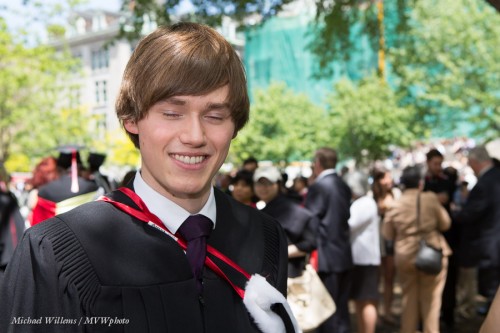
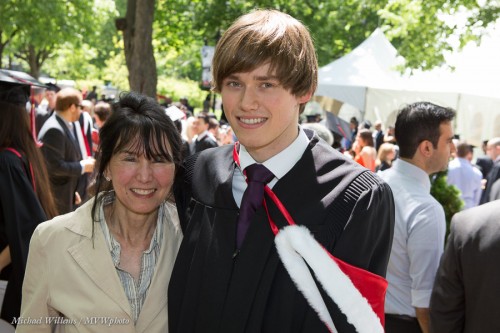
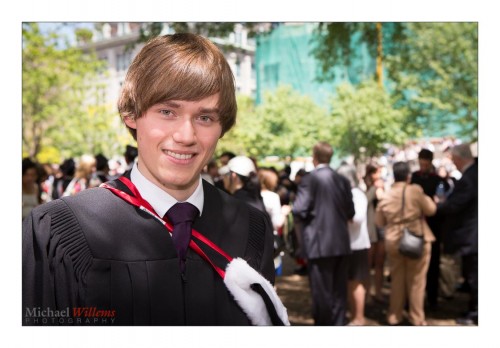
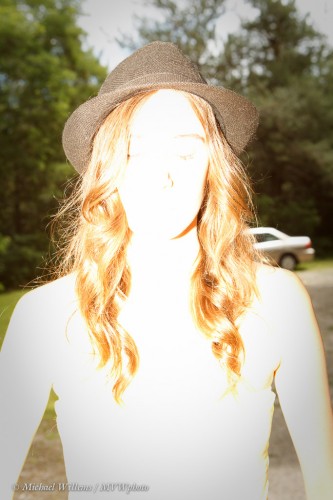
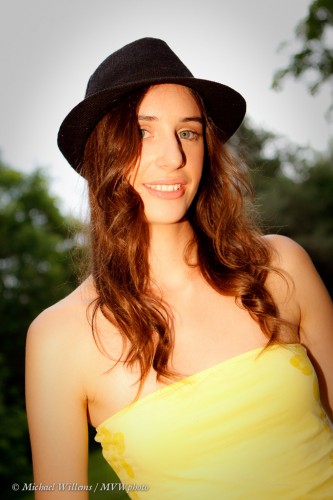
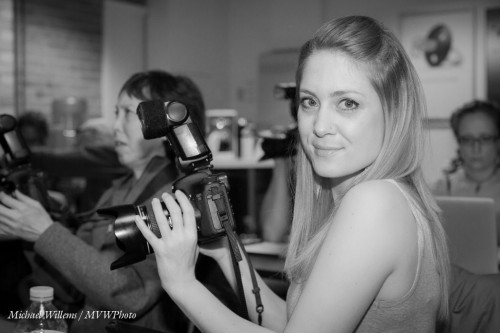
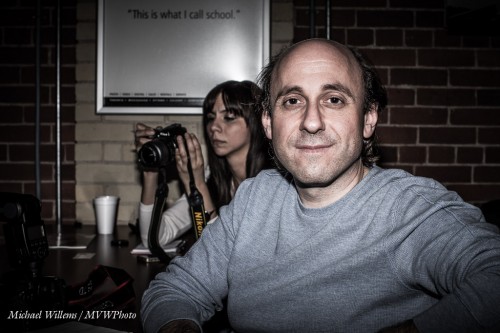
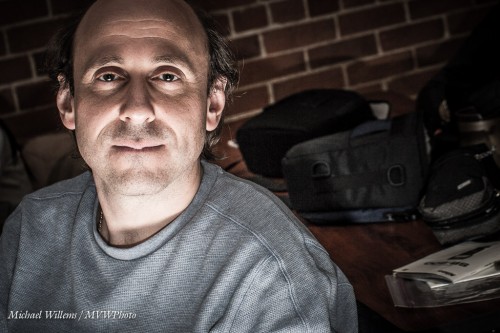
If your subjects do this:

…that is because:

  1. The flash is aimed straight at the subject (remember, outside, since you are majorly mixing flash with available light, you can get away with this if you need to); and
  2. TTL flash uses a pre-flash for metering. Then, a few ms later, when the shutter opens and the “real” flash goes off, your subject is already in mid-blink from the preflash.

Yes, you will recall there is a solution. Flash Exposure Lock (FEL, Canon) / Flash Value Lock (FVL, Nikon). This allows you to first press a button for the preflash, and then press the shutter for the picture and the “real” flash.

  • Canon: use the “*” button, unless your camera has a little “FEL” or “M.Fn” button; then use that.
  • Nikon: assign the FVL function to the Fn button (do this via the pencil menu). Note, D3100/D5100 cameras lack this function. Then use that button.

After pressing the button as per the above, you have a few seconds to fire the “proper” flash and take the image. Remember to warn your subjects there will be two flashes and the second one is the “real” one.

That little tip makes you a better photographer than uncle Fred. There. You’r welcome.


Bubutbut

I often, of course, say this – “Limit: when using flash, you cannot exceed your camera’s fastest sync speed (usually 1/250th second)”.

And then almost as often, I hear the following objection:

“But Michael: you can use High Speed/Auto FP flash!”

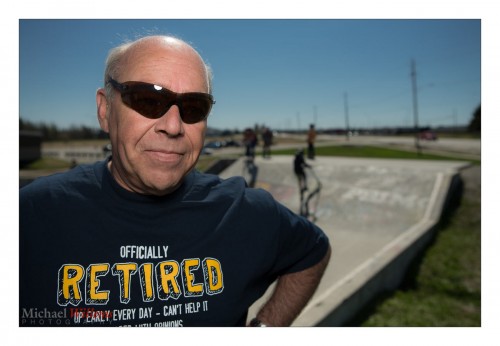
And that way, you can exceed the sync speed. Sure – like in this photo of Aurèle Monfils of the Porcupine Photo Club, which I made yesterday with the standard sunny day blurred background setting (write it down!) of:

  • 100 ISO
  • f/4
  • 1/2000th sec

…using an on-camera flash fitted with a Honl 8″ Traveller 8 softbox:

Yes. You can, as you see!

But now I have a “but”.

The high-speed mode works by effectively making your flash into a continuous light, at least for the duration of the shutter speed; it flashes pulses at 40 kHz. Fine, but most of those pulses reach the closed part of the shutter, so most energy is wasted; hence, your effective range is reduced dramatically. Maybe just over a metre at 1/2000th second when using the flash without modifier; with a softbox as I was using here, maybe 30cm, no more.

Hence the slight “wide angle” look in my image above due to me having to be close, with a wide lens. As in this one of Aurèle’s daughter Lisa:

So while it is true that high speed/FP flash solves the sync speed problem, it’s  not a panacea, and in practice, it is only occasionally usable.

Footnote: Lisa is turned away from the sun: It is behind her, meaning she is not squinting, and the sun becomes the shampooey goodness™ light on her hair!

___

Want to learn to use modern Flash technique? I travel worldwide for hands-on seminars. Vegas, London, the Netherlands, Phoenix, Niagara, Toronto, or Timmins: wherever you want me, I’ll be there for you.


What you need on the beach

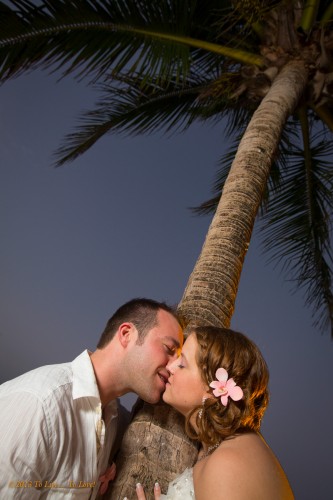
…is an umbrella, and an off-camera flash in that umbrella, as I said the other day. Some of you have asked “why” – so here’s why.

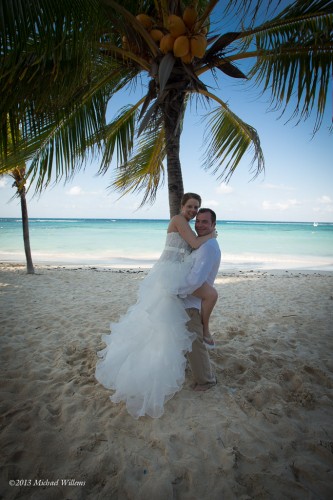
Bride and dad, with no flash:

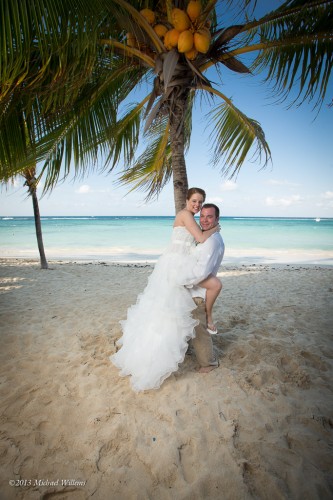
Same, but with flash in an umbrella:

As you see, the first example is terrible. Now, I could have increased exposure (higher ISO, slower shutter or lower “f-number”), but that would have also lost the background: it would have become all white.

Two more examples:

Both cases show why you need flash, no? Without my flashes, I would have done little of value in Jamaica.

And on-camera flash would have looked flat und uninteresting.

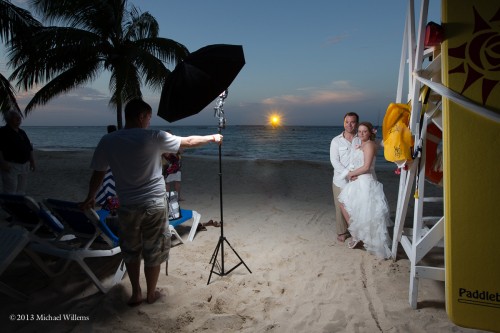
Here’s a typical setup – and the yellow flash and ghost hand (if you look carefully) belong to a person I have removed here for clarity 🙂

And I did not need a lot:

  1. Camera, of course
  2. Wide angle lens.
  3. Two pocketwizards.
  4. PW to flash cable from flashzebra.com.
  5. Flash, with spare batteries.
  6. Lightstand.
  7. Bracket for mounting umbrella and flash on lightstand.
  8. Optional: second flash with pocketwizard and cable, fitted with 1/4″ Honlphoto grid and Egg Yolk Yellow gel.

Easy once you have the knowledge… which brings me to my courses. Have a look at www.cameratraining.ca under “Schedule” and see what I can help you achieve – then sign up now.


Building a studio portrait

A “standard” studio portrait is very simple to build if you have three or four flashes; and it is entirely repeatable, that is its beauty. Here’s how you do it in six easy steps:

ONE set the camera to settings where the ambient light does “nothing”. Like 100 ISO, 1/125th sec, f/8. Test this by taking a non-flash picture: it should be dark.

TWO set up your main light, using softbox or shoot-through umbrella, at 45 degrees from the subject, 45 degrees up. Turn your subject into that light.

THREE then add a fill light on the opposite side. You can use a reflector, or another flash with umbrella, set two stops darker than the main (“key”) light.

FOUR then add a hair light, for that shampooey goodness™. This is a light from behind at an angle, using a snoot or grid to avoid lighting all of your subject.

FIVE then add a background light – another flash.

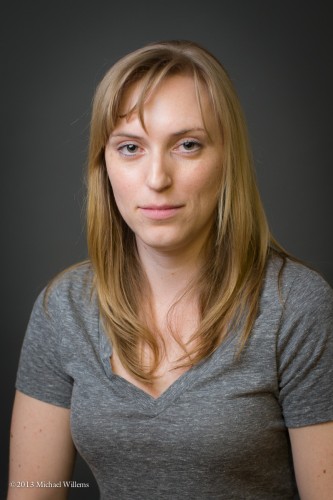
SIX then decide if you want colours anywhere – like the background. I used a complementary colour here – complementary to the subject and her clothing:

A Studio Portrait (Photo: Michael Willems Photographer, www.michaelwillems.ca)

Done!

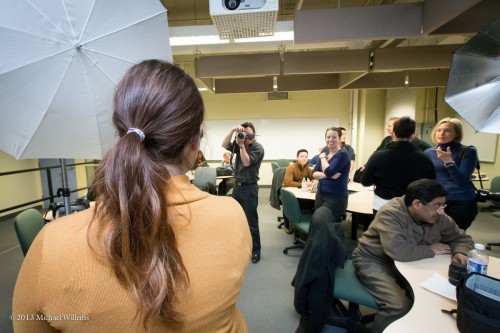
Here’s my Sheridan College class on Monday, practicing this:

___

Want to learn this? Next week’s workshop (April 10) in Hamilton, Ontario is about this very subject: studio photography. In one evening, learn to do this, use a light meter, use pocketwizards, compose, etc. There are still spaces, but this small, intimate studio workshop is limited to 10 students, so book right now!

http://photonetworkexpo.com/ : come see me talk this weekend in Toronto about Flash Photography, and even better: book online and use promo code Michael2013 to get 50% off a weekend pass. See you then!

The Outer Limits of Flash

When using flash, as you know, I very often use just one off-camera speedlight in an umbrella, like this:
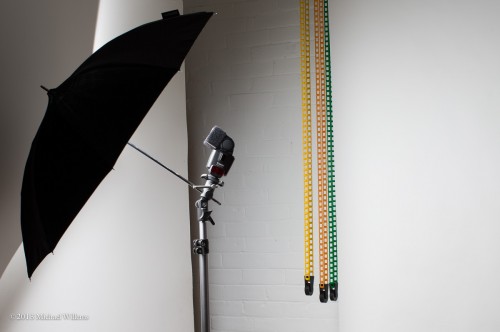
But as you have read here before, there will often be limits to what you can do in practice. These limits and how we handle them are “what separates the men from the boys”. Usually, they are not coincidence: flash makers have made their flashes to be just the right power, for instance, to meet normal earth sunlight conditions. To help you, here are a few limits and solutions:

SHUTTER SPEED: You will run into limits w.r.t. shutter speed: when using flash, normally 1/200th to 1/250th sec will be the fastest shutter speed you can use. Solutions: be aware of this limit, and use low ISO/small aperture to control light.

POWER: Most of all, you will run into power limits. At 1/200th, in bright sunlight you will have to go to f/16-f/24 for a proper exposure, and this means the flash will have to be very powerful to equal or overpower the ambient light (we call this “nuking the sun”). Solutions: use no modifier but fire direct (a direct flash has much more power than a modified one!); or move the flash closer to the subject; or use multiple flashes.

LINE OF SIGHT: Outdoors, your off-camera flash must be able to see the “morse code” light pulses emitted from your on-camera flash. Make sure that the little round light sensor on the side of your flash (Nikon) or the red area on the front of your flash (Canon) can see your camera!

HEAT: Nikon flashes like the SB-800, SB-900, SB-910 and so on, and to a lesser extent Canon flashes, will overheat (and depending on model either break, or shut down, or slow down) when you use the flash repeatedly at full power or anything close to it. Solutions: fire the speedlights at lower power.

CONDITIONS: If the ceiling you are trying to bounce your flash off is 50 feet high, you will have to go to a very high ISO setting. Solutions: do use that high ISO, or use very fast prime lenses, or ask people to move to a better location.

FOCUS: In the dark, focusing your camera is very difficult. Solutions: use a flashlight, or a laser pointer; or focus manually.

TTL INCONSISTENCY: In fact, TTL systems like E-TTL or CLS work very consistently. Solutions, therefore: learn exactly how the TTL technology works; learn exposure and metering; adjust by using Flash Exposure Compensation; avoid reflections; use Flash Lock (FEL/FVL).

There are many more challenges, and the good news is that for each such challenge there is a set of solutions. Learn the tech, and then you will be able to concentrate on what really matters: composition, light, moment!

Enjoy Passover / Easter / the start of spring; and let me leave you with the Thursday News Roundup:

  • LEARN… Join me to learn studio shooting on April 10, and join me in many other courses: see www.cameratraining.ca/Schedule.html
  • WEDDINGS… Watch for news on The Wedding Café: Celebrity planner Jane Dayus-Hinch’s new initiative, which colleague Kristof and I are part of!
  • DESTINATIONS… I am off April 14-21 to shoot a wedding in Jamaica.
  • And finally GEAR: Nikon Canada is lending me a D4 and a few lenses and a flash for two weeks. I shall report on them in detail here.. excited!

If you have any time, then use this long weekend to learn and practice some new photography skills. I vote for “Flash”. Here’finally, a sample snap taken with one flash in an umbrella:
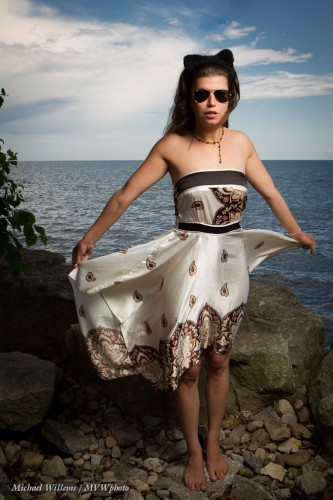

Rhonda

Here, from Friday’s workshop, is a photo of Rhonda:

Wonderful smile, truly! So that photo is good before we even start – how can you fail with a subject like that?

And yet, we have to get the focus and exposure right. Especially exposure is worth mentioning. hence this post.

Yesterday’s shots (scroll to yesterday to see them) had a pale-skinned subject in light clothing. Today, a darker-skinned person with dark clothing. So after the first person, do I need to, like, adjust anything?

If you are using manual flash settings (a typical studio shoot, with flash power set manually, perhaps using Pocketwizards): no. It’s set right, then it’s set right, never mind the subject.
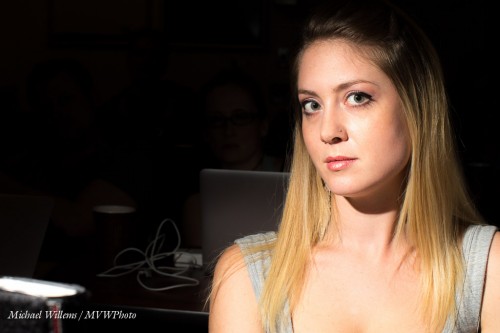
If you are using TTL flash (automatic flash), then yes. You need to adjust flash exposure compensation – down. Down, somewhere between, say, -1 to -2 stops perhaps. Else the metering circuit will try to expose this shot just as light as the last one, and Rhonda will look light grey.

So remember: TTL (automatically metered) flash is convenient, but you have to know how it works and realize that depending on the subject, it potentially works differently each time you click.

Shampooey Goodness™

You have heard the term “hair light”? It’s the Shampooey Goodness™ look that makes hair look alive and wonderful. That is why we use it in portraits.

In yesterday’s flash course, I shot a few images of one of the wonderful students, especially to show you in today’s post. Here’s Becky lit with a single TTL flash (a 580EX shot through an umbrella) without the Shampooey Goodness™ secret ingredient added:

Pretty – but now let’s add a second flash, behind her, fitted with a Honl Photo Speed Snoot (a rolled up tube, that concentrates light). That gives us the desired Shampooey Goodness™, and now, in this scientifically objective and neutral comparison, we get:

See what I mean? That’s why we so often in portraits like to add a “hair light”.

Of course there’s something else missing from this image. Can you see what?

Yes – that background is a little dull. So we add a third flash, fitted with a blue-green gel:

Bingo. A great subject, soft light, Shampooey Goodness™, and a lit background. That’s how you do a portrait. Three TTL flashes with simple, small modifiers.

___

NEW: Learn this from me personally in Hamilton, Ontario on April 10 or May 14: www.cameratraining.ca/Studio-Ham.htmlsee the full schedule on www.cameratraining.ca/Schedule.html and sign up today.


Wednesday Possibilities

Today, some shots to get your imagination going – shots that show how much is possible with little effort, and quickly. Shots I took in and between classes in mere seconds, to demonstrate specific points.

Like this quick demonstration shot showing what a great modern camera like my 1Dx can do at – wait for it – 51,200 ISO:

Meaning that with a new camera, you can now photograph pretty much in the dark, or mix a little flash with very low ambient light, or bounce off very high ceilings.

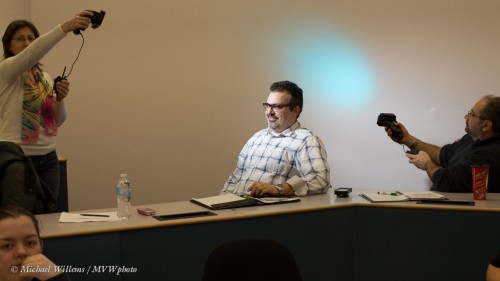
Especially when using off-camera flash, that opens up all sorts of possibilities. Here’s a demo shot showing what a little extra light can do; look carefully and you will see that I am using remote TTL flash (where my camera’s flash is the “master”), and my student at Sheridan college has set his flash to be the “slave”:

Result: he is temporarily blinded… and lit up. You can do that too, with very little extra equipment. One flash, if you have a moden camera whose popup can “command” external flashes; else, two flashes, on on the camera and one remote. Imagine what you can do when you can add a little light everywhere you like!

Then, another student lit dramatically – from below! This kind of eerie effect is easy once you can take your flash off the camera as desribed above.

Or – just turn the camera upside down and bounce flash off the table, as I did!

Off-camera handheld flash gives me this image, even when the flash is aimed direct, of Mr Jun:

Not bad, and that is direct light aimed into his face – as long as it is not near the camera, the flash can be unmodified and direct!

And when you have several flashes, you can do things like this:

Now that is a competent portrait, taken in just a few seconds, using this setup with two off-camera flashes each fitted with a Honlphoto grid, and one with a blue-green gel; using two “biological light stands”:

But finally – do you need all those flashes? No, here’s a portrait using one flash fitted with a Honlphoto 8″ softbox:

The apparent Martian in the background adds a little extra “huh?” to this photo, don’t you think? His glasses reflect the round softbox.

Anyway, these snaps demonstrate that you can achieve a lot in a very short time using simple means – you may already have every thing you need. Get creative, go outside the box, and above all, think “where is the light coming from”!


Beginner’s Flash Mistake

Has this ever happened to you?

You want an outside picture with a blurred background. So you set your aperture to a low number, and click, a nice enough picture.

But your subject is a little dark, so then you realize “wait – I should have lit my subject with a little flash”. So you simply turn on your flash and change nothing else. And then this happens:

Whaa? What happened?

Ah. In the first picture, you were at 1/1600th of a second, say. But you forgot that you have a maximum flash sync speed – usually 1/200th to 1/250th second. So for the second picture, the moment you actiavted the flash, your camera said “oh, my owner is using flash. I am slowing down the shutter to the sync speed, whether he/she likes it or not”. The result: a grossly overexposed image.

Solution: either use a slower shutter and a higher f-number and forget the blurry background, or activate “high speed flash” (“Auto FP flash”, as Nikon calls it), where the flash emits a 40 kHz pulse of little flashes, so you can go beyond the sync speed, and you can keep your f-number low. Now you get this (shot at 1/1600th second, f/2.8, 100 ISO):

Problem solved!

Note: That “fast flash”mode is only available on speedlights (like the 600 EX/SB910). And there is a drawback: your range is significantly reduced. In the previous picture your flash might reach 10 metres; with fast shutter speed and high speed flash it can be as little as a metre or less. So it’s good when you are close, as I was here.


Simple means (redux)

For my new students, in today’s class: as you see, once you kow the techniques, you can keep it simple. Like today’s shots:

One minute’s work or less, prior to the class, self portrait. Shot “so the ambient light does nothing”: 200 ISO, 1/125th second, f/8, with the flash held in one hand and the camera in the other:

Students in today’s class with background “doing some work”, i.e. something like 400 ISO, 1/40th sec, f/4:

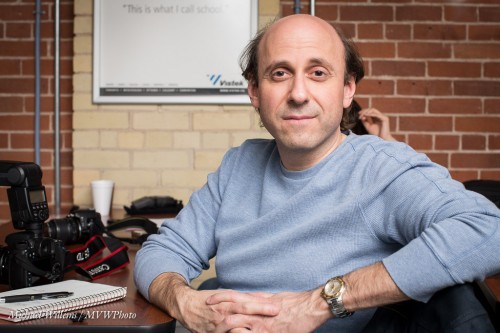
Now similar, but “this is what I call school” – the student from before, but shot again, and now with special rough direct flash plus a little post work (apologies, but it does look cool!):

Ditto, but now lit weirdly… Hallowe’en style… from below (how?):

And finally, two beautiful students; as before shot with “ambient light disappeared”, i.e. at 200 ISO, 1/125th second, f/8:

As you see in these two shots, direct flash can be great and beautiful – as long as it is not near the camera. The flash is off to our left.

None of these shots needed much thinking or much work.

  1. Decide what the ambient part should be;
  2. Make it so using ISO/Aperture/Shutter;
  3. Then add flash.
  4. Keep the flash off the background if you can (you could use a grid, or keep distance between subject and background).

All you need to remember is this simple logic, plus the limitations – like “do not exceed 1/200th second shutter speed”, and “oh, my lens can only be set between f/4.0 and f/16”, and “outside, make sure the flash is close enough to the subject to have enough power”.

It really is that simple, once you understand. And flash liberates your internal artist, once you do.

___

Additional courses ready for signing up on http://www.cameratraining.ca/Schedule.html!