Modification Good

You hear me talk about flash modifiers a lot here: today I thought I might show you what some of them actually look like. In particular, some of the ones that let me direct or colour the light (tomorrow, I’ll mention more, and talk about softening the light).

A grid restricts the spread of the light from your flash. Here’s a grid (a Honl Photo grid: I use Dave Honl’s excellent small flash modifiers constantly. They attach using simple velcro and are small, sturdy, light, and affordable: a pretty good combo):
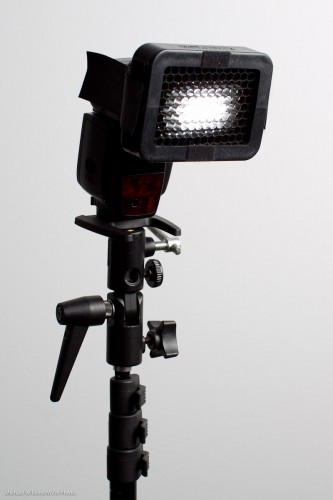
The grid is my most often used modifier. After all:

I want to direct where the light goes, which clearly implies that I also want to direct where the light does not go.

The grid helps me do that. You can even see it in the picture: the flash is firing but it’s not blinding us. I can light a subject without also lighting up the wall.

Next, the snoot. Here’s a snoot (another Honl device: the reflector rolled into a tube is a snoot):
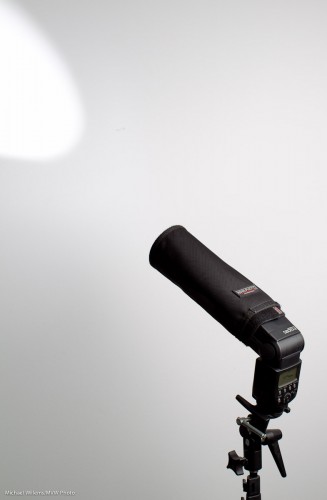
See? Even more directional than the grid. Great for very selective lighting.

One more modifier today: the gel. Here’s a gel:
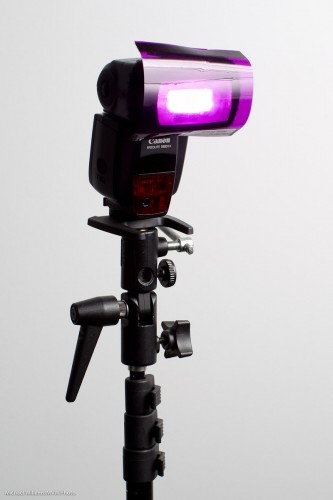
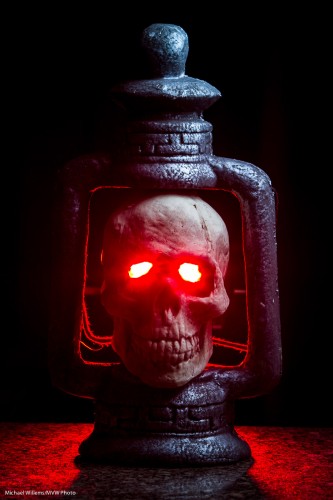
Now we have a purple flash!

Another device is the Gobo (“Go Between Objects”):
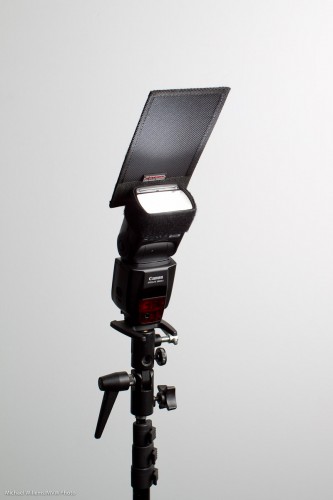
That is in fact a bounce card with the dark side used. Here’s the bounce card with the light side used:
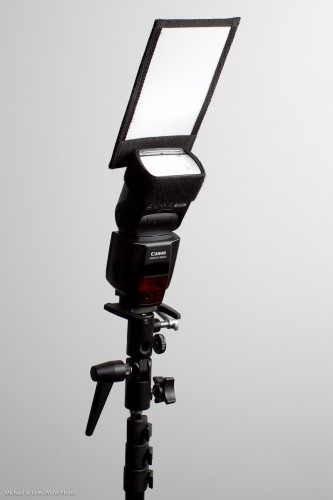
You can see both keep light from certain areas; one also reflects to the opposite side.

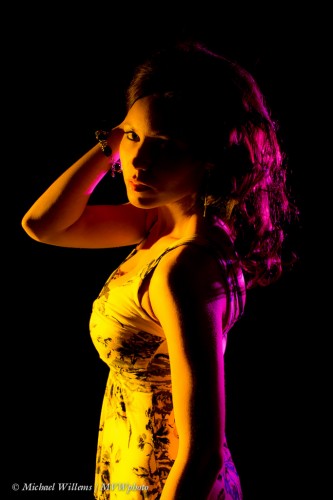
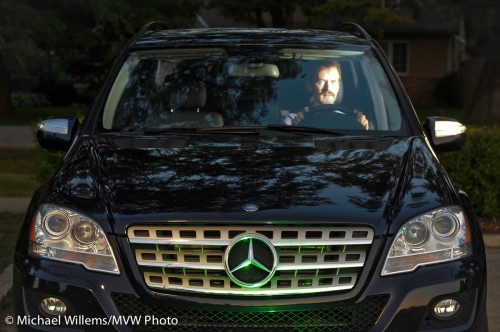
Finally today, here’s a photo taken with a gel and a snoot. Can you tell?
Tomorrow, more modifiers for you!

___

My Photography “recipe” book is out: this 108-page (non-DRM!) eBook is available for purchase right now for just $19.95 –  see www.speedlighter.ca/photography-cookbook/
 

Why flash at all? Why outdoors?

No, I am not referring to people who enjoy opening their raincoat outdoors to show that they are wearing nothing underneath. As the Speedlighter, I am of course once again referring to flash lighting.

On a pro photographers’ forum recently, a few people said they shot “with available light only”. They seemed proud of it.

I have heard this many times. And I admire people who can do this. But I must admit that whenever I hear it, I think “this is probably because the person in question does not know flash”. And in most cases, that is true.

I know, there are legitimate differences in artistic insights. And yes, you can make great art without flash. No dispute there.  But that said:

  1. The number of situations you can handle is very much restricted if you do not use flash as an option.
  2. The number of styles you can produce is very much restricted if you do not use flash as an option.

Situations include very dark rooms. Back light. Bad colour. High contrast light. Badly directed light. Uneven lighting. Direct sunlight without squinting. Special effects requiring extra light. Special effects requiring colour. The list goes on.

And styles, even more so.

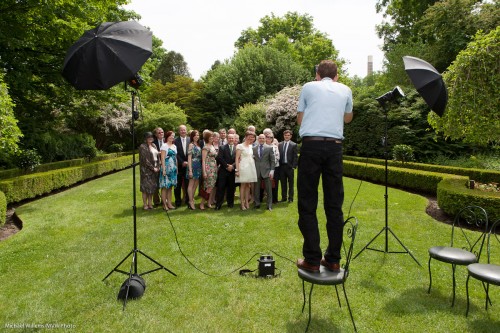
An example. Lucy and Matt’s wedding last year. Here’s me, about to shoot a group shot in direct sunlight:

\

(Notice how I am up? That is the only way to get all these people into the shot, if there are many layers of people.)

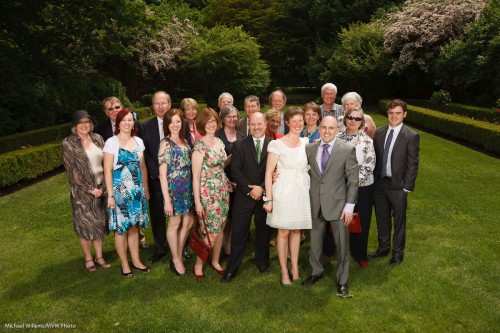
Anyway, if you zoom in (click until you see “original size”, you will see the people are not that well lit – not, that is, in a flattering way. And “bright pixels are sharp pixels” (Willems’s Dictum) – here, the people are not the bright pixels!

But in my shots, they are:

See what I mean?

And take student Melissa at last year’s Niagara School of Imaging at Brock University. No way you could do this type of dramatic portrait without flash:

Obviously, the effect photo from the other day cannot be done without flash either:

Nor can this:

Or this:

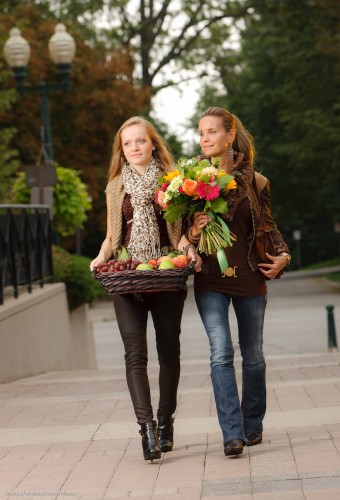
And the list goes on. Like this outdoors fashion shot of Melony and daughter Vanessa:

Vanessa and melony showing fashion (Photo: Michael Willems)

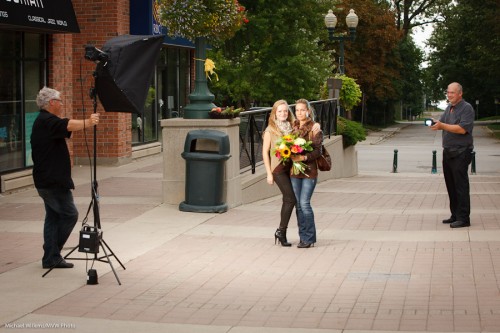
Which was shot like this, of course:

This, too, needs flash:

The list goes on. I think perhaps over half my images could not be made without flash. So.. why would you want to be a photographer who deliberately restricts herself or himself to half the possibilities?

___

Don’t forget, my new eBook is out: A unique book with 52 photographic “recipes” to help you get started immediately in many situations – including many that need flash. Read all about it here and order online today:

www.speedlighter.ca/photography-cookbook/


Party time

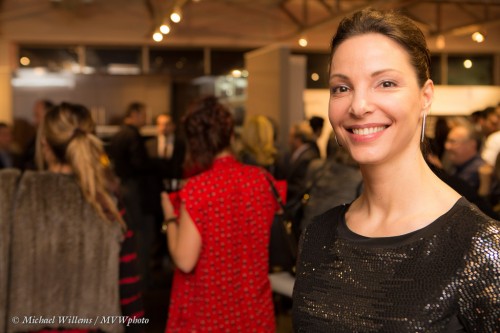
I just shot an event. With a single camera, and a 24-70 lens only. Bouncing my flash, of course, as in this image of incredibly-beautiful-as-well-as-incredibly-intelligent Tatiana:

If you have a camera and a flash, you will have plenty of opportunity this season to do this kind of shooting as well and to get it right. Christmas, Hannukah, New Years’ Day: whatever your favourite celebration is: make great pictures.

I’ll get you started. My settings were:

  1. Camera in manual exposure mode; flash on TTL.
  2. The Willems 400-40-4 rule: but modified to use 800 ISO instead of 400, at the usual 1/40th second at f/4.
  3. White Balance on Flash, with slight adjustment in post every time I bounced off a brown ceiling instead of a white wall. (Brown is just dark yellow, so move the White Balance slider to “Blue” (cold) when adjusting these.)
  4. Flash aimed behind me, straight or at an angle.

To keep in mind, a few notes:

  1. Focus carefully, and yes, in the dark that is difficult and slow. Life’s tough.
  2. Move people to where there is a nice background and you can bounce off a white wall.
  3. In darker rooms, or where the ceiling and wall are higher or less reflective, go to 800 ISO – or higher when you need to! Better to do it in the camera than to underexpose and push in post.
  4. Use the Rule of Thirds.
  5. Think about your light direction. In every shot.
  6. Change flash batteries before they run out, not after they do.
  7. 35mm is a great focal length for people shots (24mm if you are using a crop camera).

More about all this later this month. I took around 300 pictures – fewer than usual because I was a little more selective. We evolve as photographers, and I go up and down in regard to the number of images I make. I like to get them right, rather than fire away randomly.

A couple more samples. Couples in posed shots are great:

Movers and shakers, celebrities, politicians like Mike Harris are used to being photographed:

You can ask people to do things (like “Go on – kiss your wife!”):

Shooting events is fun; people will listen to your suggestions and do what you ask; and if your  technique is good, your clients (or family!) will love your shots. Go have some fun this December!


Let there be light.

When I pass away (hopefully not until a while from now), I want my epitaph to be Dylan Thomas’s words:

Do Not Go Gentle Into That Good Night.

Rage, Rage Against The Dying Of The Light.

Light is everything. But in a sense, where you do not light is even more important as a starting point.

In several ways. First, in establishing a starting point. For studio flash shots, the ambient light should be dark. So you start at 100 ISO, f/8, 1/125th second. Try it: whatever room you are in looks dark. So that only the flash will show.

Then add that flash. In this image of Kingsley in last night’s Sheridan College class, one flash is used: umbrella on the left:

The background is not quite dark, is it? So that when we add color in the form of a back light with a bright red gel, we get some, but not a lot:

how do I know it’s not a lot? Let’s turn off the front flash and use only that back flash with the red gel, where all other settings remain the same:

Wow, so there was pure saturated red – it was just blown out by the white. “Saturated” means “not mixed with white”.

The solution? Move your subject and the umbrella back a few metres. Now we get less white, hence more red:

Even farther from that background would have helped even more. As would a softbox close to the subject.

But yes – you need a large studio. True say.


Timmins, Ontario

I spent Sunday in Timmins as a guest of the Porcupine Photo Club: great team of people, excellent all-day seminar. Yes, I teach courses like my Advanced Flash course in places like London, Rotterdam, Las Vegas, Toronto, and…Timmins. Book me if you want to have a great learning experience.

But I am now back.

This was an hour or two ago, when I was about to leave:

Let’s see a few shots from the “Flash” workshop. Of course I was not there to shoot – I was there to teach – but I still managed to grab a few shots. One flash in an umbrella was used for the first picture; same plus a background flash for the second picture.

I do colour too, of course:

But most of all, I try to get it all right. So today one reminder for you.

To get the background right you may want to start with the camera in manual exposure mode, using the Willems 400/40/4 rule as a starting point. 400 ISO, 1/40th second, f/4.

But if you have one on-camera flash, the most important point to remember is: avoid direct flash. It is not flattering. Look at this bad picture (taken as a demo!) of Aurele Monfils, who kindly arranged the workshop:

Now look when we do it properly: turn the flash behind you, upward; raise ISO if needed to have enough flash power, and go for it:

Wow. See that difference? No double chin. No reflective skin. No shadows behind arms. Much (much!) better, and much more the way the person actually looks. Also, the path to the background is now about as long as the path to the foreground, so the background gets a little flash too.

Advice: Learn one thing at a time. Learn flash in small increments. Practice (irt makes perfect). But whatever you do: LEARN FLASH!

Now off to Sheridan College to teach.


Partayyy!

Party time. You have read about it here before, many times, but let me reitereate something.

Consider these three good (if I say so) recent party shots (made during a Bat Mitzvah party):

What do they all have in common?

I’ll help.

  • ONE: they are flash shots.
  • TWO: They are not DIRECT flash shots – the flash is bounced off something, somewhere.
  • THREE: The background is well exposed for all three. A little darker than the foreground, but only a little (say, 1-2 stops).

And as regular readers know – we start with step three. Always start with the background. Indoors, start with the Willems 400-40-4 rule (400 ISO, 1/40th second, f/4) and then change ISO as needed for a good background.

Then – and on;y then – worry about the flash. Use flash exposure compensation if needed. Higher ISO if you need more flash range (e.g. for high ceilings). Move if needed to get a bounce surface.

OK, your challenge: go take a few shots like this. The festive season demands it!

What you need

A studio setup usually uses big, wall-outlet powered lights (“strobes”) and more.

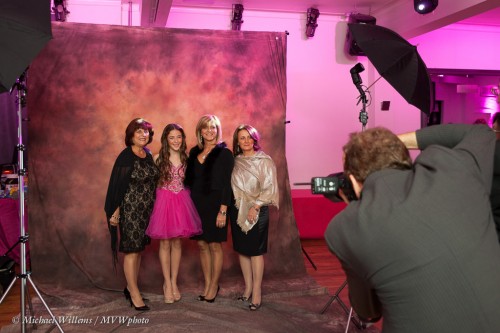
But here’s me, on a recent shoot:

As you see, I used speedlights there. They are smaller, lighter, easier.

The setup was:

  1. Camera and a backdrop.
  2. Two light stands.
  3. On each light stand, a bracket for mounting umbrella and flash.
  4. On each light stand, a Pocketwizard (as received) and a Flashzebra cable to connect pocketwizard to flash.
  5. Pocketwizard on camera (as sender).

All you need to do simple portraits like this:

But the real minimum is this:

1. One light stand

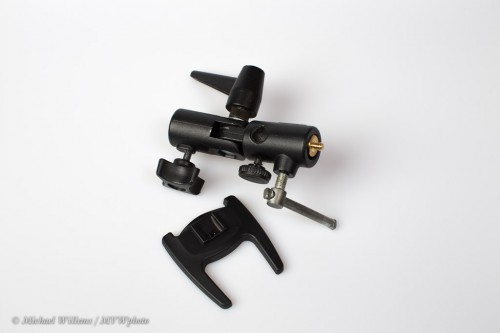
2. One bracket like this:

3. One remote flash to put on that bracket

4. One umbrella to put into that bracket

5. One way to fire the remote flash using TTL (the on camera flash is set to not flash, but to just send “morse code” commands to the remote flash). This local master flash can be a large flash (SB-900, 600EX) on your camera, or on certain cameras like most Nikons and many recent Canons, the pop-up flash.

And that is really all as a minimum!

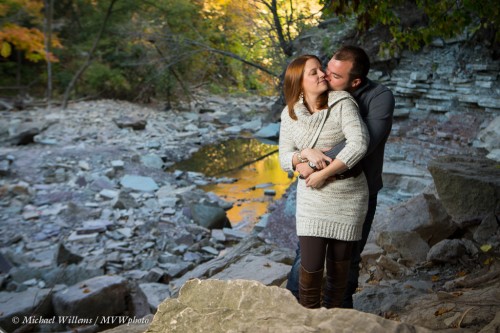
When using that, you simply mix available light with flash, using the techniques outlined on this blog. Then you can do shots like this, of Dan and Kristen, whose engagement photos I made recently in Hamilton:


Another Softbox Tip

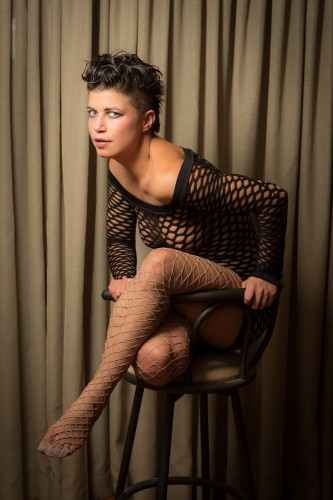
Tonight, I shot my model with her new short hairdo using the simplest of means. And yet, they look like studio shots. With the minimum of post work done, the images look like this – and this was an hour or two ago:

What did I use for this? Simply an available background, a camera, and two speedlights.

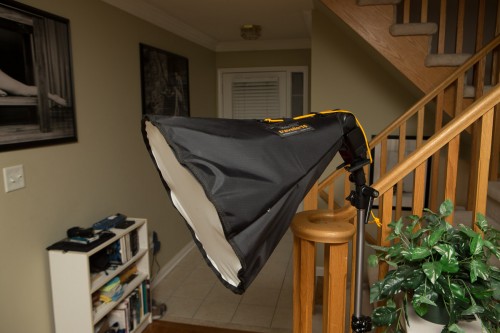
One on the camera, and one on a lightstand, equipped with the Honl Photo Traveller 16 softbox. This softbox, which is much larger than the Traveller 8, looks like this:

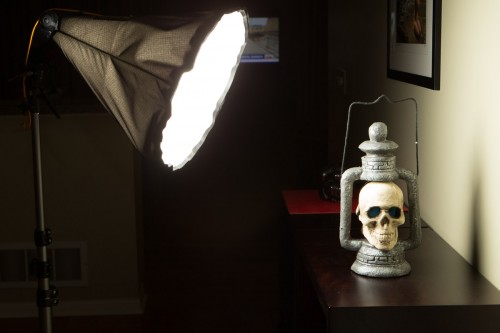
I used a Canon 580EX as the flash. The softbox comes equipped with an inside baffle so that the light spreads evenly:

(Can you tell that Halloween was a couple of days ago?)

The baffle makes the light spead evenly, but it does mean the Traveller 16 is not the obvious choice for outdoors daytime, where power is at a premium. But for outdoors on darker days, or for indoors, it is perfect:

I used this setup:

  1. Canon 1Dx with 24-70mm lens.
  2. Camera on manual, 1/200th sec, 800 ISO, f/5.6.
  3. Speedlight on the camera: 600EX, set as master, but also firing, bounced off the ceiling on the opposite side to the softbox.
  4. Main speedlight: 580EX II as slave, with the Honl Traveller 16 softbox on a lightstand.
  5. Master:Slave ratio set as 1:8 (meaning the bounced light just adds a little fill light – three stops below the key light).

Always take a pullback shot! Here’s the main flash:

The results? They are, as you see, very good.

One thing I like about the Honl softboxes is the nice round catch light:

The point of this post: That with simple tools, you can get very good results. You do not always need the clinical studio setting. In fact, I avoid it as much as possible: clinical means intimidating, and strobes mean arthritis.

If you can do it with one or two speedlights, as I did here: do it!


No direct flash

You have heard me say it many times: do not use direct flash (like your popup flash), especially when that direct flash is right on top of your camera (like your popup flash).

But what if you have no choice? Can you do it if you have to? Of course you can. The better the camera, the better. The better your control of that flash, the better. The farther the flash from the camera. And the better-looking the subject, the better.

Here’s an example from my class on Monday at Sheridan College. An example of what I would normally not do: unmodified straight-on flash.

I would normally not do this. Shadows. Reflections. Catchlights in the centre of the eye instead of high, where they belong.

Now to be fair, I did have to slightly lower the reflections on her face, especially on the nose. But other than that slight adjusting, not much done, and so you see – if you must do it, you can. In fact for young women, straight light can work well – it makes skin look very smooth. So remember to take everything I say as a guideline. A serious guideline – but one you can break if you must.

One caution. TTL flash will often (depending on your flash, your camera and your lens) take into account where you focus, and will expose for that. So if you focus wrong, your picture will be exposed wrong. As in this example of what not to do:

See? I focused on the background, so the TTL system exposed for that background. Keep this in mind. (And with this in mind, can you work out why you should keep recomposing to a minimum also?)

It’s all very logical, really.


The Flash Power Challenge

So from my posts, you have seen that in using flash outdoors, the big challenge is:

To make the background darker without also affecting the flash power to the point that it is no longer sufficient.

To make an outdoors background darker, other than actually making it darker (sometimes the simplest option is the obvious one: wait for a solar eclipse, shoot later in the day, or use scrims), you can do four things:

  1. Use ND filters
  2. Decrease aperture (use a higher “F-number”)
  3. Decrease ISO
  4. Increase the shutter speed

Unfortunately, the first three of those also affect the flash: every use of those will negatively affect your flashes’ available range too. So you want to avoid them if possible.

And what about the shutter speed?

That does not affect your flash range. So it is the obvious one to use to make the background darker. But… only up to your camera’s synch speed (depending on your camera, this is normally around 1/250th sec). Beyond that, you cannot use flash.

“Yes you can, Michael, you can use Hi-Speed (Auto FP) flash”, I hear you say.  That is true – but that too negatively affects your flash range. Catch-22! So no, it does not help with your flash power. (Then why do we have it? Ah.. to allow outdoors shots with the blurry backgrounds that only large apertures will give you.. apertures that need fast shutter speeds!)

So. Again, as said yesterday, a nicely balanced outdoors flash picture (i.e one in which the background is darker), needs you to first of all use method 4 above, up to your flash sync speed.

After that, you must do one or more of of the folowing to still have enough flash power:

  1. Bring the flash closer.
  2. Forego the use of modifiers and use direct flash.
  3. Add more flashes.
  4. Use more powerful flashes (strobes instead of speedlights).
  5. Zoom in your flashes to concentrate the light (giving you more intensity over a smaller area).

Work though the logic of this post very carefully. Step by step – the logic is important, and it is important that you thoroughly understand it. This is not esoteric theory: this directs you in every day shooting, every single day!