Doing A Studio Shoot?

Studio shooting? In that case, I have a few quick tips for you.

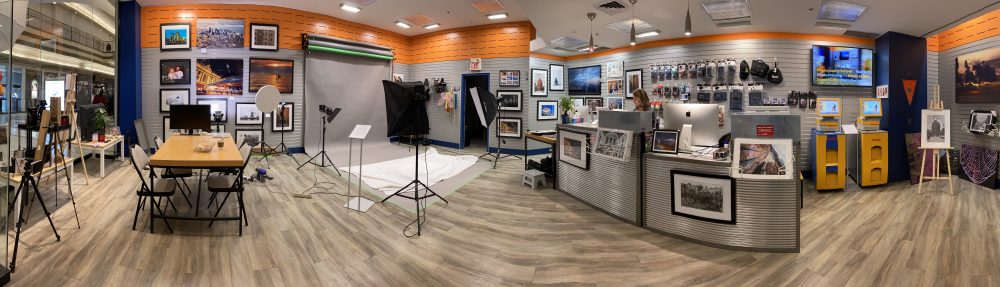
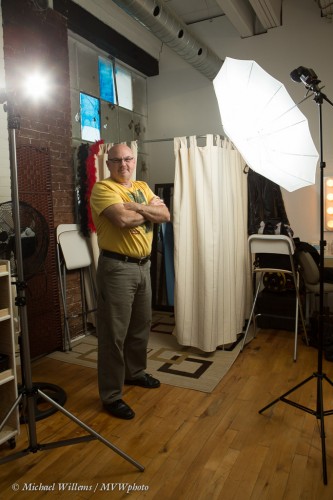
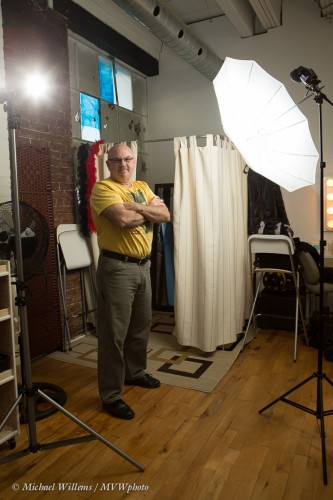
(Here’s hamiltonstudio.ca and its owner:)

So here are my studio success tips:

  1. Always have music playing. I have an ipod with a Bose dock and it just sits there playing away.
  2. Supply some refreshments like drinks and snacks, and have them sitting on a table in the studio.
  3. Make sure you have some of your art on the walls; large prints are good.
  4. Set up your cameras prior to a shoot. 1/125th second, f/8, 100 ISO, and set your lights accordingly. Consider sharp primes.
  5. Use a tripod. Not for every shot, but use it when you can.
  6. Free as much space as you have. Try to create space so you can move back and use a longer lens. There’s never enough space!
  7. Have backdrops and stands – or better, a hanger, which takes less space.
  8. Display some extra light stands, etc, showing that it is a studio (even if it is a basement).
  9. Ensure that you have softboxes and umbrellas for your studio strobes.
  10. Ensure that you have modifiers like barn doors, strobes, gels and grids. I use my speedlights for those.

These simple tips will help you get started with successful studio shooting.

And going back to the image above: why am I using speedlights in that shoot? Because I can – and they are lighter and smaller than my strobes.


Studio and more

I often shoot on location – many of my shoots do not require a studio, and I generally find studio environments too clinical.

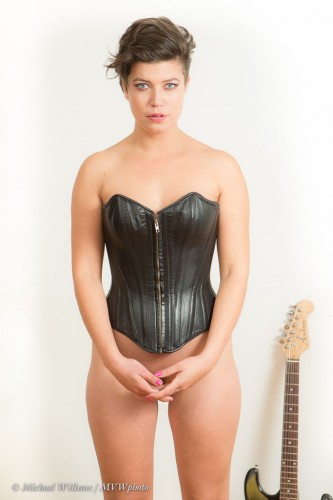
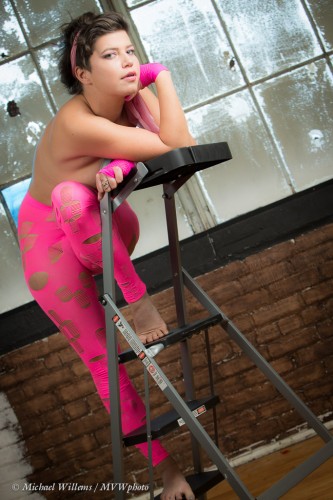
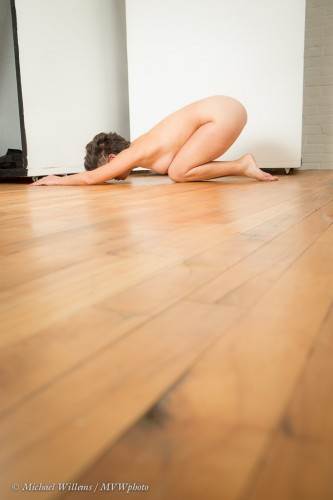
But now I have found a new studio I like, really like… in an old factory building full of photographers and other artists. I shot there today. Using my speedlights (of course!), I did studio shots like this:

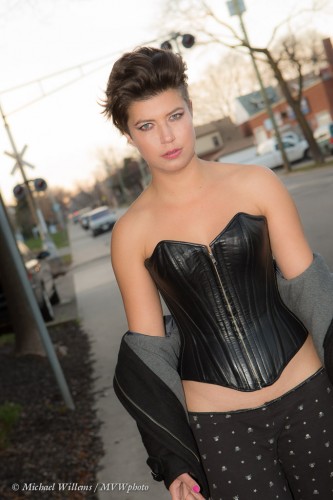
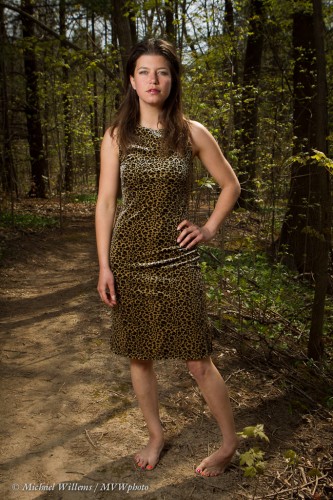
The great thing about this studio, though, is that it is entirely suitable for cool environmental shots too. Even outside the studio:

Cool buildings.. train tracks… trees, privacy.. amazing.

As is shooting inside not using backdrops. Look at this cool window and brick wall:

And inside using the wooden floor:

All this may help you in several ways.

First, you can do a lot using just simple equipment: three small flashes on two light stands, and one on my camera, all using a simple 24-70 f/2.8 lens.

Second, you can go to www.hamiltonstudio.ca and talk to Sam about studio rental per half day or day.

Third, even better: whatever your level of experience, you can have a private (or group) lesson from me in this studio on this type of studio shooting, either with speedlights or with strobes! Contact me for details – soon, before Sam fills up his studio!

Here’s Sam in his well equipped studio, in Hamilton, Ontario, a short drive from Toronto:

If you call him, mention my name. He’ll see you right with a special offer for speedlighter.ca readers.


Get ready… Partaaaay…!

December. Christmas, Hannukah, office party, family get-together: important events and the year’s highlight.

But ephemeral. The great company lasts six hours. The food, about the same. The fun, ditto. The hangover, if you are so inclined, a day and a half.

But the pictures: forever. I strongly recommend you photograph your events. Or have it done. And if you are SO inclined, I am available to shoot all your events. Prices on http://www.mvwphoto.com/Prices.html and for November and December, I will include a large 13×19 print and USB stick free of charge. Be quick, since my dates are filling up.

And for all of you, in the next weeks, some advice on event and party shoots!

Ratios

Say you do a shoot. Say, you set up lights, have a model or setting, and spend a few hours shooting, and you end up with 300 images.

The question? How many are good when a pro is shooting?

The answer is: it depends on the shoot. Sometimes I make 4 exposures and 3 are great. But typically, I take as many angles as I can, which results in a few hundred images.

I then rate them:

  • One star: technically lousy
  • Two stars: technically passable but not a great shot
  • Three stars: suitable for sharing with client
  • Four stars: Great shot in this shoot
  • Five stars: Portfolio shot

You may be surprised that for me, a typical shoot has something like 300 shots, of which:

  • One star: 3 shots
  • Two stars: 35 shots
  • Three Stars: 230 shots
  • Four stars: 30 shots
  • Five stars: zero to two shots

So while almost all shots are technically good and most are also suitable for going to the client, fewer are great shots and I am delighted if one or two are portfolio shots.

So do not feel discouraged if you do not get 150 great killer shots out of every shoot. I tend to share many shots as you all know, but most photographers only share their very very best only. You may be better than you think!


Further to that shoot…

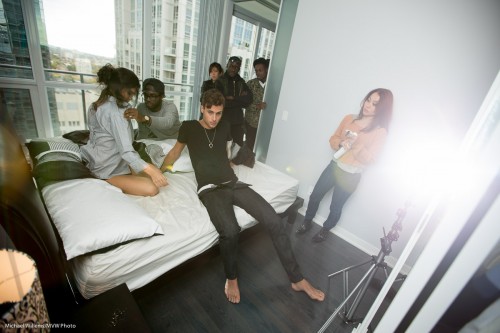
…here’s just part of the crew for that shoot yesterday (see my prior post today):

As you see, a simple shot for an ad takes a lot of people pulling together. Think about that the next time you are asked to pay a commercial rate for a commercial shoot – or the next time you are asking for a commercial rate.


Subscribers, note:

Subscribers to this daily training site, please note: I am deleting three quarters of my subscriber list. Alas for some countries, it appears that 100% of all “users” from Poland, Russia and Romania are fake. So are many French users and many, many others. I have no idea what spammers want with registrations that do nothing except send them daily articles, but whatever.

I delete by inspection of email address and name. Any users called “khsadjkhef” with email addresses like “dyewufe@mail.ru” of “fre.d.the.ma.n@backlink.org” gets deleted. If I delete you by mistake, reregister and add your actual name.

Or better still: come here to read the articles.


About A Shoot

Often, people who do not know photography think it is simple. Just press the button.

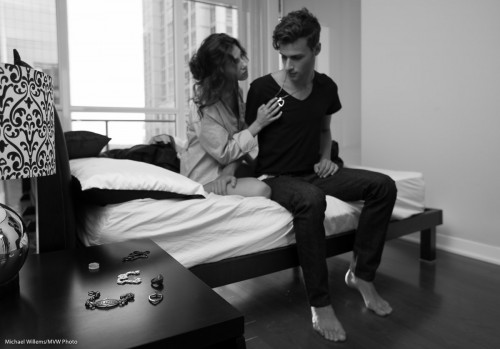
Alas, not so. Yesterday, I did a lifestyle/male jewellery shoot:

Not so. I didn’t – not alone. I was helped by another excellent photographer, my colleague and friend Kristof, but also by, among others:

  • Business owner and stand-in creative director.
  • His assistant
  • Male model
  • Female model
  • Clothing providers and coordinators (3)
  • Jewellery coordinator
  • Make-Up Artist
  • Hair Stylist
  • General assistant

In all, about 15 people were involved. And we took about eight hours to get what amounts to something like eight shots at three locations. Make-up and clothing can easily take as long as the shooting. And this was an awesome shoot: fun, and everyone worked exceedingly well together. Not always the case: here, it easily was.

As for the work: that is a lot – but it is not all. Those chosen shots are then finished meticulously. The post work takes as long as the shoot. Cropping, fixing, simplifying, adjusting perspective – all this takes time.

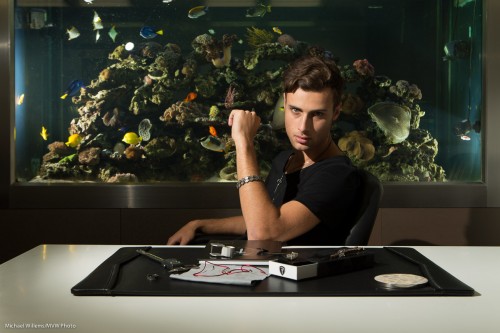
In technical terms of course it is not just the camera. It is the camera and lenses and lights – two off-camera speedlights in the shot above, and four, fitted with modifiers such as snoots and grids, in this shot:

So while the final click may only take 1/200th second, the preparing, packing, carrying many things from site to site, setting up, make-up, clothing, coordination, creative, post work, logistics, and so on take much work from many people. That is why photography takes time and costs money.

For these shots I used off-camera flash; manual flash with Pocketwizards for the first shot above. and TTL flash for the second shot. The camera was in manual. In the first shot, to give pretty good exposure – almost enough – using ambient; in the second, to give a totally dark room.


A couple of Q&A notes for you all!

For new readers especially, allow me to share a few Q&A notes with you…

Q: Why do you do this teaching site? And why is it free? A: because I believe in giving back. I teach photography, as you know, all over the world, from Toronto to Las Vegas to Europe; I teach at Sheridan College; at Vistek in Mississauga, and I teach and coach privately. This daily article is an extension of that. Free, because I am giving back. But also because I hope you will all tell your friends to follow this. And because I know that some of you will then use my services.

Q: what services do you provide? A: Photography and teaching. Teaching, because just a few lessons will help you master those aspects of craft of photography that you really need to learn. And photography: I shoot events (weddings, parties, bar/bat mitzvahs, christenings, corporate events, and so on); portraits (engagement shoots; corporate portraits; portraits for your LinkedIn, web site, of Facebook; family portraits, and so on). I also shoot industrial and product. With my wide range of equipment and skills, I can manage anything. See www.michaelwillems.ca for more information.

For wedding and family photos go here:

Q: Why is flash so prominent in your writing? A: Because it is my specialist subject – I teach people flash all over the world – but mainly because it is beautiful light once you know how it works. As in this photo of my frequent model; taken with one camera, one lens, and one off-camera small flash in an umbrella. Very very simple, and good right out of camera.


Q: Do you really do a daily post? A: yes. I may sometimes miss a day or two, but in that case I make up for it later by posting more. A post for every single day of the year so far. If I get tired of that I will slow down, but who gets tired of photography? It’s fun!

Q: Any special offers? A: glad you asked. Yes, I have autumn specials on right now for both individual teaching, group teaching, and photography. Contact me to hear trhe details.

Q: Can I repost this material? A: I will typically give you permission but only if I am fully credited; and it does depend on the purpose, location, etc. Just drop me an email to ask!

Q: Can I ask you a question? A: Yes please. I welcome your questions (send email to michael@michaelwillems.ca) and if interesting to others, will answer them on speedlighter.ca! Please also feel free at any time to comment on my posts (the little link at the bottom).

___

Back to regular programming!


Miscellany Monday

Miscellany Monday, here on speedlighter.ca!

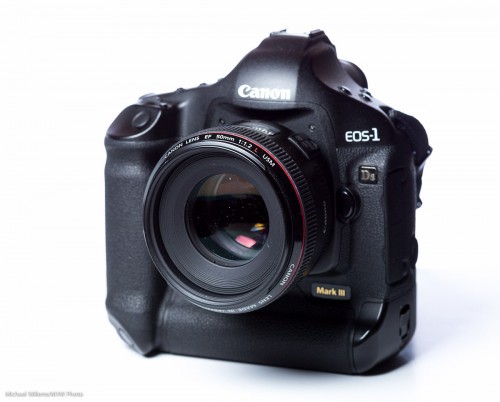
First: I am selling my Canon 1Ds Mk3. See the ad here: http://toronto.en.craigslist.ca/oak/pho/3277248183.html – if you are interested, contact me!

Second: The next few weeks, I am teaching my workshops at Vistek Mississauga – there are spots open, so take them right now!  Book here now.

  • Sep 22: DSLR Basics plus DSLR Advanced
  • Sep 29: Exposure and Composition, plus Basic Lighting for portrait and table-top photography
  • Oct 13: On-Location Mississauga Walk

Third: helping a student with his T3i Rebel the other day, I realized I need to point out something. Namely, metering, and in particular flash metering for shots where you use a flash as well as ambient light.

  • On a Canon 1-series body, evaluative metering is biased heavily toward the focus point. So if I compose a shot with the subject on the side, and I use a single focus point on the right to achieve that, metering will be biased towards the subject.
  • But on lower-end Canon cameras, evaluative metering is often biased toward the centre. So the camera in the shot above would try to light the centre, and would overexpose the subject.

If you see this phenomenon, you have several options.

  • You can set metering to average (centre-weighted) – this may just help.
  • Or you can put the subject in the middle and press the * button (flash lock), then recompose and shoot.
  • Or you can use flash compensation.

The thing is not to necessarily attempt to memorize what each camera does. The important lesson here is to realise that metering can make or break a shot, and that you have several options to solve issues that arise from this. As long as you know the fundamentals, you can solve any issue.


Sell your stuff?

Yesterday, I visited the wedding show at Toronto’s International Centre, to take pictures of celebrity (and world-class expert!) wedding organizer Jane Dayus-Hinch of, among others, “Wedding SOS” fame. Here’s Jane, who, as always, did herself proud with this great hat:
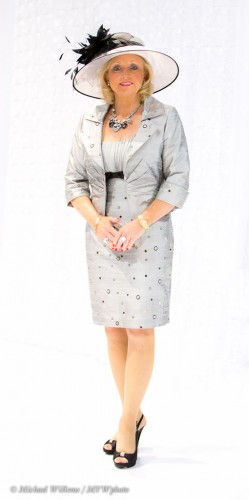
While shooting, I learned a thing or two (or three) about weddings from her: worth it for that reason alone. How should bridesmaids hold bouquets? Things like that make all the difference, and Jane is a master of such details.

But I also looked around at the show.

Bit of background: I teach a course at Sheridan College, “Running a small photography business”. So with that in mind, what did I see? Many photographers selling their stuff, with great booths.

But.

Here’s the problem. All of these photographers had great booths showing off their, generally excellent, work. But not one helped a bride choose. Yeah, they make great photos. That’s ten out of ten. Now what, if I am the bride?

Start with the company names. They all had “me me me” names. And meaningless names, like “In Focus Photography” (you better bloody well hope so!), “Luminous Light” (D’oh. Is there any other type?”) and so on. How about a name that is about the client? (I venture to say that our own “To Live, To Love” is better in tune with brides!).

And as far as I saw, not one mentioned why the bride should go with them. As said, imagine yourself a bride. Now what? Ten equally competent photographers. Who do I go with? No idea, so I go by my friends’ reference and ignore the booths.

If I had walked up to these photographers to ask in person “why are you so special?”, I presumably would have gotten some answers. They can be anything: “unique selling points”, or USPs, in marketing speak. Like “we are cheaper”, or “we shoot edgy modern candids only”, or ‘we’re like Vogue”, or “we do traditional photos your grandparents will like”, or “we have the best leather albums”, or “we have more experience”, or “we use better lenses”, or “we also shoot celebrities”, or “we are great at making people look thinner and taller”, or “we work harder than any other photographer”, or “we are rated higher than anyone else by both brides and mothers-in-law”, or “only we deliver our pictures within one week”, or.. the list goes on. And whatever the reasons are, those are what I would expect to see writ large in the booths. Not just “we make great photos are our name is X”.

And then you put these in the client’s reference frame. Not just “we do X”, but “You will have a better wedding day because of X”.

The life of a photographer is all about marketing, and I was sad to see that none of the photographers at the show had great ideas of how to go about it.

Or as someone with a stake in the business, maybe I should be happy to see this? (That calls for a smiley: 🙂

In any case: sell based on “you you you”, not on “me me me”. Find USPs, then put these in clients’ terms., then make that your message. Not the stuff everyone else does too (like well exposed, sharp images).