Outdoor portrait tip

A quick tip for new photographers and a reminder for more experienced ones:

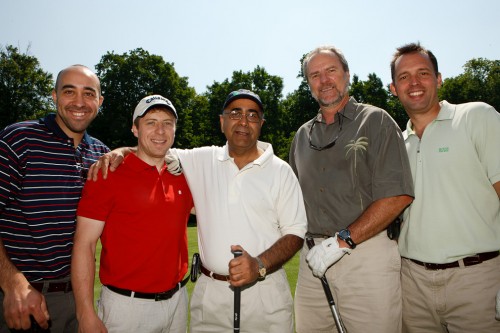
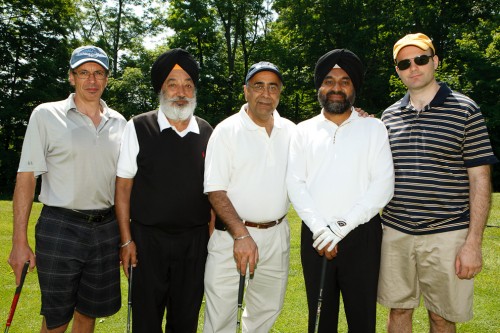
When shooting a portrait outdoors, have the sun behind the subject – but light that subject with a flash.

Government Services Minister Harinder S. Takhar and friends, photo Michael Willems

Government Services Minister Harinder S. Takhar

The sun behind them, because sunlight is harsh, and otherwise they would squint. The flash, to stop them from being silhouettes.

Another example:

Government Services Minister Harinder S. Takhar and friends, photo Michael Willems

Government Services Minister Harinder S. Takhar and friends

Unstick yourself!

A recent meeting with a very talented young photographer, Peter McKinnon, prompts me to write about lens choices for a moment.

Peter, who is a student of mine in the Advanced Flash lighting workshops, showed me a wedding album and other wedding shots he recently did. He showed me a wedding he shot on his own,  entirely with a 24mm prime lens, and much of it at f/1.4. Never took that lens off. No long shots. No zooming. Just Peter and his wide angle lens. Fantastic work.

The 1D Mark IV makes a lens look 30% longer, so that’s 24 x 1.3 = 31mm. Roughly equivalent, then, to me using my 35mm f/1.4 lens on the full-frame 1Ds Mark III body.

Mmm. That would be liberating: one lens, a wide one, for an entire shoot. And I have mentioned before, for events this is my favourite lens.

Selective focus:
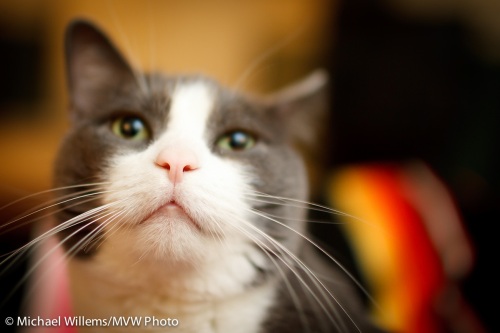
Cat, by Michael Willems (35mm, f/1.4)

Cat, by Michael Willems (35mm, f/1.4)

Low light ability:
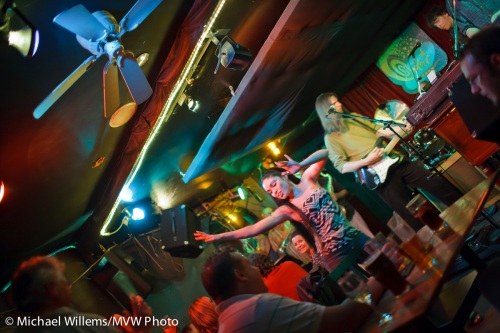
Club, by Michael Willems (35mm, f/1.4)

Club, by Michael Willems (35mm, f/1.4)

And both, available light and selective focus:

Couple, by Michael Willems (35mm, f/1.4)

Couple, by Michael Willems (35mm, f/1.4)

So I checked. The last wedding I shot, I used my 35mm lens for fully 30% of the shots! I too love the shallow depth of field:
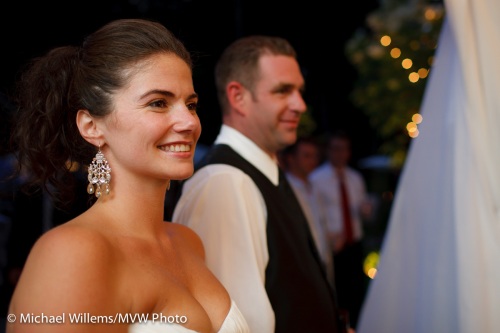
Bride and Groom, by Michael Willems

Bride and Groom, by Michael Willems

And I like the ability to get it in and to not have to worry about how to zoom.
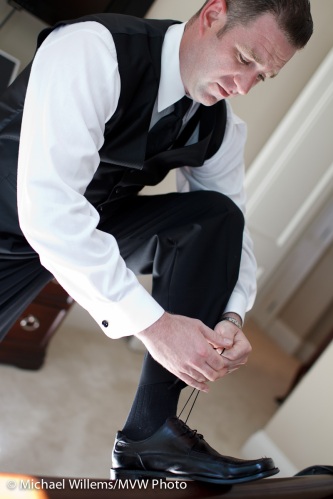
Groom getting ready, by Michael Willems

Groom getting ready, by Michael Willems

So here is my suggestion: that you too spend an entire day shooting with one wide angle lens. This will free your mind from deciding on lens, zoom, and so on, and open your eyes to the photos in front of you. And that is what photography is about: photos, not cameras or lenses.

And you know what: I’ll do the same, on my next event shoot.
Another version

…of the recent “rain”-shot Joseph and I put on at our Mono workshop. I asked recently which one you preferred. Here’s mine:

Evanna, photo by Michael WIllems

Evanna, photo by Michael Willems

Overall, I slightly prefer this one, because:

  • She is larger in the shot.
  • The wet road looks more realistic.
  • It looks like she is in the rain, now – rain drips off the umbrella.
  • I like the lit umbrella, to provide contrast with the hair.
  • Her face is part lit, not evenly lit.

But that is my opinion. Yours may differ. Validly! In interpreting art, a lot of it is valid opinion.

Background

Quick Composition Tip: make sure your background is relevant. The foreground subject in your image should be interacting with, supported by, or given meaning by the background. Otherwise it should not be there.

Tip 2 today: Look for opposing colours. Like red versus green; or as in here, yellow versus blue:

Gold and blue

Gold and blue

Your pictures will stand out more. As simple as that!

Vegas shots

A few more pictures from Las Vegas. For two days, David Honl and I taught, and showed, and guided the students through the making of these types of flash images:

Yasmin Tajik, photographed by Michael Willems

Yasmin Tajik, photographed by Michael Willems

Yasmin Tajik, photographed by Michael Willems

Yasmin Tajik, photographed by Michael Willems

Las Vegas Student, photographed by Michael Willems

Las Vegas Student, photographed by Michael Willems

Las Vegas Student, photographed by Michael Willems

Las Vegas Student, photographed by Michael Willems

Las Vegas Student, photographed by Michael Willems

Las Vegas Student, photographed by Michael Willems

Las Vegas Student, photographed by Michael Willems

Las Vegas Student, photographed by Michael Willems

Snoots, grids and gels were used for these photos. All were made with simple speedlites.

Enlarging the moon

One aspect of wide versus telephoto lenses is how large the background gets. As in “If you want a large moon, use a long lens”.

Huh? What do you mean, Michael?

I shall illustrate with a couple of shots I took of a student during a “Creative Urban Photography” outing the other day. One with a long lens, and one with a wide angle lens.

Ignore the light (I was using a flash with a warming gel on one camera, and no flash at all on the other), and look instead at the size of the blurred-out car in the background:

Here’s picture one:

Student during recent CUP outing, Oakville

Student during recent CUP outing, Oakville

Now look at picture two (where by moving my position I have kept the subject the same size):

Student during recent CUP outing, Oakville

Student during recent CUP outing, Oakville

See how that car magically grew much larger in the second picture?

Do I need to explain which picture was taken with a wide angle lens, and which one with a telephoto lens?

So now imagine the person is a tree and the car is the moon at night, or the setting sun. So what lens would I be most likely to use if I want a large moon or a large setting sun?

Piecing it together

Remember my recent post about how you need to tell a story with your pictures, but in a way that makes the viewer piece together that story?

One way to do that is by adding a second person in your portrait background, but having that second person blurred out. You sawa variant of this in the wedding cake picture, with dad in the background.

But this technique works especially well when there are two or more people, and especially when there is a relationship between these persons. Like in this nice wide-angle image of the bride and groom:

Groom with bride, by photographer Michael Willems

Groom with bride, by photographer Michael Willems

The centre of attention is the groom (unusually, because of course most of the rest of the wedding photos emphasize the bride, not the groom).  And then, a few milliseconds later, you clearly see the bride, and that she is smiling, and she is looking at her new husband.

More technical detail:

  • The wide angle makes the perspective show.
  • A good lens, which allows a wide aperture, and proximity to the subject, blurs the background.
  • Flash was bounced off the wall behind me, on my left (so the subject is hit with photons from the front).
  • The camera is in manual (“M”) mode; Exposure is set to light the room well.

Sometimes, not showing things that normally you would, also works. Look at the groom: we have no idea what he is thinking.

Knowing Looks, by Miochael Willems

Knowing Looks

Well, of course we do, we can guess – and that is what this is about.

Try it yourself now, this type of portrait! Aperture open all the way on a fast lens.

Wide or telephoto?

I am going to repeat something I have mentioned many times before, but that never goes out of style: the difference between a wide angle lens and a telephoto lens.

Here is the same car shot recently with a telephoto lens from afar and then with a wide angle from close up:

Telephoto/far away:

A 1958 Dodge shot in Oakville by Michael Willems

A 1958 Dodge in Oakville (70-200)

Wide/close by:

A 1958 Dodge shot in Oakville by Michael Willems using a wide angle lens

A 1958 Dodge in Oakville (16-35)

You see the difference, yes? If ever the saying “a picture paints 1,000 words” is true, I imagine it is here.

Wide shows enhanced perspective/depth. Telephoto makes it look flat. This is not because of magic in the lens: it is simply because of the vantage point you take using each lens.

In addition,

  • Telephoto creates blurrier backgrounds more easily, while wide can easily have extensive depth of field
  • Wide is less susceptible to motion blur

Wide is better for situational portraits, low light shooting, and architecture, and much travel. Telephoto is better for flattering portraits.

Positioning

When you shoot people, do not tell them how to pose, or that you are posing them. Tell them you are positioning them, or ask them to position themselves in a certain way.

You get more natural poses that way!

Bat Mitzvah Girl's Big Sister and Mom, by Michael Willems

Bat Mitzvah Girl's big Sister and Mom

A family, close shot by MIchael Willems

A family

And if the pose is more traditional, you can rotate, and even show the background, to add some life:

Bat Mitzvah Girl and friends, by Michael Willems

Bat Mitzvah Girl and friends