Juxtapose!

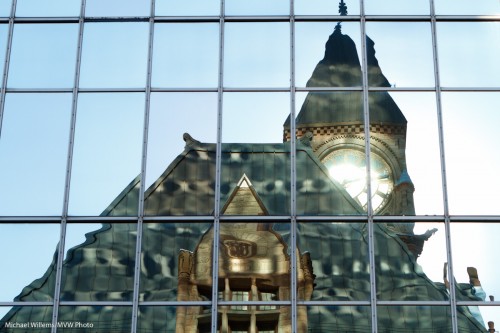
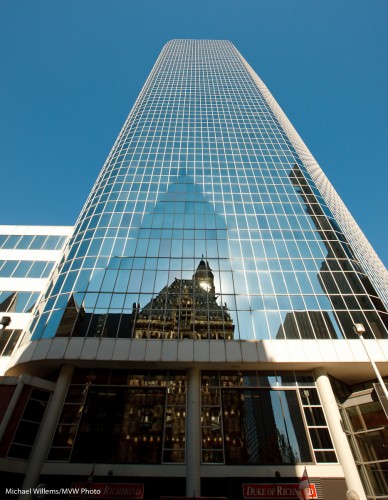
What I mean, in today’s tip, is this: your pictures look interesting if there is a juxtaposition in it – a contrast, an unusual difference between opposites.Big and small. Ugly and Beautiful. Organic and technical. red and green.

Or like in this picture, old and new:
Old and New

Old and New

When a juxtaposition is combined with another “interest”, such as “curves”, or here, “reflections”, so much the better.

And here one more, with blue and an intriguing shadow: intrigue (making the viewer work it out) is always good in pictures!
Old and New and Blue and Shadow
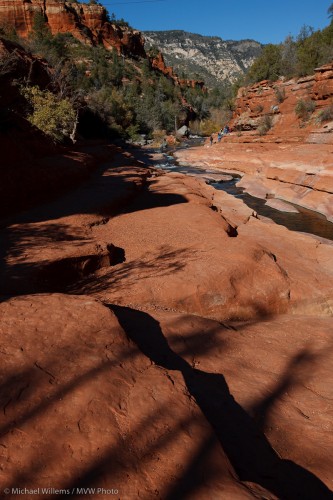
Old and New and Blue and Shadow
Scale and grandeur

It is important to add both a sense of scale and a sense of grandeur to landscape photos.

You add grandeur by using a wide lens and getting close to something (even the ground). That shows the size.

And you add scale by helping the viewer. Adding people is a common technique, as I did in this image of Sedona, AZ, in December last year:

Sedona, AZ

Sedona, AZ

You need to see that image real size to really see it (click through, then select full size). And that brings me to today’s last tip: make it big. Large prints are sooo much better than 4×6 prints.

Vomit, or silk?

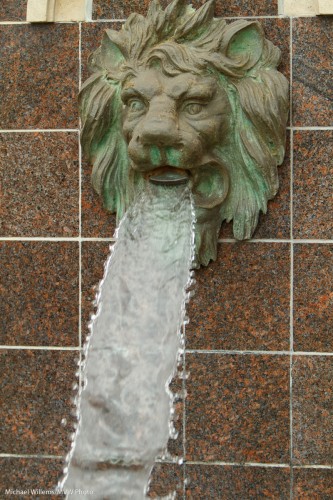
So when I shoot a flow, like a rapidly moving car, or a gently flowing river, or a famously gushing fountain (uh oh, I am beginning to sound like Dan Brown), should I “freeze” that motion? Or should I somehow show it?

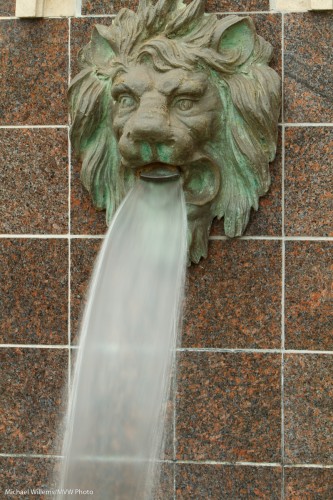
This is a shot from the other day’s Creative Urban Photography walk, shot as an instant, a moment in time (using S/Tv mode, shot at 1/500th second):

Fountain, moment in time (Photo Michael Willems)

Fountain, moment in time

Uh oh. Matter of taste – but to me, that looks like vomit. Or perhaps a chainsaw.

And here’s the same, now using S/Tv mode at 1/10th second, so it shows a  stream:

Fountain, as a flow (Photo Michael Willems)

Fountain, as a flow

Ahhh…. a beautiful silky flow.

So now you tell me. Matter of taste, yes. So according to your taste, should a flow be portrayed as a moment, or as a flow?

5 feet.

Uncle Fred takes every picture from exactly 5 feet above the ground.

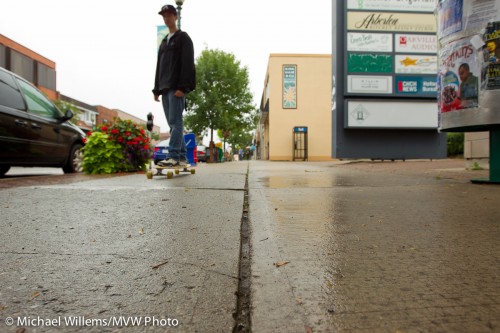
Don’t! Look for unusual viewpoints. Up, sideways, or like here, down:

Skateboarder on wet sidewalk

Skateboarder on wet sidewalk

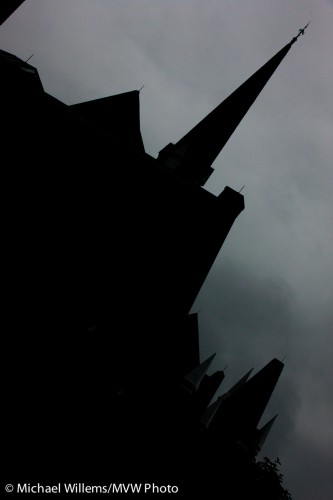
And unusual viewpoints can include diagonals:

Dark Diagonal Church

Dark Diagonal Church

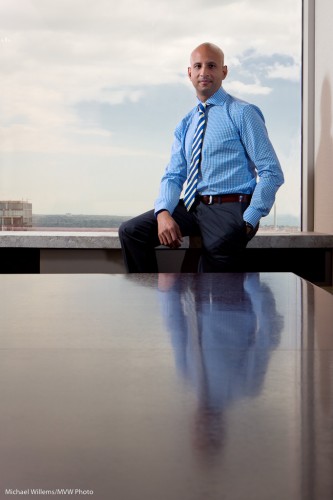
Or they can mean “table-top level”:

Reflection, photo by Michael Willems

Reflection

So avoid shooting everything with the straight and narrow Uncle Fed horizontal viewpoints!

And, um… recognise the Rule of Thirds in there, anyone?

Wide, and wider

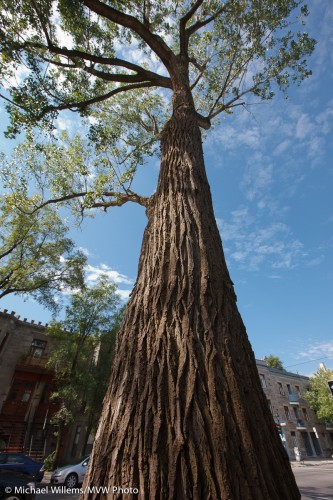
Wide angle lenses are good, you have heard me say this many times.

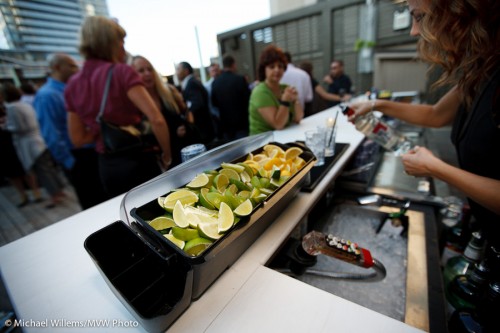
Not just for travel. Also, for instance, for “event background shots”, like this recent picture taken at a corporate event:

Bar Lemons

Bar Lemons

Or for this:

Montreal Plateau Tree

Montreal Plateau Tree

Wide angles because:

  • You get more in (d’oh).
  • They are easy to focus – if you wish, you can get it all in focus (but see the note below).
  • It is easy to avoid camera shake (a safe-ish shutter speed is “1 divided by the lens length”, after all, so shorter lenses are easier).
  • You introduce depth (“close-far” technique).
  • You can exaggerate perspective, if you wish.

So how wide is “wide”?

I would say 16-35 mm on a “full frame” camera – that means 10-20 mm for those of you who use a crop camera, like a Digital Rebel, 50D, D3000, or D90.

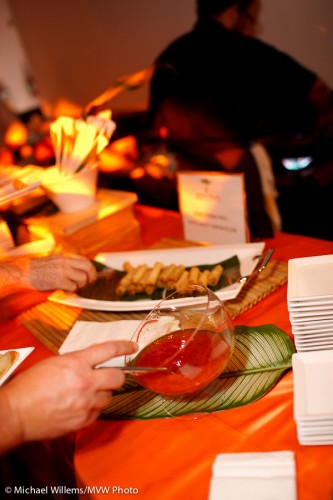
Now I promised you a footnote. Wide lenses make it easy to focus on “everything”. So what if I want selective focus, like in the bar or in the following shot? Selective focus is oh so important in photography, as it helps you tell a story:

Buffet

Buffet

Well, then I need to have a wide open aperture. Wider than on a longer lens.

And that is why I use a 16-35mm f/2.8 lens, and if I could find a faster one I would get it, too. The faster (i.e. the lower the “F”-number), the better. So when some say “a wide lens does not need to be fast”, they are wrong.

Negative Space

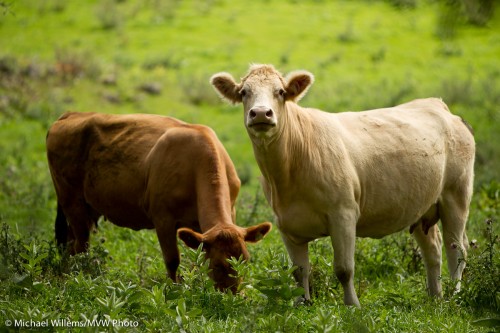
Instead of making your subjects big, like so:

Moo! Cows (Photo by Michael Willems)

Moo!

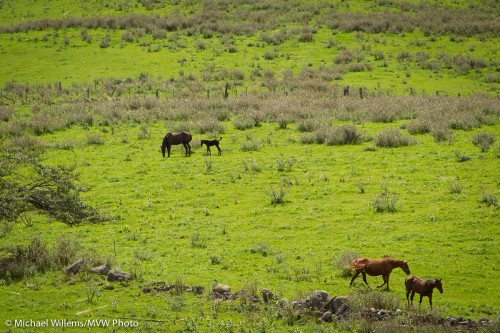
…you can also make them small, like so, and surround them with “nothing much”:

Horses in Mono - Photo by Michael Willems

Horses in Mono

We call that using “negative space”.

The use of Negative Space is a great way to show your subject not as huge, but as interconnected with, and inhabiting, a large area.

The negative space needs to be just that: negative space, i.e. devoid of meaningful content. It does not have to empty: just empty of information.

Nature close up

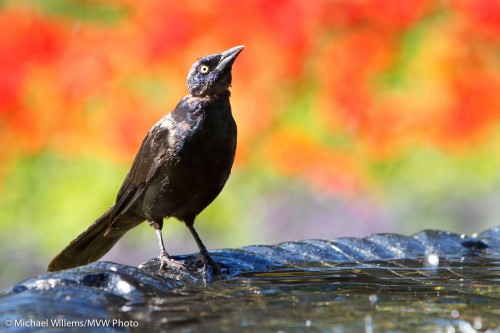
Nature can be beautiful, as in the snap I made in downtown Toronto yesterday afternoon:

Bird, Fountain and Flowers (Toronto, 29 August) - photo by Michael Willems

Bird, Fountain and Flowers (Toronto, 29 August)

Sometimes, as in this example, nature is best seen close up; sometimes better using wide angles.

That is the kind of thing we will be going over in the upcoming full-day Nature Walk workshop, which, take note, has now been brought forward to 11 September. It is also one of the subjects I go through in the Henry’s “Creative Urban Photography” half day walkaround I do in Oakville.

Choosing the right angle is a very important part of making (not “taking”!) a photo, and it is one of many subjects covered.

Oh, the photo? A 70-200mm f/2.8L lens, set to f/4 (I wanted the bird to be sharp, and these birds never sit still for more than a moment). At 200 ISO, that gave me 1/250th second. I used the Canon 7D camera, because its 1/6 crop factor gave me a longer reach (the 200mm effectively became 320m).

Piece it together

I have mentioned this before: the need to have your audience piece things together themselves.

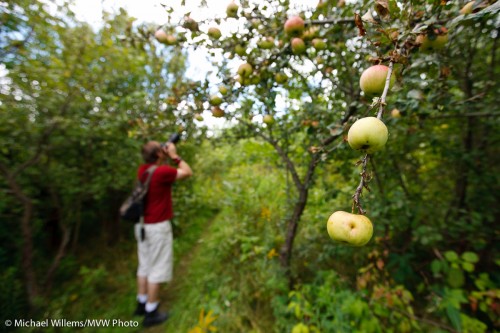
One way is to use selective depth of field. Like in this snap from a recent outing in Mono Cliffs Provincial Park:

Mono Cliffs Provincial Park, photo Michael Willems

Mono Cliffs Provincial Park

You see the apple first, then a blurred out view of the photographer, then you figure out what it is, then you slowly see what’s happening.

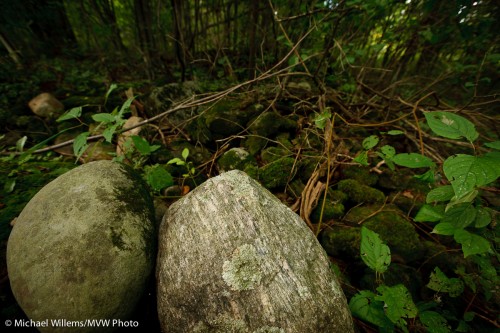
This snap also shows the benefit of wide angle lenses. As does this:

Mono Cliffs Provincial Park 2, photo Michael Willems

Mono Cliffs Provincial Park 2

Depth! And I also used a bit of flash, with a half CTO gel.

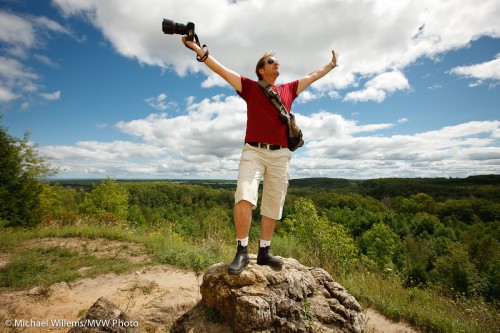
And one more, finally: colleague Joseph Marranca in the park at the lookout point. Also shot with a little fill flash with a half CTO gel, with the camera’s white balance set to flash. After first exposing properly for the background, of course.

Mono Cliffs Provincial Park 3, photo Michael Willems

Mono Cliffs Provincial Park 3

What we are doing there? tracing out  the route for the upcoming Nature Walk course!

All those shots were taken with a wide angle lens. Wide meaning 16mm (or 10mm if you have a  “crop factor” digital camera, i.e. one that is not “full frame”). Wide angles rock.

Thirds

You all know the rule of thirds. Yes?

Instead of putting your subject dead in the middle (Uncle Fred does this), you put it a third of the way from the right, the left, the top of the bottom. Or where those lines intersect. Like this:

Rule of Thirds, by Michael Willems

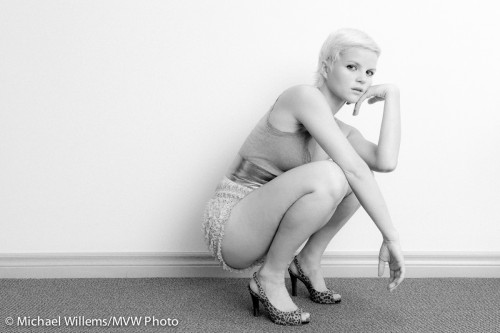
Rule of Thirds, model Lindsay Biernat by Michael Willems

Uncle Fred would have put the model in the centre, but we find images more pleasing when we use off-centre composition like this.