Batteries

A few tips about batteries:

  • Always carry a spare for your camera (and everything else).
  • LiIon batteries do not mind being charged without first being discharged, so charge them every time they go down – every day if you like.
  • Once a month, exchange the spare with the camera battery, and top up if needed.
  • For flashes, use NiMH batteries. These recharge more quickly between flashes. Plus, they save you money.
  • And these do like to be occasionally discharged before charging again. You can get a “conditioning charger” for this (Lacrosse or Maha).
  • These also discharge quickly by themselves, so top up before a shoot!

Do all this, and you are ready to live without battery hassles.


Curtain Call

No no – no worries, I am not going anywhere. This is about the first curtain/second curtain setting you have on your flash/camera combination.

First curtain sync means:

  1. the flash fires a preflash to measure the scene
  2. the shutter opens
  3. the flash fires
  4. wait…. the shutter stays open for its designated time
  5. the shutter closes

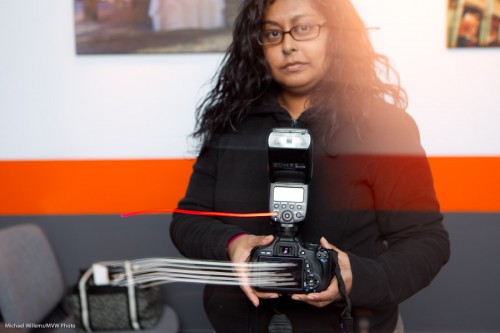
That gives you this, where the student at the School of Imaging class I taught last night is moving to our left in this slow shutter speed flash shot:

Odd. She is moving to our left? Then why is the trail off to the left? Simple – because the flash fired at the beginning of the long shutter speed.

Second curtain sync means:

  1. the flash fires a preflash to measure the scene
  2. the shutter opens
  3. wait…. the shutter stays open for its designated time
  4. the flash fires
  5. the shutter closes

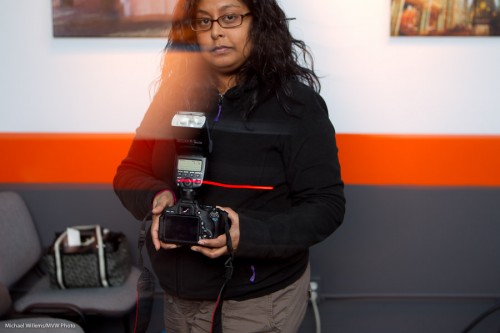
So now the flash fires at the end. That gives you this, a much more natural looking light trail:

So now you know what that does. And no – this does not in any way make the light softer, or the backgrounds better, or anything like that.


Canon 5D MkIII

The Canon 5D Mk 3 has been announced, and many of you are pre-ordering (just like I pre-ordered a 1Dx). Google it: the details are all over the web.

Yes, nice, and I note that in particular the focus system has received a major update.

But let me caution you, and point to an opportunity.

The 5D MkII is very good also – yes, older focus system, true, but since we usually just use one focus spot, and we seldom shoot at f/1.2, that is not an issue. The camera is not the picture – the lens determines the picture quality much more than the camera, and the photographer does so even more.

So instead of putting down $3,500 for a camera, how about instead buying a good used (or even new, discounted!) 5D MkII? These will be available in droves as everyone upgrades.

So unless you truly need the new camera, I advise it might be wise to save your money and use the difference to buy a fast “L”-lens, and some pro training. Better pictures will result.


Student asks:

A student asks:

My name is Pauline – I have taken a couple of courses with you. I have the Canon 5D and we had talked about a perchase I sould make of a 50mm lens — when I  talked with a salesperson, they said because the 5D is a full frame camera that I would need the 85mm so that I would not get distortion.  Due to the fact the an L series 85mm lens was more than the 50mm L – I  resisted the purchase. Can you please help me – I took the portrait course in Waterloo and the instructor said portraits are done with zoom lenses wich I know you can, but I had never heard that before – he didn’t recomend a 50mm at all.

Headshots are best done with a lens that is, say, 75mm long or more. As it happens, the 50mm lens works like a 80mm lens on crop bodies – not on yours. So the salesperson is right that for headshots, 85 would be great.

On yours, a 50 is a “nifty fifty” – a general purpose or, when used for portraits, half/body shot lens.

However! A 50mm lens is a very affordable fast lens – fast meaning large aperture (low f-number, 1.8 or 1.4), and that is a very great benefit. Get one and use it as a half- or full body shot lens or for general purpose you when you want to shoot in available light or want blurred backgrounds.

I have a full frame camera too and yet I also have a 50. I do not use it for headshots, but I use it for many many other things.

So yes – get one. No it will not be the only lens you own – no lens, alas, every will be! But it will be a lovely lens that will change your photography.

POST EDIT: “Portraits are done with zoom lenses”? I would not agree with that. Some are; some are not. Available light portraits in particular, see tomorrow’s post, are almost always taken with fast prime lenses.


Flash Note

When bouncing a flash, you may need more flash power than you have available. To ensure you have enough, do the follwoing:

  1. Use an ISO of at least 400. You may need higher ,especially if ceilings are high or non-reflective.
  2. Use an aperture of, say, f/5.6 or wider.
  3. Test your bounce environment by turning the flash to MANUAL mode at full power (1/1, or 100%). Fire. If the picture is overexposed, you have enough power; go back to TTL and start your shoot. If not, then raise ISO and open aperture, or move to a better environment.

Simple steps that can avoid a lot of pain – and TTL flash can do a good job, like here in Anastasia’s picture a few days ago:


What lens should I buy!

Boy, that’s a tough question. And I get it a lot.

Today, student Dave asks:

[POST EDIT – CORRECTION MADE TO THE QUESTION]

Michael – I have been researching lens for my D800. I currently own three FX lenses – 60mm 2.8 Macro (we used this for the portraits on my D90) , 105mm 2.8 macro, 70-200 2.8. My other lenses are DX – I will end up selling some of these. Is Kijiji the best?? I have a great 12-24 F4 G DX lens.

I am debating between (1) a mid-range zoom and (2) a good wide-angle zoom and a fast 50mm prime. I am thinking about going with (2) – getting the Nikon 16-35 F4 G with VR (gets great reviews) and a 50mm 1.4 G. The 24-70 2.8 would be about the same price in Nikon as the two other lenses. However, the Nikon lens does not have VR. Tokina has just announced a forthcoming 24-70 with their version of VR. It won’t be available for a while I think.

Also, some commentators say that mid-range zooms aren’t that useful – use your primes, and wide-angle and tele-zooms (and your legs if you need to!). However, I must admit I find I use my mid-range for my DX quite a bit.

So, a little confused. Advice?

So. First, like many pros I do like the mid-range zoom. In a shoot yesterday with talented Make-Up Artist (MUA) Anastasia, as so often I used my 24-70 f/2.8L lens.

It goes wide-ish like this:

And it goes longish like this:

So that makes it very versatile for “I’m not quite what I am expecting” shoots.

Both the Nikon and the third-party 24-70s are fine, and you do not really need VR/IS on a widish lens like that. On a long lens (the 70-200 range) it is essential but on wider lenses you can easily live without it.

So the idea of “the Nikon 16-35 F4 G with VR (gets great reviews) and a 50mm 1.4 G.” is a good one. My 16-35 f/2.8L lens is a lens I totally love, as is a fast 50.  So: my vote is for the wide lens and the fast 50, and keep your existing 24-70 lens.

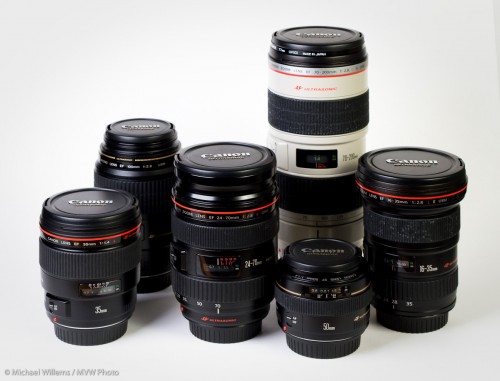
That said – these are personal choices, I love the wide lens for newspaper work, for travel, for landscapes. My six lenses, by the way, are:

  • 16-35 2.8 zoom
  • 24-70 2.8 zoom
  • 70-200 2.8 zoom
  • 100mm f/2.8 macro prime
  • 50mm f/1.2 prime
  • 35mm f/1.4 prime

All are EF lenses, meaning they fit on any Canon body (none are EF-S lenses, which are like Nikon’s DX lenses).

So if you shoot a lot of things that need wide, I strongly recommend it – a wide wide lens (10-20 for crop bodies; 16-35 for full frame sensor bodies) is my strong recommendation for everyone. IS/VR is not that important until you get beyond 70mm.

But whatever you choose will be right – just tune your shots to the lens you have at hand (eg do not do headshots with a 16-35mm lens).  And remember to shoot prime whenever you can: quality, consistency and speed will thank you.

Does that help?
 

Tilt-Shift

You may have heard of “tilt-shift-lenses”. These are lenses that.. well, tilt and shift. You can tilt the lens to the right or left (or up and down), and you can shift the entire lens up or down (or left and right).

Today, I am using the Canon TS-E 45mm f/2.8, a lens I borrowed from my friend Kristof, a very talented photographer. You can see that lens reviewed here, on The Digital Photographer: I shall not bother to add to that.

What I will briefly explain is this. A tilt-shift lens is not just used to bring converging verticals back to vertical. Yes, that too: but as many people point out, you can do that in Lightroom or Photoshop too. Same, I suppose, with the crazy weird “dollhouse” focus effects a Tilt-Shift lens can give you.

What you can not do in Lightroom or Photoshop is this: focus in a plane that is not perpendicular to your camera.

I mean this. Let’s look at a picture of some of the spices and condiments I use when cooking:

They are lined up front to back… the back is farther away from me. So at f/2.8, the back is way out of focus (click to see large: you will see by how much). Even at very small apertures like f/11 or worse, I would still see this effect (because I am so close); plus, I would lose the blurred background I want.

So here is where Tilt-Shift comes to the rescue! When I tilt the lens to the left (so it is more perpendicular to the desired plane of focus), I can shoot with everything sharp. In this case, a shift to the left of just 2.5 degrees did it:

Problem solved – all sharp where I want it to be, even at f/2.8.

So why not use Tilt-Shift lenses all the time? Well, for one, they are expensive (partly because the larger image circle needed means more glass). Also, they are manual focus lenses: no autofocus. And you need to take the time to get the effects right, and to focus accurately. You will want to use a tripod, and you will want to take your time.

But for many shots there is no substitute – like portraits where you want both eyes sharp, but the background blurry; architecture; and many types of studio product shot – even the shifting comes in handy there since you can shoot up or down without converging/diverging verticals.
 

Why lenses cost money

Why do expensive lenses cost so much? I was asked this several times in today’s courses.

It’s simple. Expensive lenses are worth it – because they:

  • Have better quality, clearer optical glass, for better resolving power and sharpness and less aberration.
  • Were designed better, with elements added for less distortion.
  • Are mechanically better. For instance, cheaper zoom lenses will drop when you lower them; costlier lenses do not display this annoying behaviour. And mounts are metal, materials are better.
  • Have more features, like IS/VR.
  • Above all, are faster – i.e. they have lower “F-numbers”, meaning more of that optical glass.

That’s why it is worth buying better lenses. Better lenses are always worth it since they, unlike the camera, always contribute to the quality of your photo.

A consumer lens is a 3.5-5.6 zoom, while a pro lens is an f/2.8 zoom or a prime that goes down as low as f/1.2, or more usually f/1.4. Today’s advice: it’s very much worth investing in these!

Michael's lenses

Michael's lenses

Not all at once – add a few primes, a fast telephoto zoom, and a wide, in any order you like. The lens is more important than the camera!


The end of the DSLR?

Fellow blogger Trey Ratcliff has stirred up a hornet’s nest by saying (and I paraphrase) that “the end of the DSLR is coming.. compact cameras are the future“.

A controversy – yummy! So to guide my readers though it, I thought I would add my view on that today.

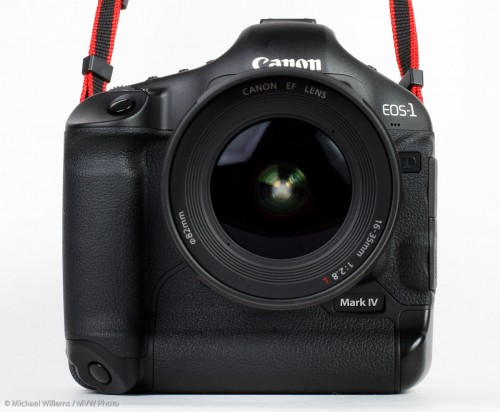
Yes, a DSLR is big. Like my 1D Mk4:


Weighs a ton. It is also heavy, expensive, and noisy (remember the classic concert I recently shot part with the  silent Fuji X100)? So those are drawbacks. They are expensive, another drawback. And above all, a DSLR has a flipping mirror – a mechanism dating back to the 1930s, that seems rather primitive today.

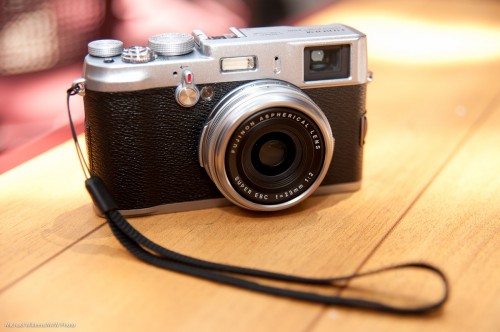
So it stands to reason that the flipping mirror mechanism will eventually be replaced by something new.  And there are great compact mirrorless cameras like my X100. And these new cameras are light, small, and have big sensors, meaning SLR-like quality.  That far, I go along with Trey. Here’s my Fuji X100:

Fuji X100 (Photo: Michael Willems)

But I go along with Trey only that far, and not an inch farther.

First of all – let’s parse what people mean when they say “DSLR”. They often just mean “complicated big heavy cameras”.

Well, these are definitely not about to go away. For many reasons.

  • Big is often better! A bit of bulk adds stability. It adds space for multiple memory cards, big screens, big battery, heavy camera-mounted speedlites, big lenses, and many buttons.
  • Bulk also adds credibility: at a wedding, people who do not know photography think “bigger is better”, and since I charge commercial prices, a shorthand way to indicate why I am worth those prices is good. If I shoot with a Rebel, let alone a compact, people might think I am Uncle Fred.
  • The ability to write to two memory cards at once is paramount for any pro shoot I do. I cannot afford to lose images during a shoot, ever: that’s why people pay me.
  • “Lots of buttons” is sometimes seen as a drawback – but it is of course the opposite. I have all my common controls available under a simple button.  On these new “compact cameras”, you need to use the camera’s menus, on-screen controls, or other inconvenient and slow ways to access the same control. Not good enough for pro shoots!

So big heavy cameras are here to stay. That takes a lot of wind out of the sails of those who say the DSLR is dead.

Whether large or small, SLRs have advantages:

  • No, or very little, power is taken by the viewfinder.
  • The focus system on an SLR, with its built-in dedicated focus sensors, still outperforms a mirrorless camera.
  • An SLR gives you the ability to use an amazing range of lenses.  These will not likely be available soon for small compact cameras (and even if they are, imagine putting a 70-200 f/2.8 lens on a tiny camera).

But is the flipping mirror mechanism dead? There, I can go along – it will no doubt eventually disappear. The clear trend in technology is for moving parts to be replaced by electronics and other non-moving solutions, so this needs no Einstein.

So I suppose my view on this is the following:

  1. The mirror will eventually go away, but is not yet dead. It is still overall the best way to do it. After all, mirrorless camera have drawbacks too – like their constant use of power, the lack of dedicated focus sensors, the need to keep the sensor powered up, and the ease of letting dust in. Translucent mirror cameras share some of these drawbacks as well. I think we are looking at 5 years or more until we see a real shift away from flipping mirror cameras.
  2. Large (if you will, “professional”) cameras will definitely not go away.

There you have it. Feel confident buying a DLSR for now; only buy a compact camera if its advantages outweigh its drawbacks.


On/off?

Quick note about turning your camera on and off.

Don’t, not all the itme. Just let it time out and go to sleep.. It uses almost no power that way. And you don’t wear out the switch. Touch the shutter briefly to eke up th camera when you need it.

But note: the camera will briefly turn on when you hit the shutter and some other switches.

And – and this took me time to figure out – when you move many lenses. The lens, when jarred, can talk to the camera, which will wake up!

Finally: it’s good practice to turn off and on when switching lenses. If only because the dust shaker will operate just when dust is likely to get in.