For those of you in the Greater Toronto Area: you have seen my cameratraining.ca schedule, and here, as promised, is my Nov/Dec teaching schedule at the Henrys School of Imaging. This is a link to a PDF file:

MICHAEL WILLEMS TEACHING SCHEDULE-NOV & DEC

This is of course subject to change, but those of you who want to take a course with me, here’s the schedule as it stands now. Go to http://www.schoolofimaging.ca to book any of these courses.

Take some training before the holiday season, not after, when you miss the opportunity to shoot those family get-togethers and those walks in the snow.

And… see you there.
Teaching News

As you probably all know, I am an educator. I teach a variety of photography subjects in various locations and in various ways.

Learning from a live person is a great way to quickly gain essential photographic skills, so I thought perhaps I should update you as to where you can see me.

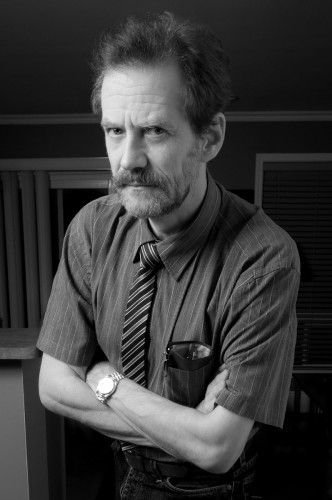
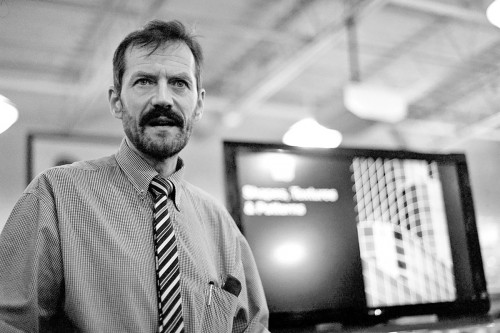
Michael Willems Looking Very Serious - Photo, Albert Wong (using film!)

S0 – here are the ten ways you can learn from me:

    1. Via this blog. Of course a blog is only an aide to real, in person teaching, but it is a very valuable resource. Search, look at specific categories, check out keywords, and so on. Read back to over a year ago, when I started posting daily.
    2. Via the Henry’s School of Imaging, Canada’s premier photo school. I teach many subjects there, including my course on Travel Photography and my Outdoor Flash workshop as well as my outdoor Creative Urban Photography workshop. I plan to post my November/December School of Imaging schedule here later today.
    3. Via my courses in Mono, Ontario – like the Creative Lighting all-day course I teach tomorrow with Joseph Marranca.
    4. By way of Personal coaching and custom one-on one or group courses. Contact me if you are interested (“contact” above).
    5. Worldwide, via special courses and tours, such as the courses I recently taught in Phoenix and Las Vegas. If you are interested in having me come to your town, shout (same “contact” button above).
    6. Via local special events – such as the upcoming half-day course with special guest David Honl (yes, the David Honl) on 19 March 2011 – book this day off in your calendar, it’ll be a great event with limited seating.
    7. Via speaking engagements to photo clubs – again, contact me if your club has not had me speak yet, or if you would like a repeat.
    8. Via custom corporate speaking engagements: if our company has people who want to learn photography, go for it!
    9. And finally, via custom 8- or 12-week courses for your organization.
    10. As a speaker at photography shows, like the Digital Imaging Show that is held twice a year beside Toronto Airport.

      I hope that clarifies, and above all, I hope to see you at one of these events soon. There is, as said, no substitute to personal training. Blogs are good, books are great, but personal interaction is much better. Think about it – otherwise we would just ship our kids and students a bunch of books and URLs at the start of each year. It just doesn’t work that way!

      Colour

      Sunday, I spent the afternoon walking through Oakville with ten students for a Creative Urban Photography walk.

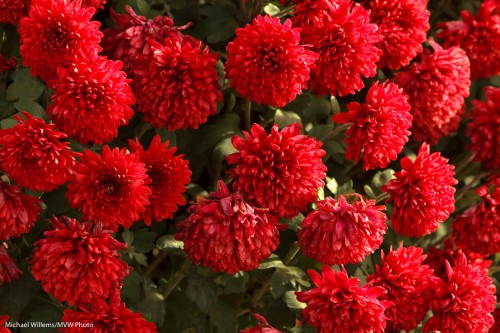
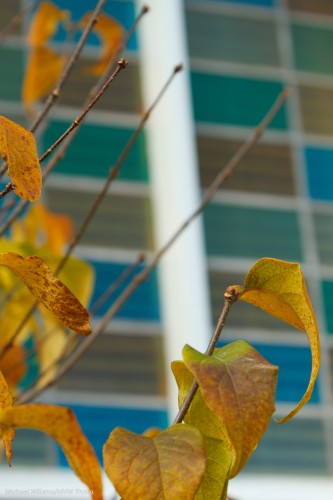
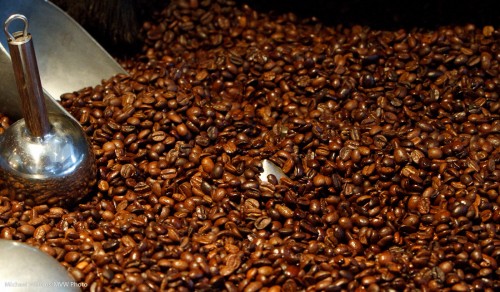
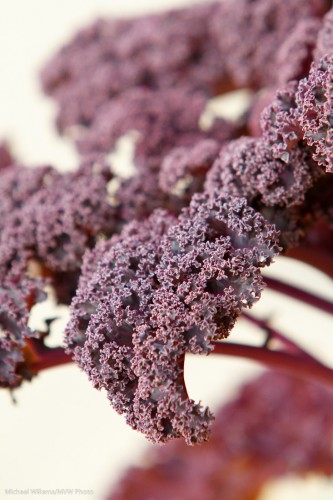
      A few pictures here. I thought I would concentrate on colour. And even on a very cold fall afternoon, there is colour.

      Like contrasting colour, in this case red and green:

      Red-Green

      Or harmonious pastel colour:

      Colours

      Colours

      Or subtle single colour:

      Coffee Beans

      Coffee Beans

      Or simple single colours:

      Plant

      Plant

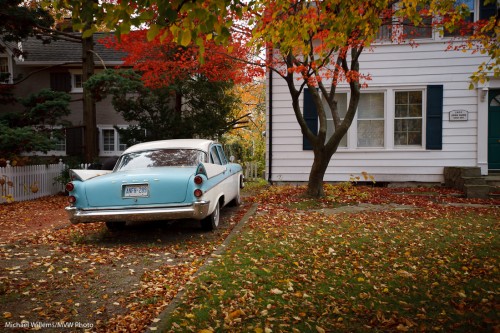
      Or beautiful fall colours:

      Fall colours

      Fall colours

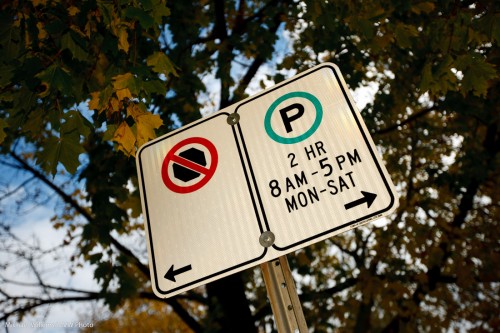
      Or colour warmed up by a gel on the flash:

      Sign

      Sign

      So if a cold afternoon can show colours like this, so can anything else. As long as you spot the colours.

      Your assignment, therefore, if you wish: Spend an afternoon shooting in the environment of your choice, looking only for colours.

      And remember to:

      1. Set the correct white balance
      2. Expose well (do not overexpose; use your histogram or a Hoodman Hood Loupe)

      Enjoy your outing!

      Speed lit

      Since this blog is called “speedlighter”, and I kind of specialize in lighting, I thought I might do a quick post on quick lighting.

      Today, I had a student shoot me, and her dog, using one studio light (a 400 Ws Bowens light). To do this you need to do the following:

      1. Set up a light on a stand;
      2. Add an umbrella;
      3. Shoot near a wall which acts as the reflector (that is why one light is enough!);
      4. Connect the light to the camera using, for example, a cable;
      5. A light meter to measure light and hence to help you set the flash’s power;
      6. Set your camera to f/8, 1/125th second, 100 or 200 ISO;
      7. Now meter to that (i.e. adjust the light until the meter read f/8).

      The first test shot should be without flash, and should be black.

      Then, connect the flash cable and shoot:

      Michael Willems

      Michael Willems

      And then, after that test shot, the object of tonight’s shoot, which was not me, alas:

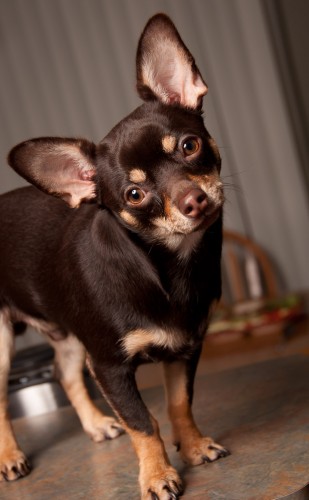
      Duke Dog

      Duke Dog

      Cute, eh?

      Note the simple composition, blurred background, the excellent composition and tilt (see Friday’s post), and note the catchlight from the umbrella in Duke’s eyes. (If we had shot through an umbrella, the catchlight would be even more simple, round).

      Confusion reigns…

      …but I am here to help you sort it out.

      I hear a lot of beginning (and some advanced) students who confuse white balance with exposure.

      This confusion is not surprising, since both have something to do with “this picture of a white wall, say, is not white enough”, and they both occur together very often.

      So here’s the summary:

      • White balance is about the colour (it ought to perhaps be called “colour balance”).
      • Exposure is about the brightness.

      So ask yourself what you mean when you say “that white surface is not white enough”!

      • If it looks too yellow, say, then it is white balance you need to adjust (the WB setting on your camera).
      • If it looks too dark, it is exposure (the +/- setting, “exposure compensation”).

      And of course since they occur together,you may well have to do both. Get the colour right first, then the exposure.

      Confusion lessened?

      Flash method

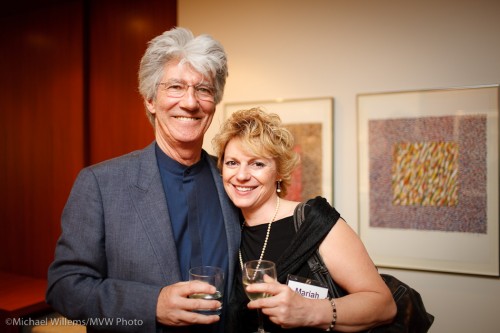
      Let me reiterate a simple flash method for camera-aware (i.e. “grip-and-grin”) people pictures at events (like receptions, parties, etc).

      1. Set your camera to “manual”.
      2. Attach your flash.
      3. Bounce your flash off the ceiling or wall just behind you if you can. If you cannot do this, use a reflector (like a Honl reflector) or worst case a Fong sphere. Think about where you bounce in terms of returned light direction.
      4. Use a wider angle lens (say 35mm). I love my 35mm prime on the 1Ds for this type of photo.
      5. Start at these settings: 400 ISO, 1/30th second, f/4
      6. With those settings, aim at an average part of the room (not dark, not light). Watch your light meter. It should read roughly -2 stops. If it reads more, like zero stops, go to a faster speed. If it reads less, go to a wider aperture (and if you cannot then a higher ISO or even a slow speed).

      The result will be good.

      Grip and grin

      Grip and grin

      Note that you may, in dark environments, have to go to slow speed and wide open aperture even at high ISO.Watch the light meter and aim for -2 stops ambient light when aimed at an average room area. In a dark night club I may occasionally be shooting at f/1.4, 1/15th second, 1600 ISO!

      I was having a coffee…

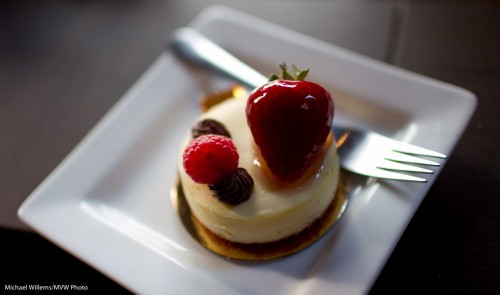
      …when I decided a cheesecake would be good. So I bought a piece.  And shot it.

      Cheesecake (Photo: Michael Willems)

      Cheesecake

      35 mm lens, f/1.4, 1/60th second at 100 ISO. You see what those nice fast lenses can do? I cropped a tiny bit of light from the top – no other adjustments.

      The moral of this post:

      • Be ready to shoot your food.
      • Fast prime lenses are good: available light works.
      • You do not always need flash.
      • Low ISO is good.
      • Wide open is good: selective focus is great.
      • A wide angle lens can be used to shoot a macro food shot!

      Exhaustion prevents me from working more tonight – but more soon.

      Portraits at the show

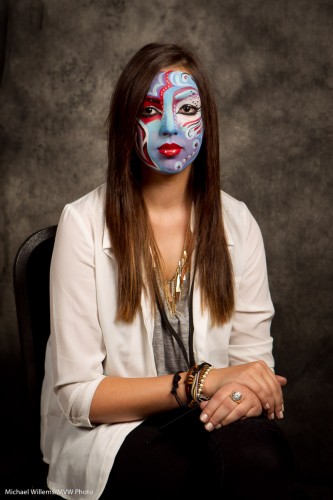
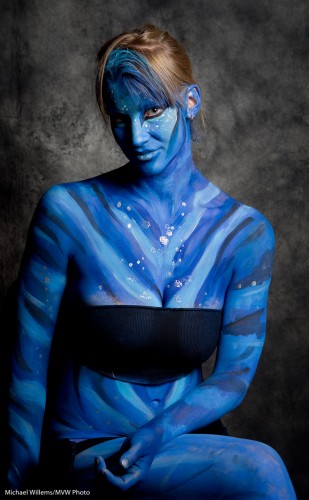
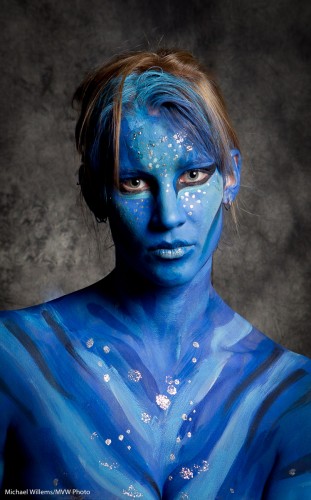
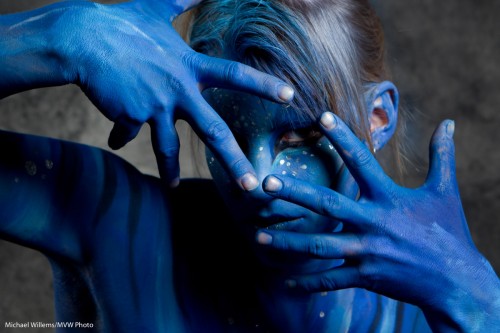
      I shot a few portraits at the Imaging Show yesterday. Simple portraits with just two lights.

      Like this:

      Bodypaint Model at the Imaging Show

      Bodypaint Model at the Imaging Show

      You can do that too. All you need is:

      1. a few lights (in this case two umbrella-fired Bowens 500 Ws strobes),
      2. a light meter,
      3. a cable or pocketwizard,
      4. and a camera.

      I used the 24-70 lens but would have preferred my 70-200mm lens.

      Bodypaint Model at the Imaging Show

      Bodypaint Model at the Imaging Show

      As you can see there, it is all about what you do NOT light. That was lit with just one light through an umbrella, with no reflectors.

      Another:

      Bodypaint Model at the Imaging Show

      Bodypaint Model at the Imaging Show

      And one more, showing the importance of body language:

      Bodypaint Model at the Imaging Show

      Bodypaint Model at the Imaging Show

      Other settings:

      • The camera was of course on manual, at f/5.6 at 1/125th second and 100 ISO.
      • Make sure Auto ISO is disabled.
      • Make sure you get catch lights in the eyes.
      • Move the model away from the backdrop if you can.

      Portraiture is fun, and simple portraits like this are in everyone’s reach. Even if perhaps the “Avatar meets Cirque Du Soleil”-models are not (thanks Melony for that apt description).

      Night.

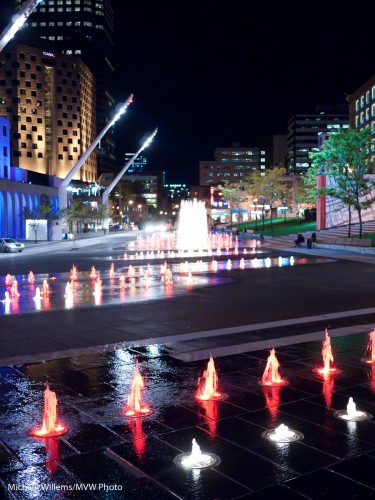
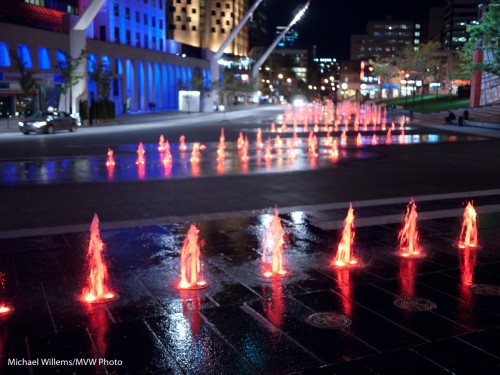
      In Montréal. Last night!

      Montreal, 9 Oct 2010

      Montreal, 8 Oct 2010

      Taken at 800 ISO, 1/30th sec, f/1.7.

      Because of the fast (f/1.7) 20mm lens on the Lunix camera I was able to shoot at 800 ISO. Had I had a regular point and shoot, I would have had to shoot at a higher ISO speed, much higher.

      Here’s another one:

      Montreal at night, 8 Oct 2010

      Montreal at night, 8 Oct 2010

      So the tips for today are:

      • Use a tripod if possible.
      • If not, then open your aperture as wide as you can.
      • And go to a wide angle if you can.
      • Use exposure compensation if needed, usually -1 to -2 stop. Ensure the black sky is black.
      • Go to a high enough ISO so you get a reasonable shutter speed.
      • Hold still.
      • Shoot multiple times.
      • Select the best shots!

      And above all: bring the camera. And have fun.

      Gearing up…

      …for the Henrys Digital Imaging show! It will be held 15-17 October at the International Centre right by Toronto’s Pearson airport.

      See the show web site (scroll down and you’ll see my name). I shall be presenting short versions of workshops throughout all three days.

      This show is great: just about the entire imaging industry turns up and you get to hear interesting speakers, see new releases, try out all the cameras and lenses you might be interested in, and I am sure there will be deals also. Also – there are so many experts that any question can be answered.

      If you are interested in photography, this is a must-see. Worth spending an entire day: I hope to see those of you who can get there, there. Come say hello!