A shot from the course

At the Mono “Creative Light” workshop,  we do different portfolio shots every time.

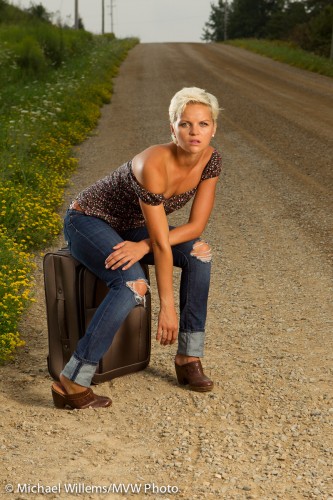
So imagine our delighted on Sunday when a student turned up in a Hummer. This was immediately put to use by model Tara:
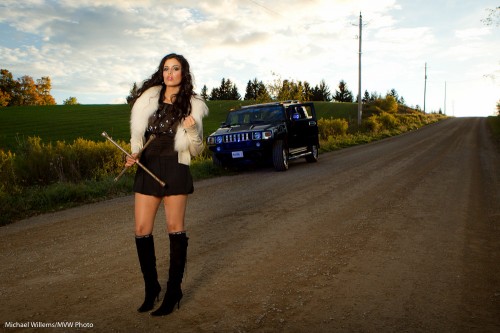
Tara Elizabeth and Hummer

Tara Elizabeth and Hummer

That was lit how?

This is how: with a softbox, to our left. And a small speedlight to our left aimed straight at the car – with a blue Honl gel. Both were fired using pocketwizards (the speedlite using a Flashzebra cable). Metered using a light meter, of course.

Here is an alternate take:
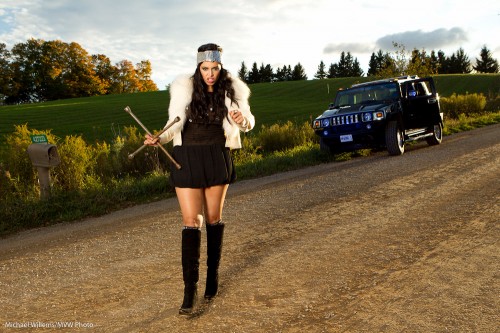
Angry Tara Elizabeth, with Hummer

Angry Tara, with Hummer

That was taken just a few minutes before. Can you see how every minute counts when shooting in beautiful late day light?

Okay, one more. Just to show that lens flare – which should normally be avoided – can sometimes be OK:
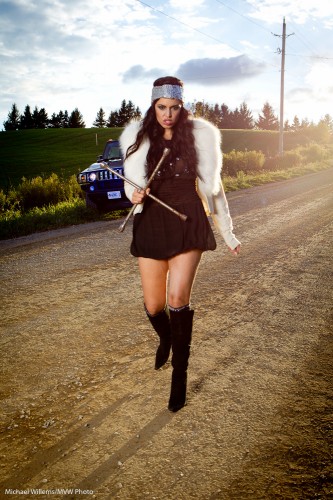
Angry with tire iron

Angry with tire iron

You avoid flare by:

  • Using a lens hood
  • Shielding the lens with your hand
  • Avoiding lens filters
  • Pointing slightly away from the light source

Have fun!
Yum

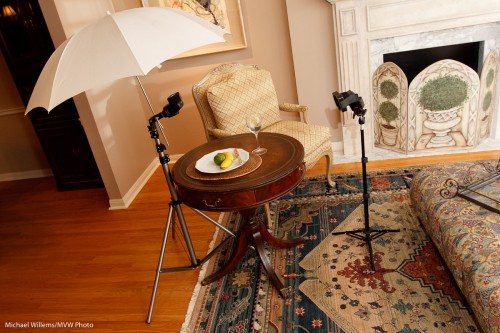
Today, I have a quick starting point for food photography for you.

Food Photography

Food Photography

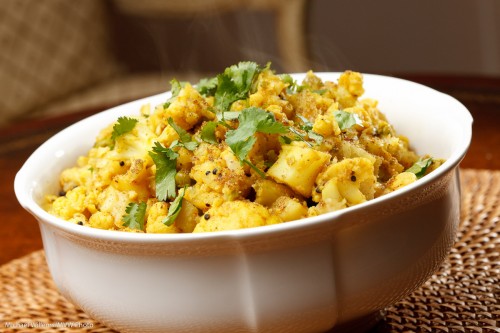
  • Lighting: small speedlights are good.
  • Use one umbrella on top, and one gridded light from behind to add accent (and to light the steam. If there is steam, try to use a dark background)
  • You may want to shoot from a low angle.
  • Blur out backgrounds.
  • These backgrounds can contain a cup or glass, cutlery, etc.
  • Prepare the food: If you have no food stylist, you are it. Every detail counts. Make it look great. Add some “green stuff”. Use a brush with oil to make surfaces shiny and yummy.

And do not forget to eat the food, afterward.

Indian Food Photography

Indian Food Photography

(Although you would be surprised how many food shoots use fake food. Ouch!)

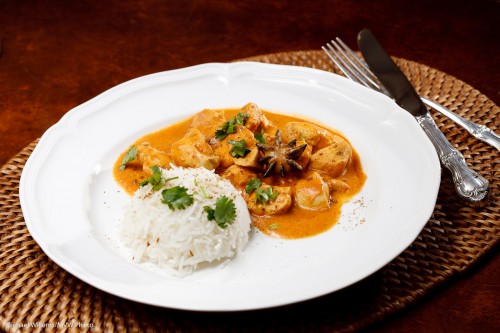
One more, for good measure (I shot these for West of the City magazine early this year).

Indian Food Photography

Indian Food Photography

Gearing up…

….to another Creative Lighting workshop tomorrow in Mono, an hour north of Toronto.

Joseph and I are coming up with the shots as we speak. Professional model, make-up artist, lunch, equipment, teachers: check. Couple of spots left, check. Fun will be had: check.

http://www.cameratraining.ca/Mono-Day-2.html

A shot from last time, to whet your appetite, should it need whetting:

Model Lyndsay Biernat in Mono

Model Lyndsay Biernat in Mono

Of course the emphasis is on creative light. Check back soon to see how we used creative light this time.

Dragging the shutter

A quick note for you today (and this is the kind of thing my students learn at length in my advanced courses, like the one tomorrow in Mono – there’s still some space).

Every had your camera react unpredictably when using flash? Yeah, I thought so. You flash and then the shutter stays open for a second and it’s all a blur. Or you flash and the background is dark black.

Why?

When you shoot indoors, say, and use your flash, your camera behaves differently in different modes – and this behaviour varies per camera.

Aperture mode (A/Av):

  • Canon: the shutter will be as slow as needed to expose the background too (caution: this may lead to very long shutter speeds if ambient light is low).
  • Nikon: the shutter is restricted to 1/60th of a second or faster (this can be set).  But… if you also engage “SLOW” mode, the shutter will be as slow as needed to expose the background too (caution: this may lead to very long shutter speeds if ambient light is low).

Program mode (P):

  • Canon: the shutter is restricted to 1/60th of a second or faster.
  • Nikon: the shutter is restricted to 1/60th of a second or faster (this can be set).  But… if you also engage “SLOW” mode, the shutter will be as slow as needed to expose the background too (caution: this may lead to very long shutter speeds if ambient light is low). .

So

  • Canon is simple: Av = long shutter speeds, P = 1/60th or faster.
  • On Nikon cameras, both modes are restricted to 1/60 or faster normally, but either mode can be freed from this by using the “SLOW” setting.

So what is the best mode when using flash indoors?

Ah, that would be Manual. That way the camera does exactly what you want. But we will get to this again another day.

TIP: if you want to try Manual indoors flash, start at 400 ISO, 1/30th second, f/4. And bounce your flash off the ceiling/wall behind you.

Autumn tip

A quick tip for those of you who, like me, are in the part of the world where autumn is coming.

If you want beautiful fall colours, you need to keep two things in mind:

  1. Brightness. Expose properly, and when vegetation is concerned that means expose less than your meter wants. Foliage is dark and you need to tell your camera that. So use exposure compensation as needed – minus 1 stop is not uncommon.
  2. Colour. Be sure to set your camera to the correct white balance. This usually means “daylight” or “cloudy”: the default “auto” (AWB) setting may get rid of the beautiful radiant colours.

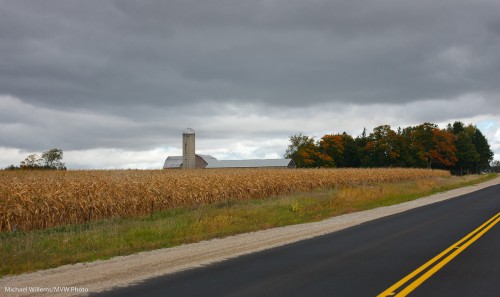
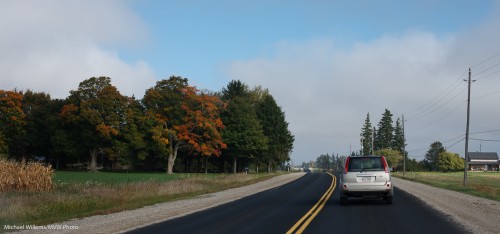
And the colours are starting. Here, a couple of shots I shot while on my way to Drumbo this past weekend, to shoot the Drumbo Country Fair. Those colours are on their way:

Fall is coming: Drumbo, Ontario, Sep 2010

Fall is coming: Drumbo, Ontario, Sep 2010

Of course I could not possibly have been shooting this handheld while driving: that would not be allowed in Ontario. Right?

Fall is coming: Drumbo, Ontario, Sep 2010

Fall is coming: Drumbo, Ontario, Sep 2010

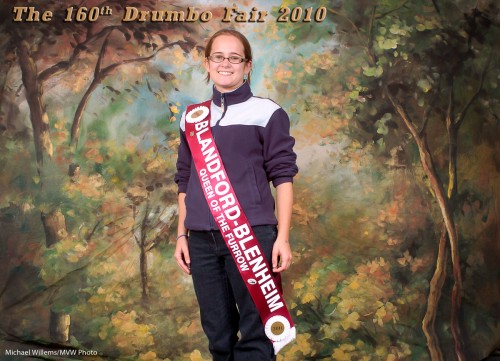
And here’s a snap from what I was shooting:

Drumbo, Queen of the Furrow

Drumbo, Queen of the Furrow

One more tip: for best fall colours, either shoot late in the day (the “golden hour”), or early in the morning (if you can get up, early morning light is just as beautiful, plus there is little wind). And know where the sun is!

But.. but… it’s complicated!

Well, sometimes things need work.

I often have students who ask “do I really need two lenses?”, “do I really need a reflector”, “do I really need a tripod”? “Must I really use manual”, … and so on.

The other day I attended a very entertaining shoot with Ivan Otis, and this shoot was a typical example of “how it’s done”.

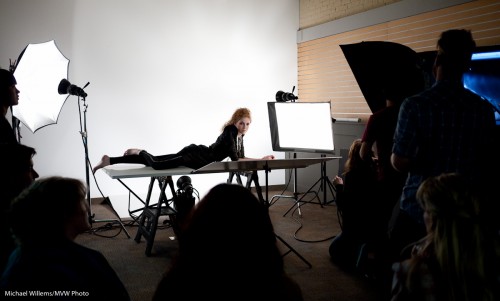
Even a simple fashion shoot like this involves cameras, light stands, reflectors, computers, umbrellas, light meters, batteries, cables, softboxes, pocketwizards, props, two assistants, a make-up artist (“MUA”), a hairdresser, lunch, and of course a model and a photographer.

A Fashion Shoot

A Fashion Shoot

A more involved fashion shoot would also have fashion advisors, a creative director, and more.

So the answer to “do I really need all this” is “it depends, but you cannot always do everything with one handheld camera, a 50mm lens, and a pop-up flash”.

The complexity in a shoot like the one above is not done just to make things complicated! As I always say, the Sports Illustrated swimsuit-issue model cavorting happily on the beach looks good only because there is a guy with a big reflector cavorting along right behind her.

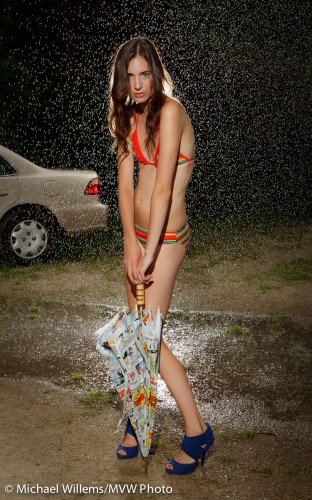
That said: you do not need to over-complicate things. Simple means can often achieve great results. Like this, taken at a recent Mono workshop Joseph Marranca and I taught:

Evanna Mills in the rain

Evanna Mills in the rain

That used just three bare speedlights and a handheld camera.

(On that note: our next “advanced lighting” all-day workshops in Mono, Ontario, will be held on 3 October and 20 November, and as of the time of writing, there is still space).

Portrait lenses

“What do you use for a portrait lens”, is a common question.

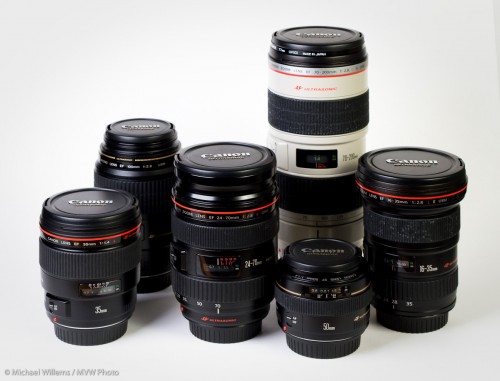
Michael's lenses

Michael's lenses

OK. So my favourites include:

  • 50mm f/1.4 for half-body shots (1Ds) and headshots (1D). Especially for avaialable open light portraits.
  • 70-200 f/2.8 for flattering headshots, in big studios.  A favourite… man, that lens is sharp.
  • 24-70 f/2.8 for fashion, etc: great for generic portrait shots.
  • 100 f/2.8 Macro for headshots: did you know, macro lenses are also great portraits lenses?
  • 16-35 f/2.8 for party shots. Wide allows me to inlcude dramatic views of room, food, etc.
  • 35mm f/1.4 for “dark party” shots, and environmental portraits.

Huh? All your lenses, Michael?

Yes. And I hope that helps show that there is not one answer to this question.

The “50-100mm” standard answer is an oversimplification. There is not “one portrait”, and nor is there “one portrait lens”.

A shoot

…from beginnning to end product is a lot of work. And seeing how others do it is very interesting. Tomorrow, I am attending an all-day session with Ivan Otis at Henry’s in Toronto. (Where I teach, as it happens… so I just happen to know there is may still be one or two available spaces: sign up before it starts at 10AM tomorrow and get to Queen and Church St, Henrys: link here).

ISO rule of thumb

I am often asked about ISO. So here is a “rule of thumb” post on that subject.

Michael’s standard starting points:

  • Outdoors: 200 ISO
  • Indoors (even when using flash): 400 ISO
  • “Difficult Light” (eg museums, dark halls): 800 ISO

Michael’s exceptions:

  • Using a tripod: 100 ISO (as long as nothing moves)
  • Hockey, etc: 1600 ISO

In each case, go lower if you can, and go as high as you need to, when you need to.

Vomit, or silk?

So when I shoot a flow, like a rapidly moving car, or a gently flowing river, or a famously gushing fountain (uh oh, I am beginning to sound like Dan Brown), should I “freeze” that motion? Or should I somehow show it?

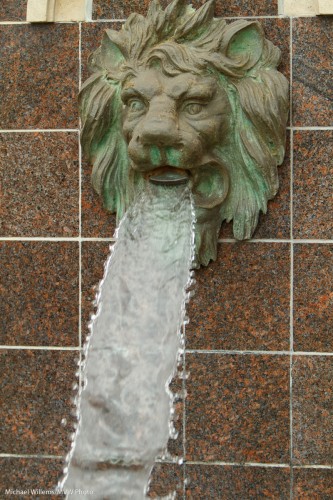
This is a shot from the other day’s Creative Urban Photography walk, shot as an instant, a moment in time (using S/Tv mode, shot at 1/500th second):

Fountain, moment in time (Photo Michael Willems)

Fountain, moment in time

Uh oh. Matter of taste – but to me, that looks like vomit. Or perhaps a chainsaw.

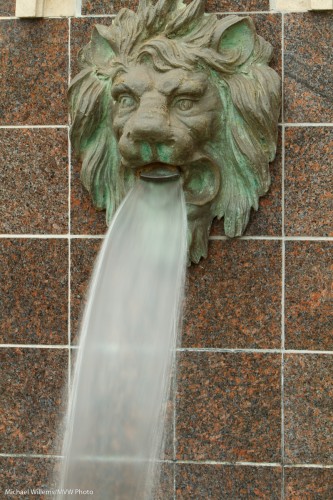
And here’s the same, now using S/Tv mode at 1/10th second, so it shows a  stream:

Fountain, as a flow (Photo Michael Willems)

Fountain, as a flow

Ahhh…. a beautiful silky flow.

So now you tell me. Matter of taste, yes. So according to your taste, should a flow be portrayed as a moment, or as a flow?