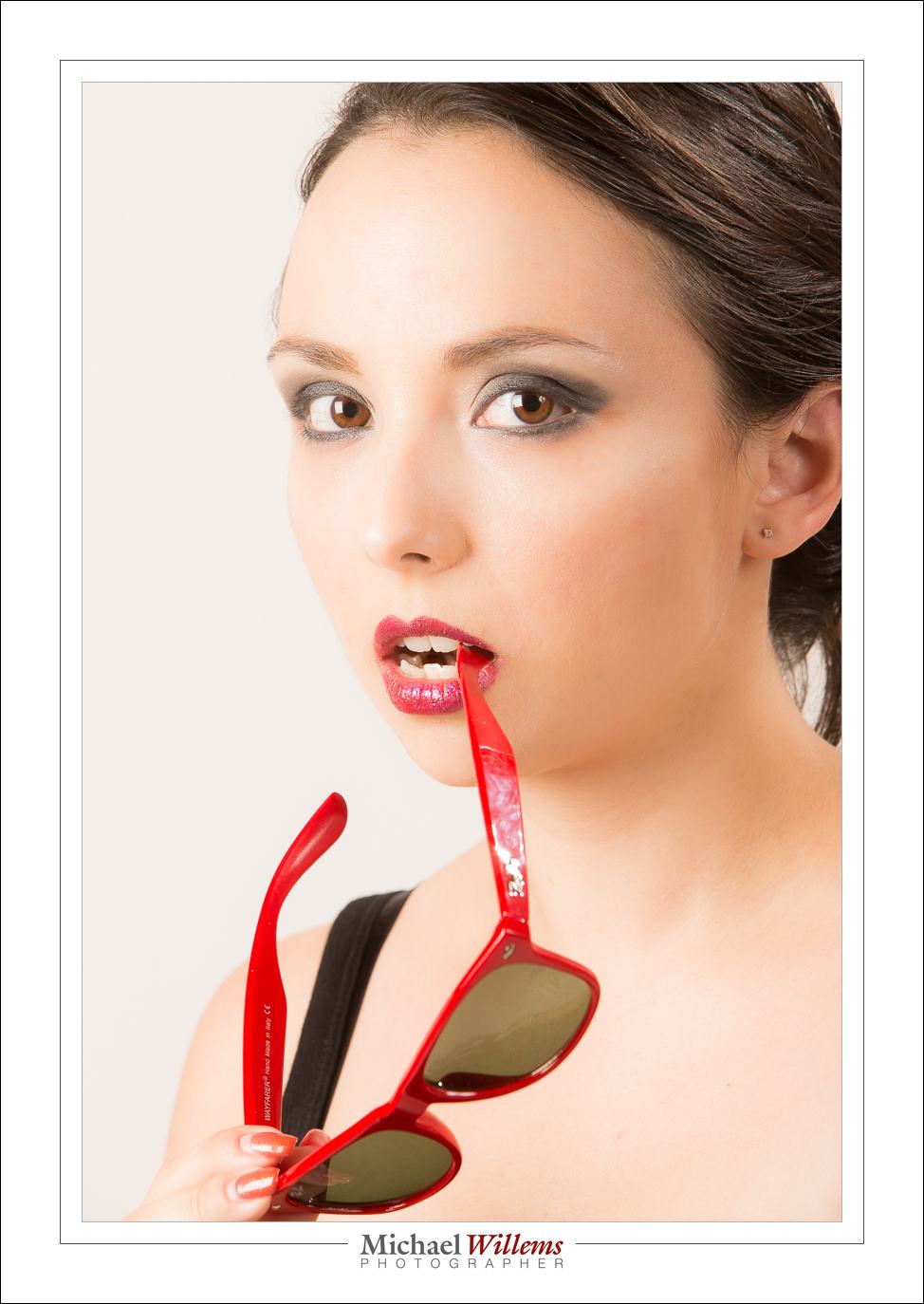
Typical shoot, untypical subject

Last night I photographed an event featuring funny-man, atheist, magician author Penn Jillette. And let me tell you, having talked with him and listened to him at some length, he is as intelligent as he appears, and then some. He was also a friend of the late and great Christopher Hitchens (a fact I was aware of) and a very good friend of the late and great Lou Reed (which I did not know). I think I am the only person alive who remembers Mr Jillette when he used to write a column for PC/Computing Magazine in the late 1980s: I used to read that mag for that last page.

The first part of the event was in a hotel. Here, balancing (a) ambient, (b) outside light coming through the window, and (c) my bounced flash was the challenge.

For these, 1/40th sec, f/4, 800 ISO was required.

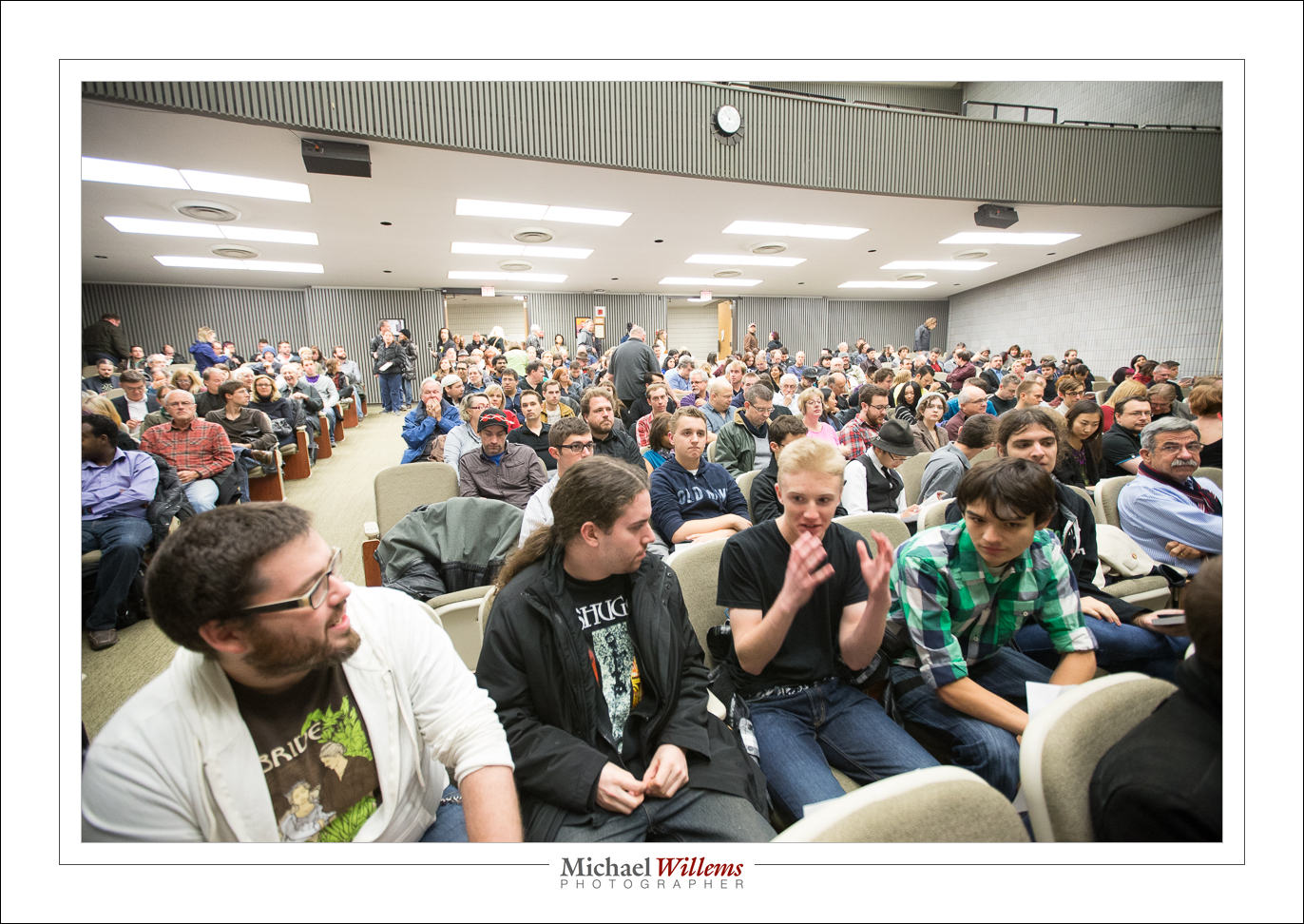
Then, the event in a University of Toronto theatre. Unfortunately, the stage lights were not available (it was Saturday, and of course staff deserved their weekend off), so it was general (and hence ugly), dim, fluorescent lighting.

Here, of course, flash is out of the question, so I shot at 1/100, f/2.8, 5000 ISO.

The event was, of course, sold out:
Careful white balancing leads to good light even under those circumstances, but I restricted myself to using the 1Dx. I do not like to use the 7D over 1600 ISO.
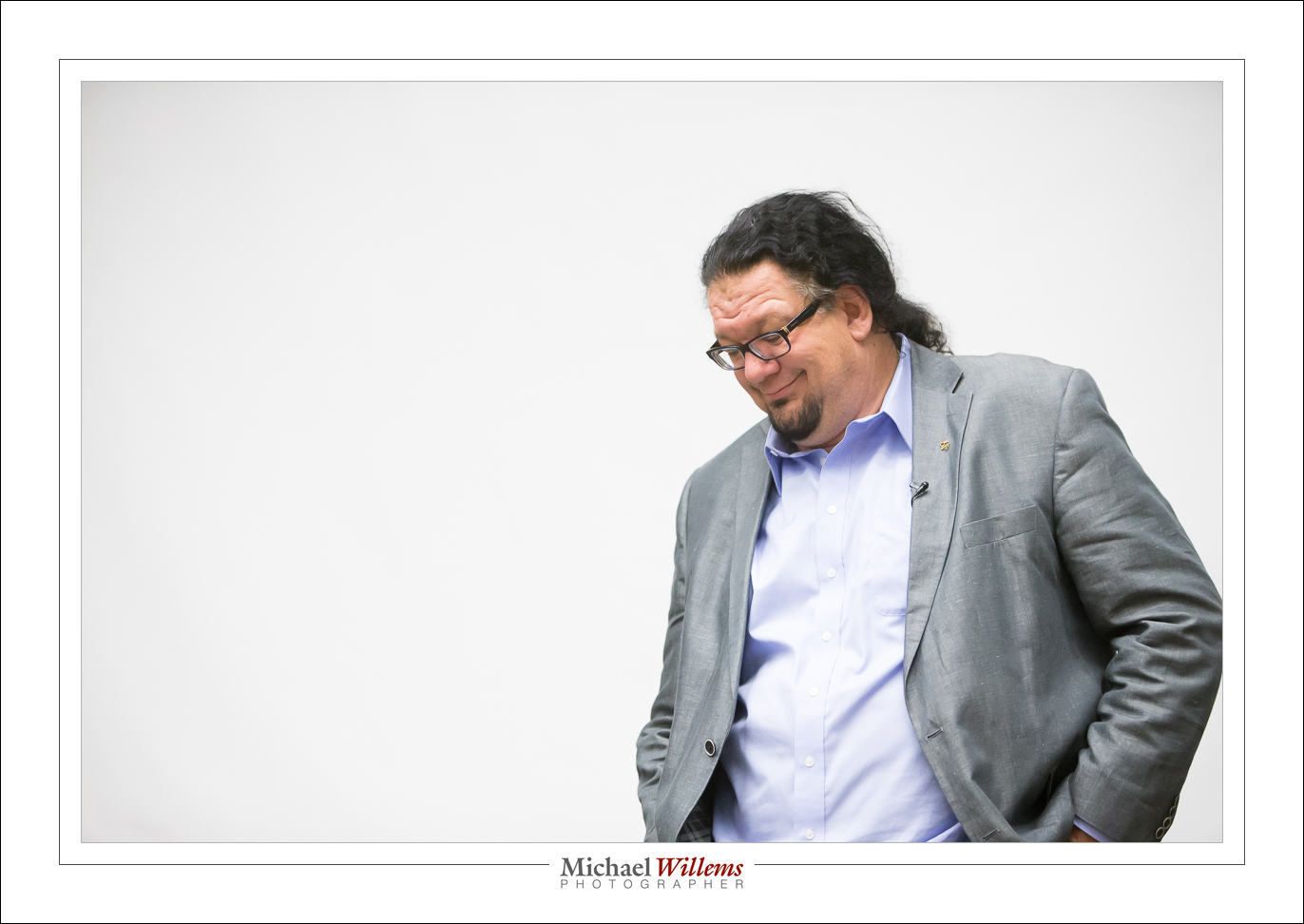
Now it’s all about expression, moment, composition.  I like Negative Space, and the screen behind him gives me plenty of that if I use the 70-200mm lens:
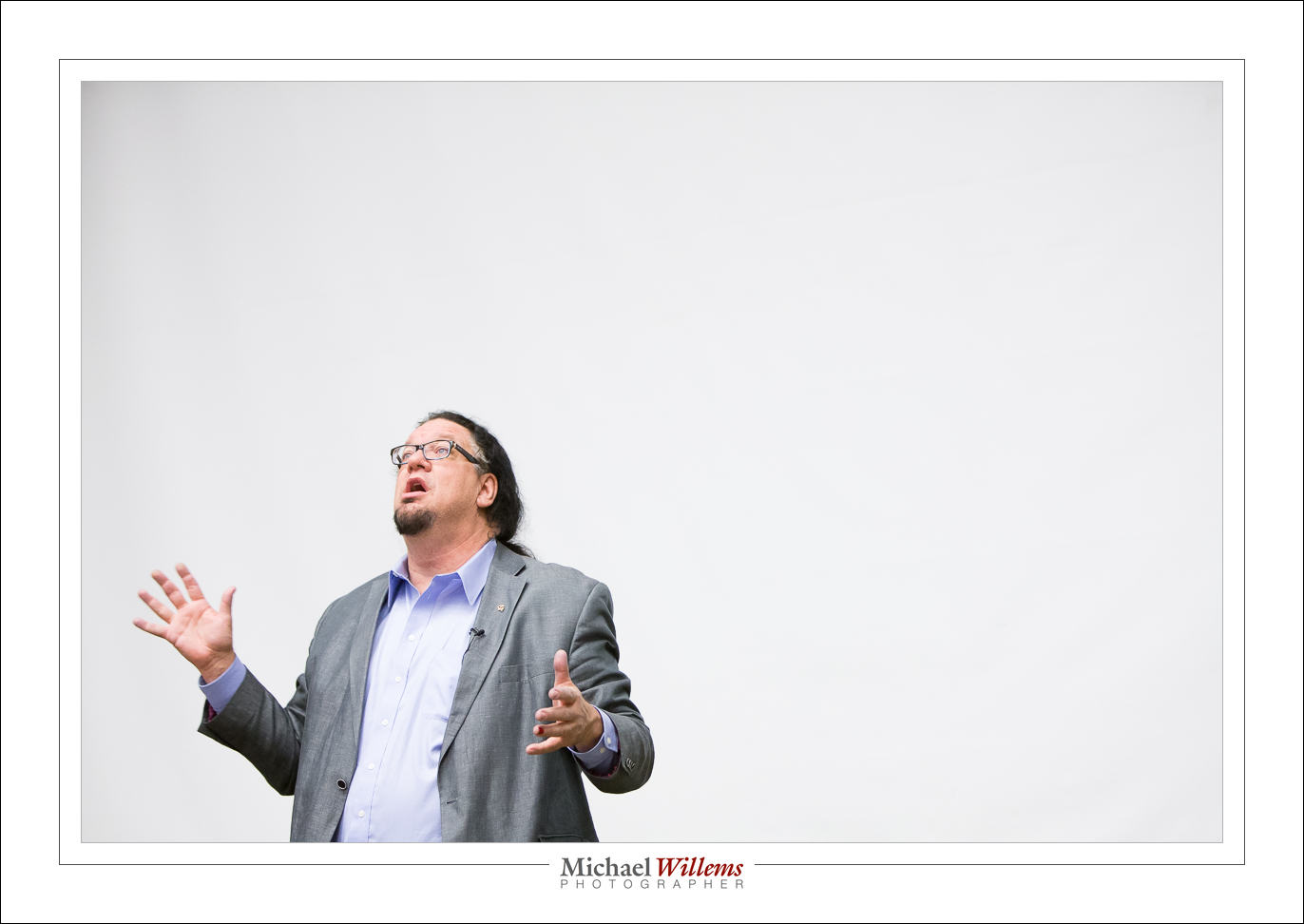
This time, I even have a photo of myself with my subject. For this, I put the autofocus to “camera chooses” and asked the volunteer to “just click”.

That was a fun shoot.

___

Do you have an upcoming event? I photograph them, and I do it well – that way, your event lasts forever, and all the effort and money you are spending does not end on the night. www.michaelwillems.ca
State Of The Art

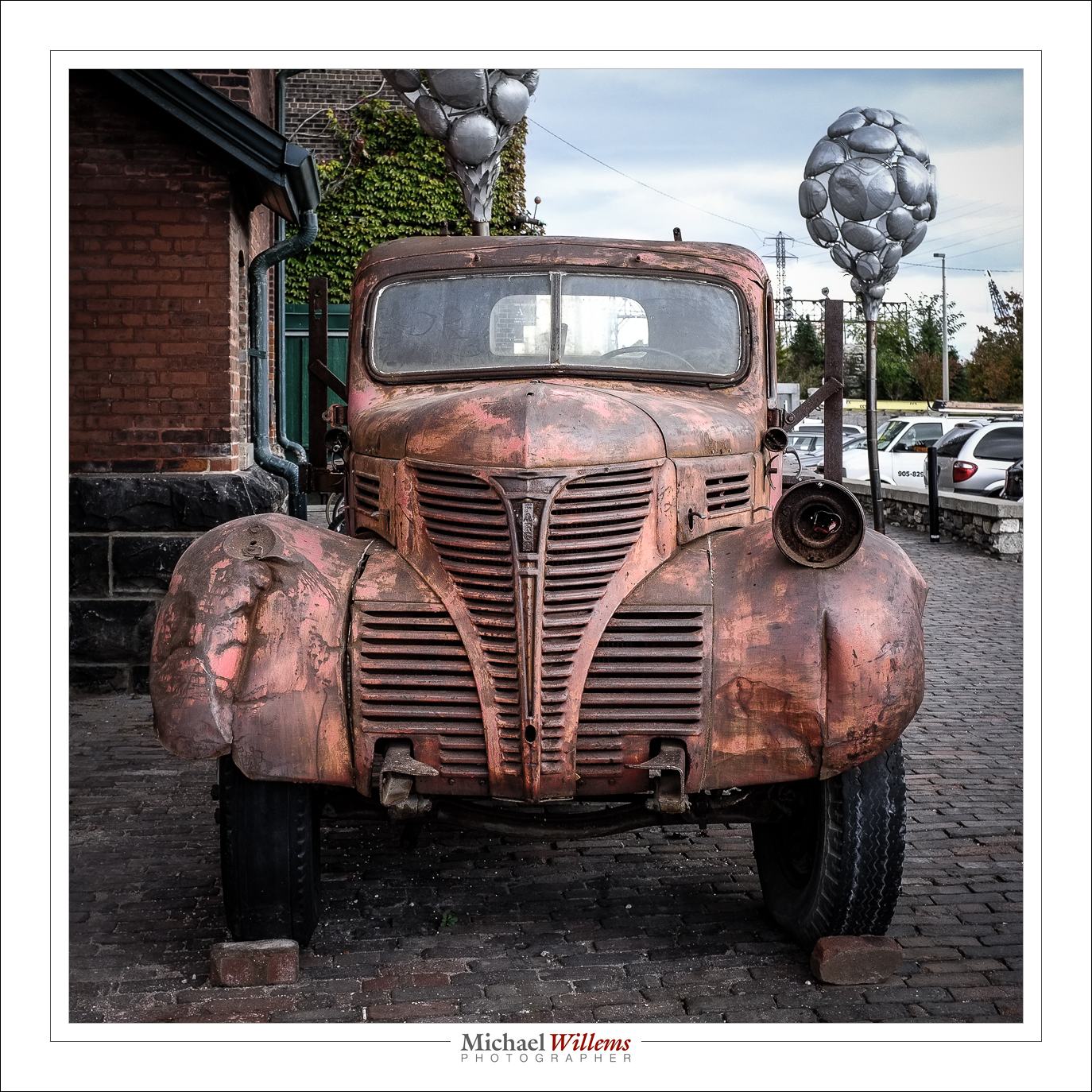
I was at Toronto’s Historic Distillery District yesterday, to pick up a large print from The Kodiak Gallery, where I had it framed. The Distillery is, of course, the home of Canada’s most photographed truck.

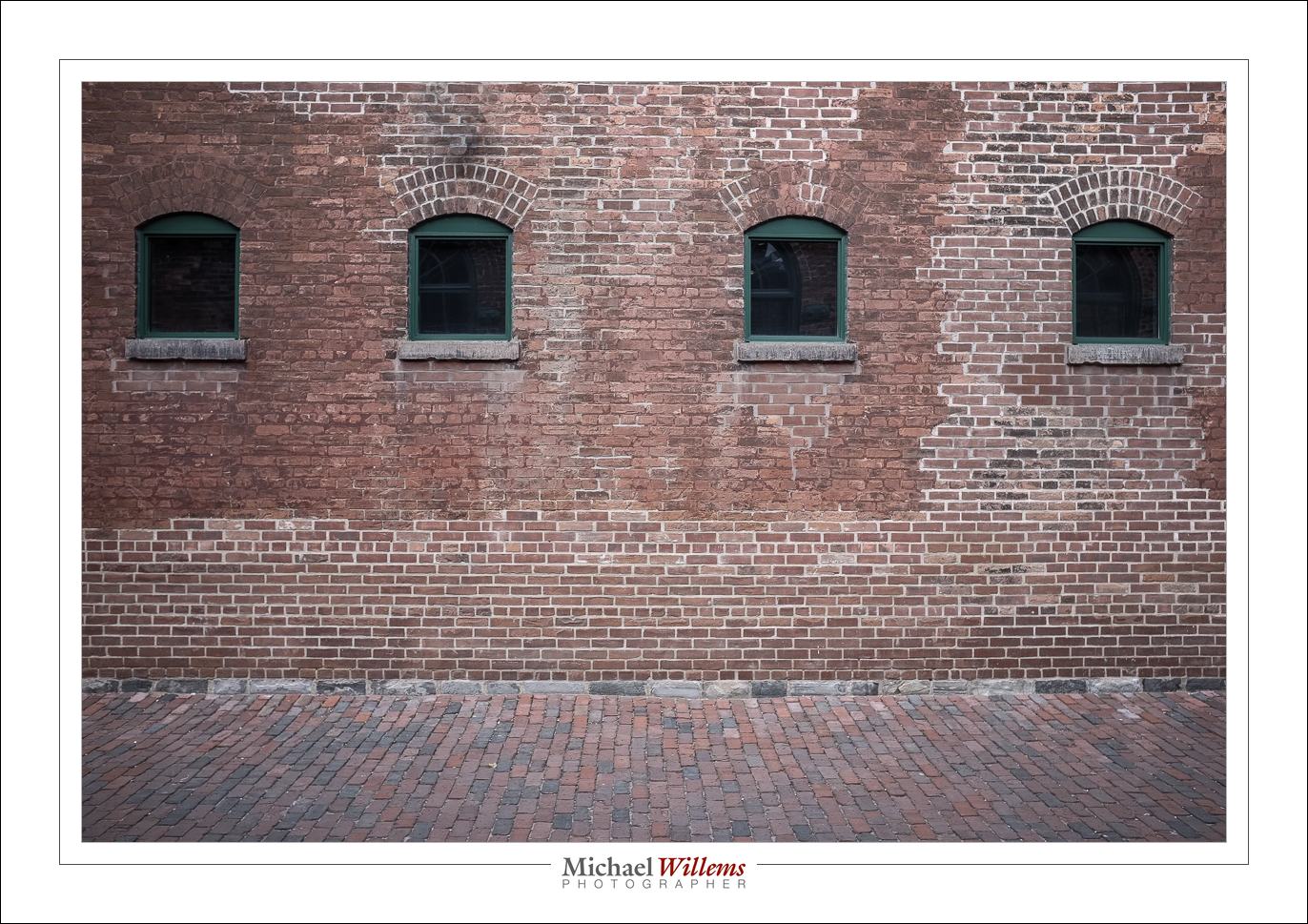
Yeah, I know… guilty as charged. I could not resist snapping it again, with my renewed-with-firmware-2 Fuji x100 camera. Nor could I resist the bricks:

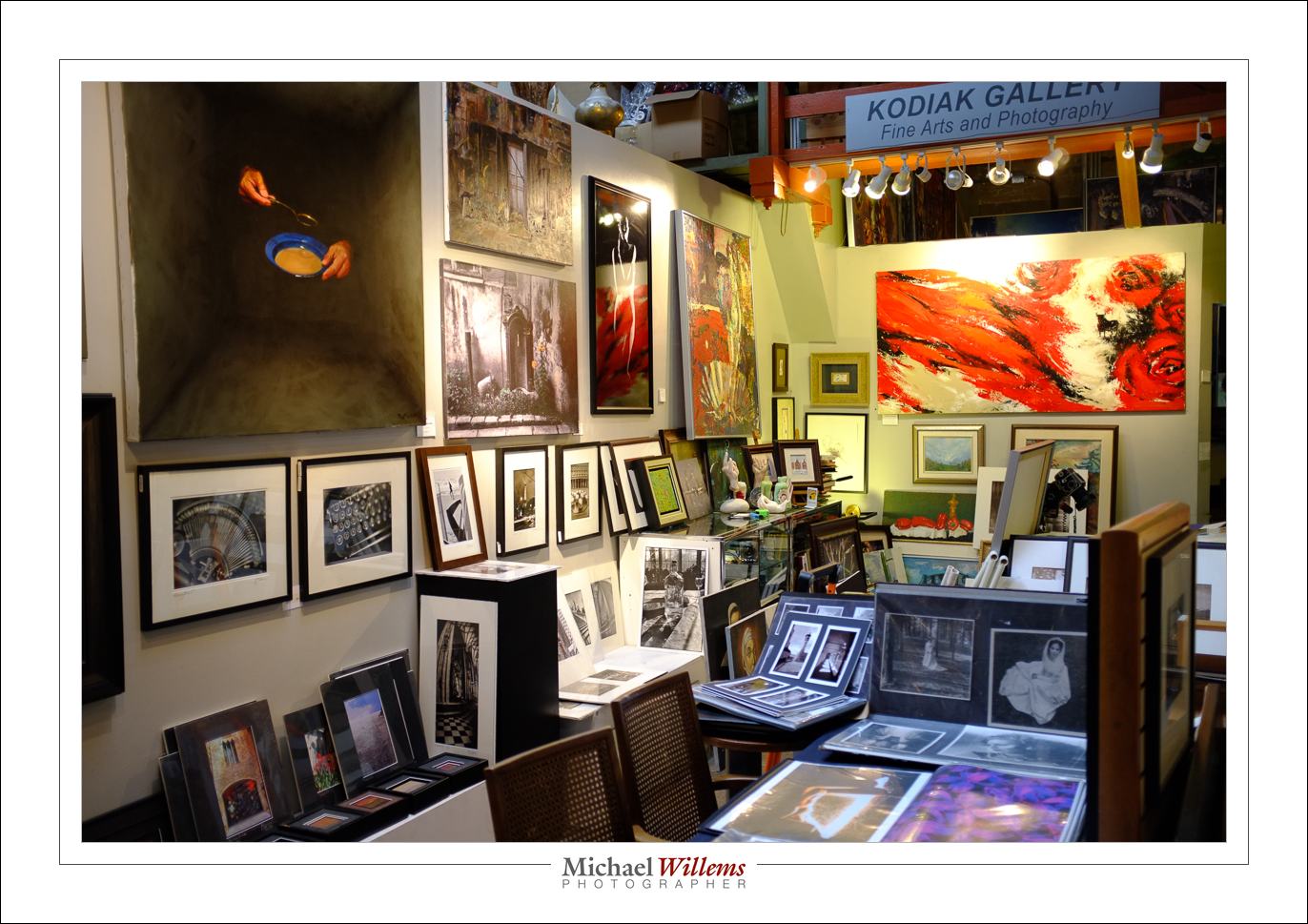
Or indeed the Kodiak Gallery itself:

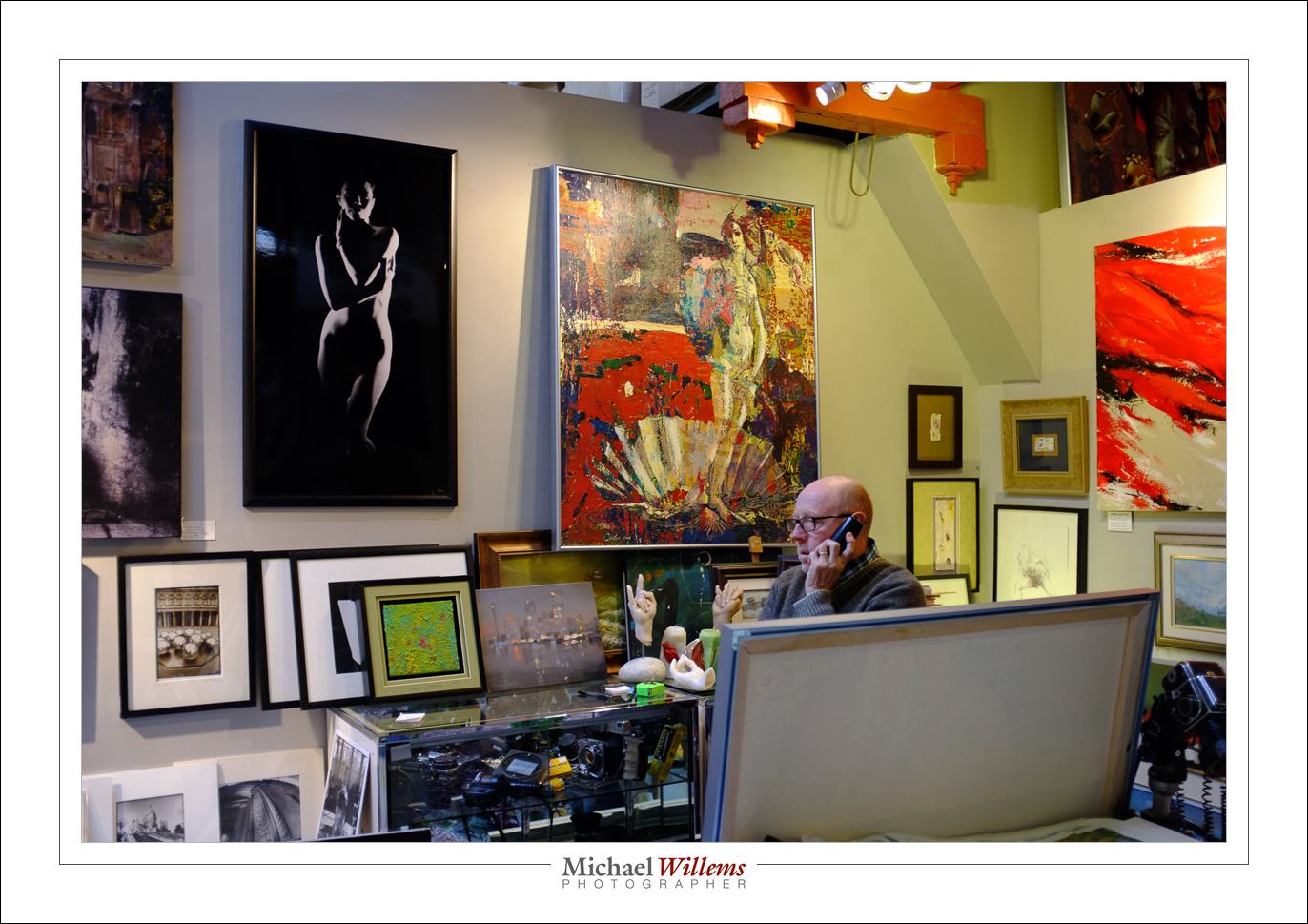
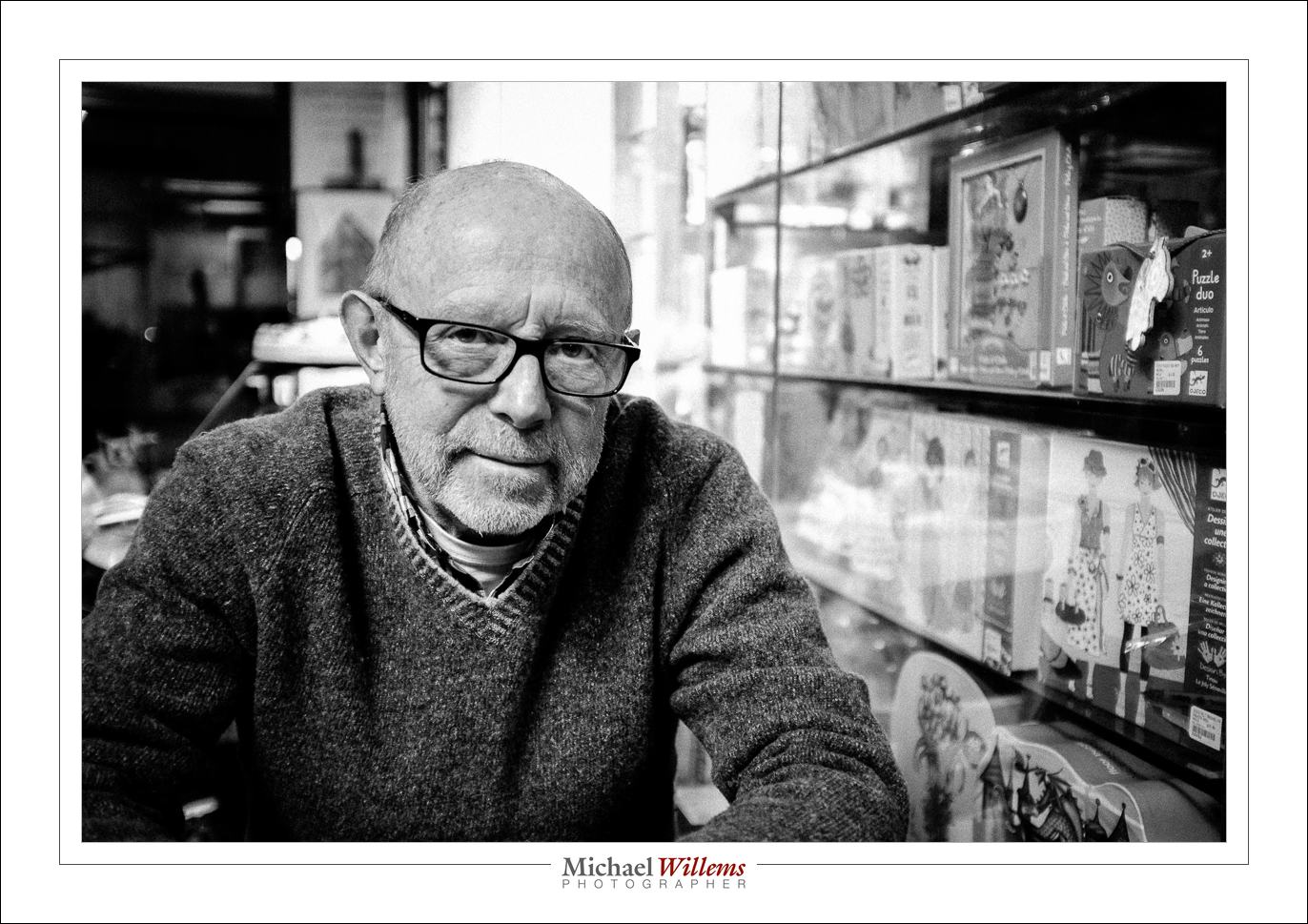
Or Gregory Talas, the gallery owner, at work:

This is a gallery I have had several exhibits at, by the way (and still have work at: that large black print on the wall there is one of mine, for instance).

And there, over a coffee, Gregory told me he is moving.

Moving from The Distillery, after years there. It appears that the last few years, people come in, look, admire, praise, admire again – and then leave. Unlike in Europe, most Canadians do not buy art, certainly not in today’s economy; or they expect a painting to cost $99 instead of $5,999 (or a print $30 instead of $300). Why stay at The Distillery if people stop buying? Gregory, and with him The Kodiak Gallery, is moving, and my work goes with him too, of course. Shame: I liked The Distillery; but sure, if the buying public is there, go elsewhere.

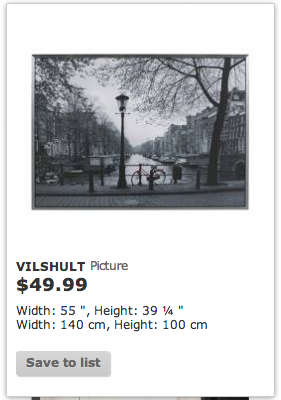
One reason for this, I think, is that beginning photographers undersell themselves. When you work out what it costs you to create, say, a framed print, from beginning to end, factoring in the time and equipment, the material cost of art printers, paper, and inks, the framing, it is impossible to seek a print for $80, say. Or rather: it is possible, but you are making a loss. And the same applies in wedding photography, family photography, or any other type of photography. The local newspapers employ people who do it for free, or for little money. If that means a lowering of quality, so be it. If most people want the distorted, not well printed, same-as-everyone-else Ikea bicycle for $49…

…instead of a unique one that only you will have, autographed and printed in permanent pigments in limited editions, at $400…

…then so be it. But just like in food, where most like McDonalds, there will always be people who do want quality and uniqueness – just not at The Distillery. And not quickly, either: a painting, a print, can take years to sell, but if it is good, it will sell in the end.

You set prices according to the market, but also according to what you put into the work; and also according to the “can I live off this” spreadsheet. All three need to meet.


Consistency.

Is. Important.

And to get consistency, you usually want to do things manually in photography.

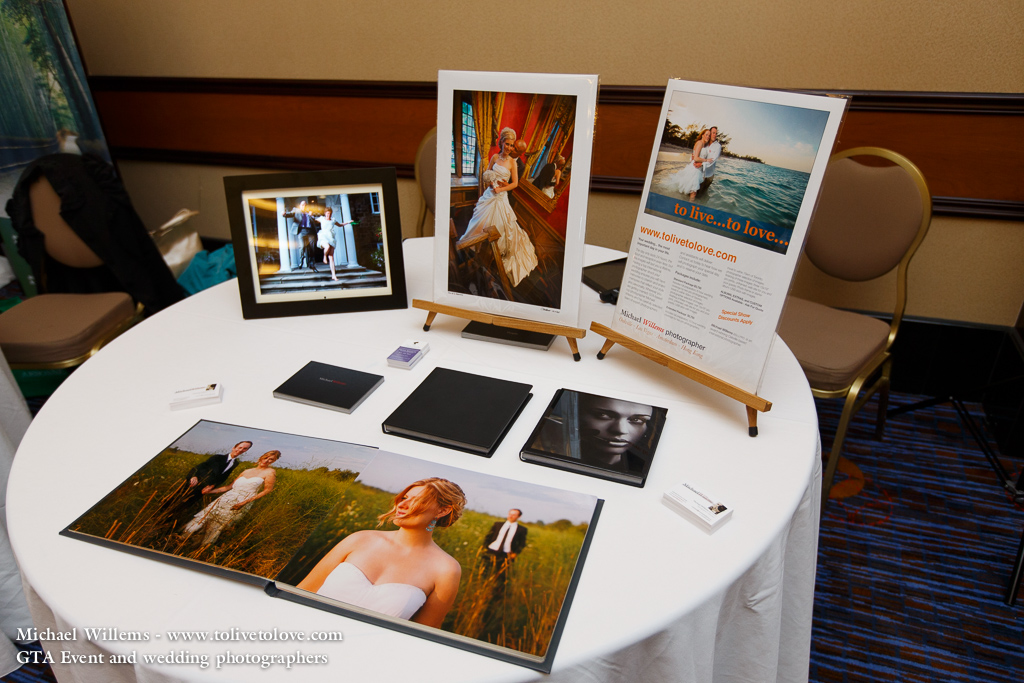
I shot a wedding show I exhibited at, on Sunday. Here’s my micro booth:

And here’s the kind of thing I shot:

And so yes, you can bounce in a big hall. But you may need 1600 ISO at f/2.8 at 1/125th second, that kind of thing. Which is what I used for that shot.

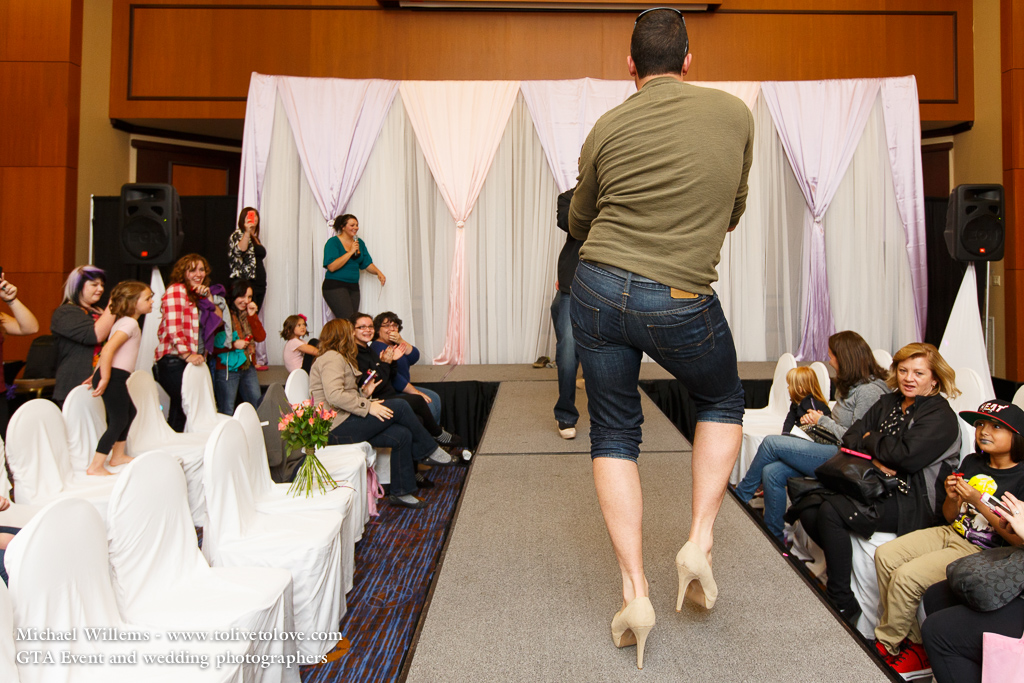
And then there was the show – again, all with bounced flash:

But here, I found TTL metering let me down a little. The bride shots were a little inconsistent. Metering off all these different moving things, with white dresses; well, that can happen.

So that is when you think to yourself: go manual flash, too. After all, I am not moving and the runway isn’t moving, so the inverse square law is not going to get in my way. So I popped the flash into “M” (manual) mode and from experience, guessed 1/2 power would work. A quick check on the back (and the histogram) told me this was correct – so I shot all the other runway shots in that mode with that power setting, and hence they were all identical (and good).

Including this one:

Yes, much fun was had.


Light or dark?

When you need to decide what to make of a shoot, light is of the first importance. And sometimes that is the question: light or dark? Go for a high-key bright look, or for a low-key dark look?

I often do both. Let me share an example.

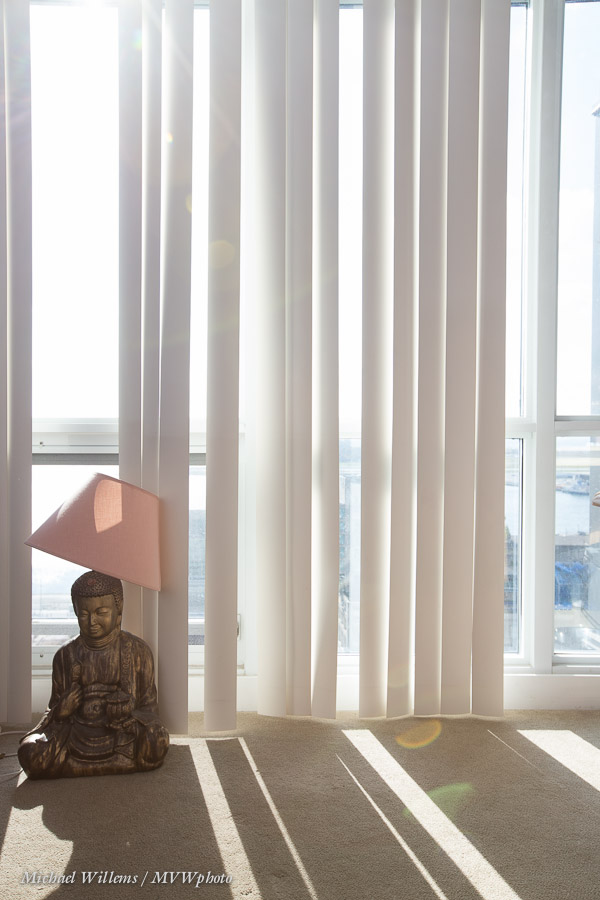
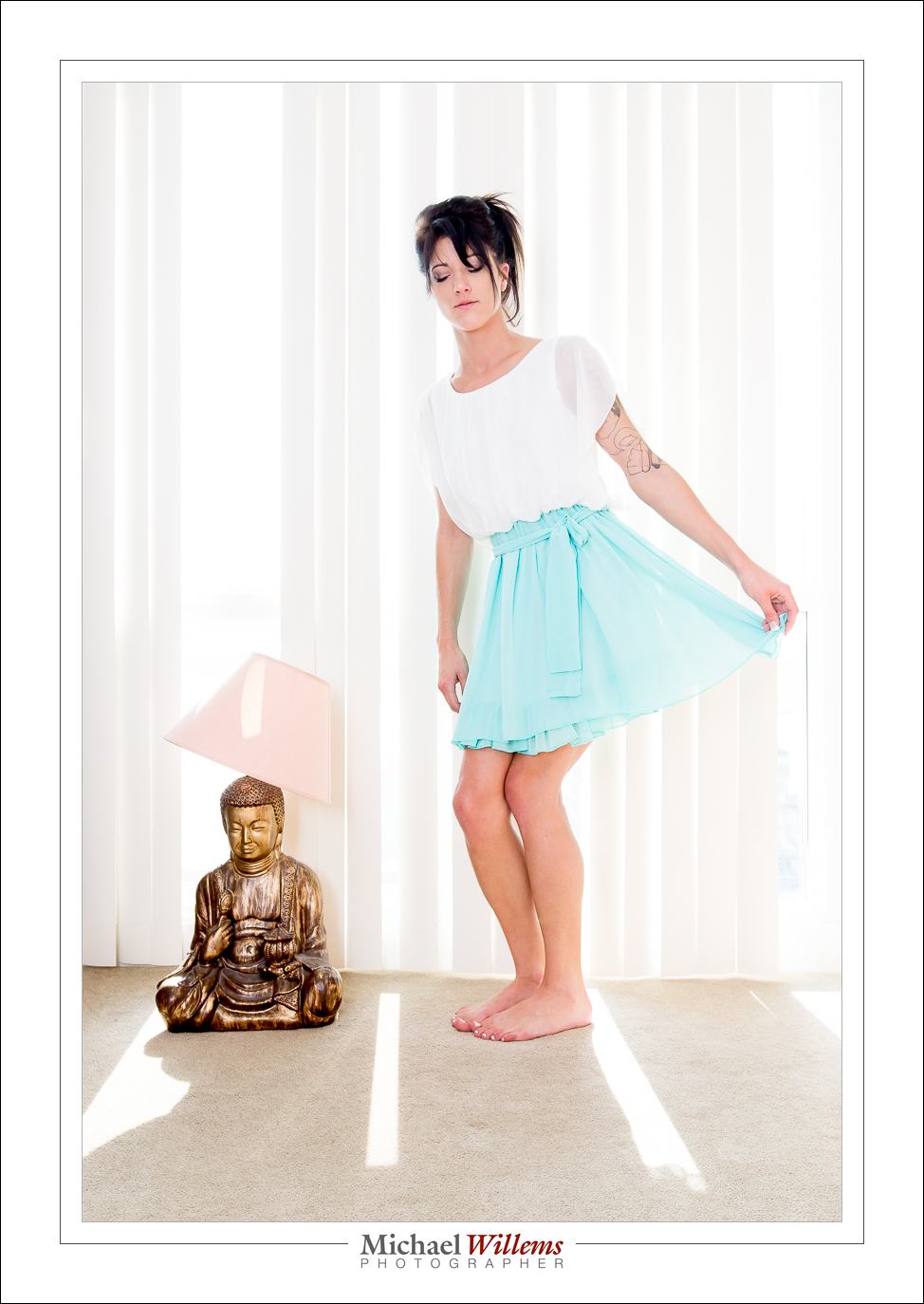
On a very recent shoot, just after walking in, I saw this:

And that immediately made me think “the Buddha”, “pastel”, and “bright”, and “backlit”. So you go with the flow, and I asked the model to find a pastel outfit. The outfit was a skirt, which worked extremely well when she pulled it out to make it the same shape as the lampshade. I exposed highly (1/250th sec at f/6.3 at 400 ISO), and hey presto:

High key means everything is bright except the subject, which therefore stands out. Can you see how highly I exposed that? Basically, everything except the Buddha and my subject was flashing “overexposed!”. Get this right and shoot RAW. But it is not difficult at all, as long as you realize you can make things bright or dark at will with your camera. It is a light shifter.

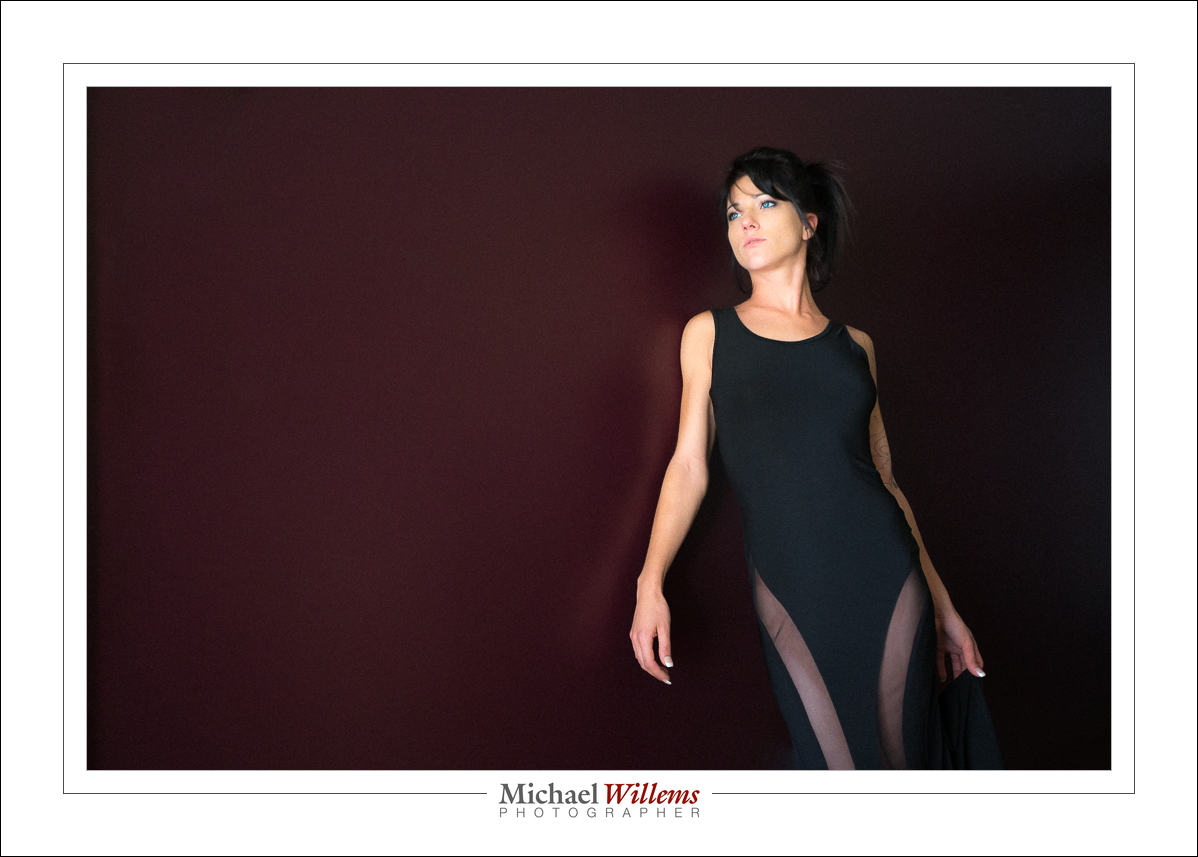
I had also seen a dark wall, a rich bordeaux, in a dark area. So hey, let’s use that too. But with this dark wall I thought low-key, i.e. everything is dark except the subject, which therefore also stands out. So, perhaps a dark outfit, which it just so happened she had:

Both made on the same shoot.  You can do this if you think about the light and use what you have, or what you can make under the circumstances.


Evening worthwhile

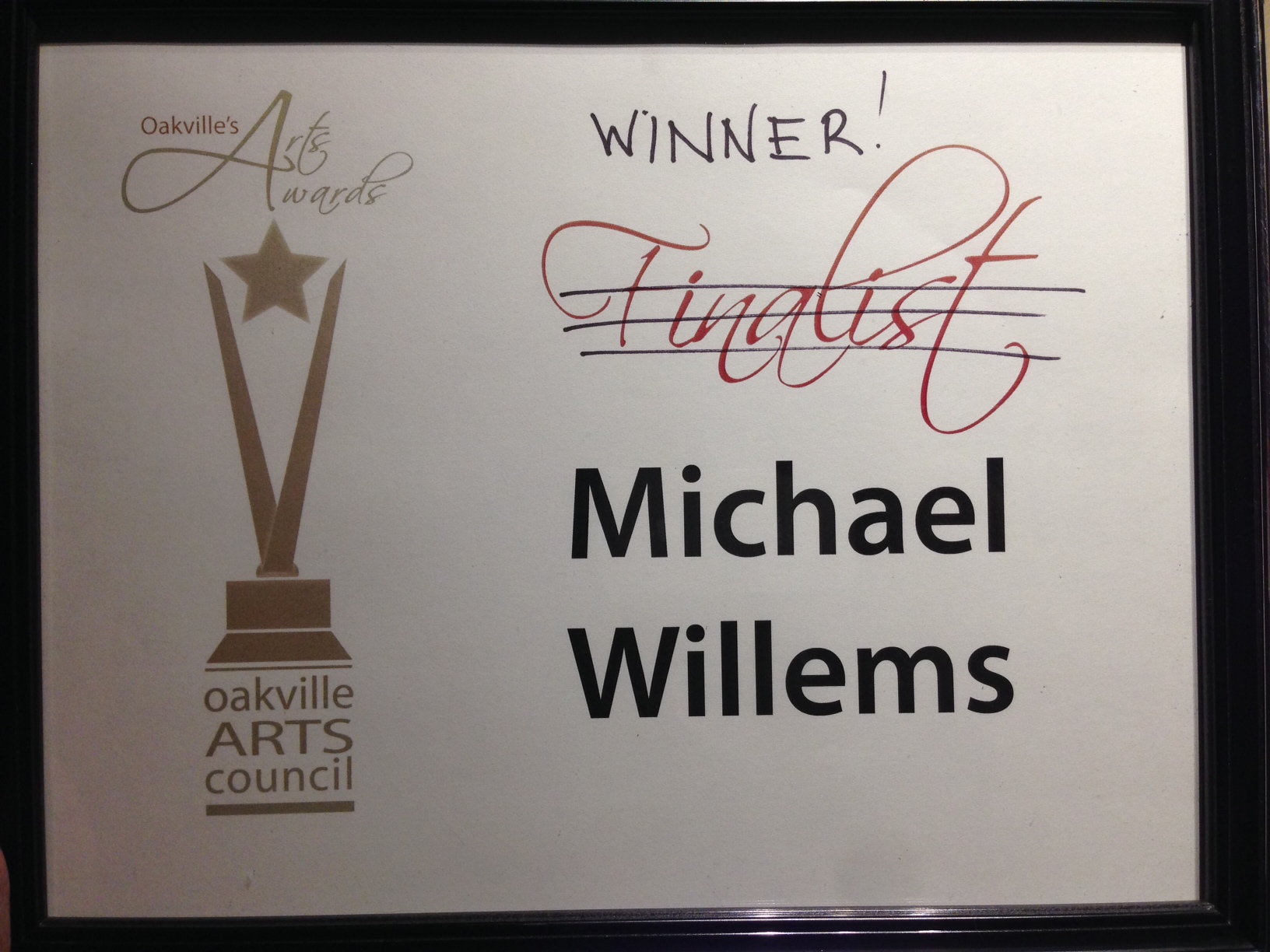
So… the art award evening, held in the Grand Ballroom of the local conference centre just now, just now went well:

Yes, I won the 2013 Cogeco “Stars Among Us” Digital Art Award.

I am hugely honoured for several reasons. First, I am humbled by the company I am in: other finalists in the various categories included renowned authors, university professors, poets, and great creative artists. And the other two finalists in my category (“digital arts”, meaning photography and video) were very, very good: I was surprised to be chosen over them.

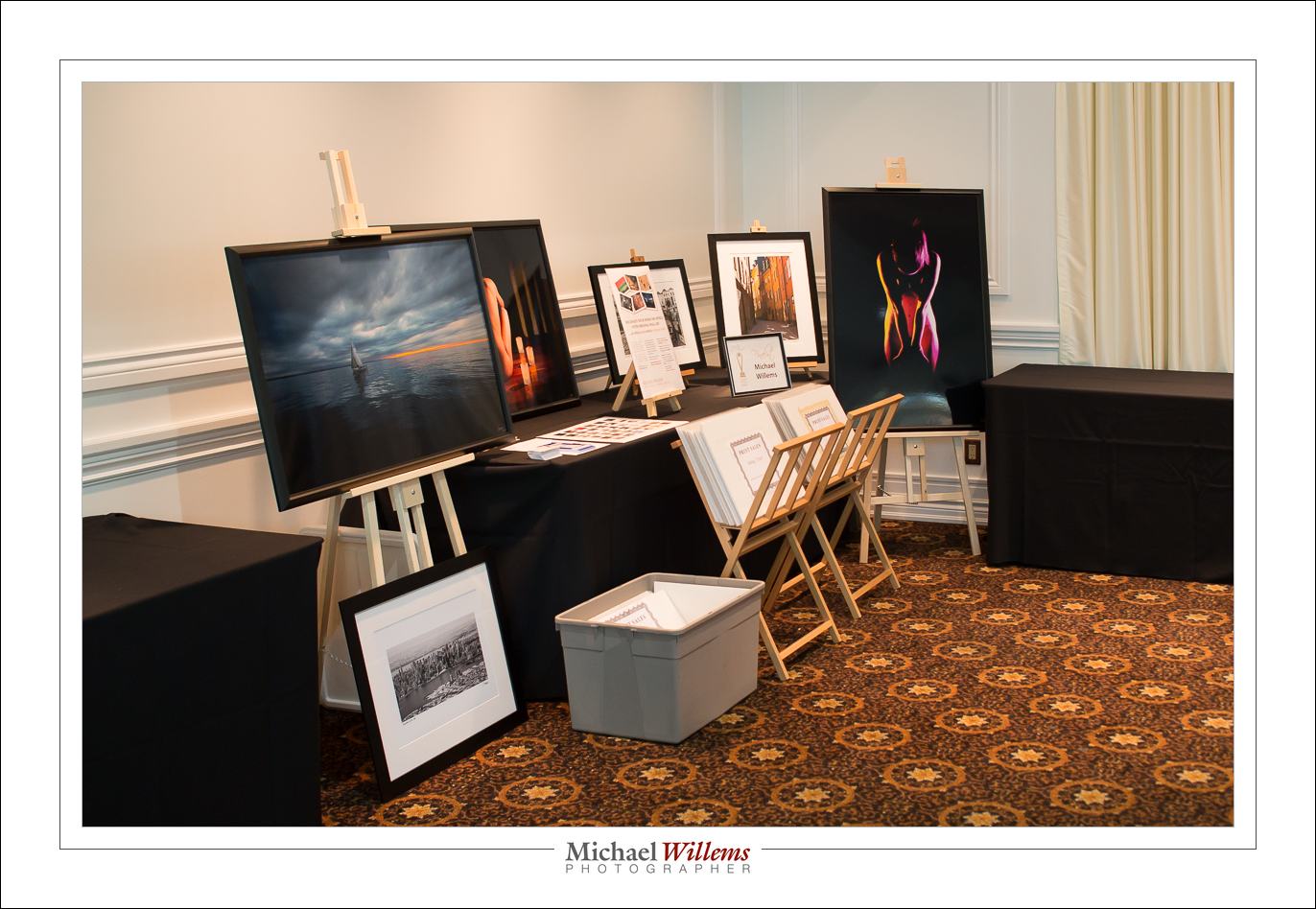
The work I submitted consisted of nudes, and a few sailing and other recent images: wall art, ready to hang. I had a bunch, as you see:

As a creative artist, I know my work is good, or I would give up. And yet, knowing that others also value it is great validation. And the cash prize helps. And the publicity will help. And business will result from this. But above all, knowing that my work pleases others is reward in itself. That’s why you do it – right?

See some of my prints on www.michaelsmuse.com


How much is allowed?

How much “editing” do we do as photographers? I don’t mean just editing some supermodel’s images, but I mean real people.

I do not call it “editing”. I call it “finishing”. Because I am on the side of “not much”: I hate making someone into something they are not. At the same time, however:

  • Temporary blemishes can be fixed, as far as I am concerned. They will not be there tomorrow anyway.
  • Anything I can do with light, I can do with Lightroom, I feel.
  • Anything a make-up artist can do with make-up, I can do with Lightroom, I feel.

In the following portrait of the other night, of the lovely Liz Medori, I did little except:

  1. Adjust exposure – because my light meter and camera disagree with Lightroom.
  2. Adjust white balance.
  3. Crop.
  4. Remove stray hairs.
  5. Fix temporary blemishes.
  6. I also adjusted Lightroom’s “clarity” a little, however. This is akin to choosing a different, less contrasty film.

That led to this:

What I will not willingly do is change shapes (remove fat), move things (like noses) and change sizes of things (like noses and breasts). I think people look just fine the way they are, and I feel uncomfortable contributing to the fiction that the world’s actresses and models are perfect, while you and I and all other real people are not.

What do you think? When so much of the market demands changes, should we make them?


Repeat post

A repeat, for once, of a post of almost four years ago, today. Here’s a young me in Nineveh, in what today is northern Iraq:

And the spiral minaret in Samara, which was very scary to climb:

And a shot I took in Baghdad, after a ministry suffered an explosion (= was bombed, one presumes):

That picture, taken from my room at the al-Mansour Melia hotel, got me interrogated by security… but they were kind enough afterward to actually give me back my developed slide film. I must be the only person to have had their film developed by Saddam’s security men.

The moral of this post: images do not always have to be technically great. Those are scans of faded old prints, made in turn from slide film. And yet, as documents, they are important to me, and irreplaceable. Sometimes having the image is all that counts.


Anatomy of a portrait

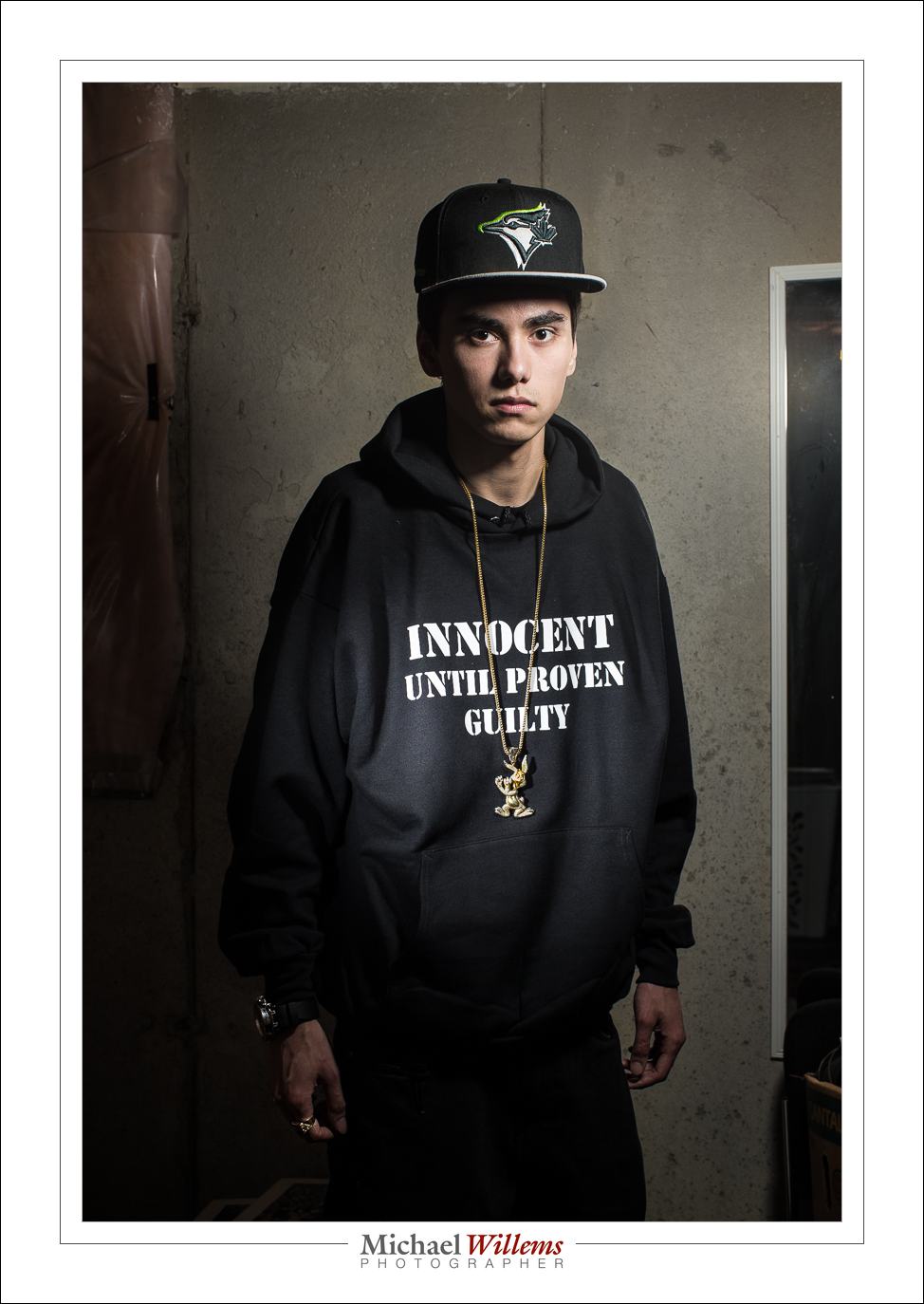
My younger son, who is a rapper, told me tonight, on his birthday, that he needed  a new portrait for publicity for his new album. So I obliged, before cooking dinner and while simultaneously doing laundry. Here he is:

That image took maybe twenty minutes, half an hour tops – but a lot of experience and thinking and equipment goes into a portrait like that.

First, what is required? We discussed, and he clearly wanted a serious, dramatic, look. In a grungy setting. The T-shirt text and the bling should be clearly legible and visible, respectively.  So OK – the briefing being clear, I used the basement studio, and freed just enough space to do a half body portrait.

Then the light. Speed was of the essence: I was about to make dinner. So I used speedlights. First, I set up a light stand with a 430EX flash set to manual, 1/4 power, and driven by a pocketwizard. I equipped it with a Honl photo 8″ softbox. I feathered the softbox to get the right amount of drama in the light, and to get Loop Lighting, almost Rembrandt Lighting, on his face.

The camera was a 1Dx with a 50mm f/1.2 lens, set to 1/125th sec, f/11, 100 ISO. I knew the 50 was perfect for a half body portrait in a small space.

I tried, and the photos were OK:

Not too bad, but we wanted a little more emphasis on the writing. And more texture of the shirt. And clearly visible bling. So I added a second speedlight, this time with a 1/8″ grid, for a tight line of light, and aimed that at the shirt. Also equipped with a pocketwizard, and set to lower power (1/16th). Not having had time to prepare, I took my time finding things like cables and a bracket that fit the flash – all part of the fun.

I set the lights to the camera’s desired settings of, if you recall, 1/125th sec, 100 ISO, f/11. I used a light meter to verify that.

And there you have it. A few pictures – I took a total of 30, and we chose his preferred one, the one at the top. I could have done the light thing, the vignetting, in post, but call me crazy: I call that cheating if I could have done it in camera.

As a result, almost nothing needed to be done in post, but that still takes time: selecting, removing the odd bit of dust, any perspective correction, and so on.

Total time taken, as said, less than half an hour including getting things ready, setting up lights, moving stuff, and the entire discussion and post work. But that’s only because I have done this before. Experience is important. The good news: you can gain experience too and it costs very little.


___

If you want to learn, and you live near Oakville, Ontario: evening Flash course on 3 Oct, and 5-evening course with a weekly evening lesson starting  2 Oct. – both these small courses have open places still.


A few snaps

Today, just a few old images. Why? Because I am printing, for an art council awards ceremony on October 10, where I will be selling some of them.

But since this is an educational blog, let me add at least a couple of words of explanation to the shots.

Julius Caesar (not “Ceasar”!) at the British Museum in London:

I got close and aimed up in order to get rid of distractions.

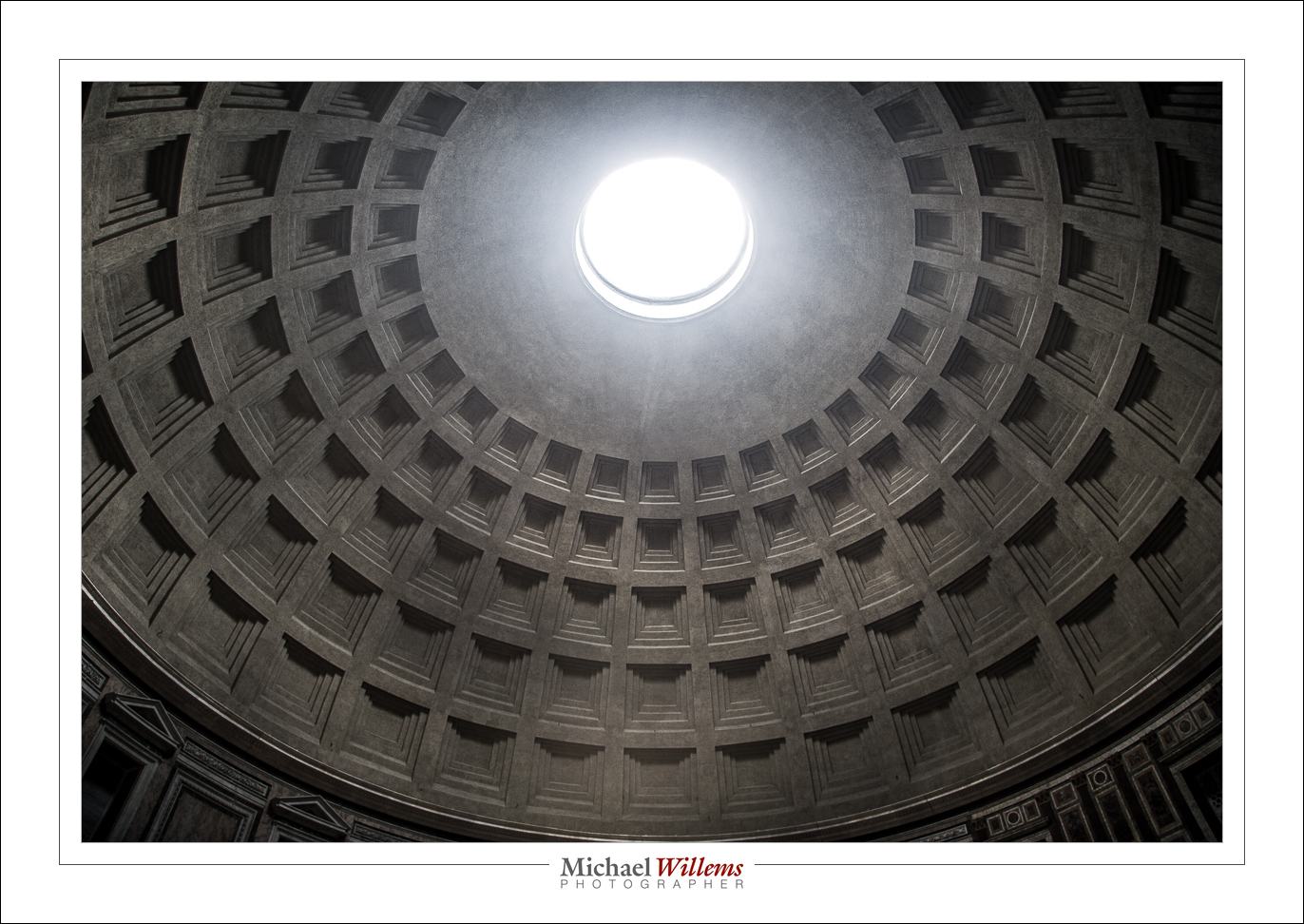
That takes us to Rome and the Pantheon:

I laid down on the floor to get the shot. I do not care what I look like.

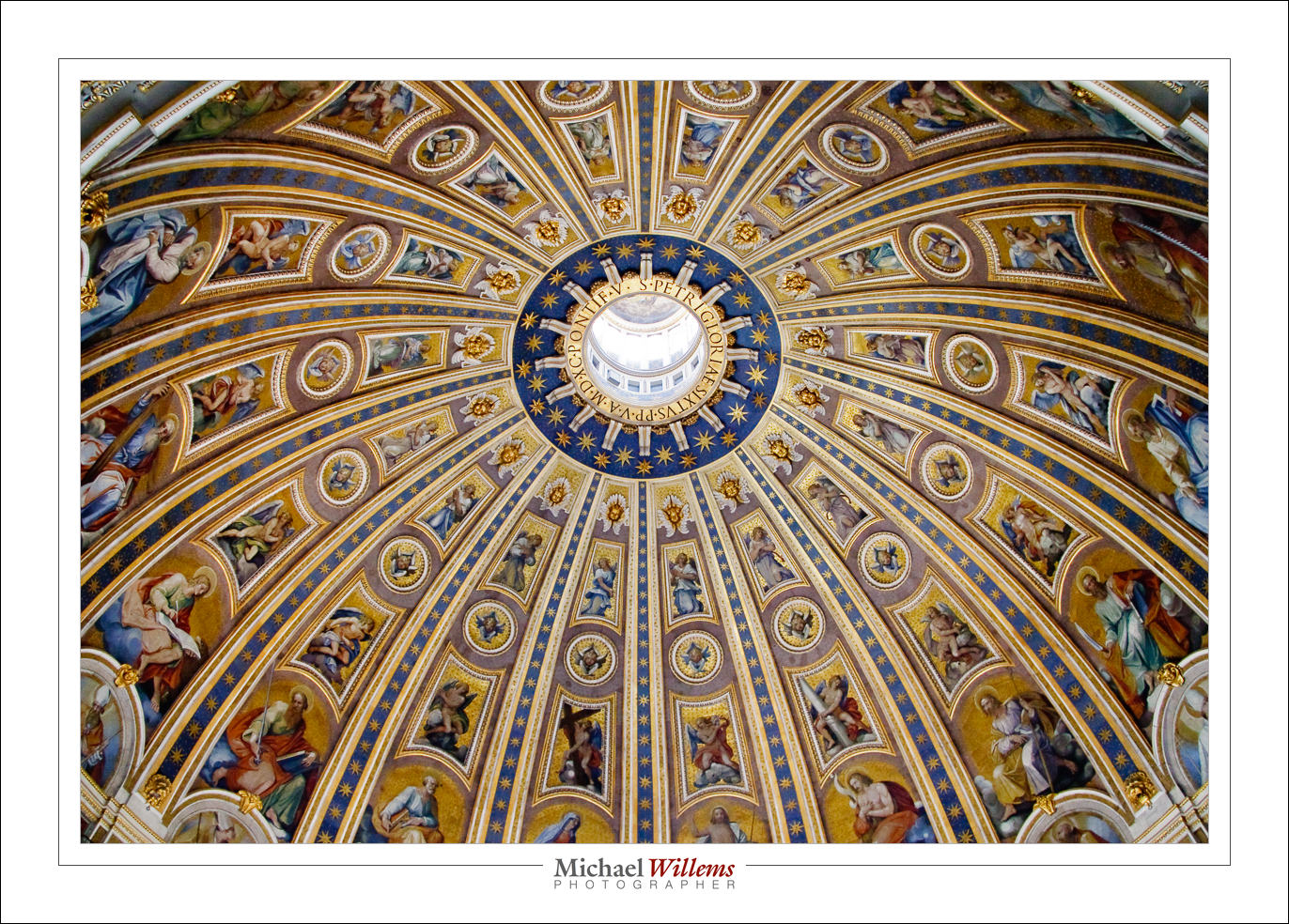
And since we are under Rome’s domes… to the next one:

St Peter’s Basilica’s dome. High ISO, since no flash is allowed, of course. And best shot from the gallery half way up the dome. A lineup, but worth it.

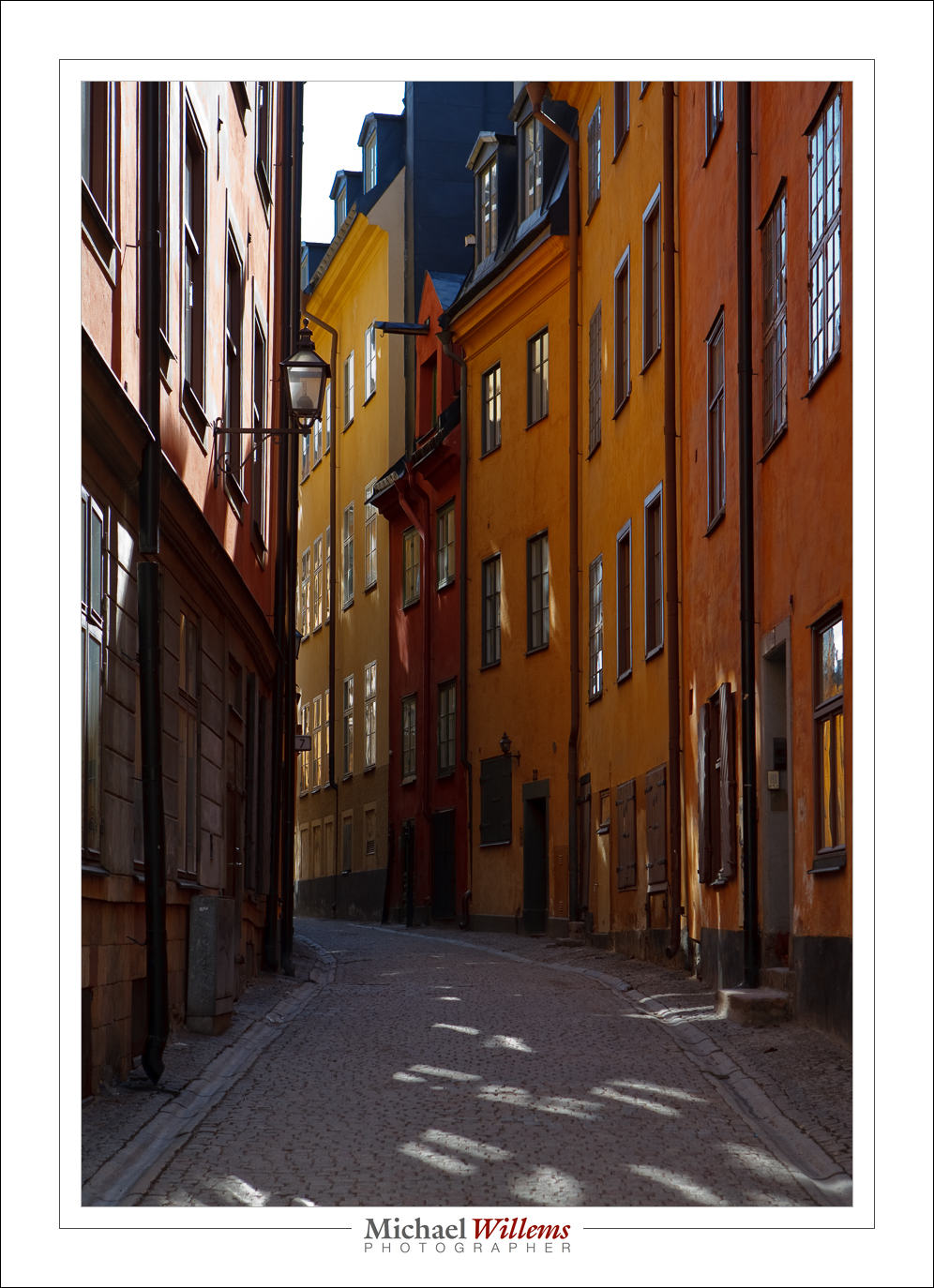
Off to Sweden: Stockholm; old Stockholm to be precise (“Gamla Stan”):

The thing here is to balance light in the dark street with the sky and reflected skylight. perhaps bracket. And to wait for the street to be empty.

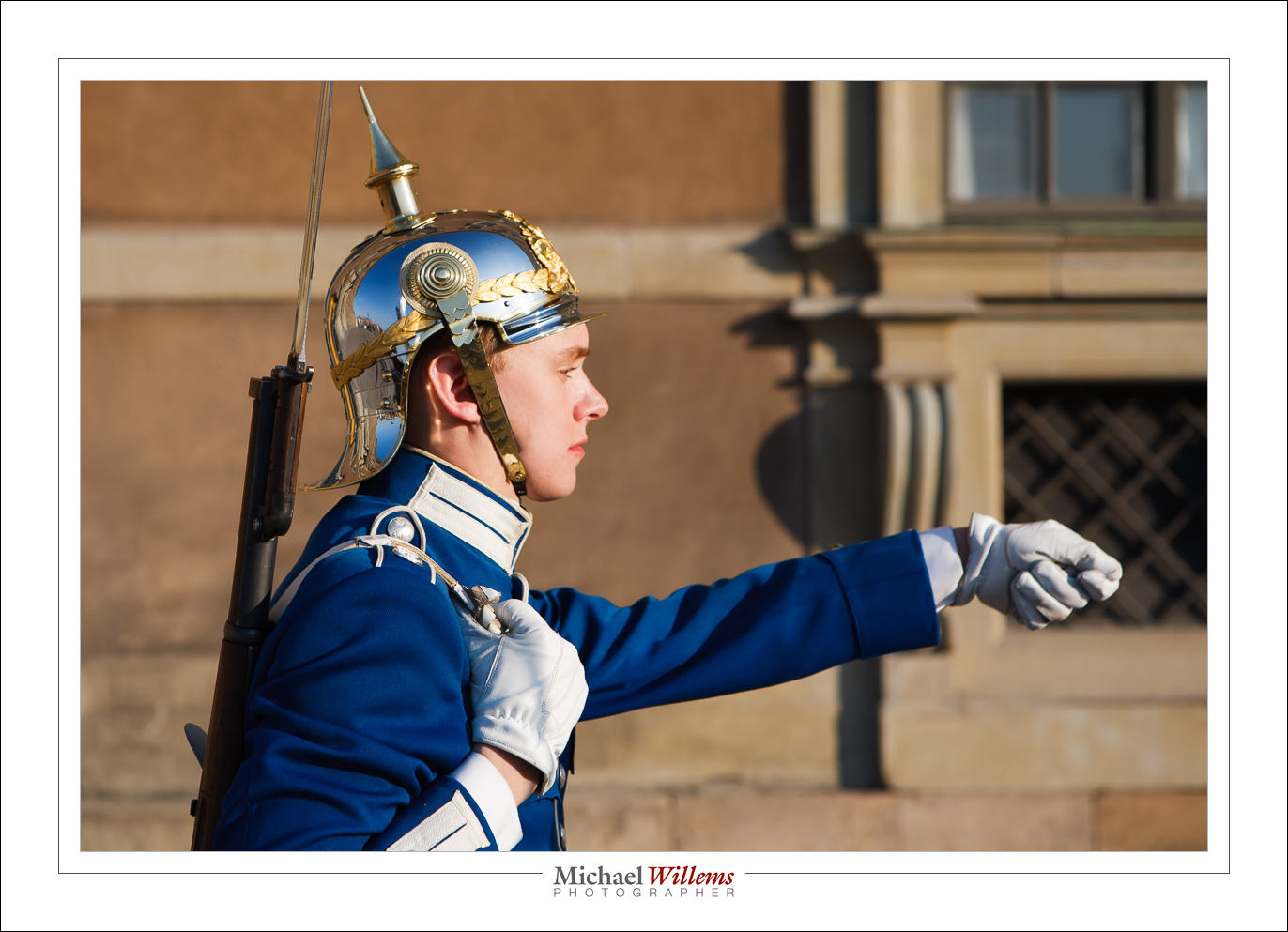
Not empty: the royal palace and its guards.

Here, the trick was to get close enough to crop out other tourists, cars, etc, and yet not to be bayonetted. And – to get the right light (onto his face, with the sky in his helmet).

ZAP! We are in Melbourne, Australia, and the backlit morning fog is dancing around the city’s tall buildings. All I had to do is avoid flare (remove any filters, beware of window reflections) and expose accurately.

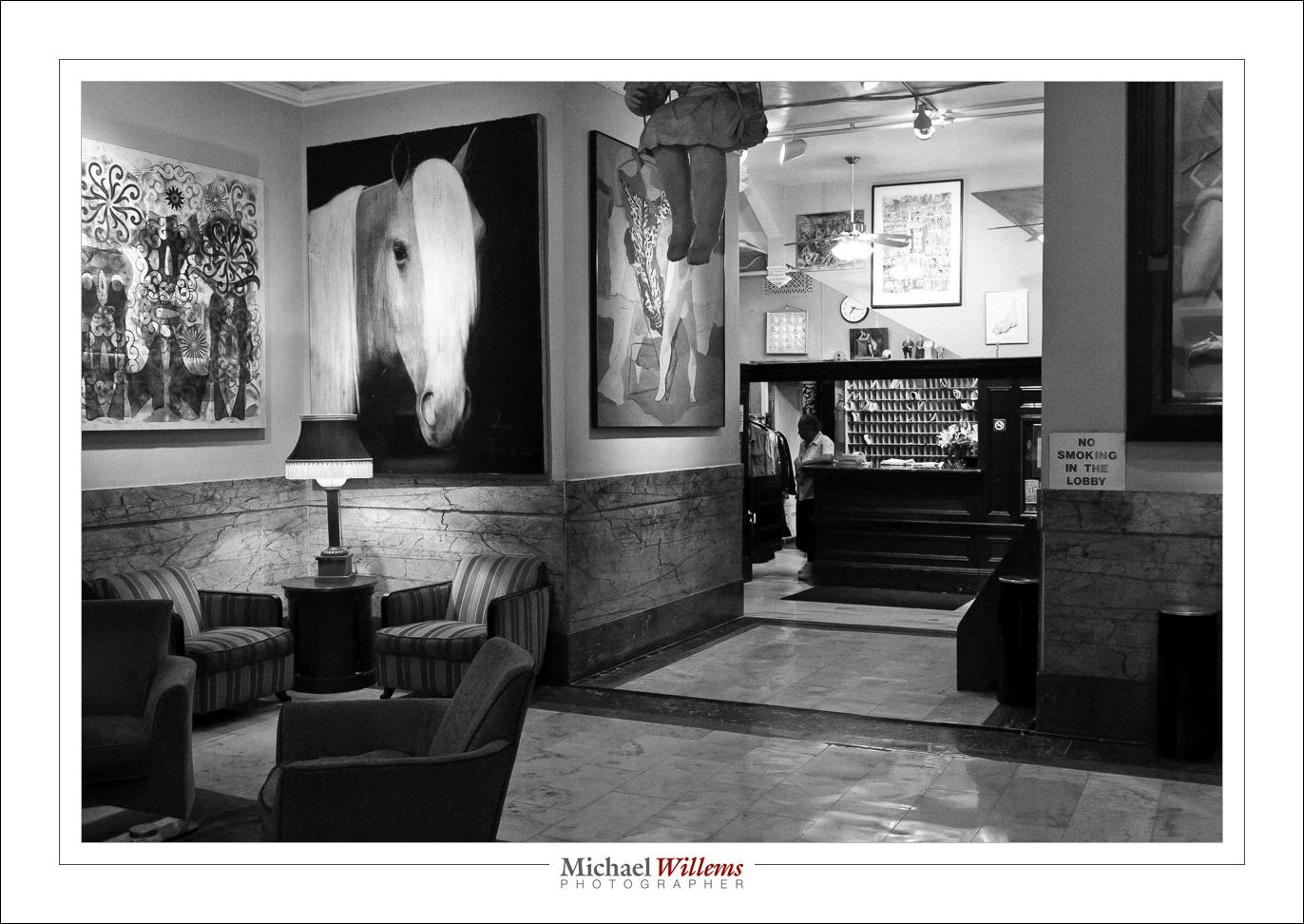
Not -zap – we are in New York, at the Chelsea Hotel:

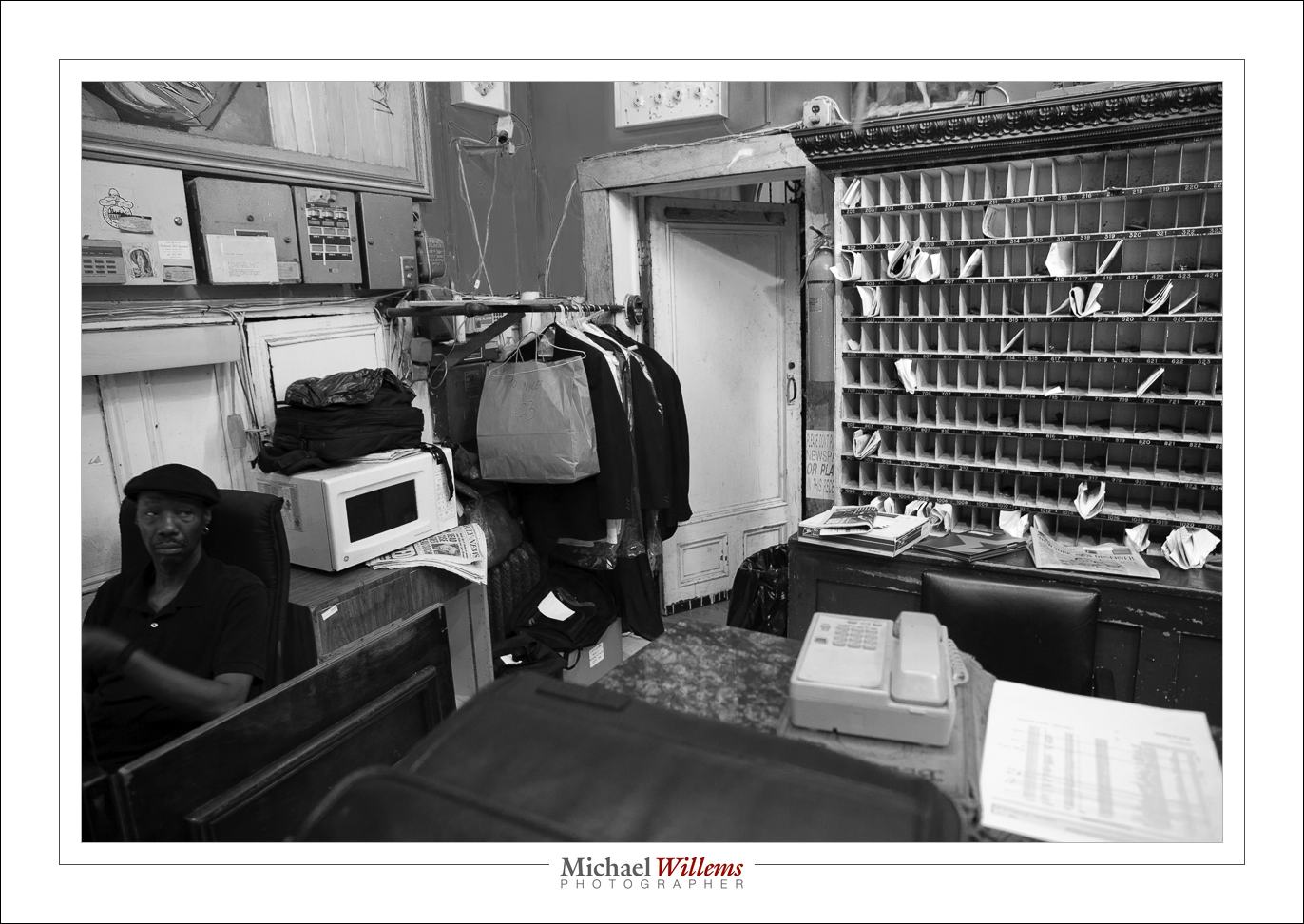
That calls out for B/W, as does the reception desk:

Nothing to do except high ISO, snap, and leave before being challenged. Either that or just ask for permission.

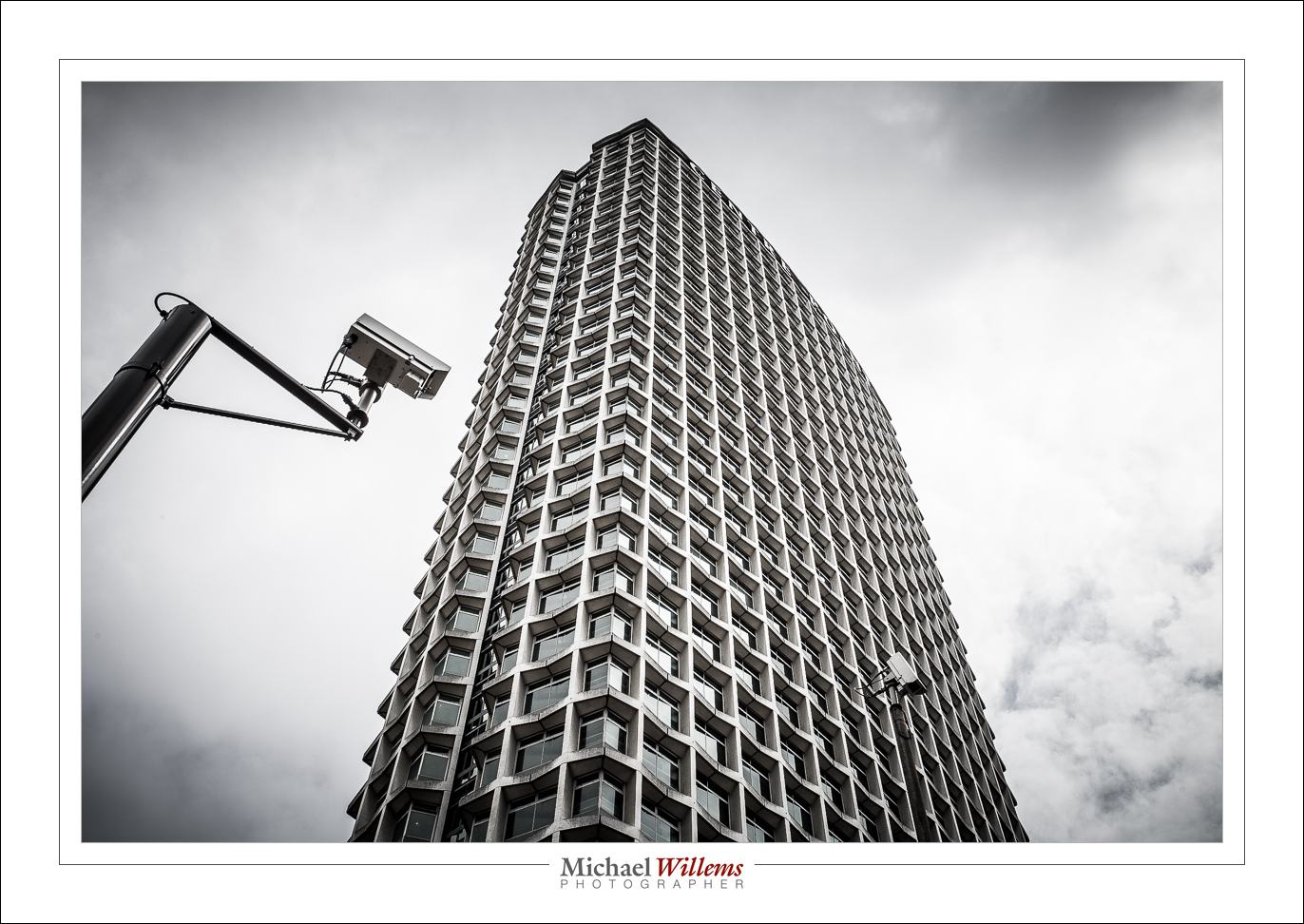
And one final ZAP – back to London, where Big Brother watches:

And to leave just as the cameras swing towards you (yes, they do – eerie).

That was a quick world tour, wasn’t it? And that is what photography does: take you to different worlds. Take you back there long after you were there. Time travel. If I can perhaps paraphrase Mad Men’s Don Draper:

Your camera isn’t a camera, it’s a time machine. It goes backwards, forwards. It takes us to a place where we ache to go again.

Word.


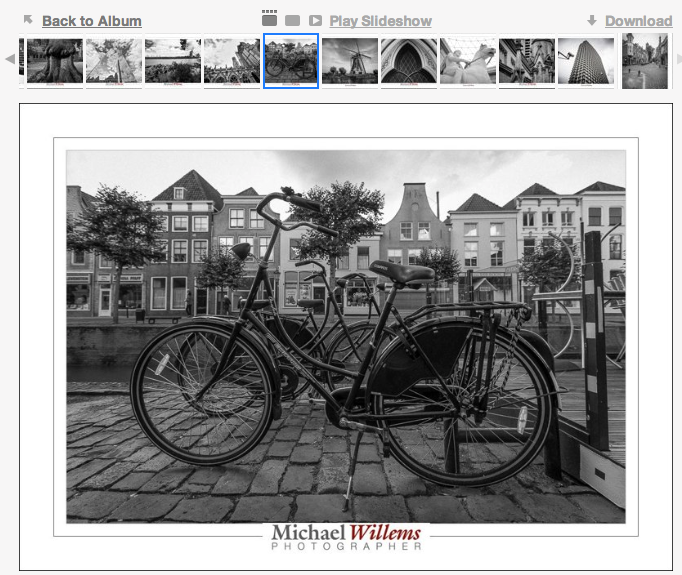
B&W is alive and well

When you look in art galleries, what do you see? Black and white prints. Although this is sometimes silly – in the 1970s, colour started to be seen as art too, so let’s get with the times – sometimes it’s a good thing.

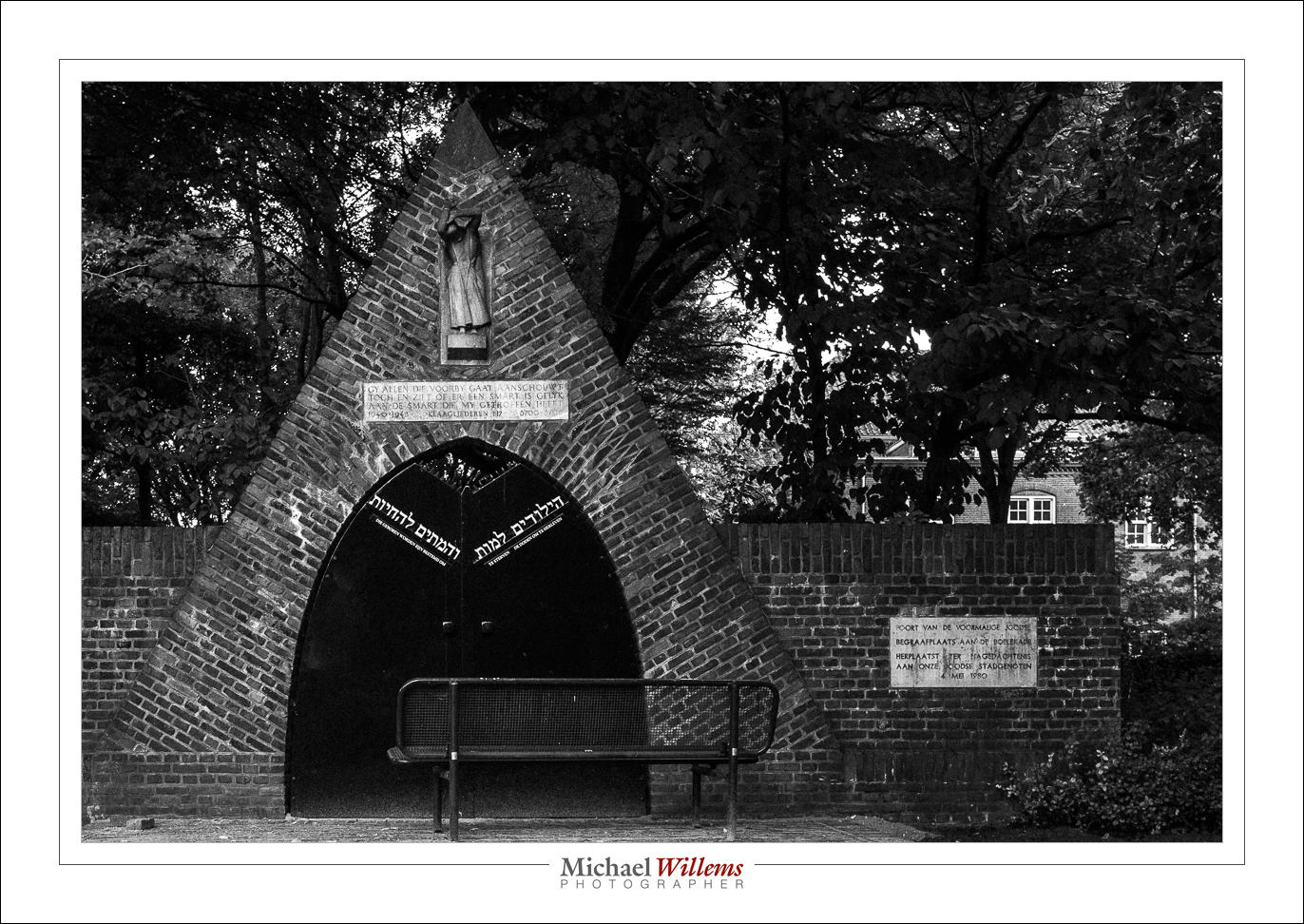
Here’s the rebuilt gate to the Jewish cemetery in Gouda, the Netherlands. The city I went to high school in.

This gate was rebuilt in 1980, long after the Jewish cemetery itself was moved – since no Jews lived in Gouda anymore after the war. One terrible example:  Friday, April 9, 1943, the Jewish retirement home in Gouda was raided by the SS, assisted by Dutch police from The Hague and Gouda. All residents were deported; none ever returned. The Dutch have always “respected authority” – order is order.  Awful, and there’s a lot to make up for. Fortunately, many Dutch families sheltered and hid Jews at severe risk to their own lives.

Incidentally, I believe I am wanted in The Netherlands, for not paying a speeding ticket from last year (they time you on the freeways and then do the math and send you the fine, no trial, no argument. Over my dead body would I ever live there again!). Problem is, they send the ticket to you even in Canada without a payment method, unless you are Dutch and in Holland. No credit cards, no cheques. So of course I did not pay. So I shall be arrested next time I enter that country. All because I drove like 5km/h (3 mph) over the limit on a freeway. Blind and inflexible adherence to “law”. Have they learned nothing since the 1940s? The Nuremberg laws were “law”, too.

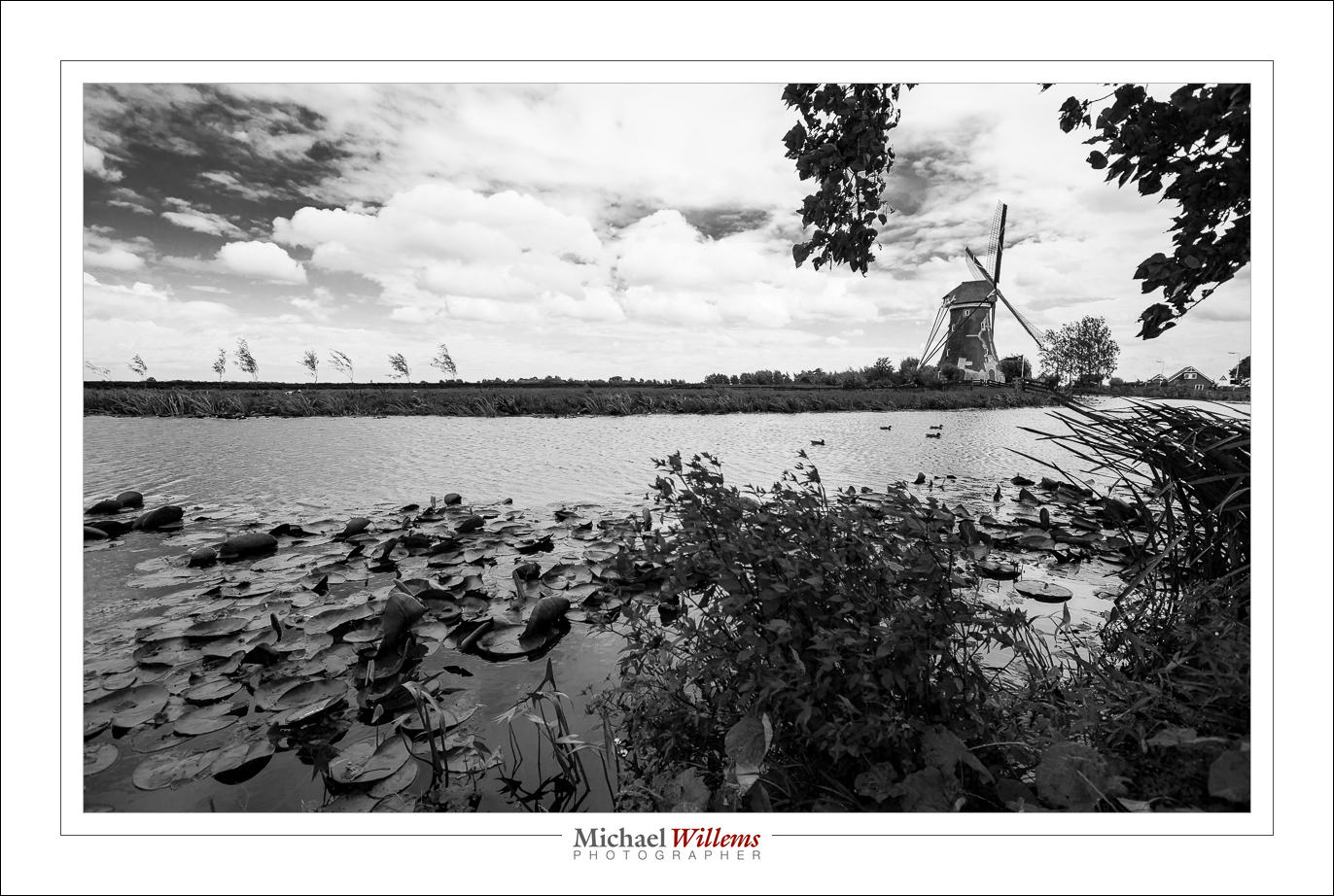
Just outside Gouda, this is what things looked like then, and it is what things still look like today:

You see those trees? That’s what I remember, riding my bicycle westward to school every day, fighting that damn wind.

Black and white pictures are a great way to convey such moods.

Here’s how you do this:

  1. Shoot RAW – this is essential
  2. Set your Picture Style to B/W. (“Monochrome”)
  3. Your previews are now B/W – but the pictures are still in colour.
  4. Now use the B&W tab in the HSL section of the DEVELOP module to convert. That way you can tweak the relative strengths of all the colours. Like adding colour filters in the old film days.

    An added benefit: you can change your mind and so colour if you choose. This only works, of course, if you shoot RAW.

    Try to shoot some B/W. It’s cool.

    ___

    Admin news:

    • Courses still open: Flash (Oct 3, all evening) and the 5-evening fundamentals course (weekly, starting Oct 2). These are in Oakville, and small – max. 6 students, and I will run them with as few as two. So, book soon.
    • I have the 24mm T/S f/3.5 tilt-shift lens for a few days, from GTA Lens rentals. But better still: I have arranged a 10% discount for my readers, from the already low prices. Click on the logo on the right. Renting a lens is a great way to try out a lens you’ve always wanted.