Ideal Aperture

The ideal aperture is like really large, yes, a small F-number?

Depends.

Well then, at least in a portrait it is, yes?

It can be. But you need to think about this carefully.

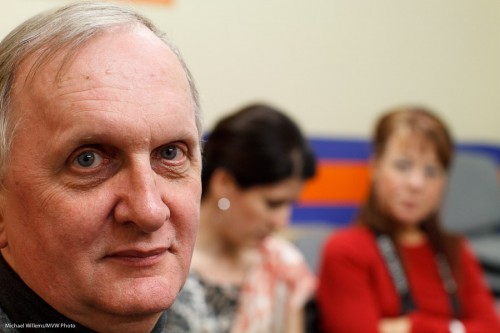
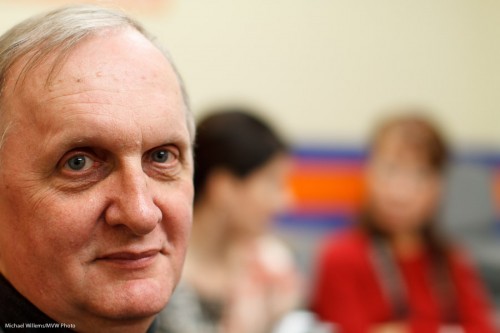
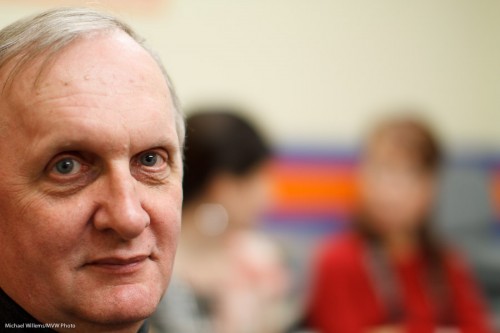
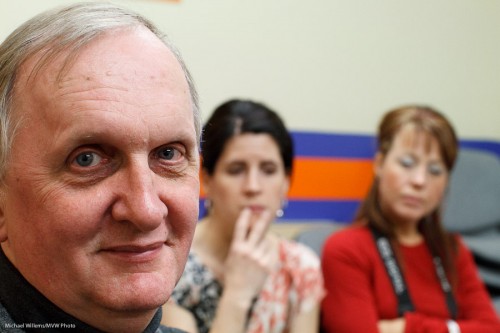
Look at this image of some students who kindly volunteered the other day:

f/5.6:

f/3.5:

f/1.8:

f/1.2:

Which one do you prefer?

I think you may agree with me that a blurrier background is better. But so is a sharp face. Often, the extremely shallow depth of field (e.g. the DOF you get at f/1.2) is too shallow for comfort. Personally, I would say that for this kind of close-up hand-held available light portrait, f/2.8 to f/4 is great.

Picture more

Today, a simple tip for you all: take more pictures. Pictures document your life and the lives of those around you, and this is of course well worth doing.

Look at this link (click): people in old snapshots, and then in the same picture, shot the same way, many years later (compliments to the modern photographers for making their image quality as bad as in the originals, which is quite a feat). Talk about time. Meant to be funny, but in fact profoundly interesting, even moving. You owe it to yourself to document your life.

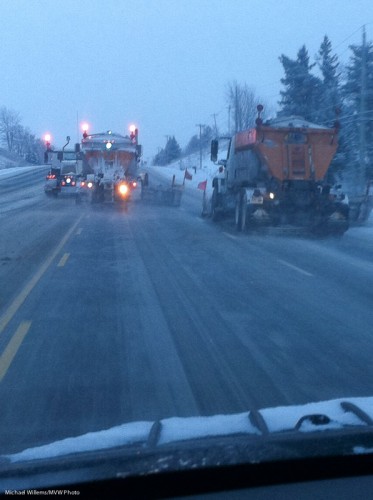
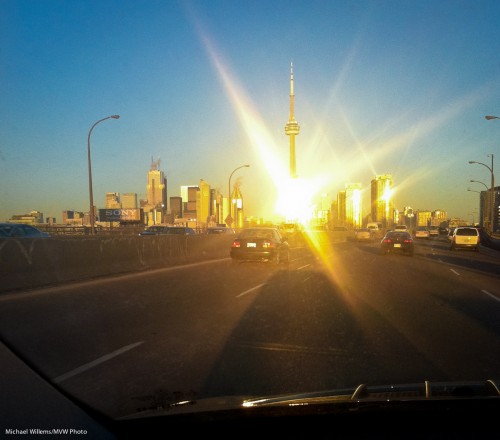
And not just the big things. Little things. Like the drive to work.

Or the drive into the city.

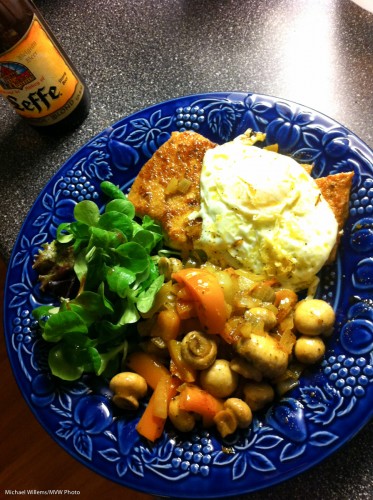
Or dinner.

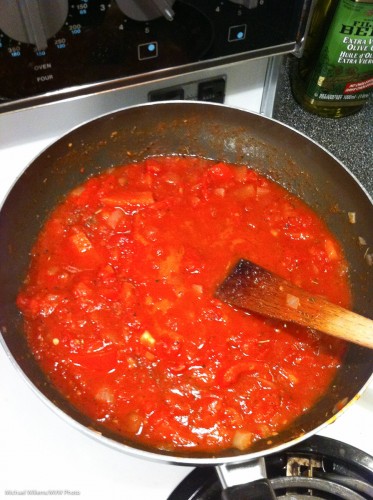
Or even the sauce that is about to become dinner.

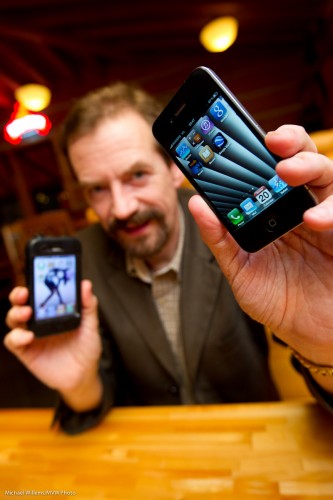
You will of course have noticed that all these are recent iPhone pictures. The best camera is, as the saying has it, the camera you have with you.

A few tips on iPhone photography:

  • You can focus where you like, by clicking on the screen in the desired area prior to taking the picture
  • When you do this, the iPhone also exposes for that area. So a normal snow pic will be too dark, but if you focus on your car’s dark dashboard, the picture will be well exposed.
  • You cannot zoom (except electronically, which ,means cropping – do that in Lightroom instead). So instead of zooming, do a lot of diagonal images to compose. That allows you to get close and get a lot in. Trust me, tilted images are OK.
  • An iPhone includes the GPS coordinates automatically with every picture.

So my advice: do carry your iPhone and do occasionally take pictures – and do look at those as a chronicle of your life.

Me tonight

Taken how?

  • 16-35mm lens on a 1.3 crop camera, set to 16mm, meaning, effective 21mm length.
  • Manual mode, 1/30th, f/2.8.
  • 400 ISO,

And then you get as close as you can to the closest object. The closer, the blurrier the distant objects (me!) will become.

Another blog post in a few minutes, with a reader question.

Granigif

That cryptic title means “Animated GIF at the Granite Club”. Which is where I was teaching portrait photography last night.

I cannot image a more fun way to spend an evening: some of the most committed, fun, outspoken, and friendly people I have had the pleasure of teaching.

So let’s start with how I set up. Click below to see it as an animated GIF. The time elapsed here was over an hour:
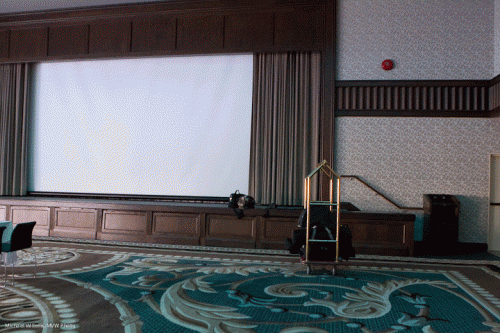
Studio Photography Lesson Setup, by Michael Willems

Studio Photography Lesson Setup, by Michael Willems

Last night was a lightning-fast lesson in portrait photography basics, from lights to pocketwizards to positioning techniques.

The interesting thing, I think, is that while for full control, the more “stuff” you have the better, you can often keep it remarkably simple.

A shot with “the standard four lights” might be this:
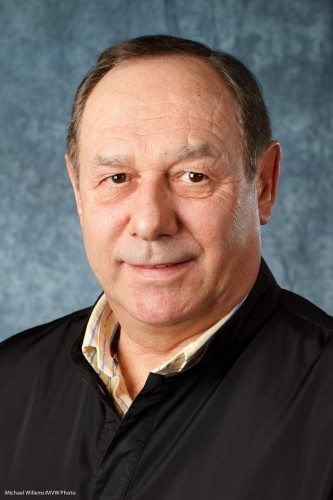
Portrait at The Granite (Photo Michael Willems)

Portrait at The Granite

That uses a key light (softbox), a fill light (umbrella), a hair light (Honl snoot), and a background light (Honl Grid).

But you can also keep it simpler. For a lady with light hair, I would not light up the background. We would also not really need the hair light. So now indeed it is simpler:
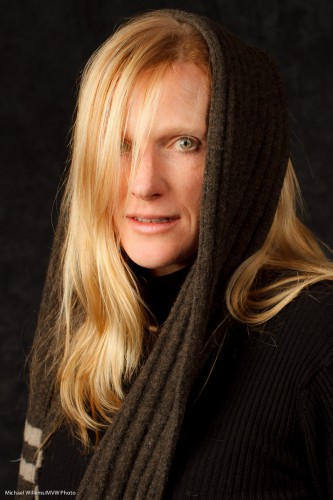
Robbin at The Granite (Photo: Michael Willems)

Robbin at The Granite

Beautiful, no?

But the real surprise is the simple setup on the left: you can just see it. A TTL flash through an umbrella. A reflector to provide fill light. And a background light to add a bit of brightness to the available background. Now all we are using, then, is two flashes and some affordable stands and a reflector.

That gives us:

Matt at The Granite (Photo: Michael Willems)

Matt at The Granite

You see: you can often keep a studio setup simple. Why use a light when a reflector will do just as well?

Studio photography is incredibly rewarding. If you think so too, I strongly recommend you take a course or private coaching and learn how to do it.
Another…

…delayed post. Things in my life are intervening, but here is a snap: a food shot. Inspired by the feeling that at 2am, I am hungry.

How do you shoot that?

  1. A soft light above the food (a flash in an umbrella).
  2. A back light from behind the food, to give it that extra sparkle (and to light up the steam).
  3. A simple composition.

Simple once you know, as always.

Another light example

Here is another lighting example for you.

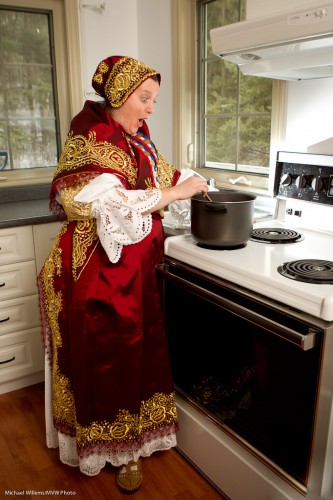
A very nice lady with an amazing traditional dress (which I am told took a year to make, which does not surprise me):

Croatian dress and mystery pot (Photo: Michael Willems)

Croatian dress and mystery pot

So how was that lit?

Here’s how.

  • First, I exposed properly for ambient light. That is why the background foliage looks good.
  • The camera, of course, is on manual.
  • Then, I added a main light on my right – a strobe in a softbox. This again gives us nice soft light. Fired by pocketwizards.
  • Then finally, I felt it needed more. So I used a speedlight in the sink, on manual, fired also by pocketwizards.

That’s how. Try some of the same if you have time!

A few travel snaps

I thought that perhaps today I would just share a few travel snaps.

Can you guess which city I took these in?

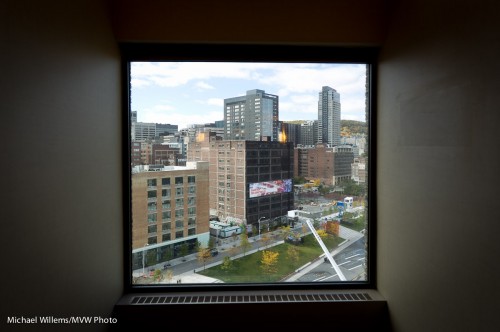
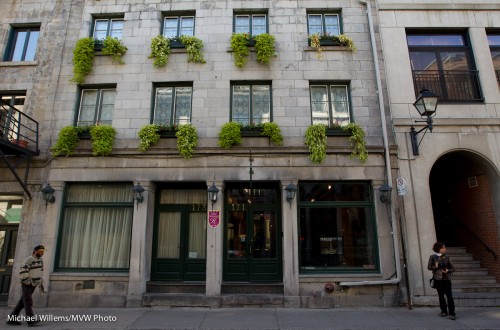
Using available framing:

Quartier Des Spectacles (Photo: Michael Willems)

Quartier Des Spectacles

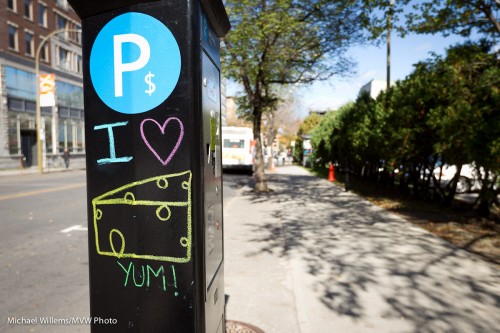
Emphasizing by using selective depth of field:

Yum!  (Photo: Michael Willems)

Yum!

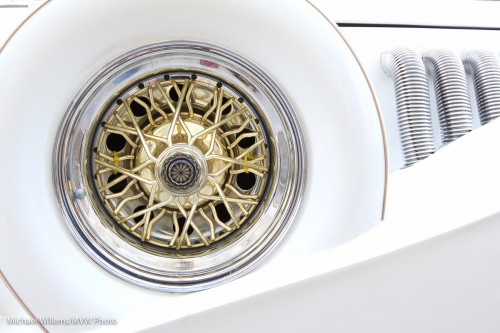
Using detail and simplifying by getting close:

Limo  (Photo: Michael Willems)

Limo

Using colour by exposing well:

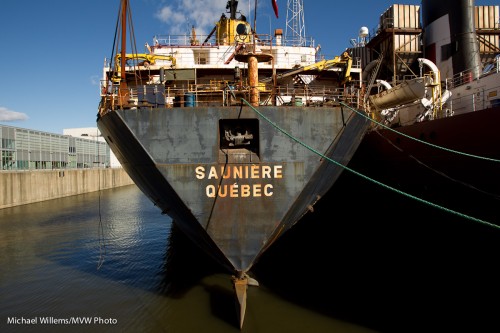
Ship  (Photo: Michael Willems)

Ship

Showing people:

Snapping a snapper (Photo: Michael Willems)

Snapping a snapper

You have guessed which city this is, by now, perhaps ?

Macro, anyone?

A definition for you, today.

“Macro” (or as Nikon calls it, “Micro”) means “showing ordinary things large”.

But true Macro, following the official definition, means the ability to obtain a 1:1 ratio between the object’s size and the size of the image on the sensor. So a 1cm long bug casts an image 1cm long onto your sensor.

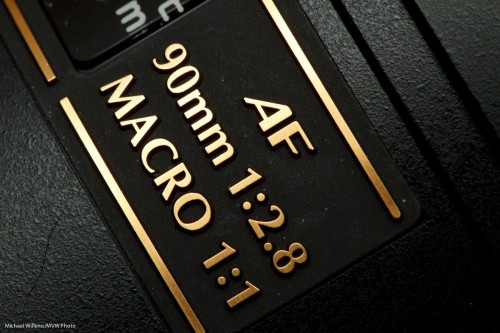
A lens can be a normal lens (not macro, usually 1:5 or worse, meaning a tiny bug image on the sensor), or a “macro featured lens” (perhaps 1:4, so that would make the bug 1/4 cm long on the sensor), or a true macro lens, like this one:

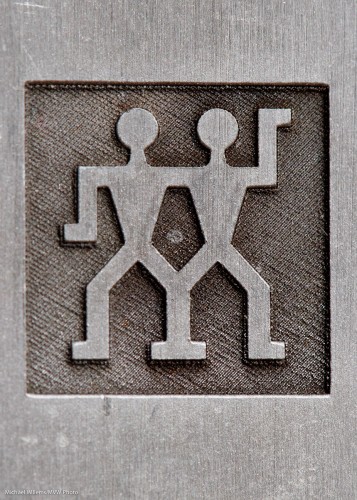
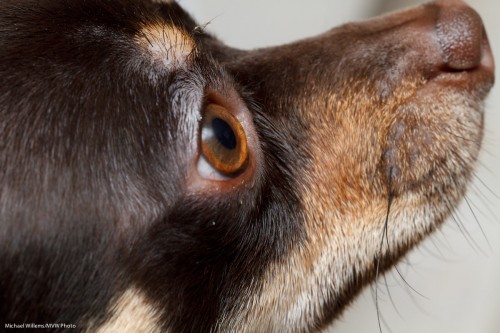
See the “1:1” marking? This, as you have seen, can give you cool images of day-to-day objects in a new light. Like this, the top of a knife:

Or this:

Yup. That’s the front of a microwave.

Or finally this:

Cute eh?

If you have a macro lens, try to shoot a few normal objects close-up, in your kitchen.

Portrait note

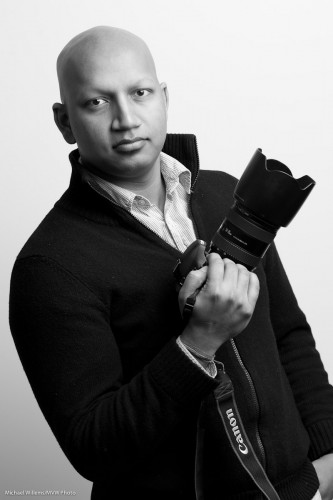
To see that you can keep portraits simple, just look at this shot of Gaurav Sharda, an up-and-coming photographer from Brampton:

Gaurav Sharda

Gaurav Sharda

This photo was taken with a 430EX flash in an umbrella to our right, fired from a Canon 1D MkIV camera with a 580EX II to drive the slave flash.

Shutter speed was 1/200th second and aperture f/5.6, at a sensitivity of 100 ISO. The lens was a 70-200 f/2.8 set to a focal length of 90mm.

Wat is simple here?

  • Available white wall, no backdrop.
  • I used TTL, no complicated metering. Of course the white wall necessitated a Flash Exposure Compensation setting of +1 stop (check your histogram to be sure).
  • One white shoot-through umbrella, nothing else (the umbrella throws enough light elsewhere into the room to also give you some fill). The umbrella also gives us a nice circular catchlight.
  • Standard “studio” settings for aperture and shutter.
  • I converted to black and white in Lightroom.
  • Nothing else needed to be done!

So for portraits, sometimes simple is enough. Do not start with lots of lights if you do not need them.

One fifteenth

When you want to show motion, one fifteenth of a second is the kind of time you need to think about.

Of course this depends on:

  • focal length of the lens
  • how fast the subject is moving
  • how close you are
  • how steady you are

..but in general, 1/15th is a good time to use.

Why?

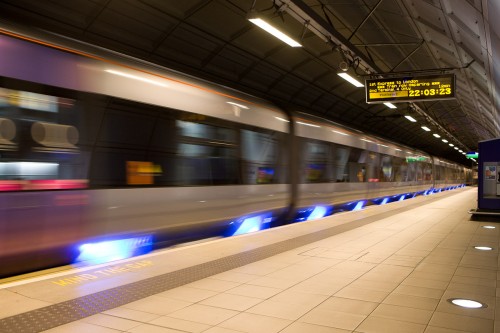
To show movement, rather than to freeze it. Like in this snap of the London Heathrow Express:

Heathrow Express Train

Heathrow Express Train

Not showing movement (shooting at a fast shutter speed) would show a “stationary” train – which here would be a big mistake.