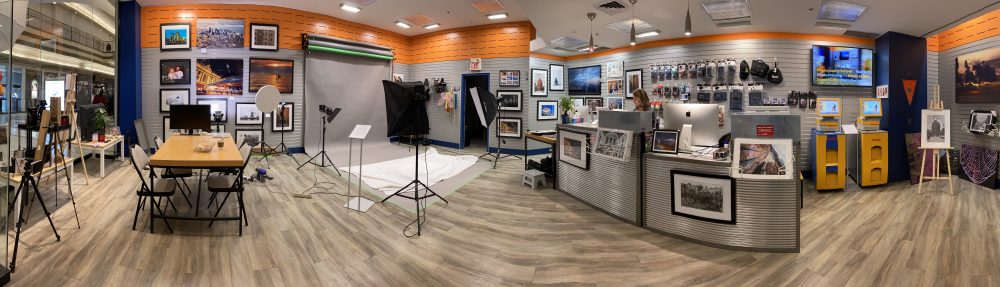
Today, I helped a student get to grips with shooting with a long lens.
So….was it really all that long? 70-200mm. And 200mm is not actually long when you are shooting small birds, some 10m away:
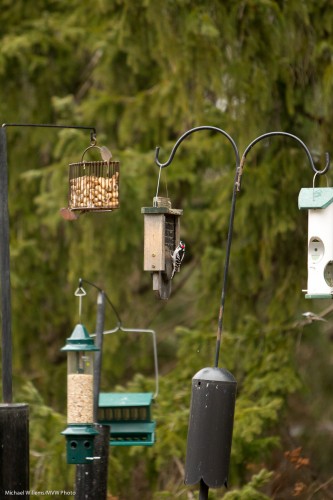
This was shot at 1600 ISO – it was a dull cloudy day and with birds you want high speed, which means high ISO even when you have a good lens opened up to f/2.8.
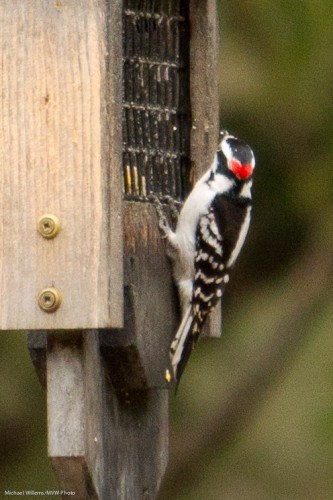
So the lens is short. So we have to crop. And when you crop, you see the limitations (click to see this part of the image at full size):
So.. what are some strategies you can use to get sharp pictures?
First, do not shoot through obstructions. Through a clean window pane, and with a filter on the lens, we got this (a small crop out of the image):
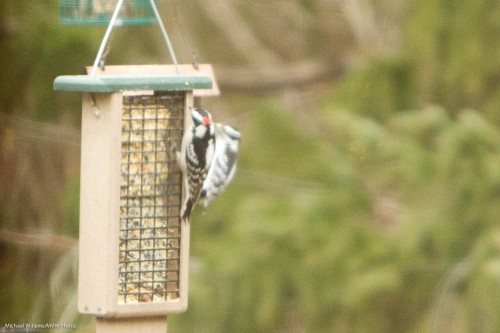
Without the filter and window, this becomes:
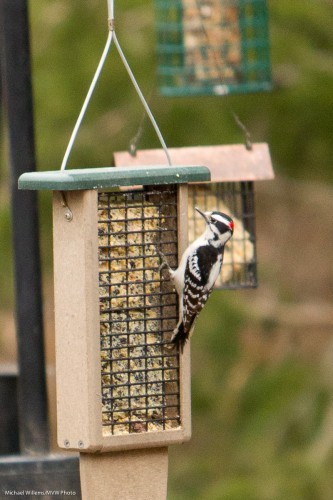
Better!
Other strategies:
- Use a good quality lens. Lenses are not what you should be saving on!
- Shoot at a fast enough shutter speed. “1 / lens length” or much better. I prefer to do this by using aperture mode at aperture wide (or nearly wide) open.
- Now set the ISO high enough to get a good shutter speed.
- Use VR/IS stabilization.
- Consider using a monopod (or even a tripod): one with a quick release.
- Focus on the background, then focus on the bird, then shoot.
- Use One Shot/AF-S focus, unless the subject moves. In that case use AI Servo/AF-C.
- Focus on contrasty bits!
- Use one focus spot, and avoid mis-focusing.
- Light well, if you can – meaning “light bright and expose to the right”. My dictum: “Bright pixels are sharp pixels”.
- Take multiple images and use what works. Your lens will mis-focus occasionally.
Also, consider stopping down the aperture a bit when you have to. Like when the bird is inside a tree… f/2.8 gives you this:
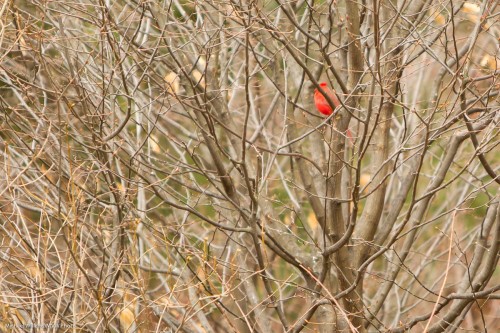
While f/4 gives you this:
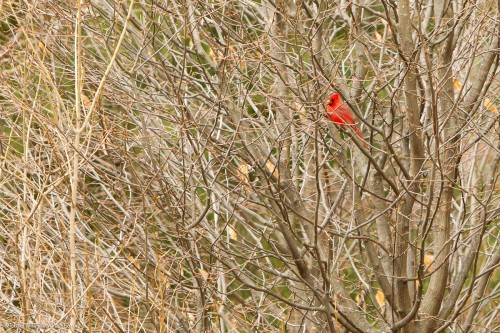
That depth of field is much better.
And one more, where a bird is “bright pixels”:
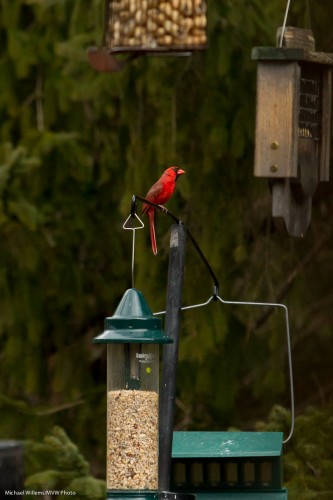
Concluding, there is not one way to get sharp pictures. The best technique is to try to stack the odds in your favour by using as many of the techniques described above.