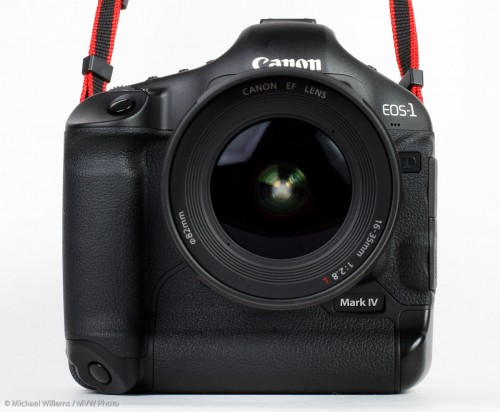
Bring a spare!

If you are shooting an important event (and ALL paid shoots are important), take some basic precautions, and bring spares.

Here is my advice:

Camera:

  1. Format memory cards before you shoot.
  2. Bring spare memory cards.
  3. Ensure that your camera batteries are 100% charged the night before. Check this!
  4. Bring spare camera batteries. At least one spare per camera.
  5. Bring a charger too, just in case.
  6. Bring a spare camera. This can be a starter camera or an old camera – just something you can grab when bad things happen.
  7. Bring a spare lens (what if your one lens’s aperture blades gets stuck? You need an alternate!).

Flash:

  1. Bring a flash – but also a spare flash of the same type. Canon TTL shooters, unless they use a 7D or a 60D, must use an IR transmitter or a 580EX flash on the camera: when that fails, your entire system is down since you can no longer remote-fire the other flashes. My 580EX II failed recently… good thing we had lots of spares.
  2. Bring charged (ideally, conditioned, i.e. discharged-then-charged) NiMH flash batteries.
  3. Bring lots of spares of those. No, I mean lots.
  4. Also, always keep a few (8?) Alkaline batteries in your bag as emergency backup. These do not cycle as fast as NiMH batteries, but they will keep their charge for many years.

Other:

  1. If you use big lights, bring more than you need. You know that your light’s flash tube will die during a shoot, not when the light is in a bag!
  2. Bring a spare photographer, if you can. If you cannot, then at least bring headache and tummy-ache pills just in case.
  3. Bring a charger for your cell phone.
  4. Here’s one most photographers forget: Bring spares for each type of cable you use. USB if you are tethered. Remote flash cable if you use that. Flash X-type. And so on. Whatever you use – bring a spare. Cables break, or go bad, all the time.

During the shoot:

  1. Change flash batteries before each segment of a shoot, even if not empty.
  2. Change your camera’s memory cards every now and then in case a card malfunctions. On some high-end cameras, like my 1-series Canon bodies, you can write to two cards at once.

These simple precautions will not only save your hide sometimes – they will. But more importantly, every shoot you do will involveless stomach acid and headache. Although of course you carry pills for those.

Final bit of advice: make a personalized checklist for shoots. This too gives you peace of mind.
Is brand important?

A student asks me this via email:

Hi Michael, hope you are well. I wanted to send this email as I enjoyed the class you taught and enjoy reading your blogs!

As an amateur photographer the very first camera I started out with was a 35mm Minolta. Hence the reason I purchased my digital Sony, as my lenses were compatible.  I’ve have been building my equipment around “Sony” but have come to so many roadblocks.

I’m not sure if you remember me but I had to borrow your camera in class because I did not have a Nikon or Canon which was compatible to your remote flash. I would love to attend your workshops but I have no knowledge of Nikon or Canon. There has also been some part time job opportunities that I could not apply for because they preferred Nikon or Canon.

So therefore my question is…should I trade in all the Sony equipment and begin with Nikon or Canon? If so, which brand and model would you recommend?

Currently I have the Sony A700 model with 3 lenses (16-105, 50, 70-200macro).

Any recommendations would be greatly appreciated!  (Can’t wait to attend one of workshops, need more help with lighting theory).

Great question, and one that occurs regularly.

And a tough question, too. And it is one to which the answer, as so often in life, is “it depends”.

Let’s go through the various aspects to this choice.

  1. Technology. The A700 is a great camera. In general, though, there is little difference in quality between brands. Sure, Canon and Nikon, as market leaders, have larger R&D budgets, but in the end, all cameras end up with the same features. Differences are minimal. Do not discount Sony, they want to be number two soon, and who knows. If Canon has benefits (very extensive lens selection) and Nikon has advantages (low ISO), Sony also has advantages (available Zeiss lenses). Where Canon has drawbacks, so does Nikon and so does Sony (ask me if I like the Sony proprietary flash socket, or if I like Sony’s menu navigation). All cameras have aperture, shutter and ISO settings, so in the end, technology is not the decisive factor – either way. More important than “what brand is this camera” is “how modern is this camera”. They all get better every year.
  2. Backward Compatibility. Clearly a big one: if you have many thousands of dollars in one equipment maker’s hardware (say, Minolta lenses, which work on Sony cameras, since Sony bought Minolta) that is a factor to be taken into account.
  3. Market. Now we come to a biggie. The market leaders, Canon and Nikon, have a huge advantage over others, since the pro photography pretty much is Nikon and Canon. You have seen it yourself: if you cannot operate Nikon or Canon, many people do not want to know you. This is unjustified – but “it is what it is”.
  4. Peripherals. From available third-party lenses to Pocketwizards, all peripherals are available for Canon and Nikon. So that too can be, for pro shooters, a benefit of switching.
  5. Knowledge, Support, Expertise. An offshoot of the previous point. Books. Courses. Technical support. “Hey guys, my flash just died: anyone have one I can use?”. “Guys, who knows how I turn on this custom feature on my camera?” – Availability of used gear on Craigslist. Reviews on the magazines and online (like my blog). All these are easy if you use Nikon or Canon.

So what would I advise you?

If you are considering a switch for technical reasons, I would say “wait”. I have shot with Olympus, Panasonic, Asahi Pentax: Nikon, Canon, and I teach all others: all cameras are great. The camera is not the important thing, the lens is – and the photographer.

But since you want to be a pro shooter who has already run into roadblocks, I would seriously consider the switch.

To what? Canon or Nikon is a personal choice. What feels better?

Then you choose the level: for you I would say

  • Starter level (Rebel, or 3000/5000) – avoid. These cameras need more pro features
  • Mid-level: 60D or D90, say: great options.
  • Basic pro: 5D, 7D, D300s, etc: great options.
  • Pro: 1D, 1Ds or D3 etc: overkill, I would say, at this point, and in general, overkill for most users (but that said: I use a 1D as well as a 1Ds).

My advice: Check out dpreview.com. When you have a particular camera in mind, ask me about that one. Ask your friends and ask other photographers.

I hope that helps.

Prints

Mmm. One of life’s little annoyances. I left a red box of 13×19″ prints somewhere this week. My portfolio of recent work. But where? It appears gone without a trace… So to all local friends: if you see it anywhere, you’ll know to call me.

But.. but… it’s complicated!

Well, sometimes things need work.

I often have students who ask “do I really need two lenses?”, “do I really need a reflector”, “do I really need a tripod”? “Must I really use manual”, … and so on.

The other day I attended a very entertaining shoot with Ivan Otis, and this shoot was a typical example of “how it’s done”.

Even a simple fashion shoot like this involves cameras, light stands, reflectors, computers, umbrellas, light meters, batteries, cables, softboxes, pocketwizards, props, two assistants, a make-up artist (“MUA”), a hairdresser, lunch, and of course a model and a photographer.

A Fashion Shoot

A Fashion Shoot

A more involved fashion shoot would also have fashion advisors, a creative director, and more.

So the answer to “do I really need all this” is “it depends, but you cannot always do everything with one handheld camera, a 50mm lens, and a pop-up flash”.

The complexity in a shoot like the one above is not done just to make things complicated! As I always say, the Sports Illustrated swimsuit-issue model cavorting happily on the beach looks good only because there is a guy with a big reflector cavorting along right behind her.

That said: you do not need to over-complicate things. Simple means can often achieve great results. Like this, taken at a recent Mono workshop Joseph Marranca and I taught:

Evanna Mills in the rain

Evanna Mills in the rain

That used just three bare speedlights and a handheld camera.

(On that note: our next “advanced lighting” all-day workshops in Mono, Ontario, will be held on 3 October and 20 November, and as of the time of writing, there is still space).

A shoot

…from beginnning to end product is a lot of work. And seeing how others do it is very interesting. Tomorrow, I am attending an all-day session with Ivan Otis at Henry’s in Toronto. (Where I teach, as it happens… so I just happen to know there is may still be one or two available spaces: sign up before it starts at 10AM tomorrow and get to Queen and Church St, Henrys: link here).

Daily News

In today’s Photography news:

  • Canon launches the G12. This is, like the G11, a low megapixel camera (kudos, Canon – good decision. High pixel densities cause more noise).
  • The Daily Mirror sacks 6 out of its ten photojournalists. Yes, photojournalism is dead.
  • A famous photojournalist was in fact a spy.

The quality of photojournalism has plummeted now that no-one is being paid to do it. There will be few more iconic news images, now that somehow people seem to believe that an amateur image shot on a phone with a 2mm-across lens is as good as an image shot on an SLR with an f/1.4 lens.

Progress cannot be stopped. Just like no-one knows Latin or punctuation anymore, and people think Sweden is the capital of Amsterdam, and just like only 5-10% of people can tell me that 1,000 x 1,000 is one million, this skill too will disappear.

And that is fair enough. “It is what it is”: if society does not value Latin, or math, or photojournalism, or knowledge of history, then they will not be around. Almost no-one reads a newspaper anymore, so why employ photojournalists?

The good news is that while deep ability like this is disappearing, at least the remaining abilities are democratizing. Instead of a few Robert Capas, we have millions (that is, thousands of thousands) of increasingly able amateurs today.

And I am determined to help Canada and the USA and any other areas that I have students in become the best-educated photography nations in the world!

Blog notes

Hi there audience!

I am just back from shooting a very enjoyable event – a birthday party. It is such fun to shoot these events.

Cakes

Cakes

Four hours shooting, and two or three hours of post-production work. All great!

More about events and how to shoot them – and what to shoot at them – in the next few days, but first, a note about why to shoot them.

We only live a few years – “three score years and ten”, according to Leviticus. Thank G-d this is no longer the limit (the person whose birthday was being celebrated in the picture above will no doubt join me in being thankful), but even though it may be twenty years more now, there is a limit –  And then we’re gone. And we long for the days gone by.

But when we have good photos, we remember. We mark those days, those places, those events, and those people down forever.  And in doing so, we own them forever.

So please… have your significant events photographed. A few dollars is nothing compared to eternal memories.

And that is why I like to help people learn photography. That is what this blog is all about: about learning the skills that will make you a really good photographer.

This blog is, and will always remain, free. But in return, you can do something for me: spread the word. I see that I have several thousand visits a day, but I would like that to be several tens of thousands a day, or several hundreds of thousands. So please tell your friends and acquaintances; write about this blog; or link to it.

And above all – read it, daily. I post every day and I hope you find it useful. Let’s make this community the best educated in the world. Photographically speaking of course.

Now… I’d like to hang around – but I need to write tomorrow morning’s post!

Love them. Love them not. Love them.

Large corporations, especially Japanese ones, can be hard to deal with. Customer Service tends not to be top of mind – dealing with these companies can be a little like dealing with the government.

They have only a vague understanding of the Internet. Their web sites are designed, it seems, to obfuscate. Long trees of site-to-site navigation, often having to chose between several options, none of which are right. “The interwebs”, for these old grey guys in suits, is, it seems, quite often just a way to get rid of those pesky customers who keep calling. (And I say that tongue-in-cheek: I am middle-aged, male, and wear suits quite often, and a tie even more often).

I use Canon equipment. The cameras are a 1Ds Mark III, a 1D Mark IV, and a 7D, and all the “L” lenses I need. Probably $45,000 worth of Canon equipment. And I love it all to bits of course, but I do rely on my cameras for a living, so I need good service when I need it.

Canon has CPS for that: Canon Professional Services. Pros get better service.

But here’s the catch.

Catches.

  • In Canada, CPS costs hundreds of dollars a year. It used to be free, and in most of the world it still is, but for Canada it costs. Much! We get a really bad deal. Why do photographers in other countries get reasonable service for free, and we in Canada pay $250 a year? After paying tens of thousands of dollars?
  • Well, at least in return, you get service. But wait. That service appears to have been downgraded from what it was, just last year! More money for more process, less service!
  • Emails from Canon about CPS have links, but the email is a graphic and you cannot click on the link.
  • The CPS program has no email. Their emails are signed by “CPS Services”. Who wants customers to email them? Not Canon, it appears. Makes me feel very unwanted: Canon goes out of its way to not be contacted by me. I am an annoyance.
  • Service? Well, I signed up. I got “approved” (ludicrous that you have to get approved, but anyway). I got a bill. Had a question. Called the person whose name and number was on the bill. She was on holiday (it’s OK for some!) so I left a message on her voice mail. This lady never called me back. I guess perhaps they have a “policy” against that.

As a result, I have not yet paid. And I doubt that I will. Maybe I’ll switch to another brand of camera equipment if I ever need service. Paying tens of thousands of dollars for less service, and getting no help? Doesn’t seem like such a good deal to me.

I cannot imagine treating customers this badly. Suppliers of any product or service should go out of their way to make their customers, who part with their hard-earned money for them, happy.I am delighted to work at midnight, or to go the extra mile in any way I can. I love my customers. I am grateful to them. I cannot imagine treating them badly!

So when my thousands of students ask me whether Canon service is like Apple’s, I can only sigh. And I doubt that Nikon is better (correct me please, if I am wrong!)

One thing I will say: retailers can be a very useful buffer.  Henrys (Canada’s largest photo store) are fantastic. (Disclaimer: I teach there. That said, I do not work for them, and I can say this independently). Any service issue at Henry’s is dealt with very well. They invite contact, instead of avoiding it.

And I am not just saying that: I take out the additional Henrys warranty on all my cameras. The only additional warranty I ever buy. Because it is worth it.

The summary of this post:

  • Large corporations can be good (Apple) or useless (you know who you are) at service.
  • Retailers can be a very useful way for customers not to have to deal with these corporations (just like insurance brokers).
  • Service is important: if your camera breaks, you are out of business!

Now back to photo editing, my job for tonight.

Matt

Matt of WordPress dot com explained, I now see, why he inconvenienced me and thousands of other bloggers: see http://ma.tt/2010/07/syn-thesis-1/#comment-481953

Quote: “regardless we’ve always had attribution on it. We’re replacing it anyway, don’t want any of his junk touching our sites.”

So he killed my blog layout and widgets to satisfy his own  need to have a great designer’s “junk” not on his site? What an inconsiderate person. All the prejudices I ever had against spoilt Californian kids are bubbling up. Except Matt tells me he is not even Californian!

Postscript: so OK, I got a bit angry. Can you see why, though?

Credit where credit is due.

While Sears has not so far handled my watch destruction well (see previous post of a few days ago), Apple has come through once more with shining colours.

I took my iPhone 3Gs in to the Apple Store on Saturday. Cracks had started to appear on the bottom. Was that covered by warranty, I wondered?

When I arrived, the Apple Genius (hum) told me that:

  1. My warranty had expired by 37 days
  2. But since my iPhone looked well-treated they would replace it anyway.

Result: a brand-new iPhone 3Gs, with no cracks.

New iPhone 3Gs

My All-New iPhone 3Gs

They even set it up for me, gave it a quick charge, exchanged the card, and made sure it worked. Kudos to Apple Sherway Gardens and Chris the “Genius”. Credit where credit is due.

Of course this is sensible customer service. I will no doubt keep going back to add to my iPhone, iPod, iPad, iMac, MacBook Pro, and MacBook Air repertoire.