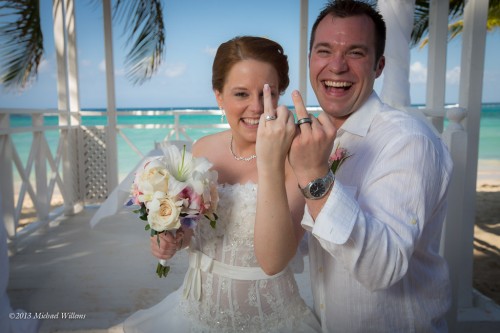
Group Shot Tips

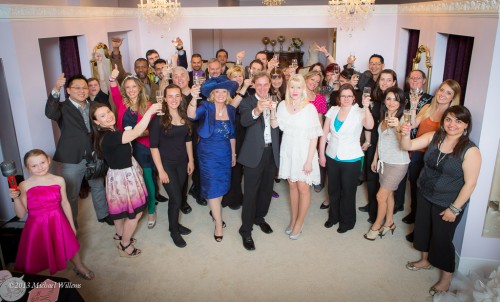
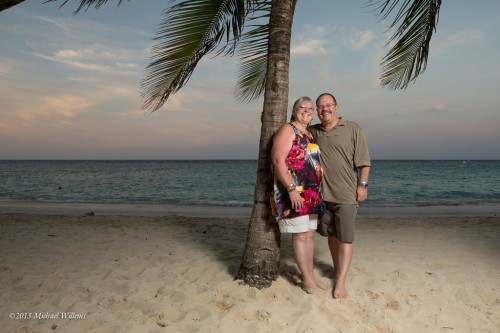
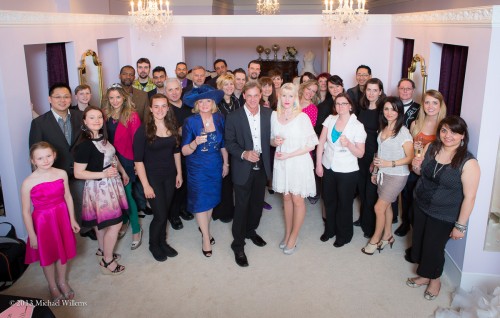
Today, let me share a few tips fror group shots, like the pne I took af the Royal Posh/Wedding Café opening on Saturday:

A photo like that works best if you:

  • Stand on something high – else, row 2 and further disappear behind the heads of row 1.
  • Use simple light – two umbrellas, or as in this case, one flash bounced off a white sheet held up behind me.
  • Direct. Be loud and clear and tell people what you expect.
  • Focus on someone in the centre row.
  • Tell everyone that if they can not see the camera clearly, it cannot see them clearly.
  • Take several shots – 3-5 is a good umber – in case of blinkers.

Do not forget to get fun expressions also:

You may or may not use them, and I often do, but in any case, they lighten the mood!


Cardinal Rules for studio light

So yesterday I taught my signature “Advanced Flash” workshop in Hamilton. And one of subjects was restricting and directing light.

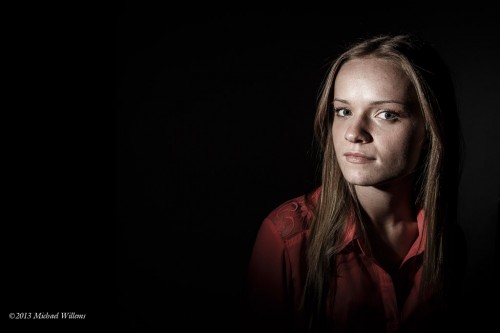
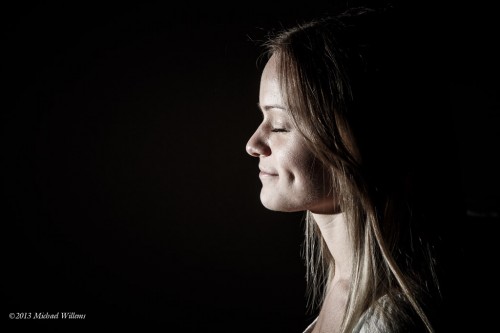
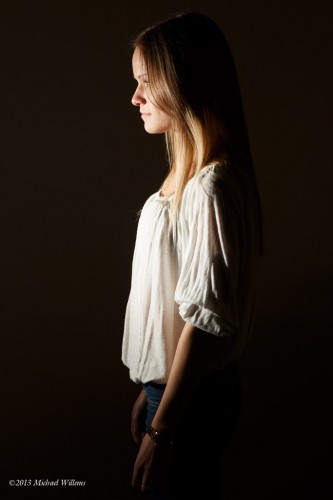
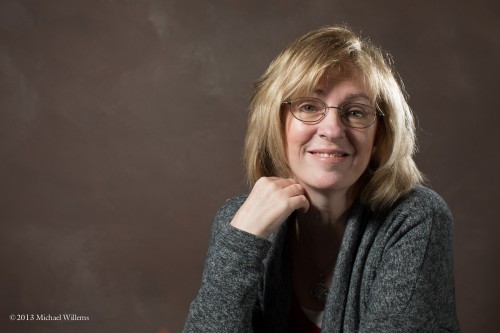
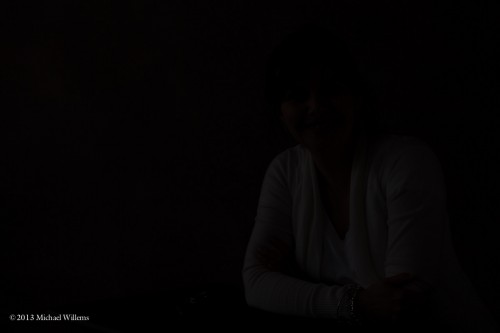
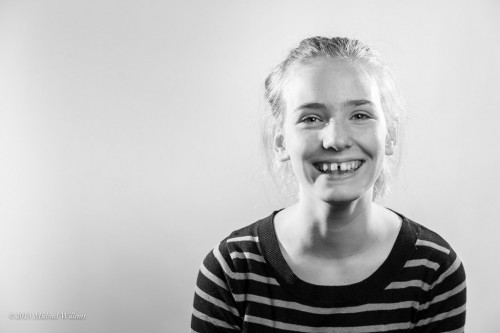
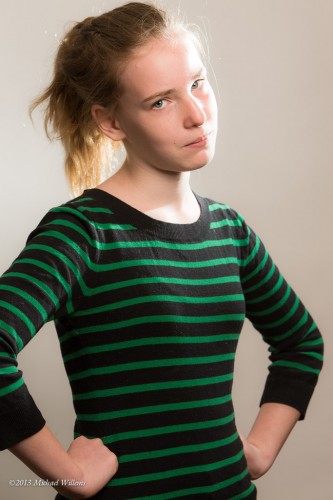
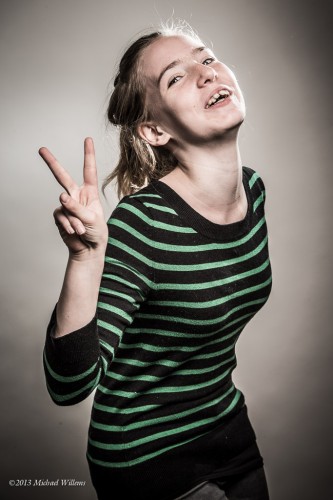
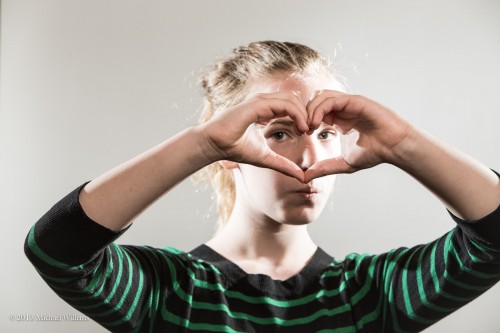
Look at these four images of Vanessa, our workshop model for the day, and consider me what you see happening here:
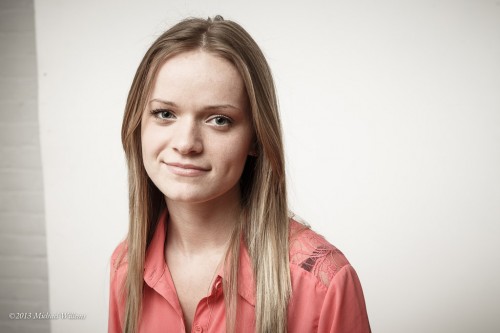
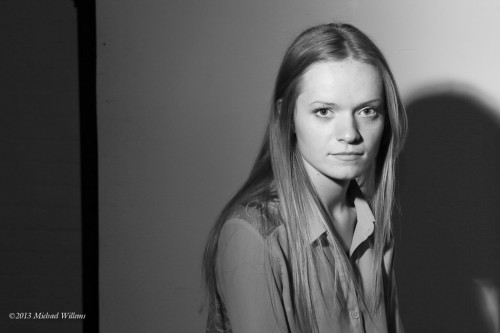
As you see, they are in increasing order of, as I like to call it, “specificity of the light”.

And can you see how they all show a different aspect of the model’s personality? And how they are all “storytelling pictures”?

Here’s the thing: all of these were taken with just one flash. Four very different types of light; one flash. And here were you, thinking “I can’t do what Michael does because I don’t have all the gadgets and gizmos he has, and I don’t have $30,000 to spare on equipment like he does”. Well – no longer true. You can keep it simple. Just keep in mind what I like to call my cardinal rules:

  1. Work out what the background should be like.
  2. Set your camera accordingly.
  3. Have the flash elsewhere than where your lens is.
  4. Always know what your flash reach is – “where is it shining”.
  5. And for effect, make it specific.

As for (1) and (2), I shoot at 1/125th second, f/8, 200 ISO. That gives me the dark ambient light I want.

As for (3), in the interest of speed, I used wireless TTL flash setup. But I could have used pocketwizards, of course, and I normally would have.

As for (4) and (5), except in the first image, which was bounced and hence not at all specific; and in the second image, where I used a Honl Photo 8″ softbox and which hence was only somewhat specific; I used a grid on the flash for the rest (my favourite flash accessory, a Honl Photo 1/4″ grid), in order to restrict where the light goes.

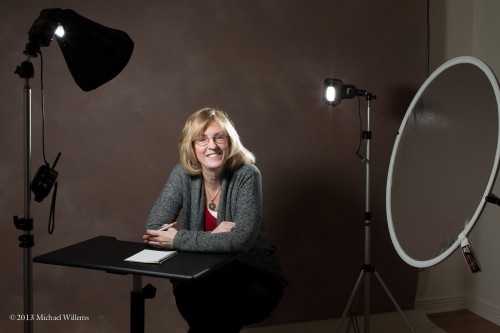
Here’s what the studio, and a few of the students, looked like:
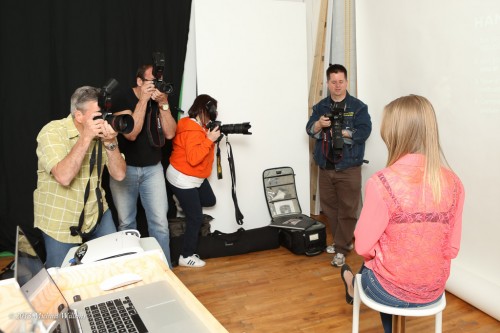
Of course we can make it more complicated, and add the required “shampooey goodness(tm), but even that only neeeds a few flashes and a reflector:
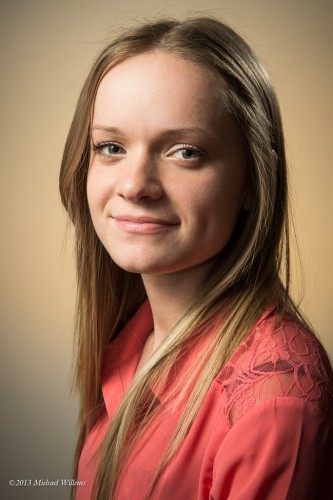
And then you get creative – two flashes, one with a grid, one with a blue gel. And then you can concentrate not just on your light, but on your positioning – as in this one, where my friend and great fashion photographer Baz Kanda did the positioning:
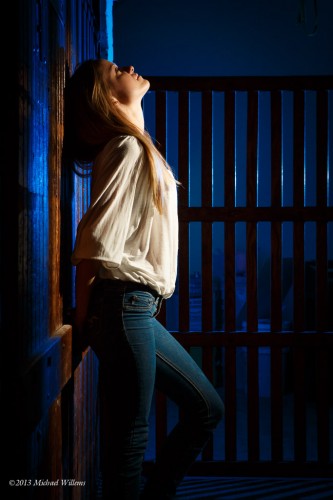
Even that is simple – just two small flashes with simple modifiers.

___

Learn the skills and become a great photographer with little equipment: it is very rewarding and you can do it. Many more courses coming up, so stay tuned on http://www.cameratraining.ca (click on “schedule”).

 

Treasure Trove

Your old photos are a treasure trove.

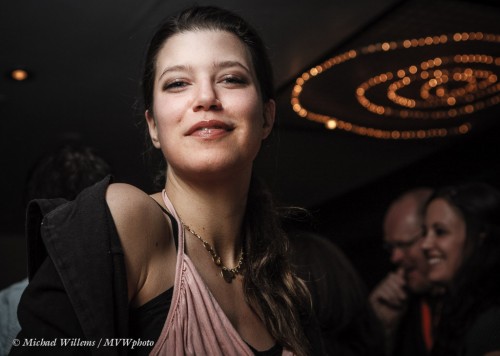
I reminded myself of this again last night: searching for some images for a client, I came across many great images that I had overlooked before. Like this, of Miss Halton 2009, Evangeline Mackell:

Some images are great because they remind you of the times you shot them in. Others, because they show friends you may have almost forgotten, or places that seemed humdrum at the time, but carry meaning in retrospect. Or perhaps they show people who have since become famous. Yet others, because they are artistically good. Some, because you simply overlooked them, and that is more common than you may think. Always revisit your images multiple times.

Also, over time, you get new insights into how to finish images. The image above is desaturated – my flavour of the moment. In this image, it makes it good.

One thing to do with your images is to:

  1. Date them in the filename.
  2. Organize your images in folders by date.

TIP: When images are imported into Lightroom, you have options, and here are two of the most useful ones to apply automatically when you import any image:

  • File renaming. My images automatically get renamed upon import to “year+month+day+original filename:, so that an image named “MVWS0318” becomes “20100114-MVWS0318”. That way whenever I find this image on my hard drive in the future, I can quickly go to folder “/photos/2010/2010014-Toronto” to find the other pictures from this shoot.
  • I set the camera calibration Profile to “Camera Standard”, not “Adobe Standard”. That way the images look more like the way they look on the back LCD after I shoot them.

More images:

As you see, even the waitress can make for a nice shot. Or people with nice backgrounds thrown out of focus:

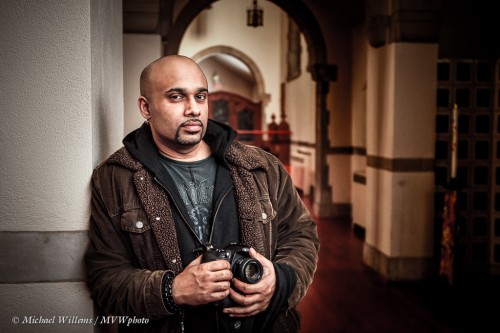
Or people like my friend and animal lover and incredibly talented photographer Baz Kanda, who is expected at the Willems Studio Residence (i.e. here) in an hour to accompany me to the Flash course I am teaching today. Here he is at Storey Wilkins’s residence and at a church, in January 2009:

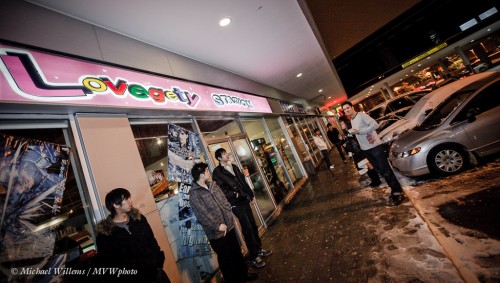
Dallas Hansen at Lovegety Station – only the Japanese can come up with a word like “Lovegety”…:

And those are just a few random picks from a few random days a few years ago. Can you see the potential?

Now, time to prepare for my course.


A “Simple is Good” studio setup

I trained a local photographer in the subject of studio photography yesterday, and we kept it simple. Because simple is good!

First, let me show you a resulting picture of her friend, the model for the day:

Good studio photo, right? Yup.

So how did we get to this?

First, set the camera to standard studio settings. Like 1/125th to 1/200th second, f/8, 100 ISO.  This is designed to make ambient light go away. The studio was a bright room – big windows with only light sheer curtains. And yet with those settings, it looked like this in photos:

Second, now add lights where you want them:

  • A camera with a pocketwizard transmitter on it.
  • A main light – a speedlight (Canon 430EX) fitted with a Honl Photo Traveller 8 softbox.
  • A Pocketwizard to fire this flash.
  • A Flashzebra cable from Pocketwizard to flash hotshoe.
  • A light stand with ball head for it to sit on.
  • A reflector to act as fill light.
  • A  430EX flash to act as hair light (Shampooey Goodness™).
  • A light trigger from Flashzebra to set off that flash.
  • A similar ball head and stand.
  • A Honl Photo 1/8″ grid to restrict the light’s path.

All this looks like this (remember, take a “pullback shot”):

Third, now set the power levels. With the camera at 100 ISO. 1/200th, f/8, a power level of about 1/2 on the main flash and 1/4 for the hair light did the trick.

All this takes minutes to set up. A pro studio shot can often be done with simple equipment like this. And note the appropriate backdrop. The blond hair means we wanted a darker background. For dark hair I might have wanted a lighter backdrop: in that case I can add another light to light the backdrop I have.

This image is good and needs no pst work other than cropping to taste. Note the correct catch lights in the eyes: 45 degrees off centre and crear (and round, here).

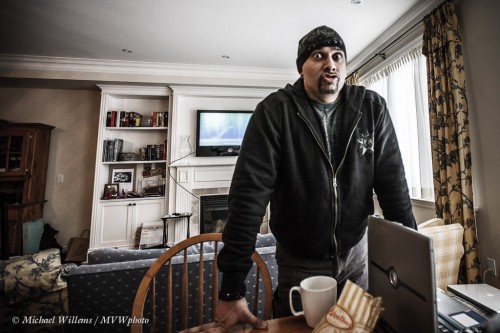
Now, another shoot, the day before: friend and ex colleague (and client) Keith, showing true character:

This was done with three lights: One with softbox where I am., and two feathered flashes, unmodified, on each side, lighting both backdrop and side of his face. Again, a simple setup, although it took a few minutes work to set up. Slifght clariti enhacement to give it more pop, and slight desaturate to meet the web spects that this image was taken for.

By the way, fun expressions are good. Can you see how in that picture, Keith’s nice guy nature really shines through, even that was not te point of the picture? try to capture your subjects’ personality in the images you make.


Families, and what precedes them (weddings)

Why do I love to shoot weddings and families?

Because we live to love. We live a short time (although my son Daniel, when he was perhaps nine years old and I said “life’s very short!” instantly responded “No it isn’t: it’s the longest thing you’ll ever do.”)

In any case, capturing personality and life events is one way we can be immortal. Look at this kid at a portrait shoot I did yesterday: four different looks in a few minutes. Happy and open; death stare; typical teen Facebook pose; and cool. If you were the parents, would you not love immortalizing your daughter this way?

And just think at the excellent pictures mom and dad will be able to project onto the wall at the time of her wedding (or more likely by then, holographically project in front of each guest).

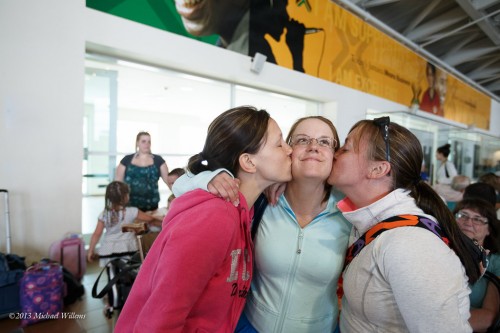
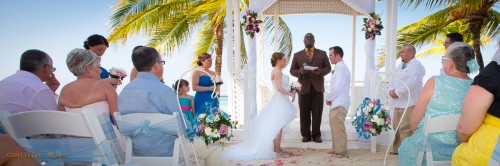
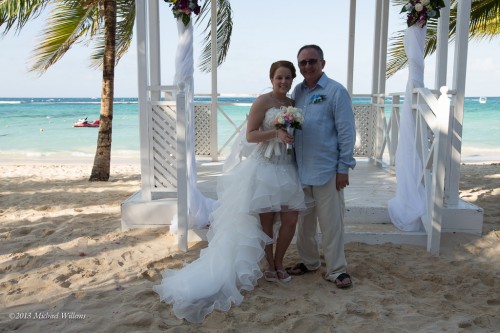
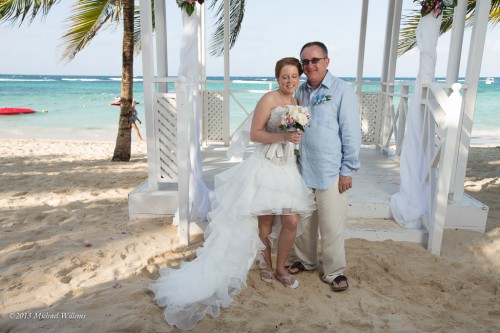
Talking of weddings… I just got back from Jamaica, and my mission there was to tell a story. Not just to get the standard wedding shots – the ones you might get when you hire a local resort pro – yes, those too, but so much more: the story of the entire trip. Smiles. Moments. Love. Beach. Fun. Friends. Outings. Jamaica. Airports. Buses. The entire trip. One of the bride’s best friends (and bridesmaids) just responded to teh slideshow I put together:

What an amazingly great job on the video Michael! I LOVE the pictures!!! I laughed and I cried! I flashed back to the great times we had on the trip…and it made me wish I was closer to my friends! THANK YOU so much!! Amazing, amazing, amazing job!!! 🙂

And THAT is why I shoot destination weddings: I met great people and I made a difference to them by enabling them to remember and relive this life event forever.

And that of course must include a “b-roll” of pictures that include:

  • fun.
  • events (like “the plane ride”)
  • background, to show the environment.

Like these:

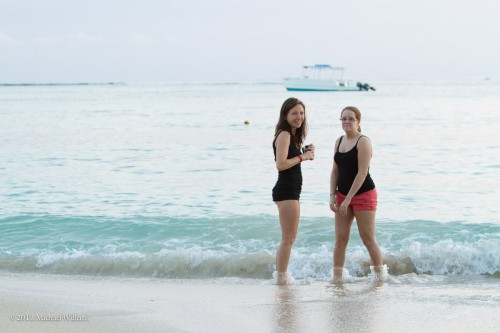
Most of these were taken at 5:30AM on the day of departure. All of these are extra to a “normal” wedding. No local wedding pro will every get you anything close to that. So if you want a wedding trip to remember, bring your own photographer.

So when you make a trip:

  1. Tell a story! And to do this:
  2. Look for markers – moments in time that mark a transition, like airport arrival; climbing up the waterfall; leaving; entering the bus; that sort of thing. Every time a new phase starts.
  3. “If it smiles, shoot it”.
  4. Look for anything funny and capture it, too.
  5. Carry the camera when you think you will NOT need it. Some of the best pictures arrive without warning.
  6. Look for background, the “B-roll”, to remind people “what it was like”. Signs are good. So are views. The food. The detail; the little things you notice when you arrive. Shoot them; later, sort out of you want to use or not.
  7. Sort into the right order later.
  8. Make a slide show – or make multiples, maybe 5 minutes each. Background and “Ken Burns effect” are good.

That’s what I do when I shoot a destination wedding.


Tropical Paradise.

If you are thinking of a destination wedding, I say two things:

  1. Do it – you will never regret it. The beauty is amazing, and “all in once place just metres from your room” is great for a relaxed wedding. Marry in a beautiful resort and your images will show that beauty.
  2. Bring your own photographer. He will be able to capture your wedding better, but he wil also capture more than just the wedding, in a way no local hotel photographer can ever do.

Jamaica was fabulous. The people, the wedding…

A few tips.

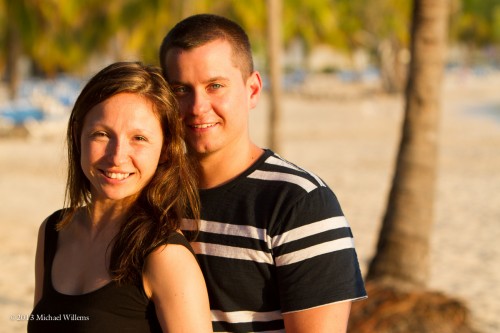
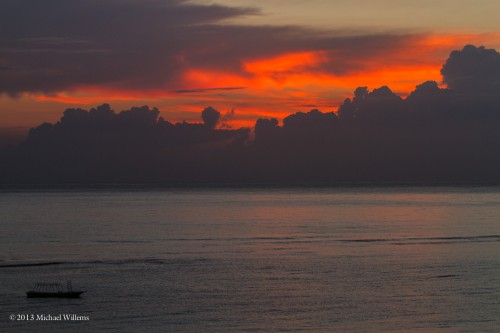
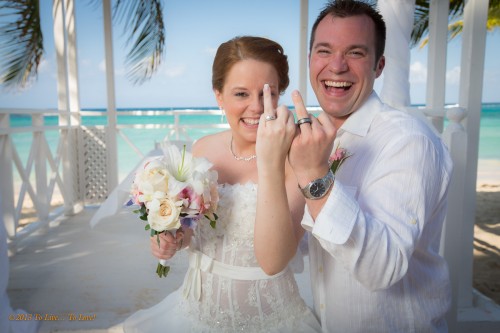
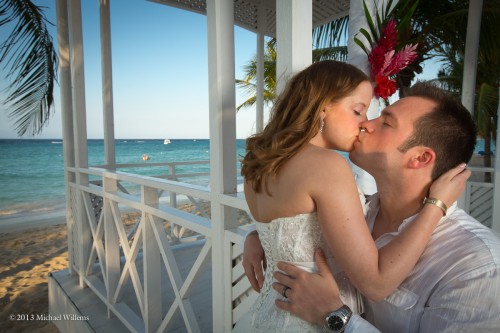
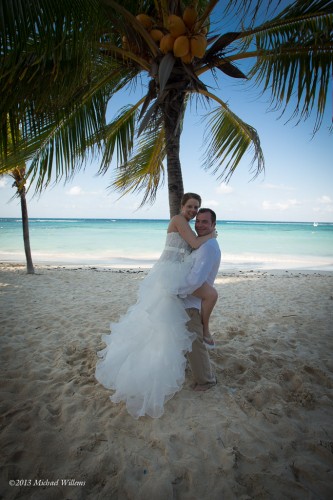
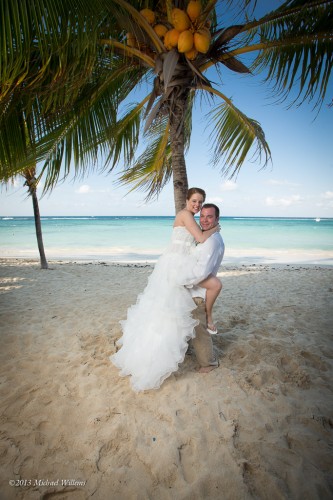
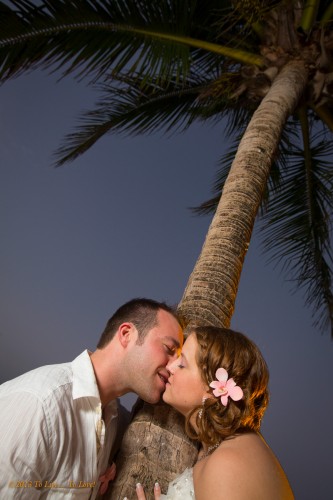
In terms of light, I did several things. Mainly, create colourful backgrounds by exposing for those backgrounds, and then use flash to light the foreground; as in the image above.

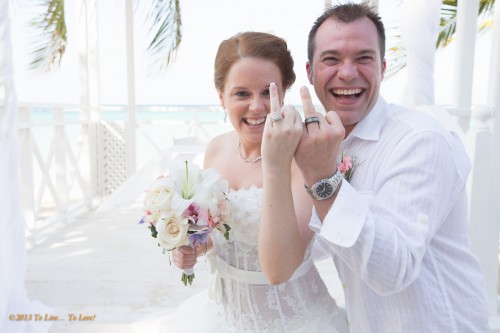
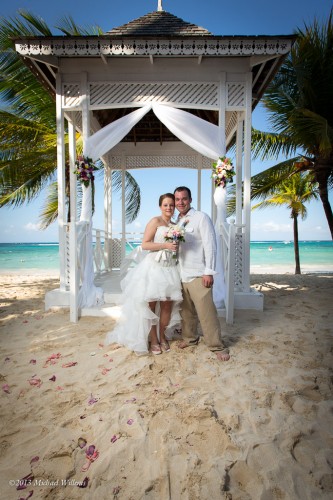
But I also did some with blown out backgrounds: look at the background:

The first has no flash, and is exposed for the couple. The second has flash, and is exposed for the background. Both are good, and I advise all photographers to do various styles: “your” style, but also other styles, and then you choose the best later.

And d not be afraid to use high ISOs. You may need them in order to get fast enough shutter speeds.

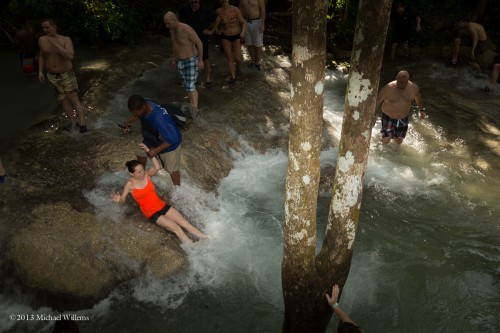
I also encourage shooters to use selective lighting, like I am using here at Dunn’s River Falls:

My flash was zoomed to 125mm even though I was shooting at a wide angle, and it was aimed at the subject. Magic!

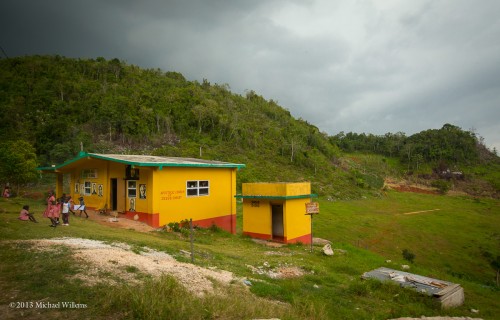
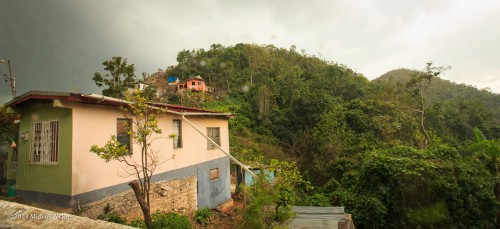
Do not be afraid of rainy days. They are beautiful, as in Nine Miles here (where Bob Marley was born):

Now, back to my photo finishing – which will take me a little while (think, all week). I will leave you with one more Jamaica image:

Jamaica

As Bob Marley said:

No want you come galang so;
No want you fe galang so.
You want come cold I up;
But you can’t come cold I up

(“I don’t want you to be like that / You want to put me down, but you can’t put me down” – from “Trenchtown Rock”).
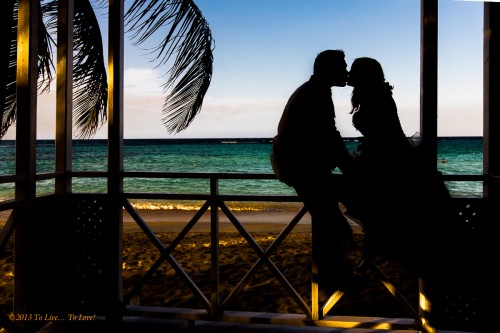
Jamaica made me cheerful. Not just because Bob Marley, whose music I have listened to since 1975, was from here (I saw his Mausoleum, and much ganja was smoked there), but because people are friendly and happy and smiling; and because I love the Jamaican patois, and the handshakes, Ya man, everyting irie. Respect!
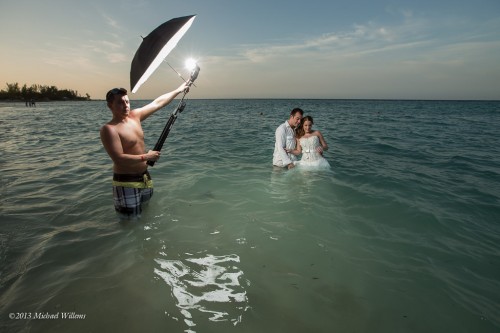
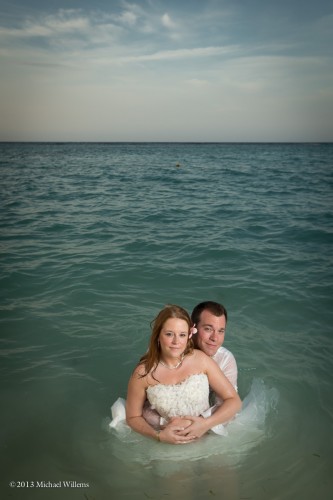
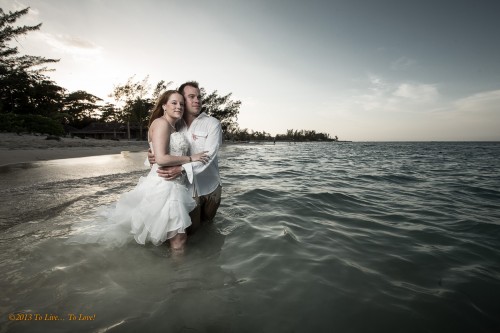
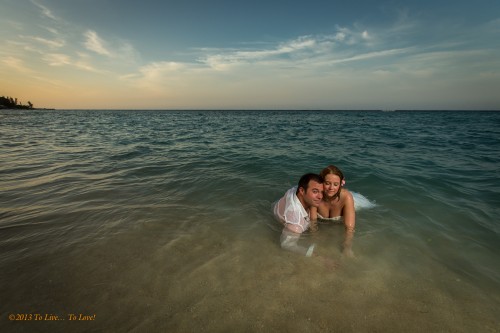
But I am cheerful also because Kristen and Dan’s wedding was a lot of fun to shoot. Since I was with them all week, they got the entire week covered: the trip, the wedding day, the “trash the dress” the days after, and their friends and family.

And when the mood is great, the photos are great, as was the case here this week.

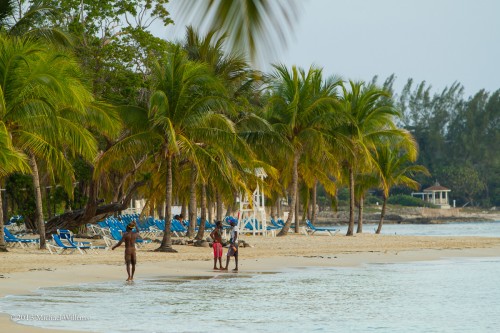
And in the Caribbean, it is all about colour and light.

Or lack of light: keep light off subject, then expose for the background and the picture takes itself:

But sometimes the light needs some help, like here:

An image like that is taken how? Well..

  1. by first exposing for a darker background – 1/250th second, 100 ISO, f/8 perhaps. F/11 would be even better but then the flash has to punch through that f/11, so it had better be a powerful, close by flash.
  2. By taking the flash off camera. I used pocketwizards and one flash, today.
  3. And by modifying the light.

My single flash was modified and held by guest TJ:

This makes for great photos, some of which I might also do a little Lightroom treatment on, like here:

And some I will not do that to, like this:

I apply the Rule of Thirds, of course. And I use negative space. And close-far. But can you see how here, it is all about light and colour?

In family shots too, which I made for a few people (featuring Catharine, the groom’s mom):

Now in all these I used the settings and rules and principles above. But as the day went down, it as necessary for me to progressively open the lens more. More about this later – and how and why I did them without using either TTL or a light meter.

Going home tomorrow. No want Sunwing to cold I up….!

Michael


What you need on the beach

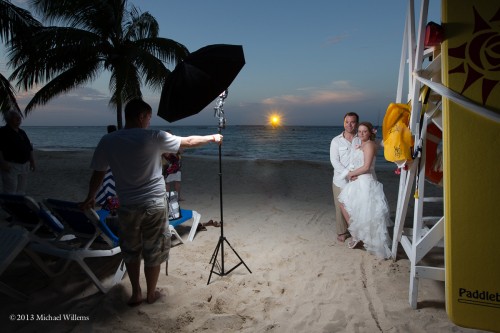
…is an umbrella, and an off-camera flash in that umbrella, as I said the other day. Some of you have asked “why” – so here’s why.

Bride and dad, with no flash:

Same, but with flash in an umbrella:

As you see, the first example is terrible. Now, I could have increased exposure (higher ISO, slower shutter or lower “f-number”), but that would have also lost the background: it would have become all white.

Two more examples:

Both cases show why you need flash, no? Without my flashes, I would have done little of value in Jamaica.

And on-camera flash would have looked flat und uninteresting.

Here’s a typical setup – and the yellow flash and ghost hand (if you look carefully) belong to a person I have removed here for clarity 🙂

And I did not need a lot:

  1. Camera, of course
  2. Wide angle lens.
  3. Two pocketwizards.
  4. PW to flash cable from flashzebra.com.
  5. Flash, with spare batteries.
  6. Lightstand.
  7. Bracket for mounting umbrella and flash on lightstand.
  8. Optional: second flash with pocketwizard and cable, fitted with 1/4″ Honlphoto grid and Egg Yolk Yellow gel.

Easy once you have the knowledge… which brings me to my courses. Have a look at www.cameratraining.ca under “Schedule” and see what I can help you achieve – then sign up now.


Light.

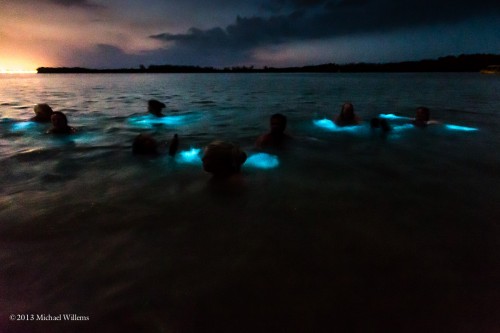
A phosphorescent dinoflagellate, you say?

Yes. A kind of microorganism that glows in the dark.  And it lives in salt water, but especially in Jamaica’s Luminous Lagoon. And it glows when agitated – like when there’s swimmers:

I was the only person to get any pictures. Why? Because it was dark. Very dark. Very, very dark.

So I had to shoot like this:

  • 16,000 ISO (!)
  • f/2.8 – f/4
  • 1/2 second shutter time, on a boat.
  • Manual focus – guessed because it was too dark to see even to focus manually.

Even then, I had to push the shot a little in post.

Longer shutter speeds and a tripod, you say? Not on a moving boat!

I could not see my focus scale, so I could not even look at the lens and manually set the sharpest point to, say, 3m. It was all guesswork – and guess what, it worked. Good gear (f/2.8, 16,000 ISO, yes, sixteen thousand) helped me a lot.


Note To Self

I am in Jamaica shooting a wedding. When traveling, you may want to bring some of the things that in packing last Sunday at 3AM, I did not remember to pack – and usually do:

  • Bring a power bar. Hotels never have even remotely enough  power outlets.
  • Bring clear lens filters, just in case.
  • Bring enough memory cards.
  • The worst, for me:  Bring a mouse with the computer if you want to edit. Pads are useless for accurate editing.

I did remember some things of course, so I was able to get a lot of good shots.

The things I remembered include:

  • Bring enough batteries! Change them all the time.
  • Bring an umbrella. Without the umbrella and Pocketwizards and flash cables and enough flashes I could not have done the shots I did, like the one above.
  • Bring a laptop and Lightroom.
  • Bring a spare disk – backup, backup, backup!
  • Bring two cameras and 16-35, 24-70, 70-200 and 50mm prime lenses.
  • Bring microfiber cloths and a small brush to clean cameras at beach.
  • Bring medication for tummy upsets – have not needed this but always carry!

If I had had more powerful lights, I could have made more dramatic images – but the images I made were just what I had in mind…!

Now  bath, then off to breakfast, then the pool or the Caribbean sea: decisions, decisions!