Aftermath – Abandon All Dreams

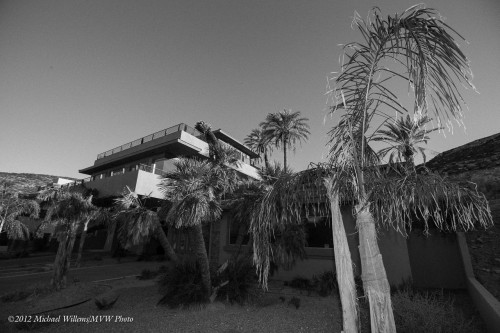
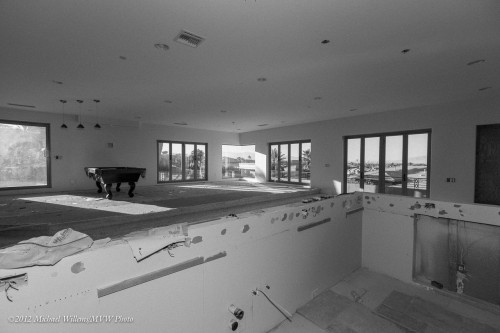
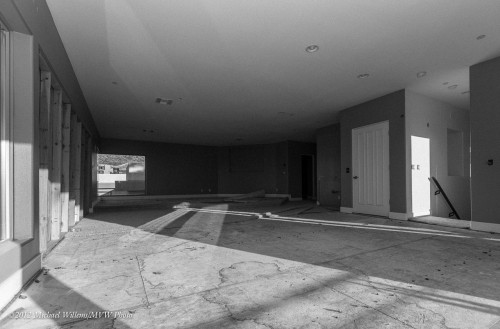
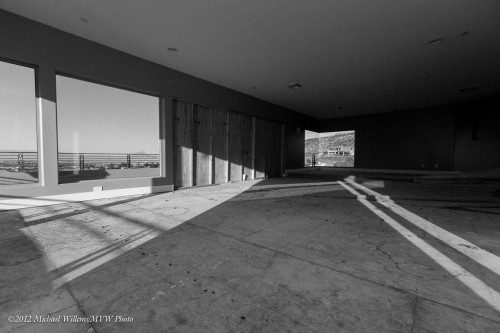
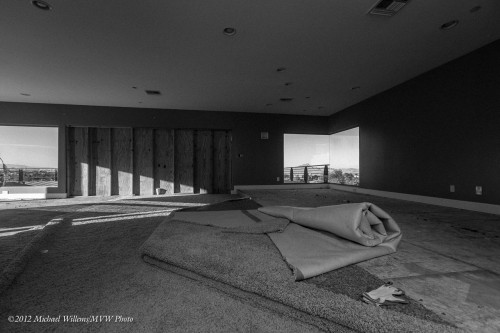
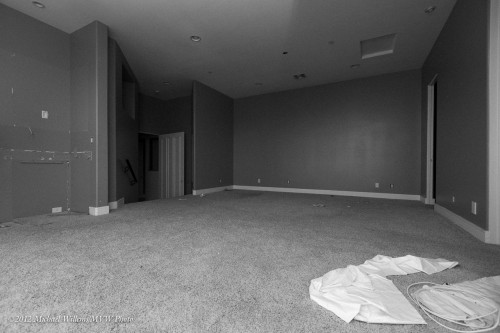
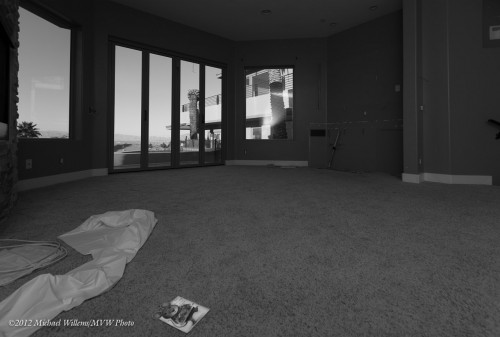
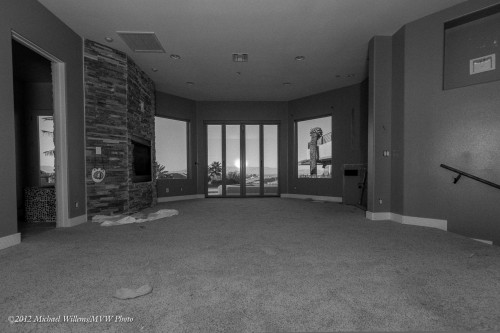
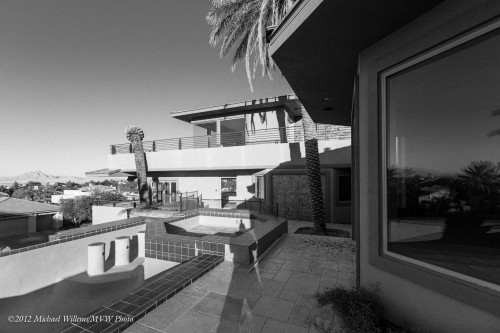
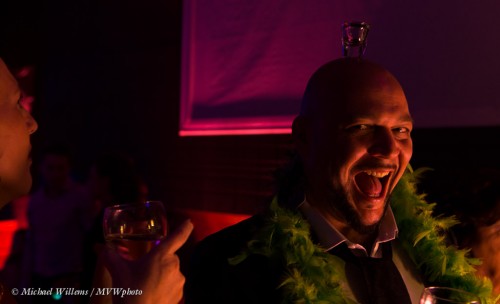
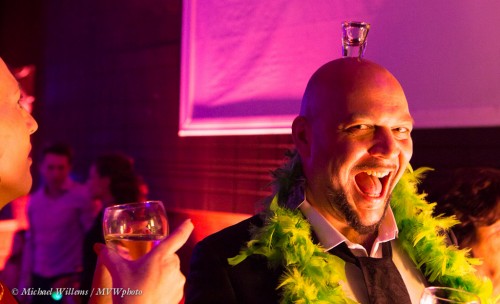
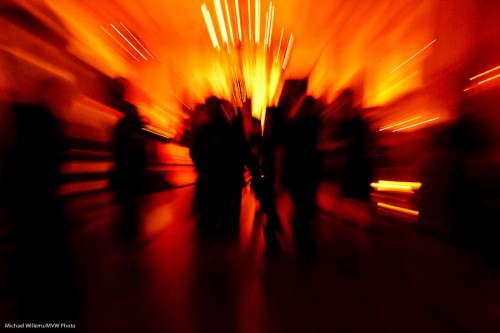
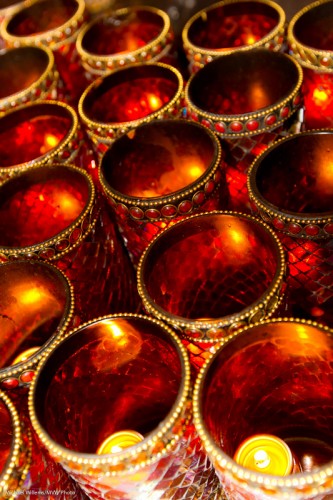
“Aftermath” – a short series I shot in a foreclosed home in Henderson, Nevada yesterday.

The contrast between the beautiful home and its present gutted nature, the abandoned dream is so great, and so sad.  None of this was staged, of course. The stories are human (look at the card in one of the shots: in fact it says “For Mommy, With Love”.)


Air Show Tips 2

And a few more tips for shooting events like air shows.

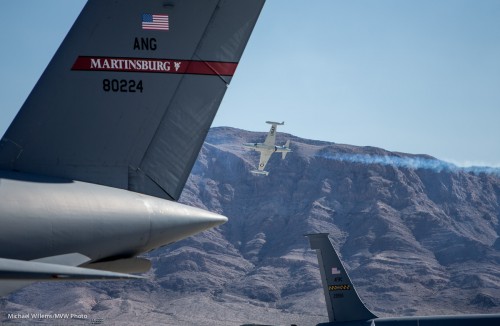
Avoid what happened to me above: the grey area on the bottom left is the outline of the head of another spectator. I was too late – just a quick visit, so I was not at the front.

Use a crop camera if you have one – your lens is 1.5/1.6x longer that way! And consider using an extender to make your lenses longer. I used a 70-200 on a full frame camera, so I had to crop; a longer lens would have been great. 1.4 and 2.0x entenders are good. Not cheap, and you lose some stops, but there should be plenty of light at these events.

Be half way down the runway – that’s the lowest point for many routines and flybys.

Stay where you are. Find a position and stay. If you move, you lose shots.

Look at the sun. Be aware where the light is coming from.

Bring a Hoodman Hood Loupe – so you can check your exposures.

Um.. and have fun. Though doing this must be a lot more fun than just watching it:

(Yes, he is upside down).


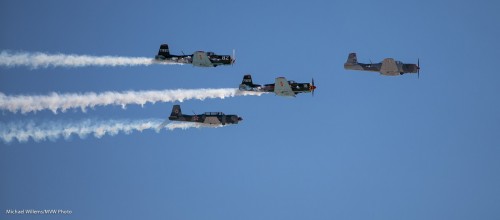
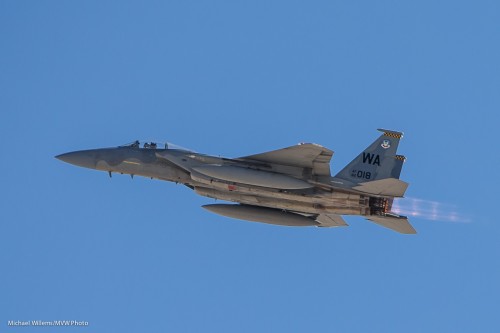
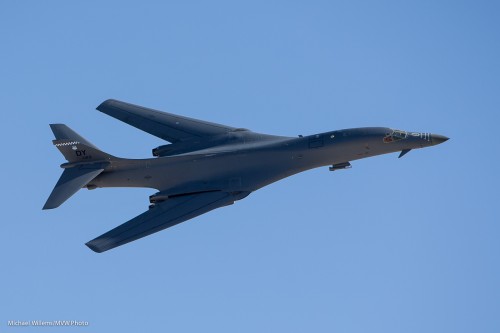
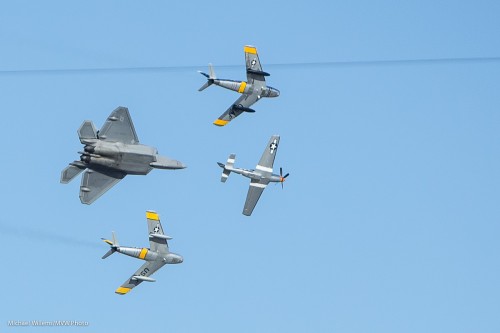
Shooting an Airshow

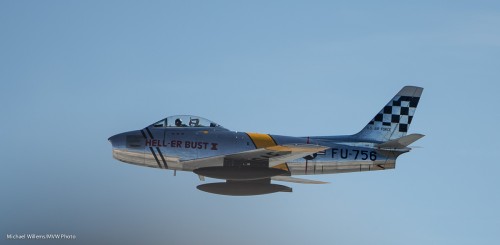
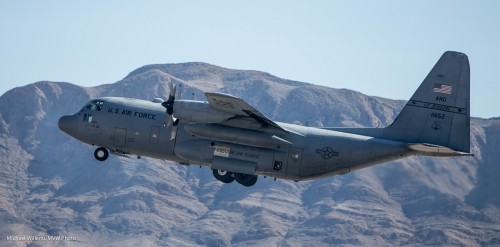
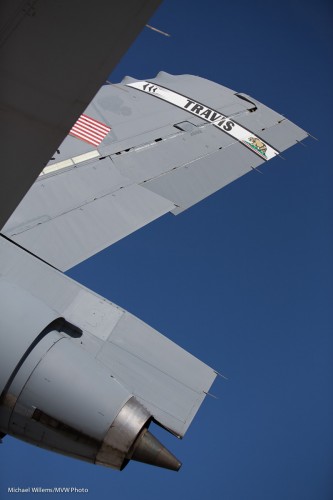
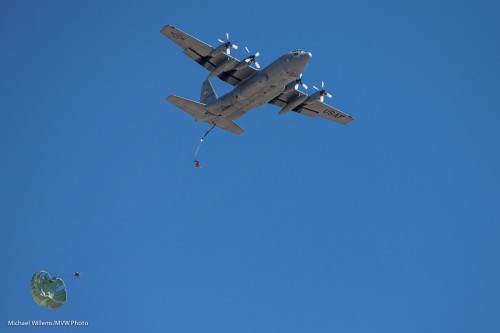
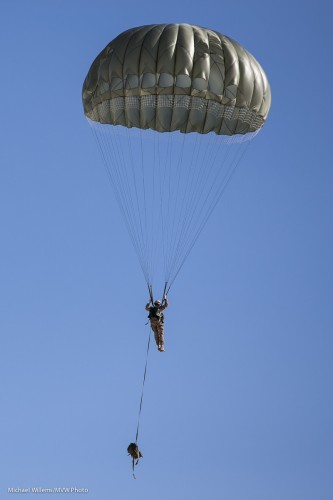
I took a few shots yesterday at an airshow in Las Vegas.

And this is interesting to you why? Because it reminds me to tell you something about shooting air shows and such.

Equipment:

  1. Use a stabilized long lens-  200-400 mm or longer is best.
  2. Set the stabilizer to “Active” or “Mode 2” if it has that option: you will be panning with the aircraft.
  3. Also bring a wide lens for close-up shots of ground equipment and parked aircraft.

Camera settings:

  1. Use manual mode. Figure out exposure for aircraft and set to that. Take into account direction – back lit or front lit, that makes a difference.
  2. Set your focus mode to AF-C / AI Servo. Continuous focus is usually best.
  3. Ensure a shutter speed that is fast enough – maybe 1/500th second for prop planes and 1/2000th or faster for jets.
  4. Use continuous shutter release mode.

A few more samples:

Other:

  1. Get close to the landing strip
  2. Arrive early and get a good spot with no-one in front of you
  3. Crop images when needed!
  4. Your bag may be searched, so keep it simple.
  5. As said above… use a wide lens for detail shots – lots of stuff on the ground.
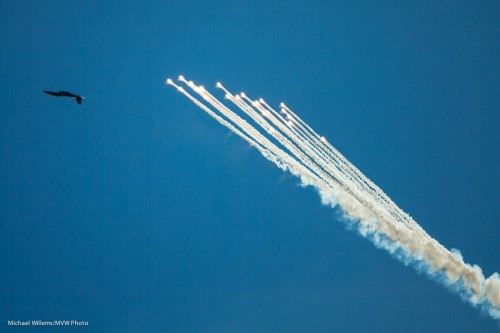
  6. I always use one focus spot, except at air shows.. only one thing in the sky. So I use the “camera chooses where to focus” way. But one thing I had not realized: the camera will try to focus on the darm smoke trails. So a smaller focus area might be a good idea.

And finally, a few more samples. All at or around 1/2500th second, f/2.8, 100 ISO, with the 70-200mm lens, cropped as needed.

So.. go shoot at airshows, and enjoy shooting moving objects.


Not Immediately Obvious

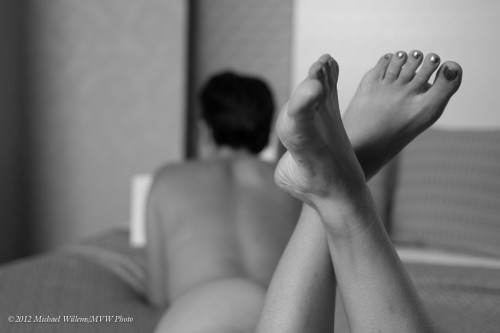
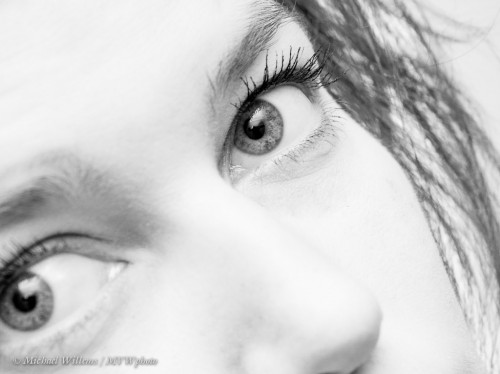
In a good photo, it is often good to not make your message too obvious. It is better to “talk without saying much”. A photo like this, taken yesterday, “model reading book”, is often more effective in conveying a situation or mood than an explicit image that tries to lay it all out:

Make the viewer put it together. That way the image is much more effective. In the case of the image above, the image benefits from the following elements:

  • Black and white.
  • Blurred subject, while foreground is sharp.
  • Face not visible.
  • Rule Of Thirds composition.
  • Action (“what is happening here”) is not immediately obvious.

The “not immediately obvious” is key. Are your images always immediately obvious? Like “Spouse Standing in front of Eiffel Tower Smiling at Camera”? Then I suggest you may try some of these techniques to make them more interesting.


The Decisive Moment

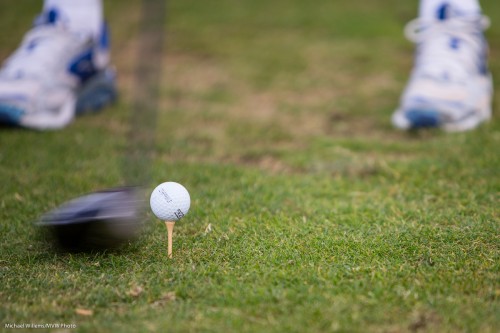
Sometimes time is the important part of an image. Like here, in this image taken yesterday afternoon of a golf ball about to be wacked:

Time is of importance here in two ways:

First, the moment. A millisecond later would have been too late; a millisecond earlier, too early. How do you capture these moments? By shooting a lot, set to continuous shooting. Shoot streams like this and if you are lucky, maybe one in five will have a good image like this. And that is with a fast-shooting camera like my 1Dx, which shoots 10 frames a second; a slower camera would give much less of a success rate.

Second, the motion. A faster shutter speed would have failed to show the club’s motion; a slower shutter speed, and we would have seen just a blur.

I shot this image with a 70-200mm lens, with the camera in manual mode at 400 ISO, f/2.8, 1/1000th second.

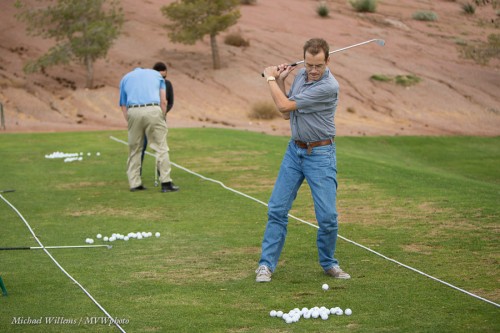
And for the record, I am a lot better shooting golf pictures than I am actually hitting the ball…


Red

One thing I have always told my students: “Include something red”. OK, that is a little exaggerated. But there is a grain of truth!

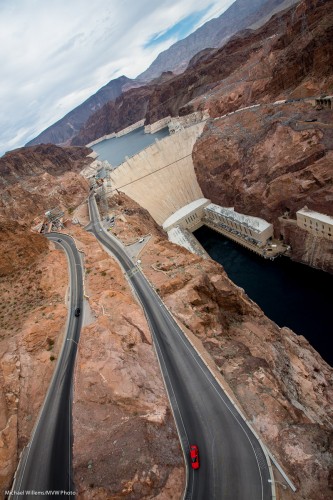
Look at today’s image, of the Hoover Dam:

Hoover Dam (Photo: © Michael Willems Photographer)

Hoover Dam (Photo: © Michael Willems Photographer)

What makes this a good image? Well.. I would say: the wide angle, the colours, the tilt, the rule of thirds, the curves, and, as the cherry on top, the red car. A little contrast like that is great. Juxtapositions. Contrast. Storytelling. And red, in a green and brown and blue nature scene.


Techniques When It’s Tough, Continued

Tough shoots, when nothing works for you? “Gibt’s Nicht Gibt’s Nicht“, as a German acquaintance used to say.  you can always do it.

Here’s yet another way. Shoot without flash if you must, in a hurry, even with the wrong settings and fix later.

This image, from last Saturday’s Bat Mitzvah party, was taken at 1600 ISO but the flash was not ready. Nevertheless I wanted the moment and could not wait, so I took the image:

Now since I shoot RAW ( a must!), I can then pop up the exposure by, wait for it… 2.8 stops. Almost three stops and yet a very usable picture results:

Now do not get me wrong, I am not advocating making bad pictures and then trying to fix them in post. What I am saying is that you have a large number of techniques at your disposal, and sometimes even this one comes in very handy. A safety net, if you will.

___

A good photographer has all these at his or her command – that’s why you hire a pro for shoots. And those of you who want to learn these techniques: I am available for training, one or one or groups.


A ‘Tog Gotta Do What A ‘Tog’s Gotta Do

If you are an amateur or an emerging pro, be careful before agreeing to shoot an event! Events mark important milestones in life, and they should definitely be photographed. But they are tough. Very tough. Much more difficult than studio shooting.

At a typical event, last night night’s Bat Mitzvah party, I need to get shots like this:

I must get this. No ifs or buts. This is a must-have: the Bat Mitzvah girl’s chair dance.

Alas, the photographer at an event like this is faced with:

  • It’s way too dark.
  • It’s also too contrasty: spotlights bright, background dark.
  • No bounce options in areas with high-dark ceilings.
  • Other areas have beams stopping my light.
  • Other areas have coloured walls or spotlights.
  • You set up for one area and then the action moves quickly to a different area – no time to redo your settings.
  • Action is too fast for me to follow.
  • You get ready and then the subjects turn away from you just as the important thing is happening!
  • In the dark I cannot see my camera’s controls.
  • In the dark I cannot autofocus.
  • It’s all moving too fast to manually focus.
  • No-one tells me when important moments are going to happen – or where!

All these and more – but failure is not an option. That’s why you hire a pro to do it.

In the next weeks I shall touch upon this subject repeatedly, with some techniques to get you started. Unless you are an experienced pro, do not attempt to shoot an event (like a wedding) until you have practiced many times. But anyway, my tips and techniques will help.

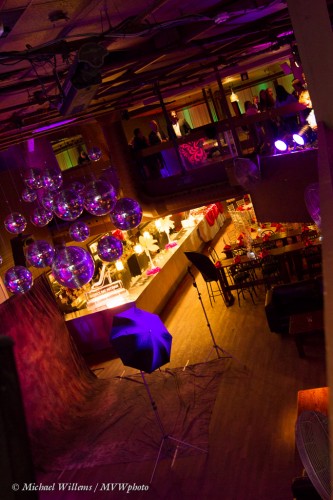
Today – what to do when you cannot bounce off a black, high ceiling? Like this:
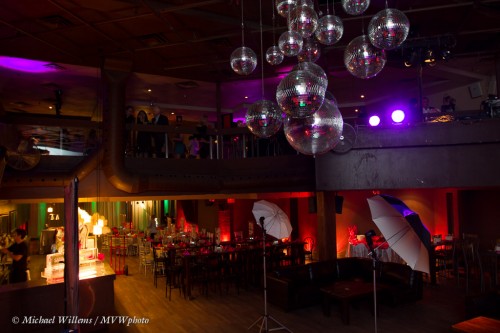
Well you can do sub-optimal stuff, like use a Fong Lightsphere (a useful device to save your behind sometimes, but not creative), or use direct flash. Ouch. Better if you get creative!

On the stage behind me, I had noticed a big projector screen:
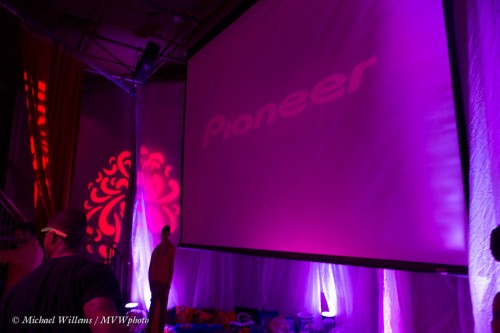
So now I have a solution. Zoom my flash in to 80mm and then aim it behind me, directly at the screen – something like this:
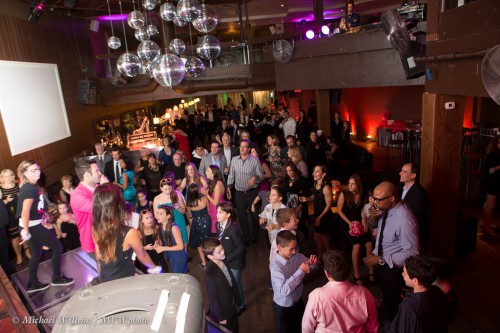
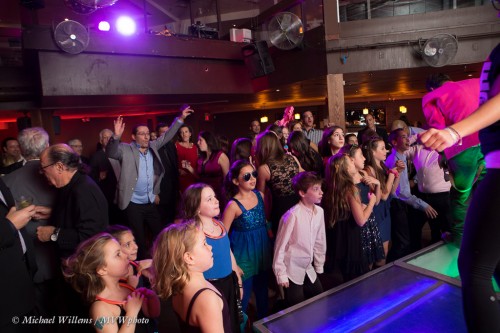
See the bright screen left? Be VERY careful how you aim your speedlight: miss the screen and you have no effect at all.

But if you do it well, you have now solved your problem: a great big softbox on the wall!
BONUS TECHNIQUE:

One I discovered a while ago by accident. But in retrospect it should have been obvious.

You saw, in the first shots, those disco balls? Aim your flash directly at them and you get great glittery decoration of otherwise humdrum shots:
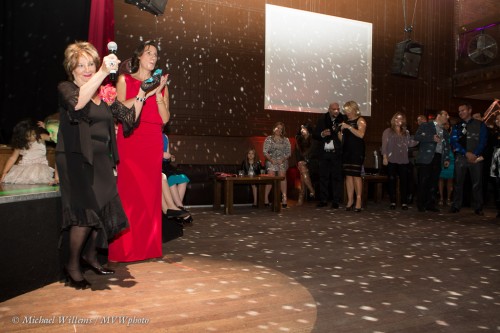
So there’s just two of hundreds of technique points for you – have fun in this festive season! And remember: don’t give up. Photography is problem solving!


Opportunity Knocks

Opportunity abounds this season – in many ways!

You can have me teach you – at Vistek Mississauga, at Sheridan College, and in the form of workshops (A Toronto Photo Club tonight; Las Vegas in November) or of private or small group coaching, which is usually the best way to quickly tie all the loose ends together and fill the gaps. Contact me if you are interested before the holidays!

You can have portraits made – family portraits are on special until December, so that you can have anything from a quick portrait to an extensive session done at a special rate, to use over the holidays.

And you can go shoot! This season is great, because it offers challenges. Dreary days. Bad light (if like me you are in the Northern Hemisphere). Food. Parties. Macro Studio. Effects.  Lights. Let your imagination run wild and learn some technique to capture this season. There’s so much to shoot!

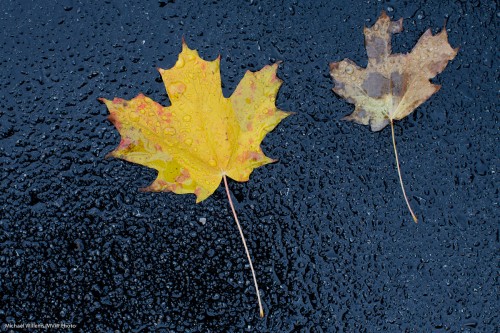
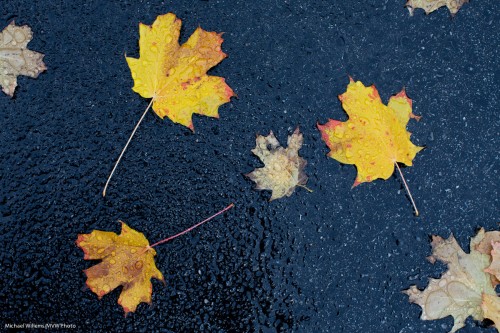
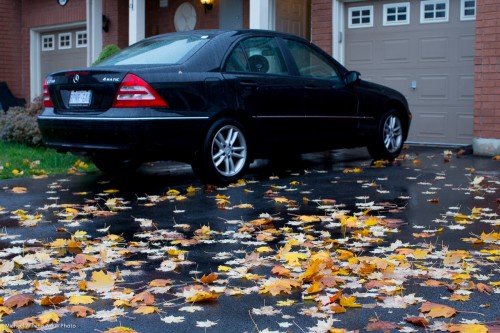
And to prove my point I just walked outside and took a few snaps outside my front door (and yes it is cold and rainy): 50mm lens, 400 ISO, 1/125th sec, f/5.6:

In the next weeks I will expand on some of these possibilities. Meanwhile.. have fun.


Wide Angle Pic of the Day

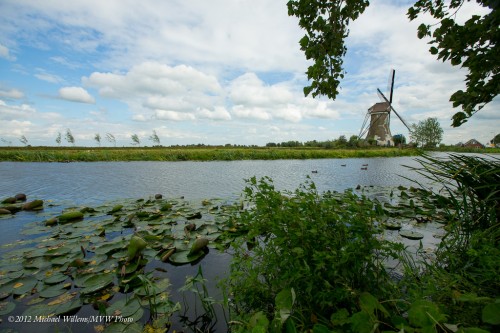
Taken in Haastrecht, the Netherlands, late August 2012.

The wide angle makes nature “wrap around” the subject. Look at the waterlilies and how they seem to all aim at the windmill.

The use of framing (by way of the branches) calls more attention to the windmill and balances the composition.

The trees trying to remain standing in the incessant easterly wind add a nice touch.