Why bother?

A friend just pointed me to the new Canon PowerShot SX30 IS, a newly announced super zoom.

“Why bother with something like a micro four thirds camera?”, he asked. All he needs is the super zoom capability. “It has a 14.1 megapixel sensor; why do I care whether it is micro four thirds or not?”

Well… you know I’ll weigh in on that.

When not using an SLR, I like Micro Four Thirds cameras like my Panasonic Lumix GF-1:
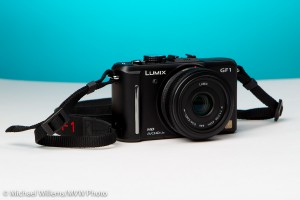
Panasonic GF1, photo Michael Willems

Panasonic GF1, photo Michael Willems

And for some very specific reasons.

  1. A larger sensor means lower noise. The higher the pixel density (pixels per square mm), the lower the signal-to-noise ratio, and hence, the higher the noise in any given picture. That is why Canon very sensibly went down in Megapixels between the G10 and the G11 (by the way, the G12 was just announced).
  2. Hence, less ability on small sensor cameras like the Powershot to go to higher ISO settings. I can take good pictures on my full-frame camera at 3200 ISO. Forget even 800 ISO on a typical small frame camera. And that’s physics, so there’s not much to be done about this.
  3. Inability on small sensor cameras to go to selective depth of field. The aperture as a ratio of the sensor size determines “how blurry I can make the background”. Large sensor = ability to really blur the background. On my micro four thirds Panasonic, which has a sensor almost as large as many SLRs have now, I can create really blurry backgrounds at f/1.7. On a small point and shoot: forget that, even at the lowest “F-number”, your background is still crisp and sharp.

So that is why zoom ability and small size are not everything.
See me…. hear meheeee….

OK, sorry for the “Tommy” reference above. I am inviting people to see me and hear me, though perhaps not necessarily to touch or feel me.

As most of you know, I teach. Everything from one-on-one classes to small groups (like the recent events in Phoenix and Las Vegas, where I was joined by David Honl), to mega-shows like the upcoming Henry’s Photographic and Digital Imaging Show.

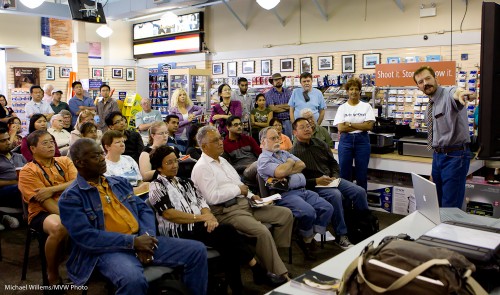
Sometimes in a store, like at the special event at Henry’s last Saturday:

Michael Willems Teaching

Michael Willems Teaching, Mississauga, 11 November 2010

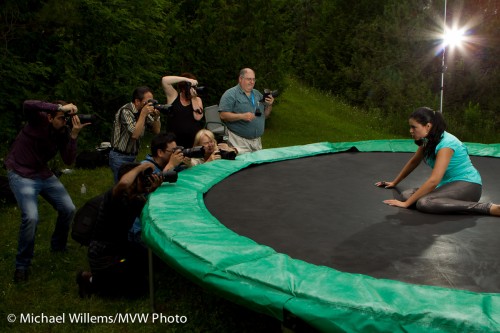
And sometimes outdoors:

Hands-on photography training, Mono, Ont, 2010

Hands-on photography training, Mono, Ont, 2010

And sometimes to large crowds:

Michael addresses a large crowd

Michael addresses a large crowd

Depending on the nature of the event, audiences range from one to 500. And regardless, in all cases, hearing photography explained by a live person who knows how to explain (and in smaller classes, also practicing hands-on), is much better than reading the manual (do not start me on camera manuals). You would be surprised at how much you can learn in how little time.

So I thought I would outline a few of my coming teaching events, for those of you interested.

Apart from the regular courses, these include:

  • The all-day “Advanced Lighting” course in Mono, Ontario, which I teach with colleague Joseph Marranca: two dates, 3 October and 20 November, and both have availability (these are limited to ten students each).
  • Canada’s big photography event: The Henry’s Photographic and Digital Imaging Show, Mississauga, 15-17 October. I shall be speaking pretty much all day, every day. Don’t miss this show!
  • Henry’s Creative Urban Photography walks in Oakville on 23 and 31 October.
  • Great news: Dave is coming to Toronto! I am teaching a workshop with David Honl on Saturday, 19 March 2011. (Details soon, and let me know if you are interested in pre-booking: seating will be limited).

There is more, but that is a start. Come see how much you can learn in a few hours. I promise you will be delighted – and inspired.

Vomit, or silk?

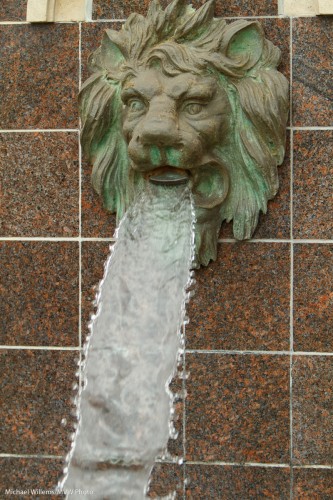
So when I shoot a flow, like a rapidly moving car, or a gently flowing river, or a famously gushing fountain (uh oh, I am beginning to sound like Dan Brown), should I “freeze” that motion? Or should I somehow show it?

This is a shot from the other day’s Creative Urban Photography walk, shot as an instant, a moment in time (using S/Tv mode, shot at 1/500th second):

Fountain, moment in time (Photo Michael Willems)

Fountain, moment in time

Uh oh. Matter of taste – but to me, that looks like vomit. Or perhaps a chainsaw.

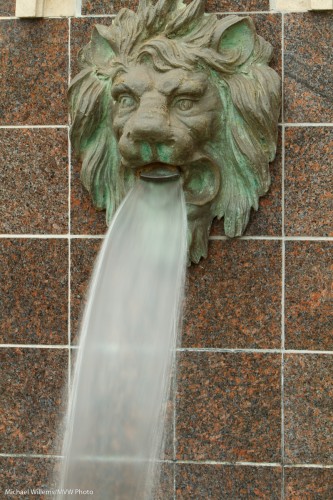
And here’s the same, now using S/Tv mode at 1/10th second, so it shows a  stream:

Fountain, as a flow (Photo Michael Willems)

Fountain, as a flow

Ahhh…. a beautiful silky flow.

So now you tell me. Matter of taste, yes. So according to your taste, should a flow be portrayed as a moment, or as a flow?

What is in my bag?

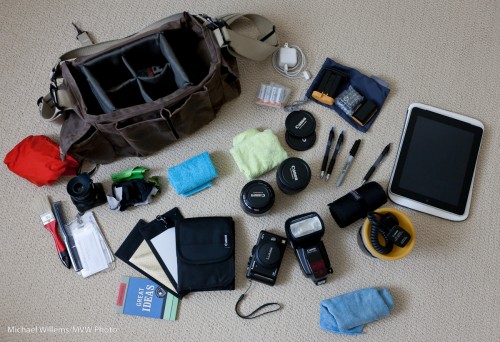
I am often asked “what is in that Domke bag of yours”?

Here. Too much, many would say…:

Photo Bag by Michael Willems

Photo Bag by Michael Willems

The bag is a Domke bag, and it contains:

  • Two lenses (Which ones? That varies per shoot).
  • A speedlight (Canon 580-EX II).
  • My off-camera flash cable.
  • My point-and-shoot camera (a Panasonic Lumix GF-1 Micro Four Thirds camera).
  • The indispensable Hoodman Hood Loupe (Get one. Now.)
  • Memory cards… always carry spares.
  • Fong Lightsphere – for safe shooting when I need safety rather than creativity.
  • Honl Photo reflectors/gobos.
  • A Honl gel set in a Honl roll.
  • My iPad .. plus, just in case, its charger.
  • Spare batteries for every camera and for flash. Never travel without spare batteries.
  • Lens caps for the lenses that are on the camera. I do not use them on the cameras I am using.
  • Cloths, plastic bags, headache and stomach acid pills.
  • Note pad, pens, comb, small brush, business cards.

And an important note: no camera. That is (or more accurately, those are!) over my shoulder.

Daily News

In today’s Photography news:

  • Canon launches the G12. This is, like the G11, a low megapixel camera (kudos, Canon – good decision. High pixel densities cause more noise).
  • The Daily Mirror sacks 6 out of its ten photojournalists. Yes, photojournalism is dead.
  • A famous photojournalist was in fact a spy.

The quality of photojournalism has plummeted now that no-one is being paid to do it. There will be few more iconic news images, now that somehow people seem to believe that an amateur image shot on a phone with a 2mm-across lens is as good as an image shot on an SLR with an f/1.4 lens.

Progress cannot be stopped. Just like no-one knows Latin or punctuation anymore, and people think Sweden is the capital of Amsterdam, and just like only 5-10% of people can tell me that 1,000 x 1,000 is one million, this skill too will disappear.

And that is fair enough. “It is what it is”: if society does not value Latin, or math, or photojournalism, or knowledge of history, then they will not be around. Almost no-one reads a newspaper anymore, so why employ photojournalists?

The good news is that while deep ability like this is disappearing, at least the remaining abilities are democratizing. Instead of a few Robert Capas, we have millions (that is, thousands of thousands) of increasingly able amateurs today.

And I am determined to help Canada and the USA and any other areas that I have students in become the best-educated photography nations in the world!

5 feet.

Uncle Fred takes every picture from exactly 5 feet above the ground.

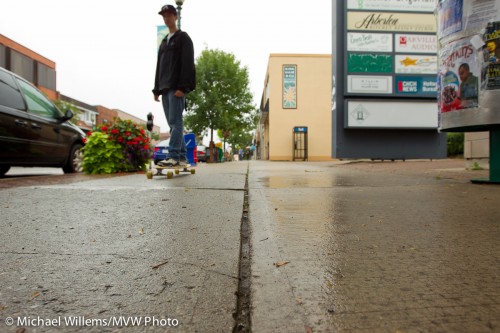
Don’t! Look for unusual viewpoints. Up, sideways, or like here, down:

Skateboarder on wet sidewalk

Skateboarder on wet sidewalk

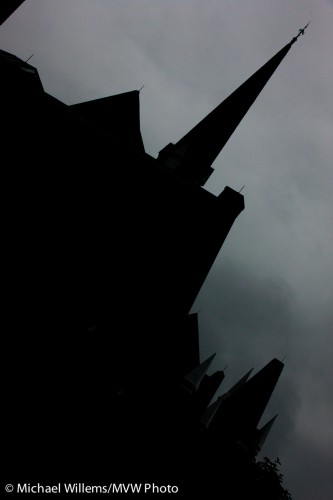
And unusual viewpoints can include diagonals:

Dark Diagonal Church

Dark Diagonal Church

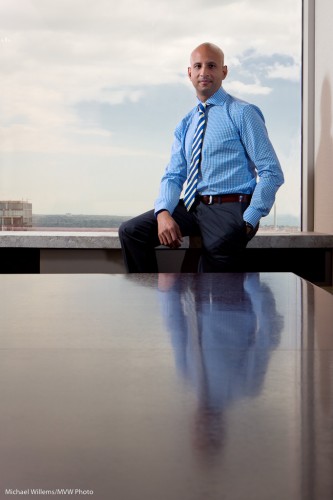
Or they can mean “table-top level”:

Reflection, photo by Michael Willems

Reflection

So avoid shooting everything with the straight and narrow Uncle Fed horizontal viewpoints!

And, um… recognise the Rule of Thirds in there, anyone?

Colour combinations

There are some colour combinations I always look for. If you see those, think “could there be a shot here?”

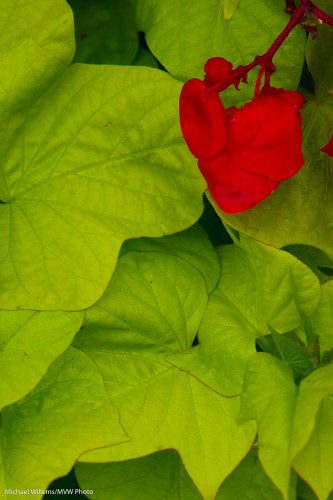
They include Red vs. Green, a combination that contrasts on the colour wheel:

Red and Green

Red and Green

But also:

  • Yellow vs. Blue, ditto, another contrasting combination.
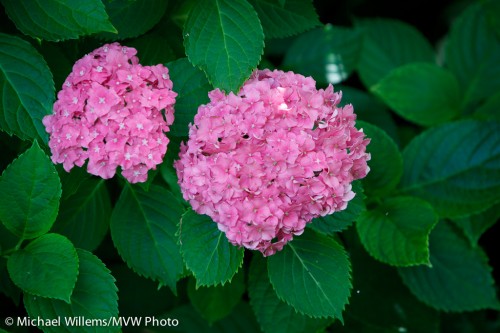
  • And the following harmonious combination we find a lot in nature: purple and green.
Green and purple

Green and purple

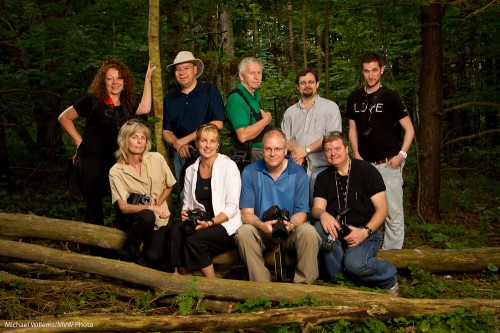
And this one, shot in yesterday’s “Creative Urban Photography” walk that I did with nine students in Oakville:

Harmonious Colours,photo by Michael Willems

Harmonious Colours

So any time you see any of those combinations, ask yourself “could there be a picture?”. And if you see lots of green, look for some red; if you see lots of blue, see if you cannot find some yellow to add to it.

Update: two more notes. First, remember to set your white balance properly (e.g. on a cloudy day, use “Cloudy”). Second, the upcoming autumn is a great time. Cloudy, overcast days provide wonderful saturated colours, and of course the leaves are turning. Get Out and Shoot!

Wide, and wider

Wide angle lenses are good, you have heard me say this many times.

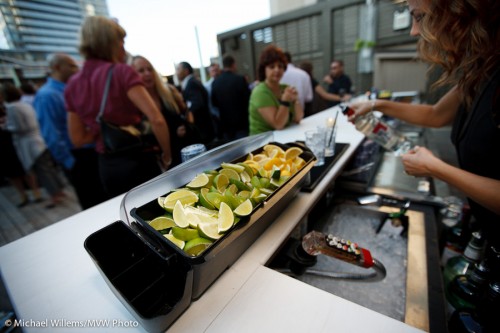
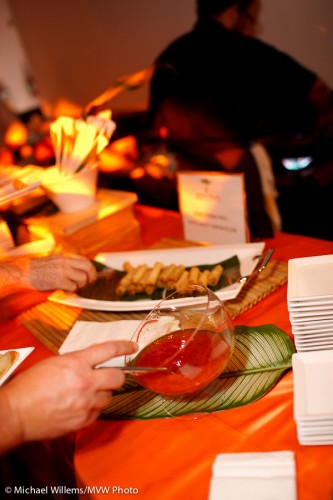
Not just for travel. Also, for instance, for “event background shots”, like this recent picture taken at a corporate event:

Bar Lemons

Bar Lemons

Or for this:

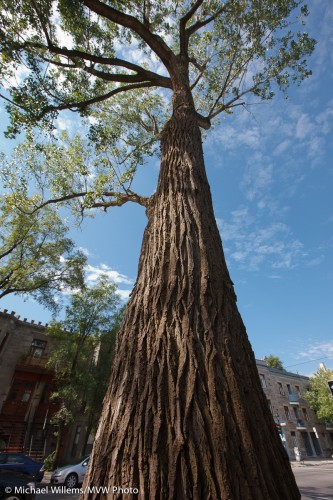
Montreal Plateau Tree

Montreal Plateau Tree

Wide angles because:

  • You get more in (d’oh).
  • They are easy to focus – if you wish, you can get it all in focus (but see the note below).
  • It is easy to avoid camera shake (a safe-ish shutter speed is “1 divided by the lens length”, after all, so shorter lenses are easier).
  • You introduce depth (“close-far” technique).
  • You can exaggerate perspective, if you wish.

So how wide is “wide”?

I would say 16-35 mm on a “full frame” camera – that means 10-20 mm for those of you who use a crop camera, like a Digital Rebel, 50D, D3000, or D90.

Now I promised you a footnote. Wide lenses make it easy to focus on “everything”. So what if I want selective focus, like in the bar or in the following shot? Selective focus is oh so important in photography, as it helps you tell a story:

Buffet

Buffet

Well, then I need to have a wide open aperture. Wider than on a longer lens.

And that is why I use a 16-35mm f/2.8 lens, and if I could find a faster one I would get it, too. The faster (i.e. the lower the “F”-number), the better. So when some say “a wide lens does not need to be fast”, they are wrong.

Fun today

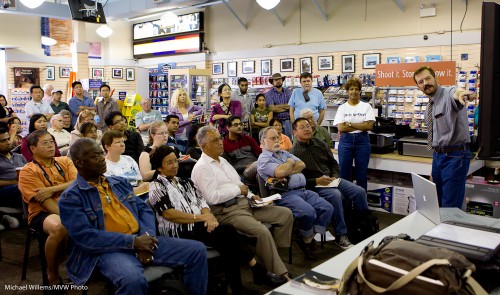
Today I taught Travel, Kids, Composition, Flash, and more to an overflowing crowd at Henry’s in Mississauga.

If you were one of that crowd, welcome here, and it was a great pleasure to have such an intelligent and attentive audience!

Michael Willems Teaching

Michael Willems Teaching