…during the Netherlands-Uruguay game.
Tech Note: In a bright room like that, straight flash (aimed forward) is an option, but as fill – meaning I expose just under for the ambient light and Flash Exposure Compensation is set to -2 stops.
One aspect of wide versus telephoto lenses is how large the background gets. As in “If you want a large moon, use a long lens”.
Huh? What do you mean, Michael?
I shall illustrate with a couple of shots I took of a student during a “Creative Urban Photography” outing the other day. One with a long lens, and one with a wide angle lens.
Ignore the light (I was using a flash with a warming gel on one camera, and no flash at all on the other), and look instead at the size of the blurred-out car in the background:
Here’s picture one:
Now look at picture two (where by moving my position I have kept the subject the same size):
See how that car magically grew much larger in the second picture?
Do I need to explain which picture was taken with a wide angle lens, and which one with a telephoto lens?
So now imagine the person is a tree and the car is the moon at night, or the setting sun. So what lens would I be most likely to use if I want a large moon or a large setting sun?
Everyone should own a fast 50mm lens, I keep saying. “Fast” meaning a prime, large aperture lens (like a 50mm f/1.8, or even a 50mm f/1.4, like this one:)
One student asks a good question about this:
“I recently attended your travel photography and Nikon Pt. 2 classes. You spoke about the value of a 50 mm lens. I have a Nikon D90, which is not full frame therefore I am wondering if you still recommend the 50 mm over a 35 mm.”
Good question.
As you know, a small sensor camera (like most of today’s DSLRs) appears to “lengthen” the lens (search this blog for “crop factor” to see why). So a 50mm lens will work like a “real” 80mm lens.
In “real” terms,
So presumably we should all start with a “real” 50mm lens? On a regular (non-“full frame”) DSLR, that means you need to buy a 35mm lens.
So is my advice really “buy a lens marked 35mm” or “buy a lens marked 50mm”?
Ideally, both. But if you have to choose, start with the 50, because:
Most manufacturers make a 50mm f/1.8 that costs around $150 or less. A bargain, and something you just need to put in your camera bag.
Quick recipe for fireworks, US friends!
Technical tips:
And the usage tips:
And above all, have fun, and happy 4th of July!
It is July 4 in the US, so my American friends will all be taking pictures today. So here is a quick tip for you flash users out there!
If you want a slightly warmer look – the “late afternoon light” look – to your flash pictures, simply do this:
Result: your subject (close by, lit by flash) looks slightly warm.. instant late afternoon “golden hour” light even at noon.
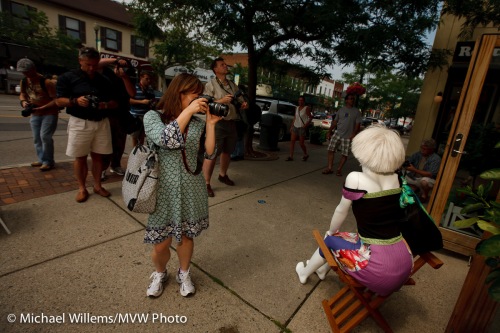
That was a student at last week’s “Creative Urban Photography” course. In not very warm light!
One of my workshops is called “Creative Urban Photography”. I take a group of students around Old Oakville for three hours to practice and hone their technical skills, and especially to practice their eye.
This is a great workshop, that I can recommend to all (go to your nearest Henrys to sign up for it).
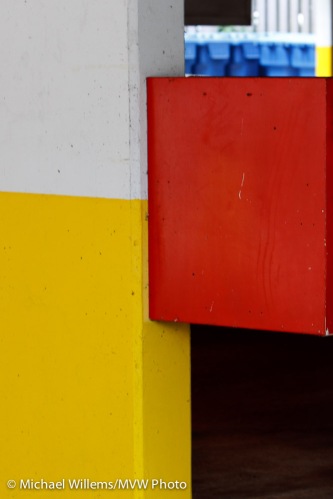
The wonderful thing is to see what “Urban” means to people. To some it means this:
Or this, Oakville’s very genteel version of vandalism:
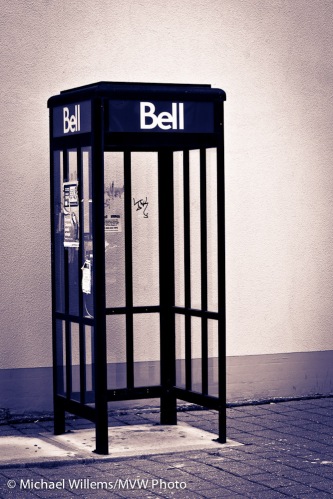
While to others, it means happy things like this:
And this:
And this:
(Can you see how I am filing the frame in these images?)
Others yet have a theme like “churches” or “textures”. All good. The thing is, once you have a story, you are great. It does not matter what that story is, and no-one can tell you what it should be. It is your story. All I can tell you is that there should be one. Random images are not as effective as images that try to tell a story, convey a viewpoint.
So next time, ask yourself what your story is. Once you know, you will fimd ways to portray that photographically.

My “IV” photojournalistic work is featured on this month’s 180 ( http://180mag.ca/ ) style/art/fashion magazine. The first article in the July Issue.
Go check it out. This is the work I am passionate about: showing worlds we do not normally see. Several of the images there are new and have never been seen.
When you are using TTL flash (metered, automatic), you sometimes get too-dark foregrounds.
This can be because a setting is wrong, or because there is just not enough power available from your flash. It is important to know which one it is!
The settings that affect your flash brightness are:
My trick: to ascertain whether it can be done at all, fire a test shot using manual flash at full power!
If your picture’s flash subject is now still too dark, it cannot be done. Open the aperture or get closer.
But if your flash subject is now blown out, it means your picture can be done with current distance. Go back to TTL, figure out what you are doing wrong, fix it, and try again!
The most common question I hear is “what lens should I buy?”.
Boy, that is a tough one – a bit like asking “what car should I drive”. The answer: “It depends”!
Almost as often, I hear “what exposure mode should I be on?”. That one is much easier.
I should start by saying that here too, of course the answer is “it depends”. So instead of giving you a canned answer, I am going to explain a bit about what modes I use in my daily photography practice.
And these are:
So that means typically I might do this – a few examples:
Try them all, and learn how each mode works. Especially, do not underestimate Manual, where you get full control. You need to know what you are doing, but it pays to learn.