What’s with the long lens?

So when I shoot portraits, my favourite lens, if I can use it, is the 70-200.

Why “if I can use it”?

Because it is long. That means I need a large studio to stand back a lot. And not every studio is large. In all probability, your kitchen isn’t large, and I bet you do portraits there sometimes.

OK… but why would I want that long lens in the first place?

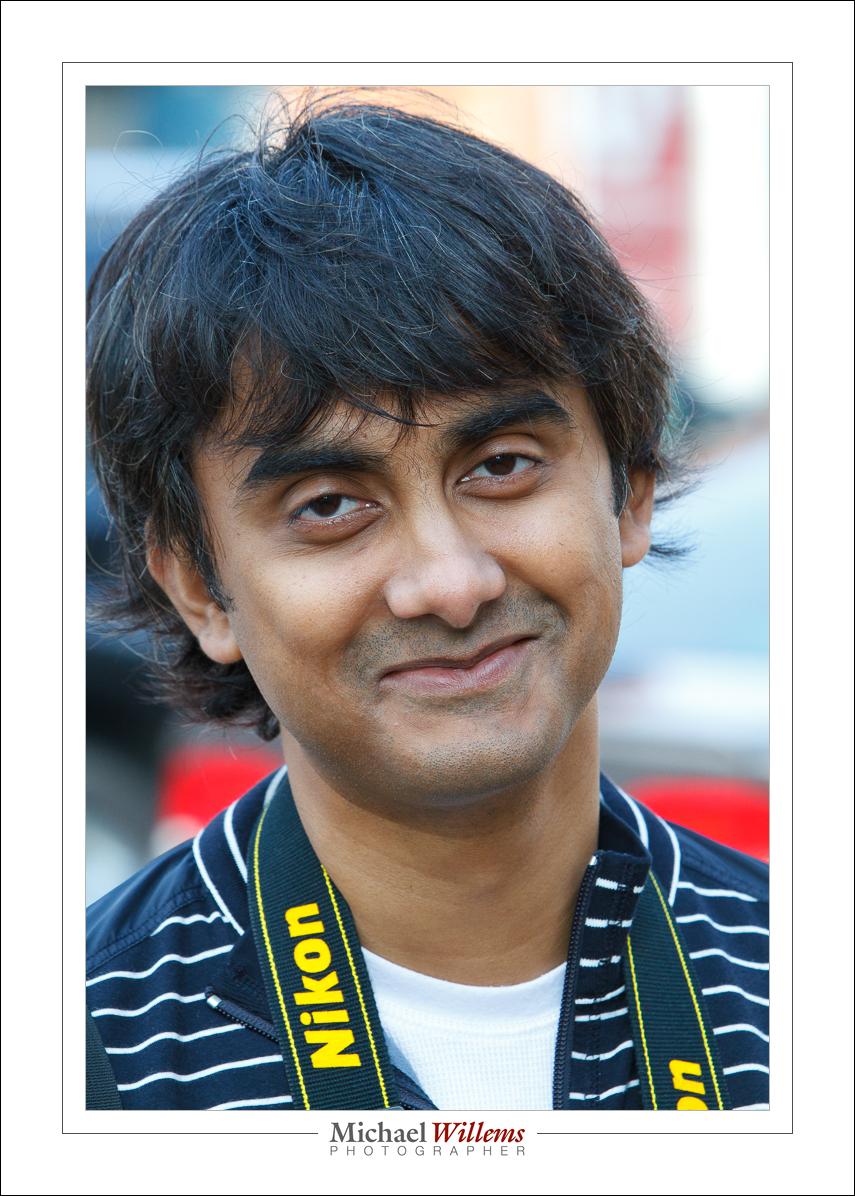
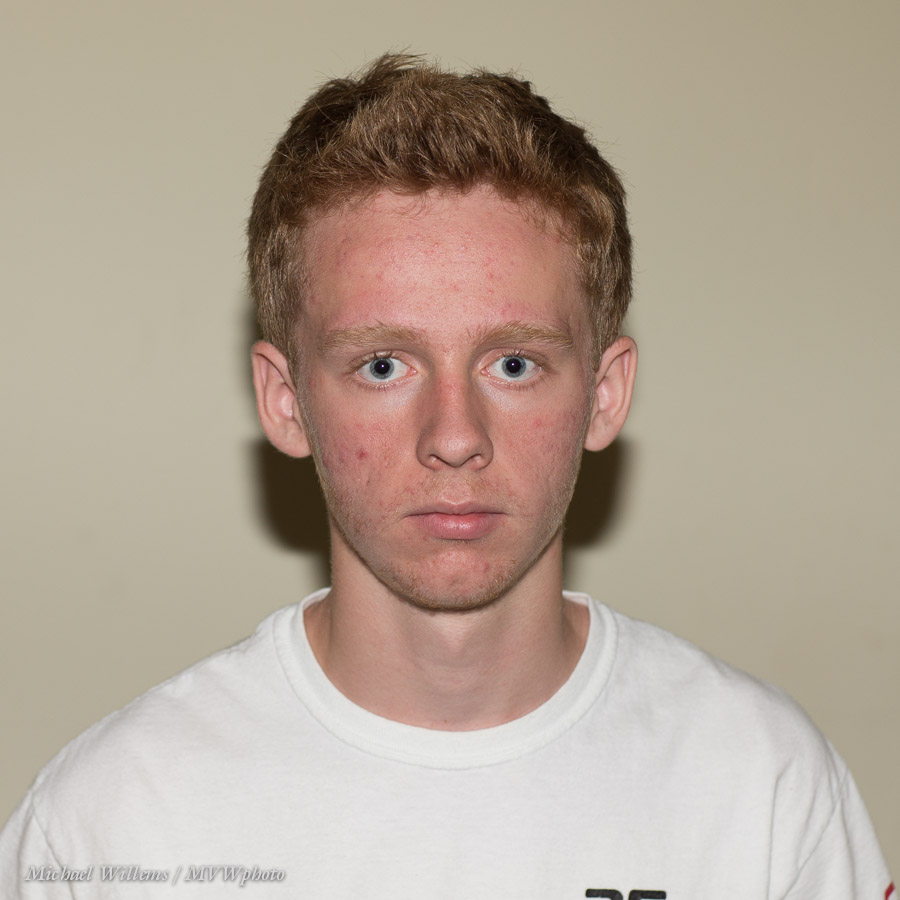
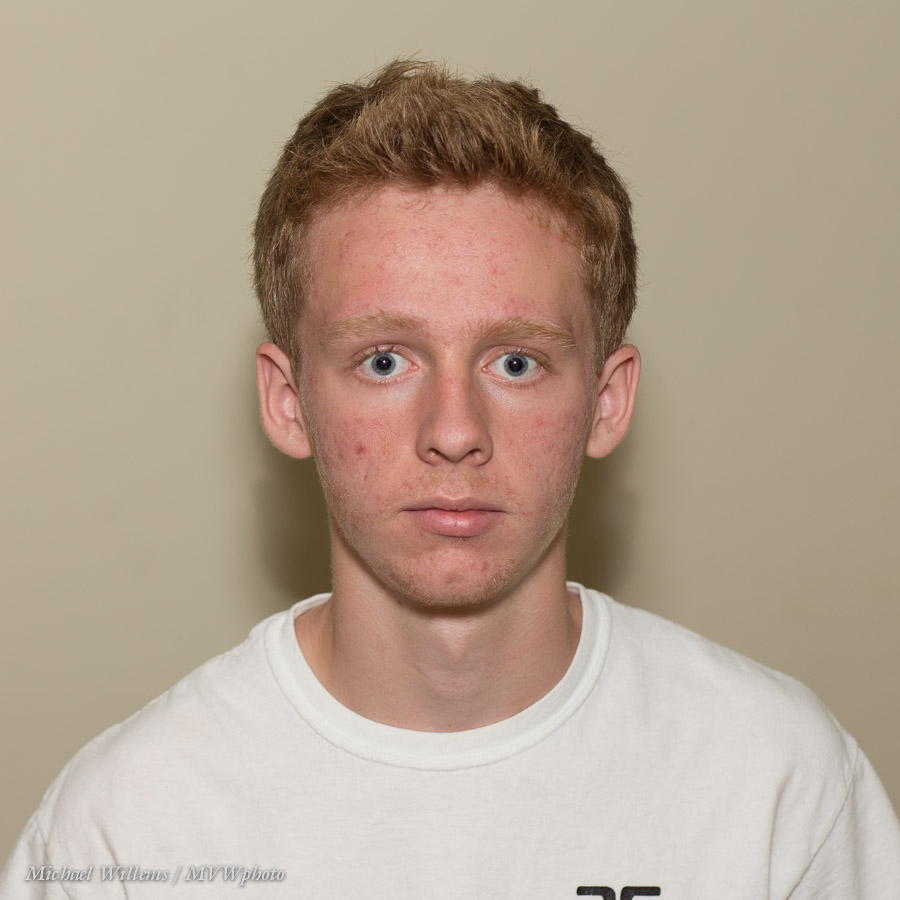
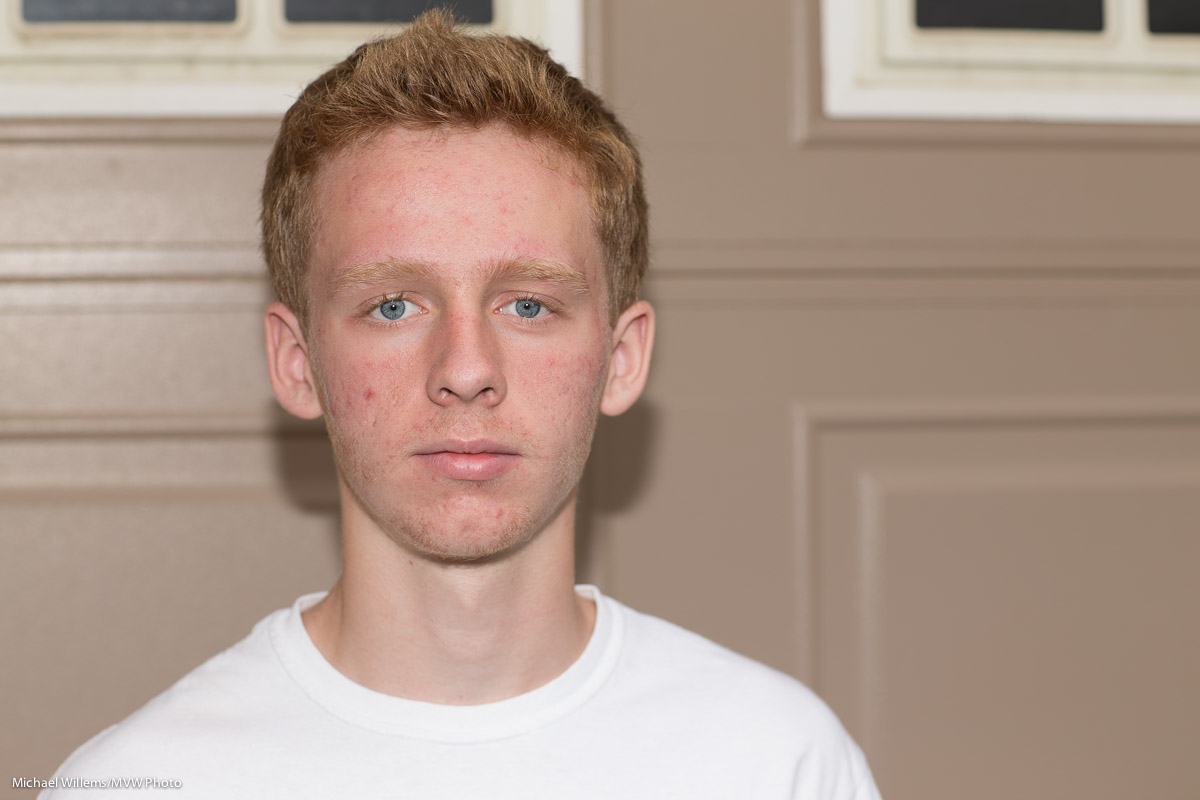
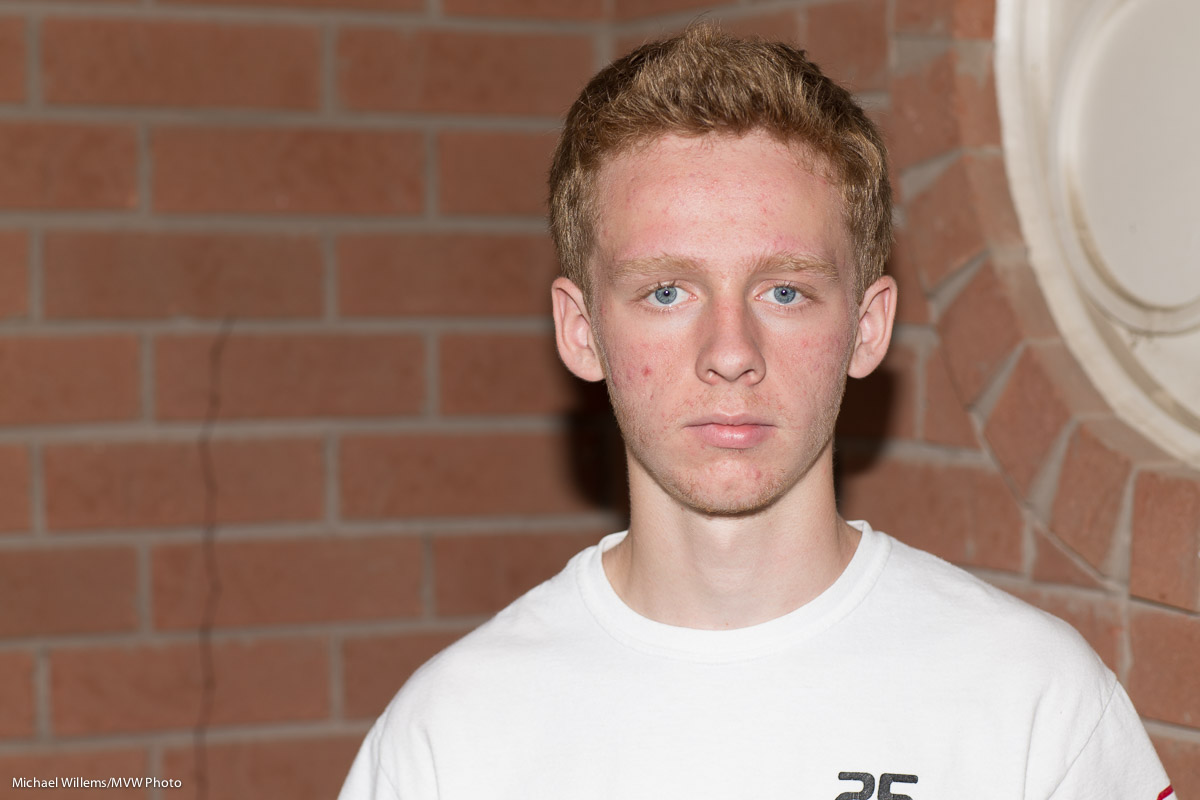
Because then I get very little distortion. Here’s a student, a few years ago on an Oakville Photo Walk, from far away, with the 70-200mm lens:

That’s what he looked like.

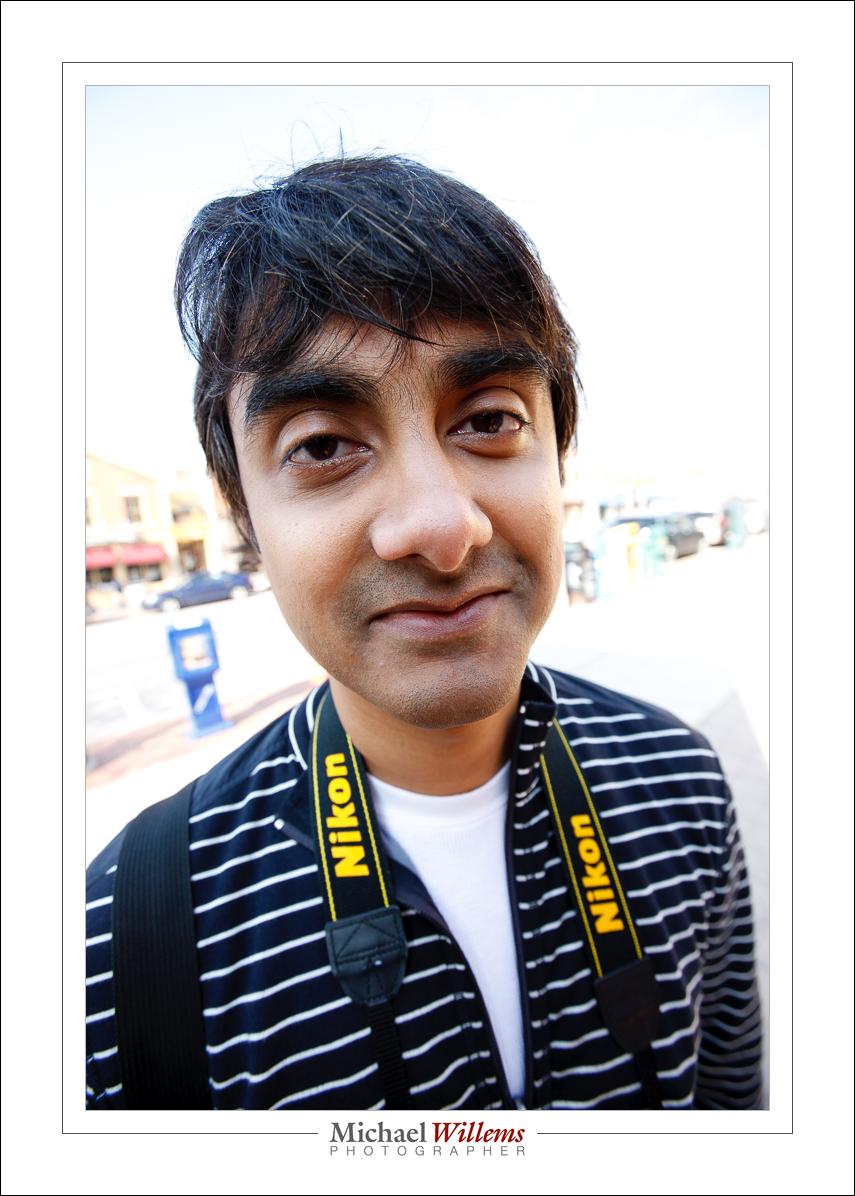
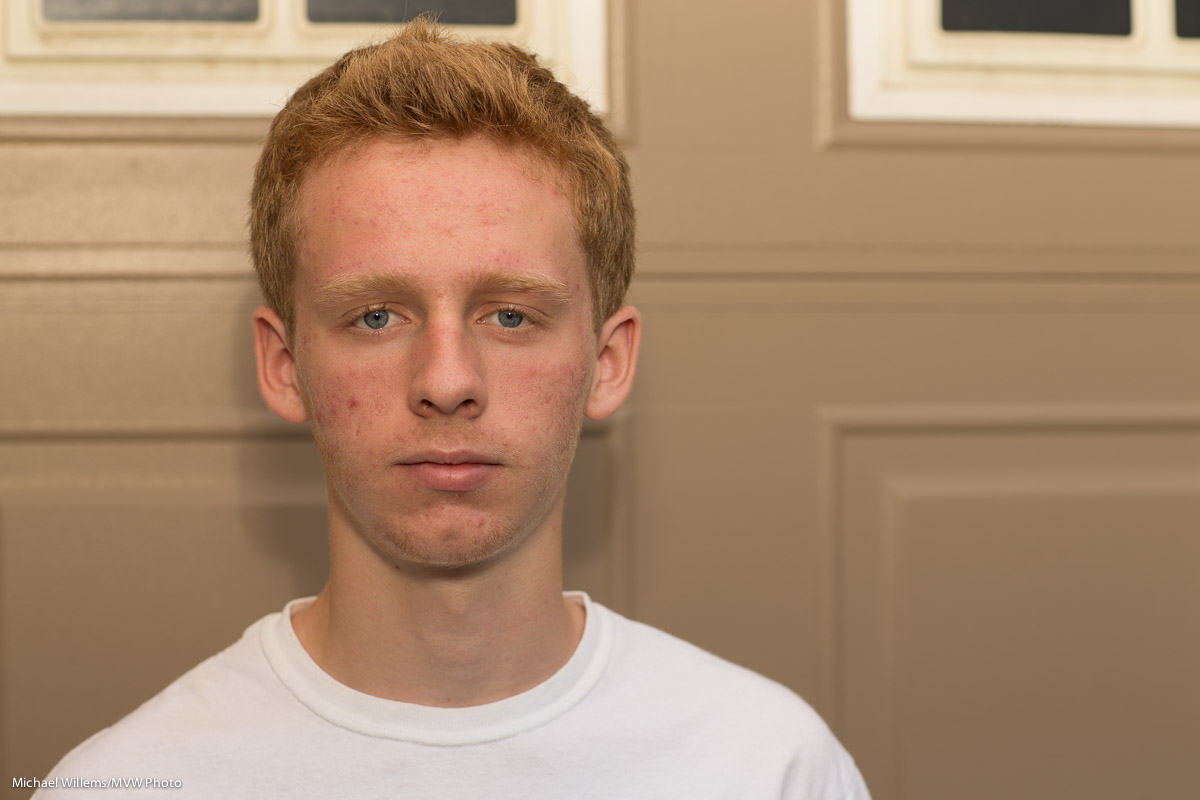
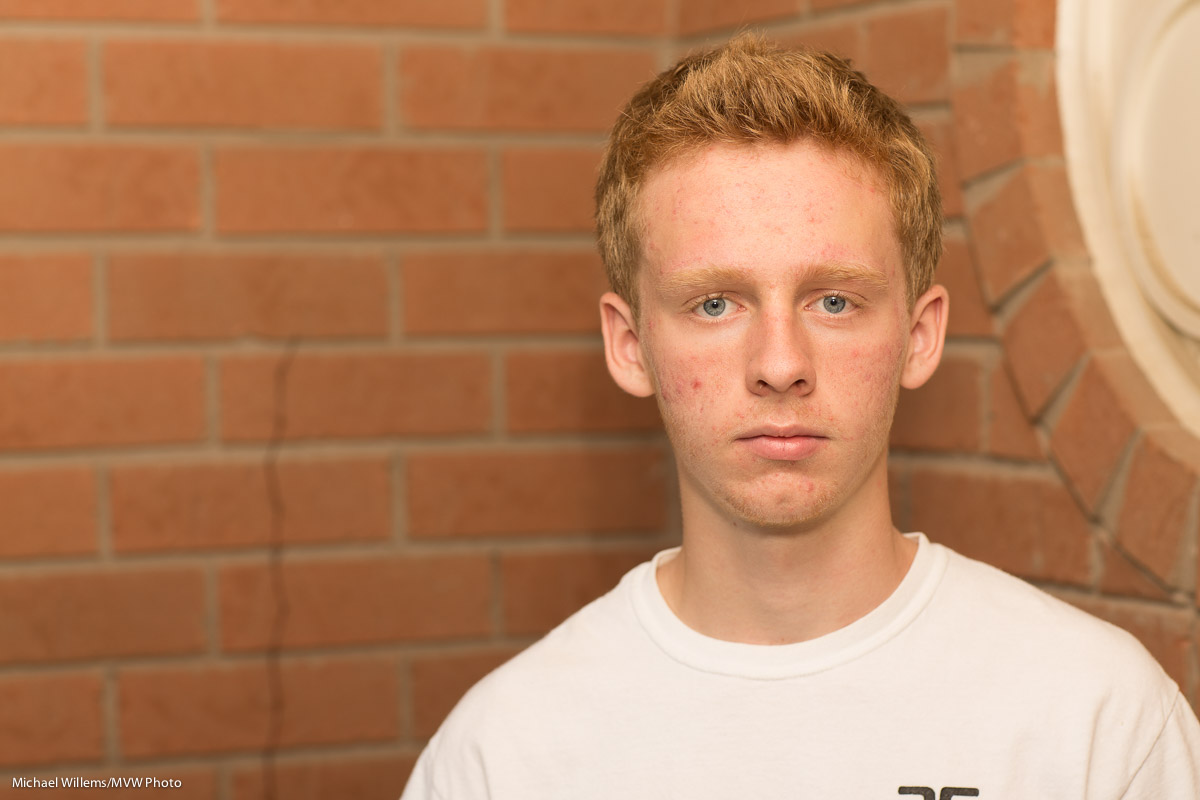
But now let’s get closer. And closer. So we zoom out. Closer still. Wide angle. Closer still. Now we have a very wide angle lens (16-35), and we are very close:

Can you see that’s a very different (and distorted) person?

Sometimes, in an environmental portrait, you may want to get close to the second picture—though never that close, distortion is out. But generally speaking, if it’s a headshot, you want accuracy, and the farther back you stand, the more accurate the representation of the person is.

There is a second advantage to being far away: you are not “in their face”. That means you are not perceived as threatening and something to fear. Which in turn means your subject will relax more. Basic psychology.

Practice: 50mm (on a full frame) is the minimum for half body shots; 85mm (ditto) is the minimum for headshots; longer is better for neutral, accurate portraits.

Lesson learned: If you go wide, stand back. Because of course it’s not the lens that does this magic: it’s how far away you stand. The lens just facilitates that.


Make Do

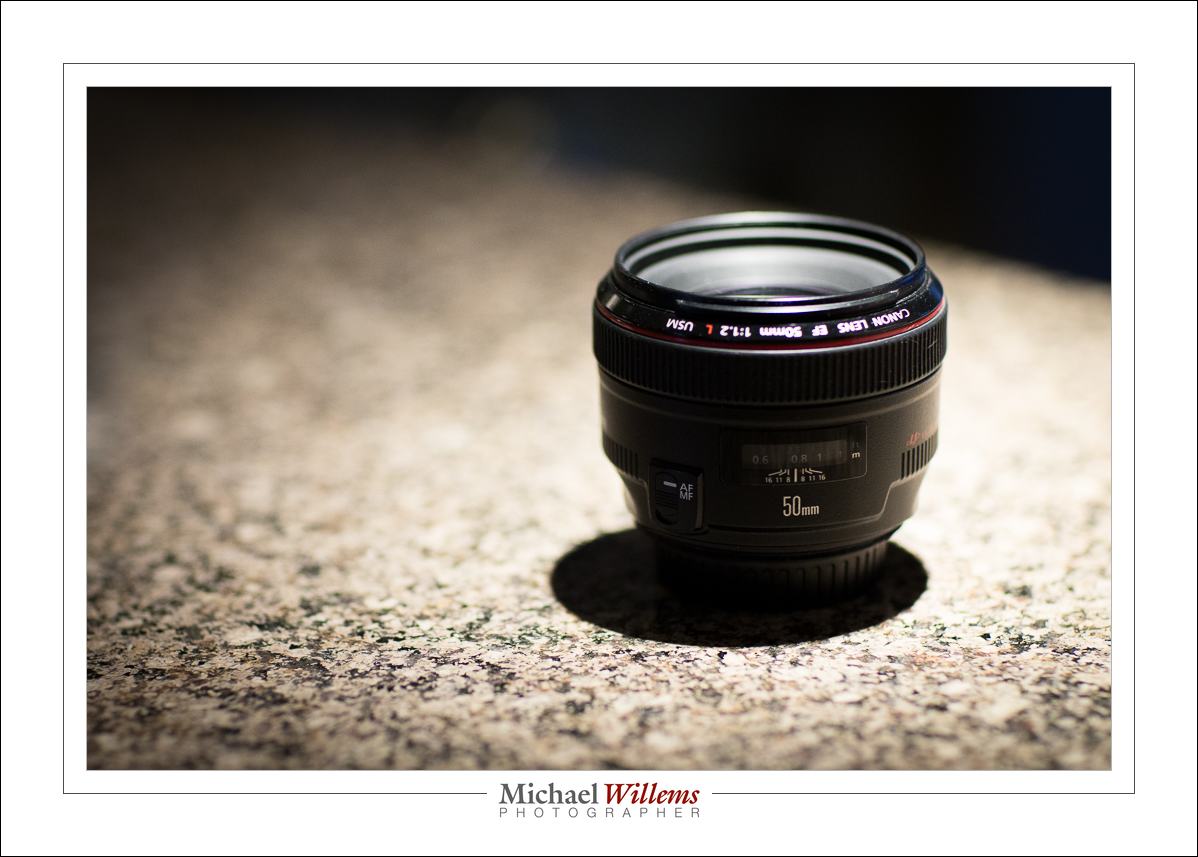
Much as I loved it, I no longer own this lens:

Instead., I own the 85mm f/1.2. More glass.

Why can I live without the 35mm? Because I have a crop camera too. And the 35mm f/1.4, which I also own, on the crop camera is very similar in effect and angle to the 50mm on a full frame camera.

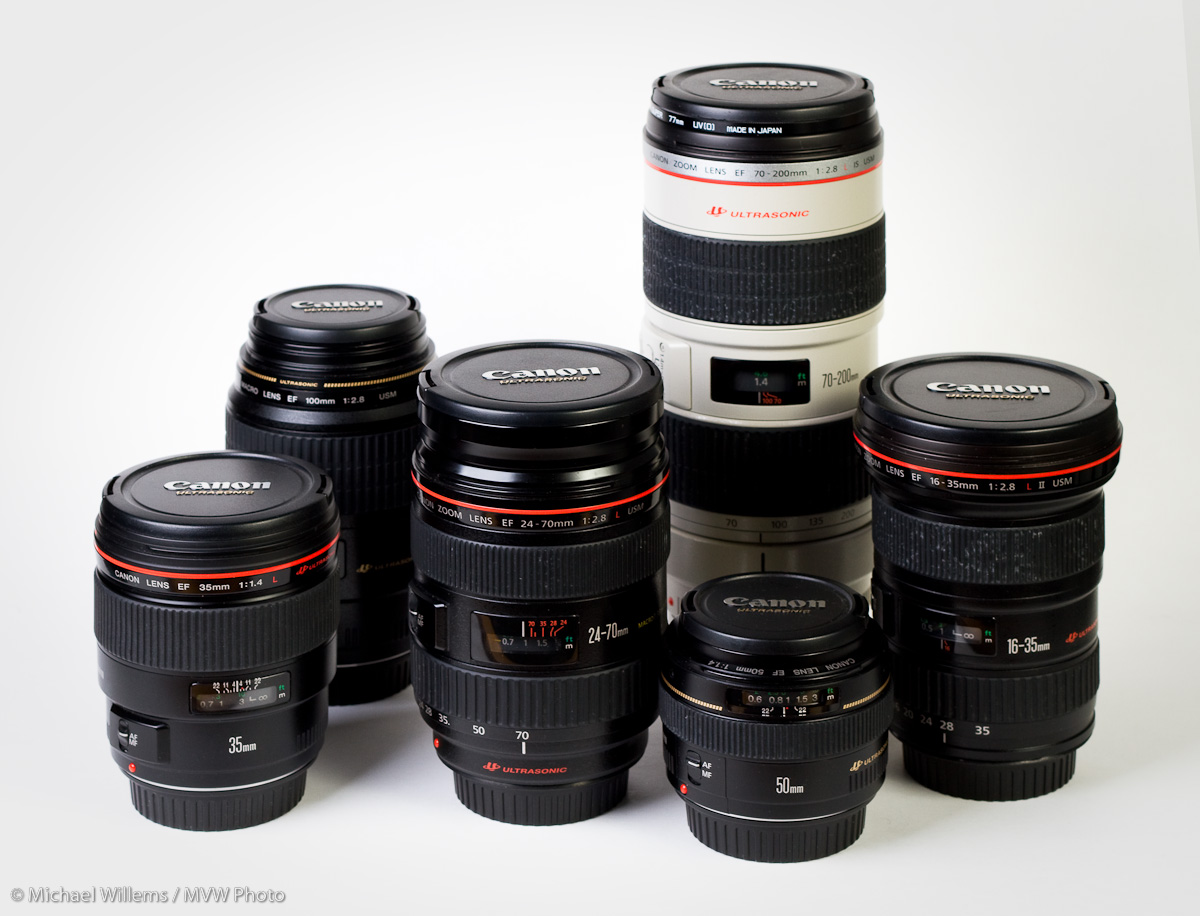
And that is the point. I have:

  • 35mm f/1.4
  • 45mm f/1.2 T/S
  • 85mm f/1.2
  • 100mm f/2.8
  • 16-35 f/2.8
  • 24-70 f/2.8
  • 70-200 f/2.8

But that also means I have, approximately:

  • 55mm f/1.4
  • 72mm f/1.2 T/S
  • 135mm f/1.2
  • 160mm f/2.8
  • 26-55 f/2.8
  • 38-110 f/2.8
  • 110-320 f/2.8

So the total number of focal lengths I have:

  • 35mm
  • 45mm
  • 55mm (*)
  • 72mm(*)
  • 85mm
  • 100mm
  • 135mm(*)
  • 160mm(*)
  • 16-35
  • 24-70
  • 26-55(*)
  • 38-110(*)
  • 70-200
  • 110-320(*)

(*) By using the Canon 7D, a 1.6 crop camera

Michael's lenses

Michael's lenses (a few years back: now I have more)

So I have a very wide range of available focal lengths! If you have two crop factors, that is how you should look at your lenses. Making dfo with what you have is a great thing.

Yet another reason to own two cameras.


Video Tip

I use my DSLRs for video; I also teach a course I developed on shooting video with DSLR cameras (see here).

Today, a tip from that course: Audio. Audio is very important, and I recommend a few simple things:

One: turn off auto level. Set the audio recording level manually, else every time no-one speaks the noise goes up.

Two: use an iPhone in your pocket if you have no lapel microphone. An iPhone gives you great audio quality at an incremental cost of zero, if you already have an iphone.

And three: use a clapper board app such as Digislate (thank you, intern Daniel, for this one). Using a clapperboard allows you to synchronize this iPhone audio with the video from your DSLR.

Done. Professional audio from an iPhone, a simple camera, and free iMovie software. Simple, innit?


___

The special on headshots is still on. Buy this week; take the headshot in my studio by August 14, and get a pro headshiot for much less than the regular price. See http://learning.photography or scroll down to yesterday’s post.


Gee. Nine?

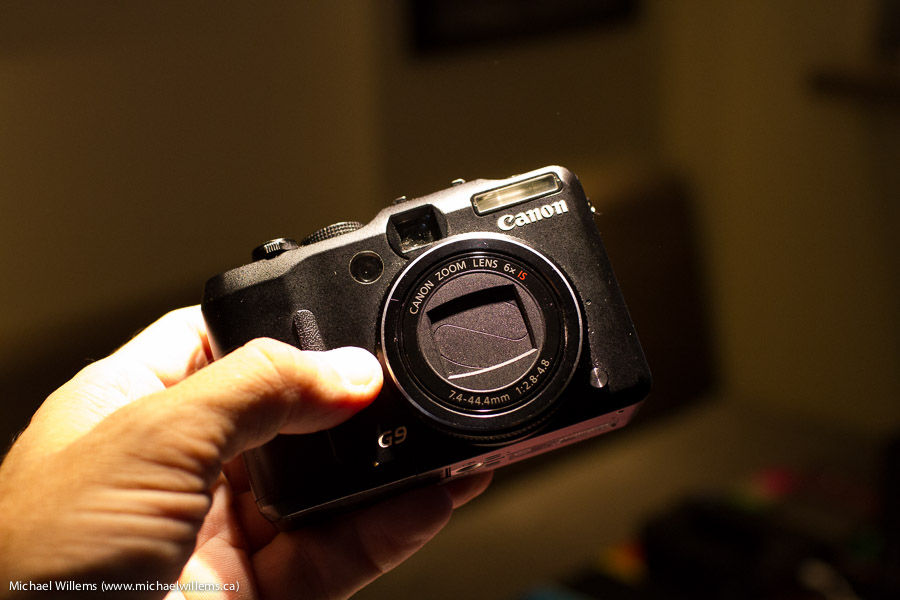
I have an old Canon G9. A great camera in its day, but small sensor/high noise by today’s standards. Here it is:

So. Useless. Right?

Not.

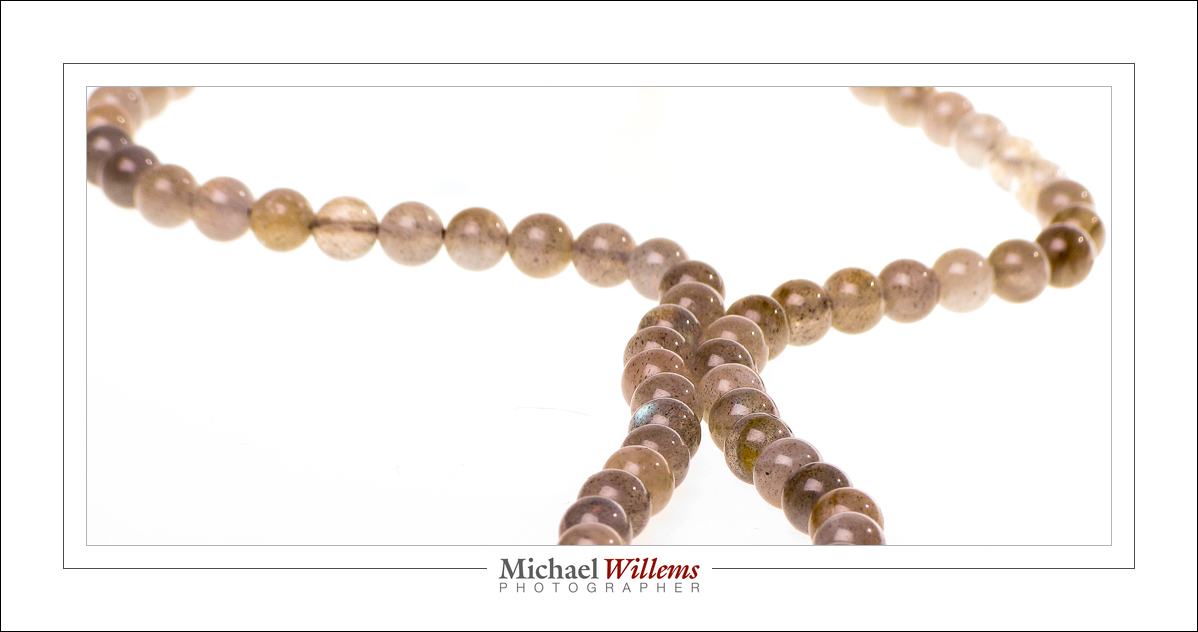
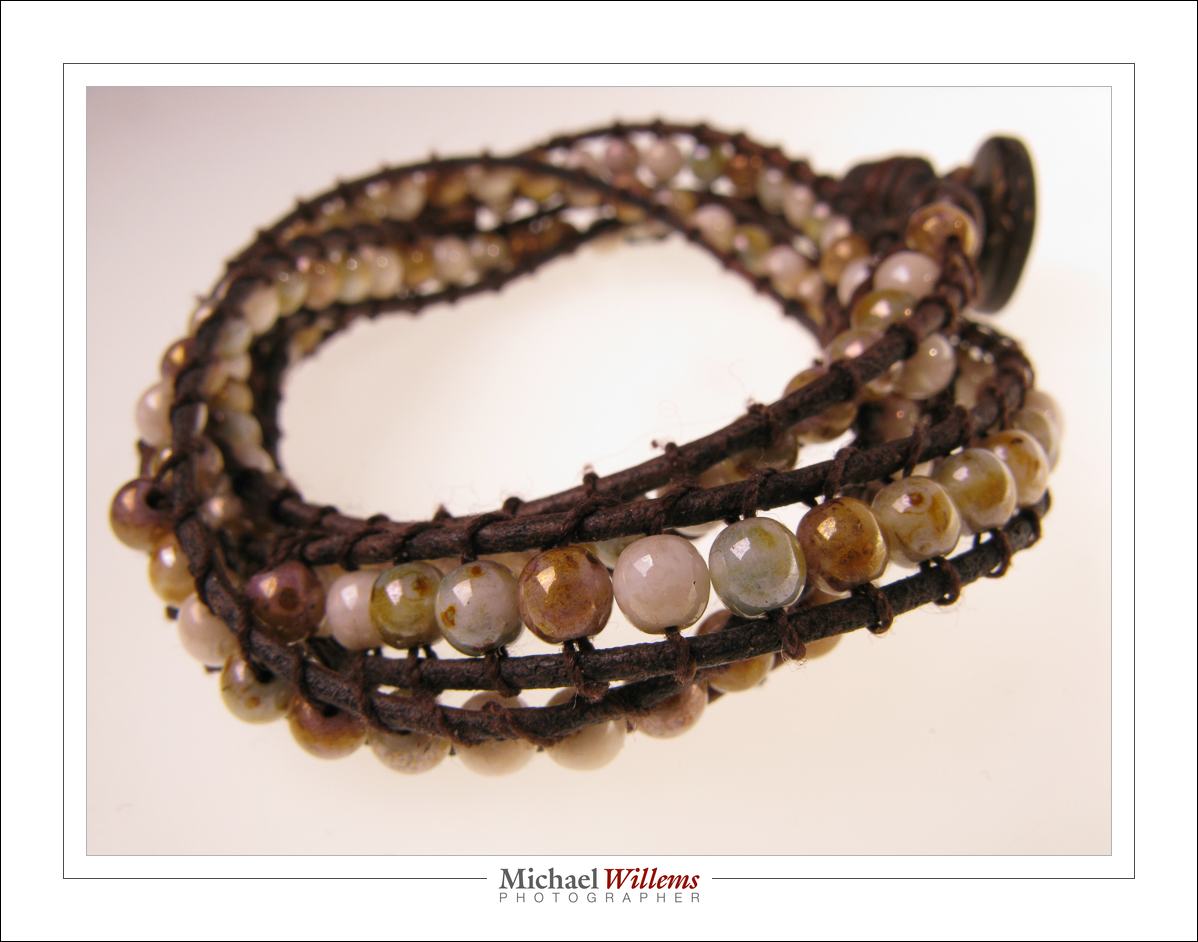
This camera is great for one thing in particular: close-up photos. Because of the small sensor, I can get very close. Here’s a shot of some jewellery:

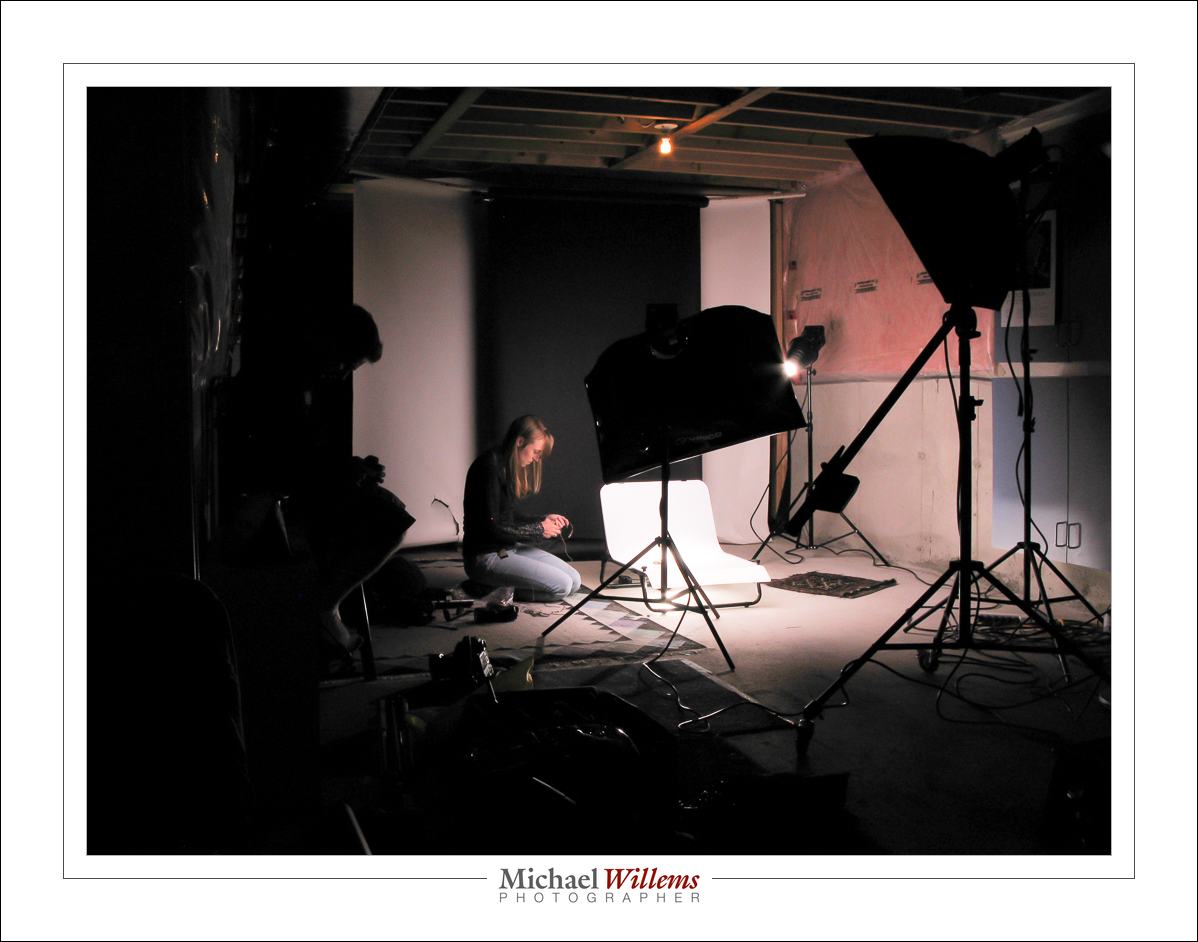
Made like this:

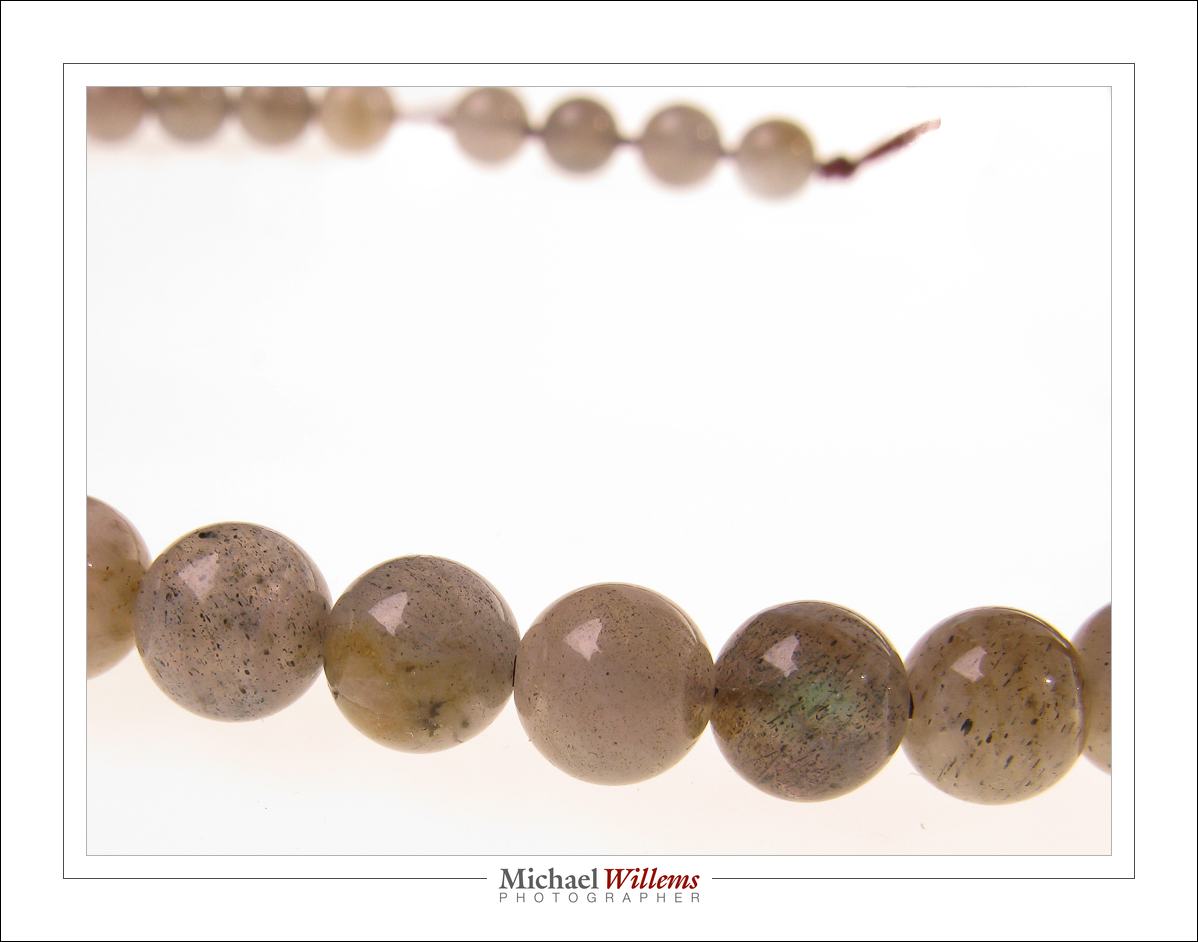
But I can get closer:

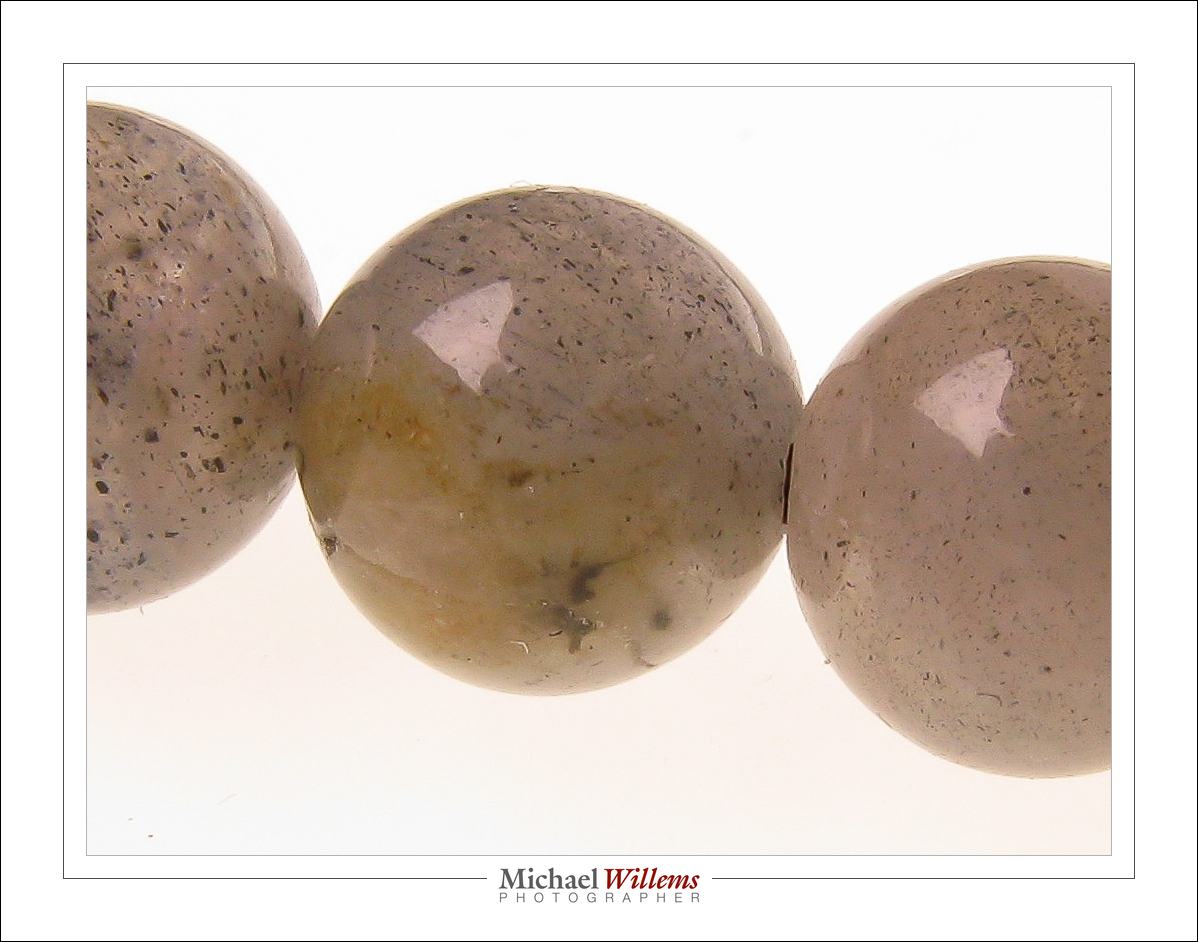
AND HERE’S A 1:1 SECTION (each pixel in this, once you click on it, represents one pixel on the sensor):

These are very small beads in real life!

So an old G9 does a great job as a macro camera, if you have left your macro lens at home. Here’s another full shot of another piece:

I guess the lesson for today is that you should not throw old equipment out. I am pretty sure you can buy a G9 for a price approaching $ zero… and it’s plenty good for a lot of pro work, as long as you keep it to low ISO settings. Keep it our little secret!

Jewellery by Becky.


Through The Eye Of A Woman

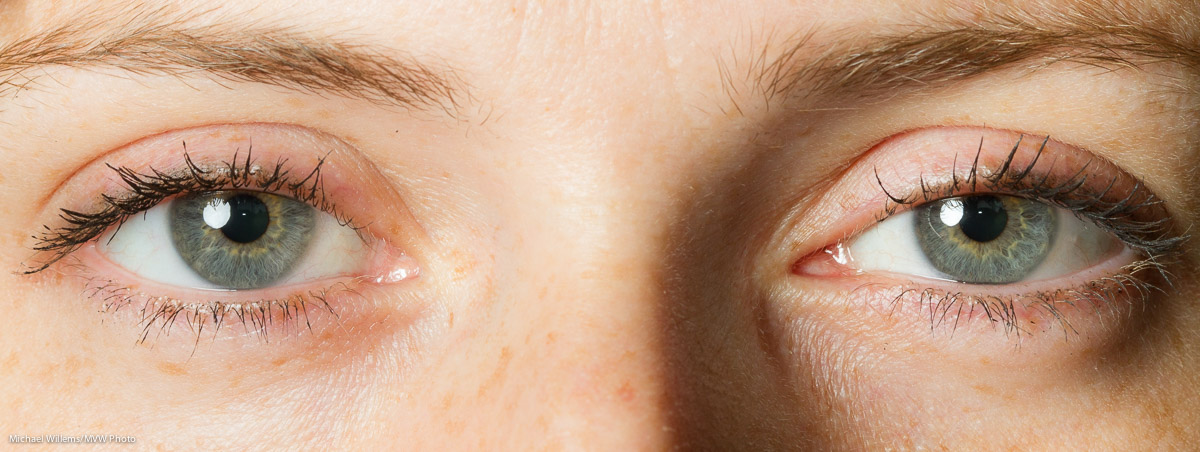
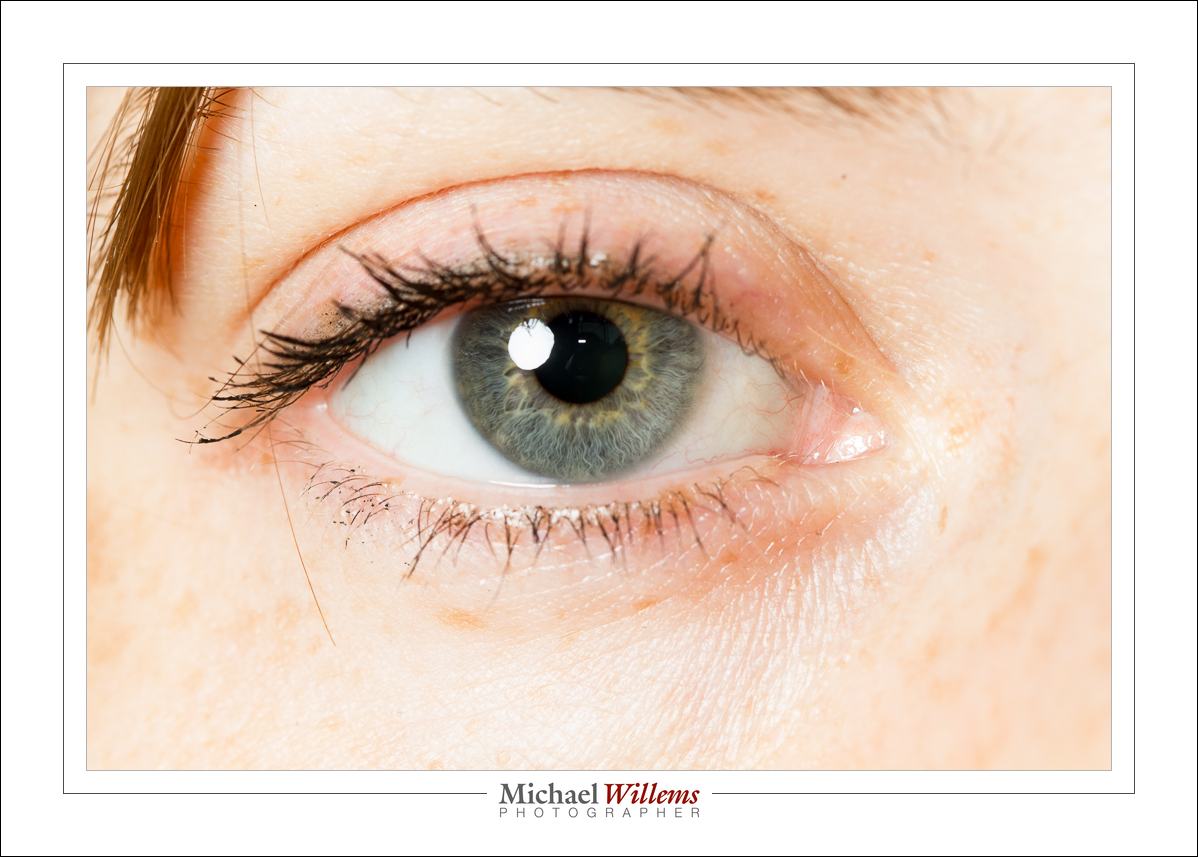
OK, maybe that title is a little silly. But it IS through the eye of a woman that I shone my flash

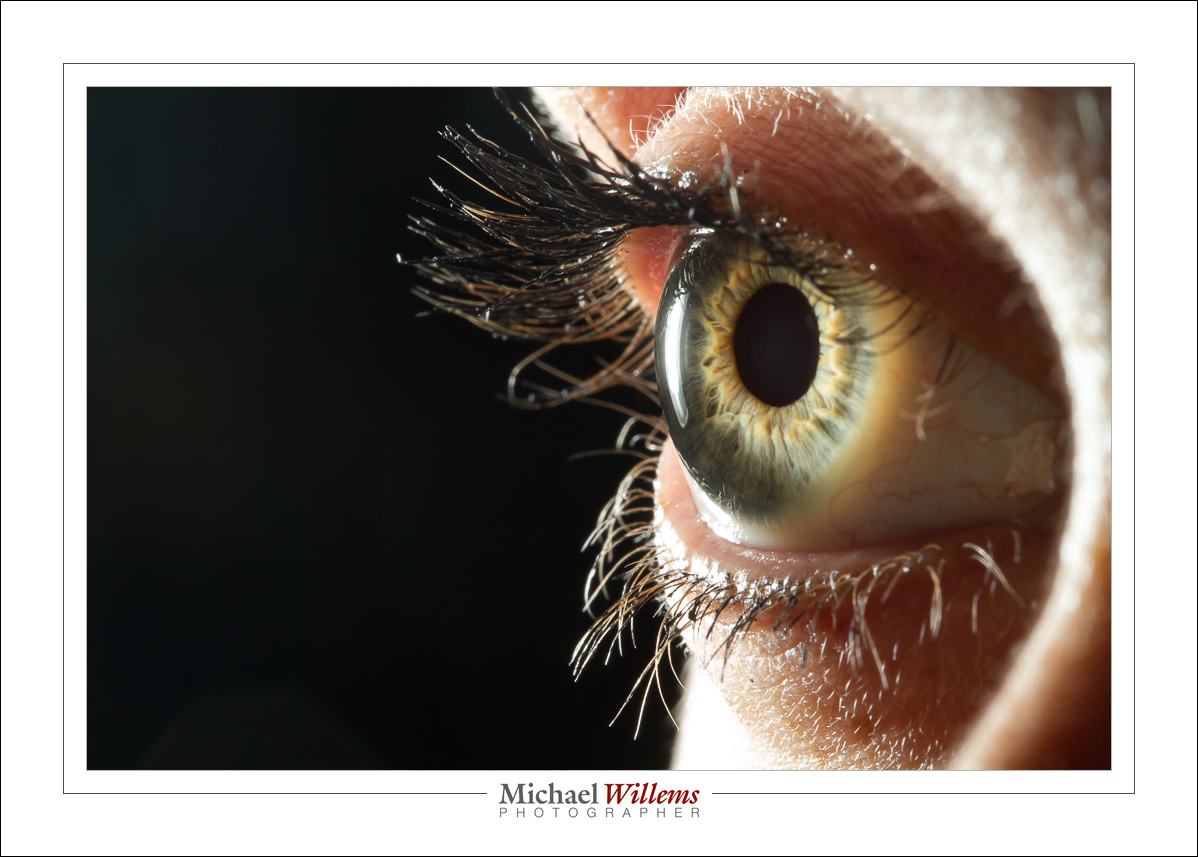
And here, lit from the back:

Macro lens, 1/80 sec, f/16, 100 ISO, hand held.

The flash was shining from the back. This can give you pretty weird effects:

My eye here looks light green, while in fact it is light blue. Back lighting can do that.

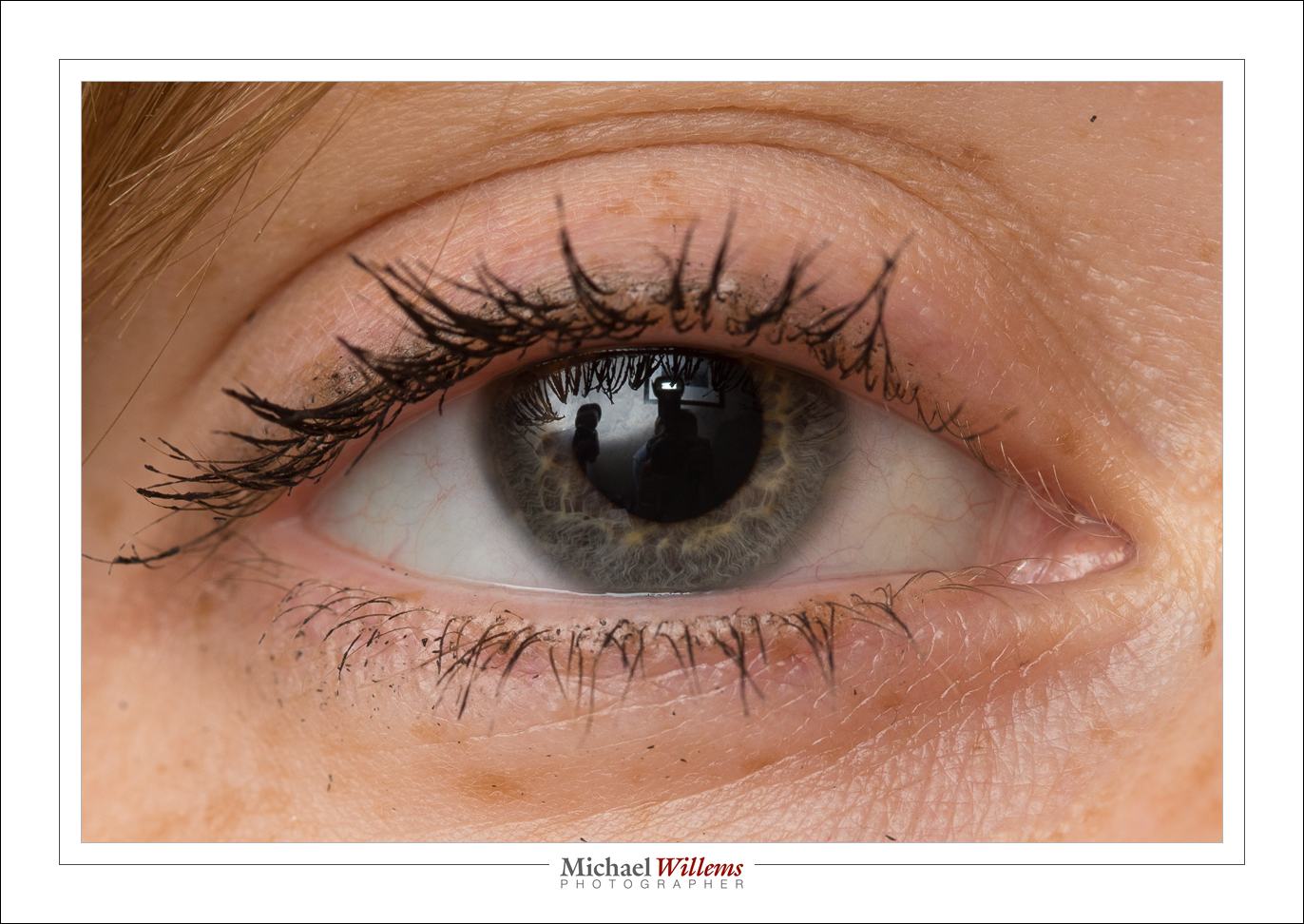
But go back to the first shot. See that? Look carefully. A little white point, in the centre of the pupil,next to the actual catch light.

This is mysterious, because I was using an off-camera flash. The on-camera flash only sends “morse code”, as it were, to the other flashes, before the shot is made.

And yet, that pin light is from the on camera flash.

Simple, actually: it is its afterglow. The flash is off, but it takes a fraction of a second to completely go out, and it is during that fraction of a second that the shot is made. Here, the proof:

See, the main flash on our left, bounced against the wall; and me and the camera including its popup flash afterglow in the centre:

And that is why you get a little pin of extra catchlight in some wireless TTL photos, even though your on camera flash is turned off.

(Thanks to Becky for the loan of an eye!)


Flash Light Trixie

Another one from my trixie bag of tricks.

Have you noticed how difficult it can be to focus when you are in a dark environment? I notice that on my high end Canon cameras, not only does get focus slow or even impossible; it also gets inaccurate. Not good.

You have also seen that I use the Honl photo range of flash accessories, such as the Traveller 8 softbox and the reflectors and grids. And like the speed strap around all my flashes.

And here’s an all-new use of that speed strap:

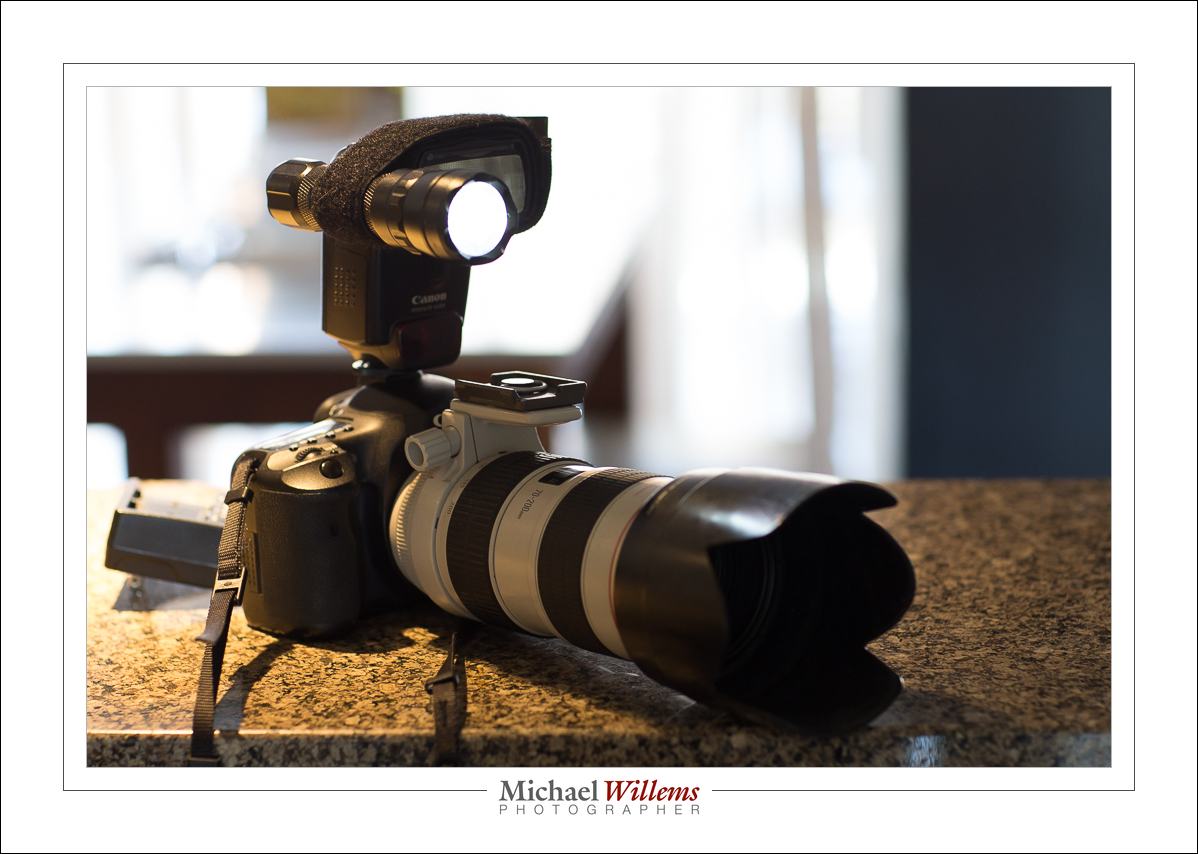
When it is dark, I use a spare speed-strap to temporarily tie a cheap and simple LED flashlight to the flash. It aims forward and I can now focus:

Of course you will want to make sure that the light does not show in your pictures as it does in the photos above. I use this when I am using flash, and ambient light is “turned off”. Or I turn off, or redirect, the flash after focus.

Alternately, you can ask an assistant to aim the flash. But then you need an assistant.


All the difference

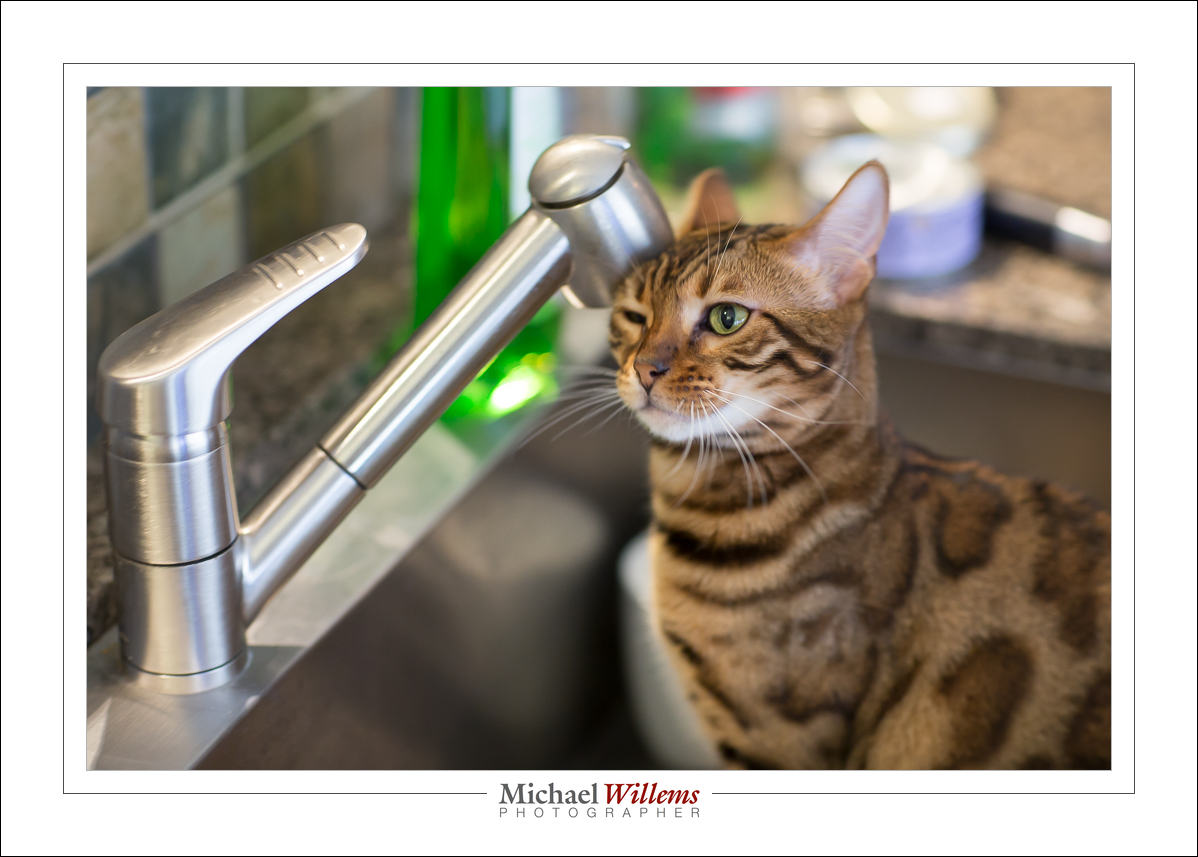
Look at Mau the cat, who is pretending to not notice me:

I used my 85mm f/1.2 lens on the 1Dx body. The settings were 1/60 sec at f/2, 800 ISO.

Let’s think about that for a minute. 1/60 sec is about the slowest speed I can hand-hold: any slower and I would shake; and the cat would move visibly also. So that’s a given.

800 ISO is nice. Much more, and I start getting visible grain, certainly on cheaper cameras.

So unless I want to use a flash, f/2 in my kitchen is what I need.

Now… imagine I had a consumer lens,. like the 17-85 f/3.5–5.6. The latter designation means that when I zoom out I can get as low as f/3.5, but when I zoom in I cannot go any lower than f/5.6.

If I used this lens, I would have to go to a much higher ISO. To keep the same exposure, if I want to keep the same shutter speed, I would have to change ISO as follows:

  • At f/2 I need ISO800
  • At f/2.8 I needISO 1600
  • At f/4 I needISO 3200
  • At f/5.6 I needISO 6400

So with the cheaper “consumer” lens zoomed in, I need to go to 6400 ISO. Which would, especially on smaller cameras, give me a lot of grain; a bad quality picture, in other words.

So the more expensive, “faster”, lens gives me a huge benefit here. One not to be scoffed at, which is why we like prime lenses. Which are not all expensive: you can get a 50mm f/1.8 lens for just over $100.

Which I hope you have done!


Autofocus point

An important point about autofocus (and forgive the pun).

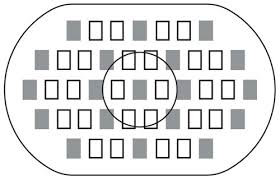
You have a number of AF points. One in the middle, and then 2 more, or 8 more, or 40 more: whatever. Lots, on my 1Dx:

These “points” are sensors that look for focus by looking at lines and sharpening them. But did you know that some points are sensitive only to horizontal or vertical lines? That’s why, when you select one AF point, sometimes you cannot focus even though you are pointing the AF point at a nice lined surface.

The centre AF point is always sensitive to both horizontal and vertical lines. But many other AF points are sensitive to only horizontal, or only vertical lines.

What’s more, this even depends on:

  • The mode you are in
  • Auto or manual AF point selection
  • The minimum f-number of your lens. Some points are points (sensitive to both) when used with an f/2.8 lens,. but horizontal only, or vertical only, when used with an f/5.6 lens.

So, my strong advice: Read up on how your camera does it. And if in doubt, use the centre AF point, since it is likely more sensitive and a cross-type sensor.


Conundrum

OK, so you have a flash that does not work on your camera. Bad contact.

But:

  1. This flash works on every other camera. Ergo, it is the camera.
  2. This camera work with every other flash. Ergo it is the flash.

Huh? Which one is it?

That is what a client came to me with. And never to shy away from a challenge, I took a look and figured it out. And since this could affect you too, if you own a camera and flash, I asm sharing.

Solution: it is both.

With any flash problem, you start by resetting camera and flash and cleaning contacts on both sides, camera and flash. Most “real” flash problems are caused by a bad contact.

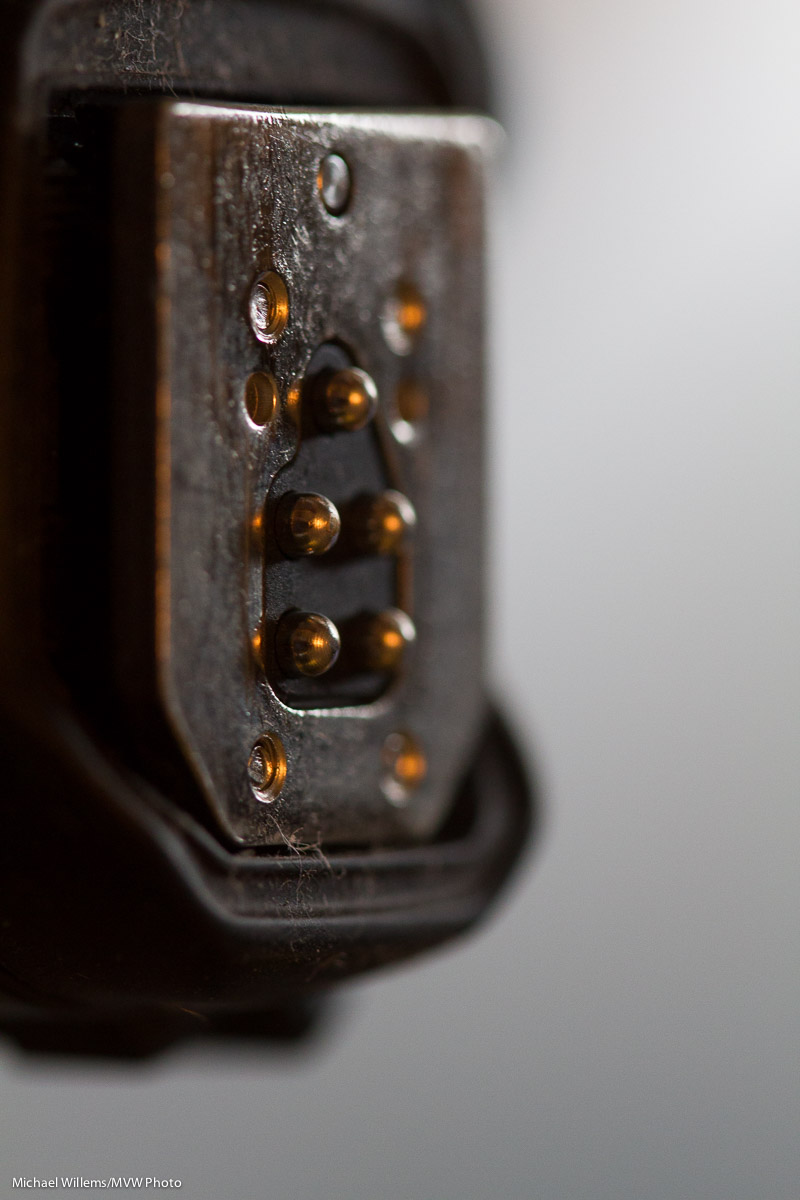
This camera, a Rebel, has rather a large vertical distance between the hot shoe and the actual contacts; i.e. the contacts on this camera are “recessed” a little more than usual, as this photo shows:

Next, the flash. Here are the flash contacts. This is a Canon 580EX II flash:

Clean, and functional.

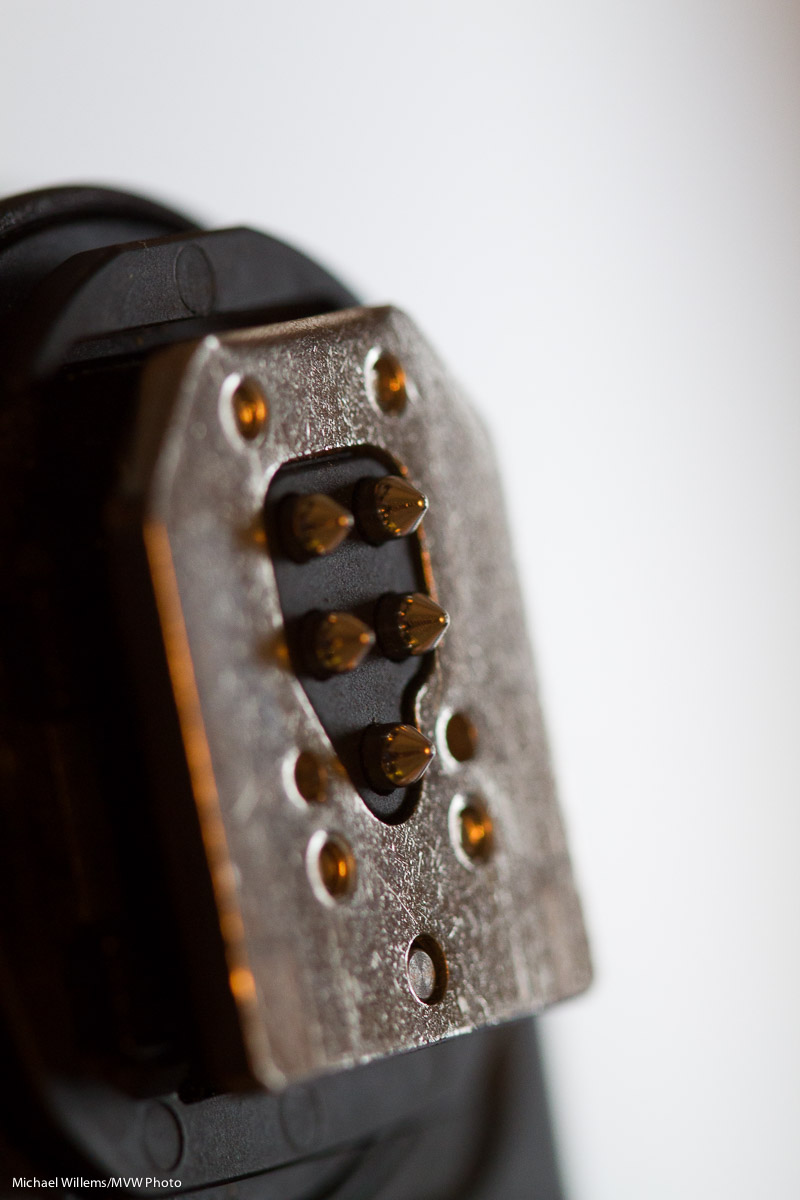
But then I noticed something. My own 58u0EX II flash, i.e. an identical flash, is in fact not identical. It is newer, and its contacts look like this

Can you see the difference? Instead of round, they are pointy, and they extend farther.

So Canon did a rolling upgrade in mid-production, and changed the pins. Obviously, my friend is not the only person who had problems with the flash contacts.

So this was the problem: a camera with slightly more space to bridge, and an older flash that has slightly less ability to bridge space. That’s why it was the combination that did not work.

And 580EX II owners, take note. Do you have the older pins, or the newer pointed pins?


A New Modifier!

You know how I like the Honlphoto range of small flash modifiers, and I use them all the time. Small, light, sturdy and affordable is a great combination of properties for travelling photographers. Right now David is just outside Mosul in Iraq. This brings back memories: I was in Mosul in 1982 (see me next to Nineveh’s City Gates), and I stayed at the Railway Hotel. Small world.

(Full disclosure: David is a friend of mine: but that is not why I recommend his stuff. The reverse, rather: I like his flash stuff so much that I contacted him and we became friends.)

Broadly speaking, there are three types of small flash modifier:

  • Modifiers that change a flash’s direction, like snoots, grids, gobos.;
  • Modifiers that change the flash’s colour (gels, coloured reflectors);
  • Modifiers that change the nature of the light, usually by softening, such as softboxes, reflectors, and bounce cards.

So you modify where the light goes, in what colour it goes there, and how it goes there. And now there is a new modifier in the latter category.

To place this new modifier, let’s start with the existing ones.

First, we have “no modifier”: aimed straight at the subject from atop the camera. When I use that, I get cold, harsh light. Look at this object in front of a wall:
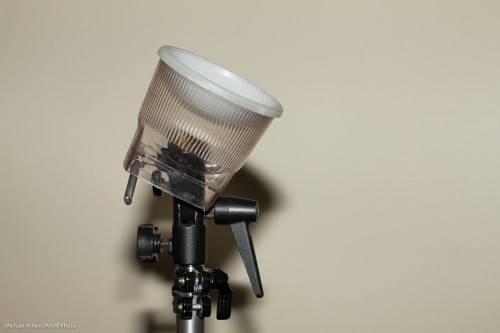
Then I bounce the flash behind me, up at 45 degrees, to get a much better result:
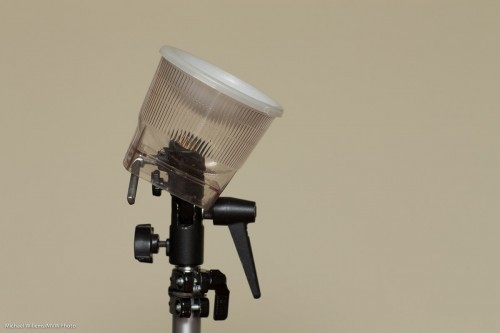
Much better, but I cannot always do this. The ceiling is sometimes too high, or it is a bright colour, or there are objects in the way that stop the light from my flash from reflecting back; or there simply is no ceiling.

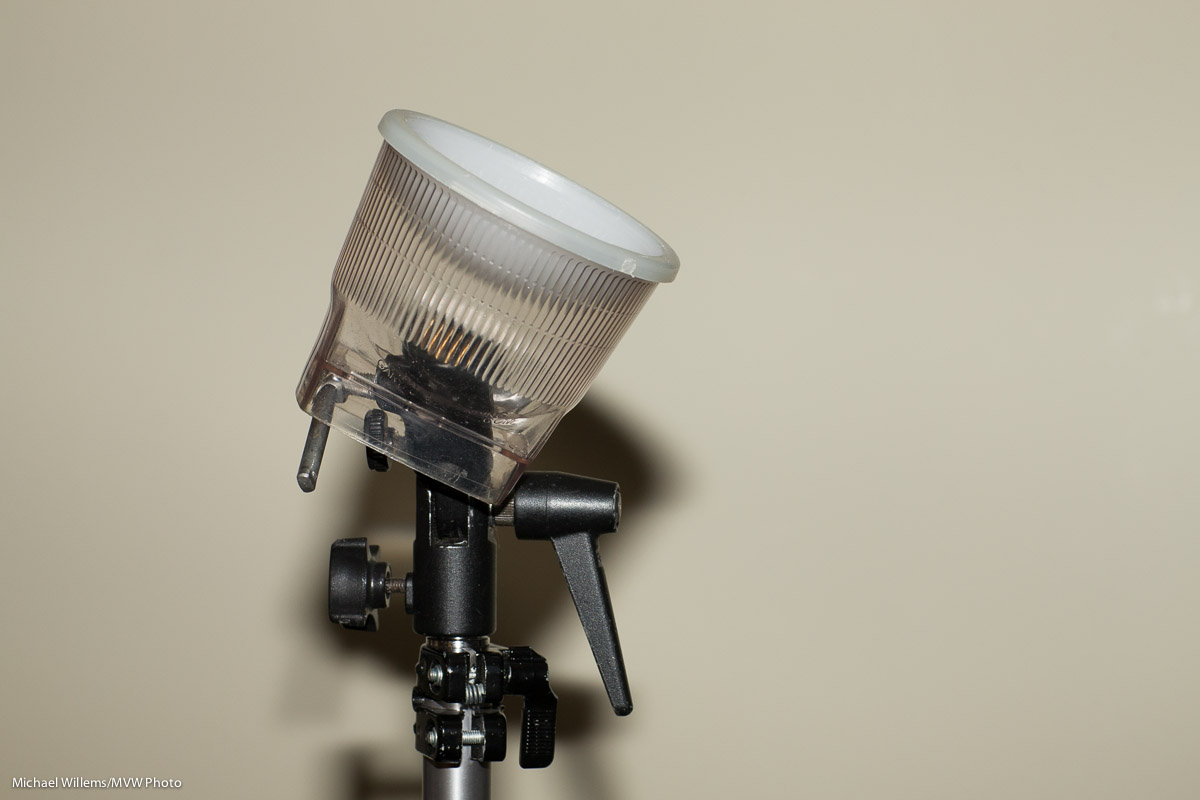
In those cases, I can use a reflector on the back of the flash. The Honl Speedsnoot doubles very nicely as a reflector. While this is not perfect, the shadows are a lot less hard than they would be from direct flash, and the light comes from a higher position.
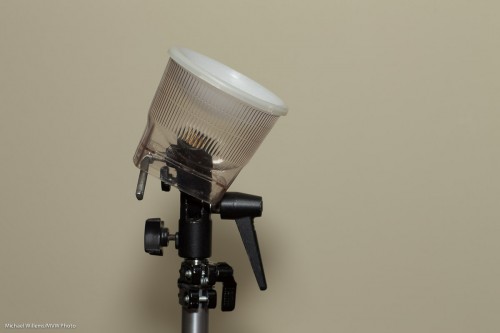
This solution is not always easy: the reflector takes a little manual dexterity to tie to the speedstrap on the flash, and it can flop down all too easily.

I can also put a hard reflector card (bounce card/gobo) behind the flash. This is hard when there is no bounce at all, but it works very well when combined with ceiling flash:
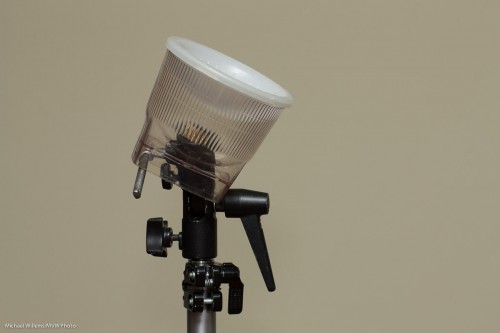
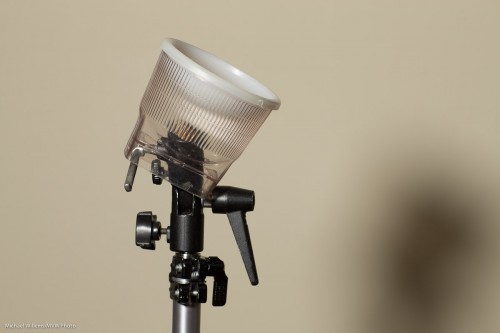
Next: a great modifier is the softbox. In the next photo, I used a Honlphoto 8″ Traveller8 portable softbox off camera. The shadow is under my control: bring the flash closer and it softens, and the flash’s position determines where the shadow goes. Now that nasty shadow becomes a creative tool under your control.
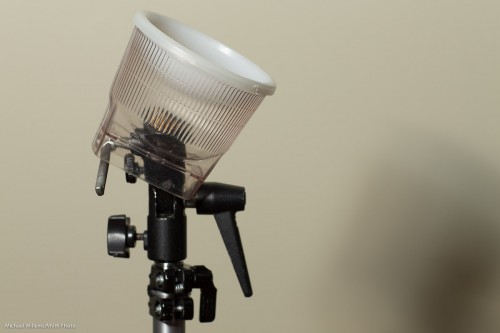
Another great option is the ring flash. Rather than buying one, you can go with the Orbis ring flash attachment for your speedlights. I will talk more extensively about this in a next post, but for now, just look at the light with its distinctive halo, a halo that shouts “Ring Flash!”:
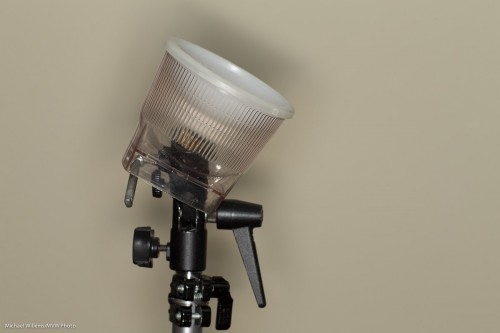
And if I take it off camera it’s still great:
 

NEW: THE LIGHT PADDLE; A MINI REVIEW

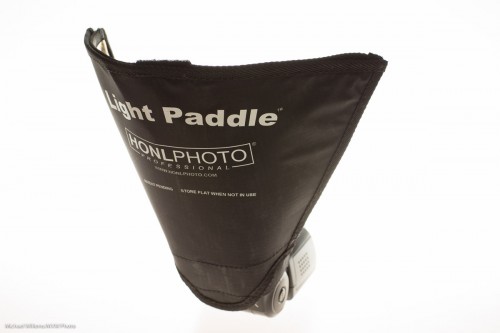
There is an all new small flash modifier to add. Dave just sent me one, a hands-on mini review of which I am hereby delighted to bring to you as a Speedlighter Exclusive… the Honl Photo Light Paddle.

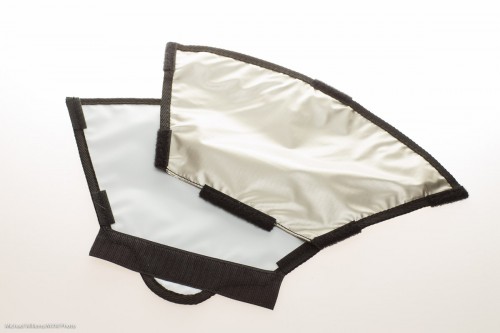
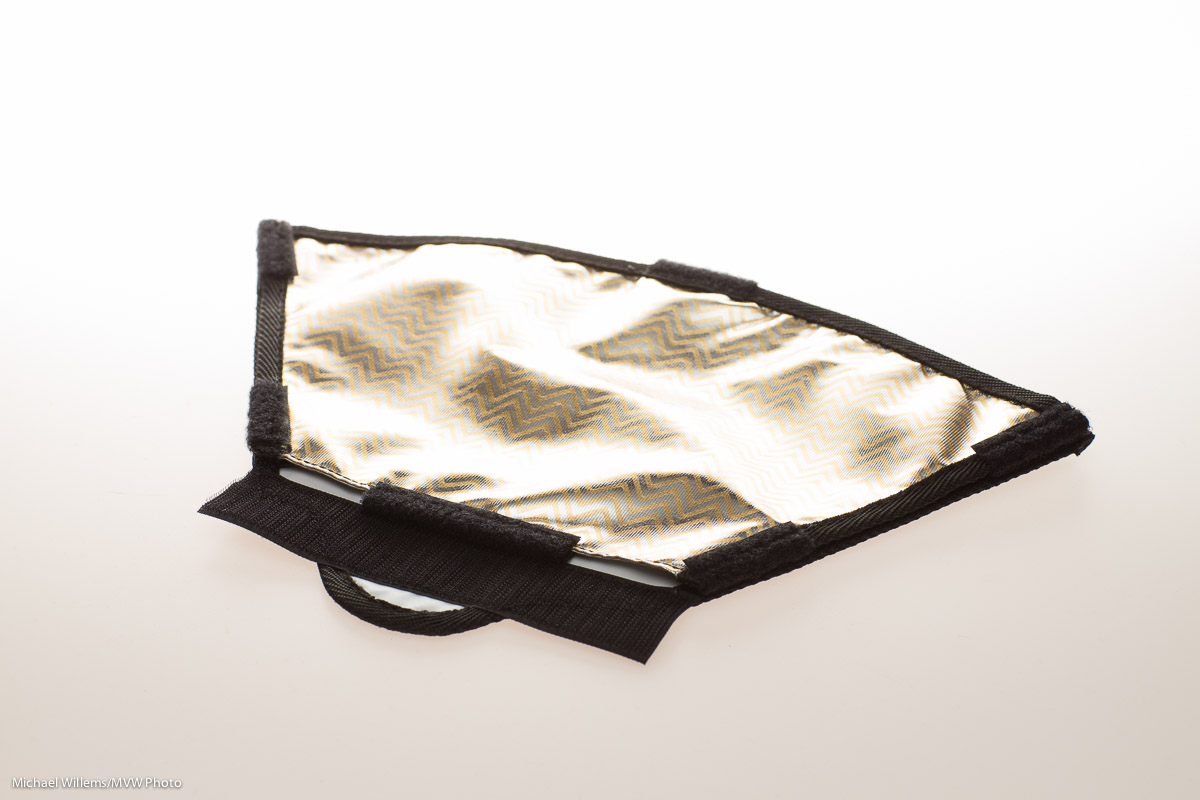
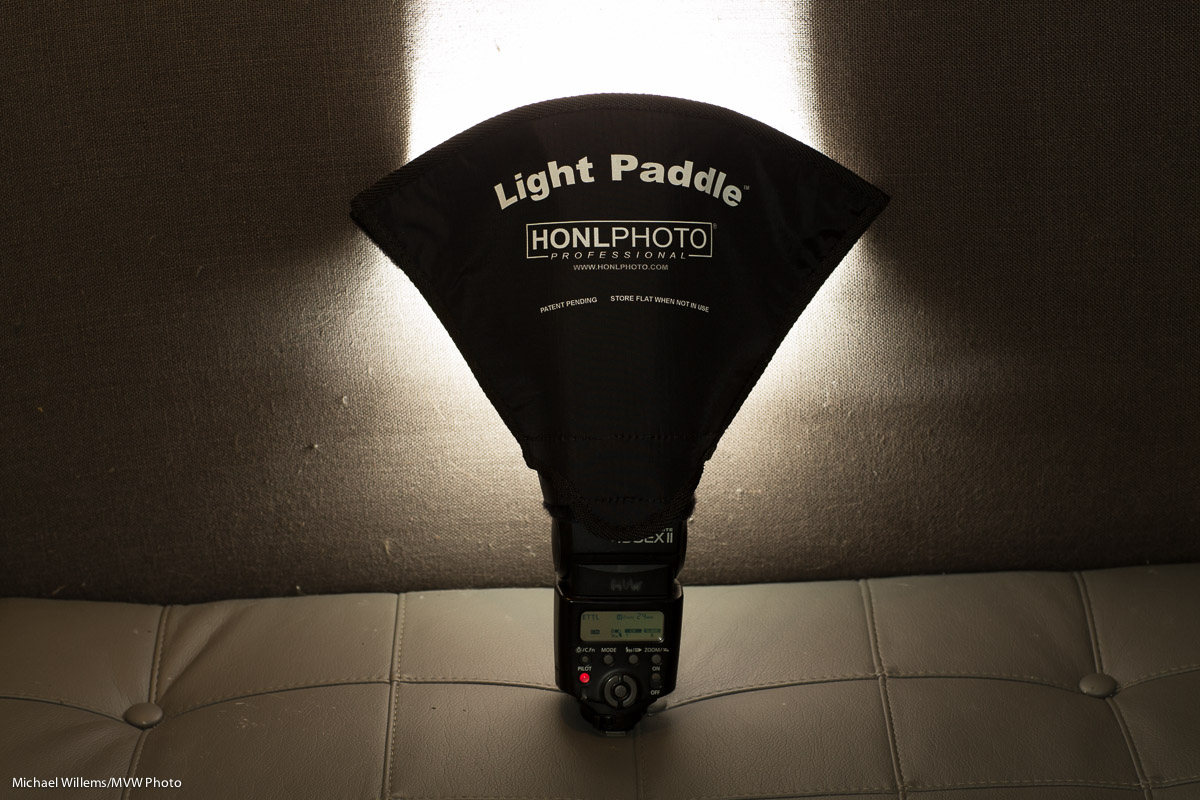
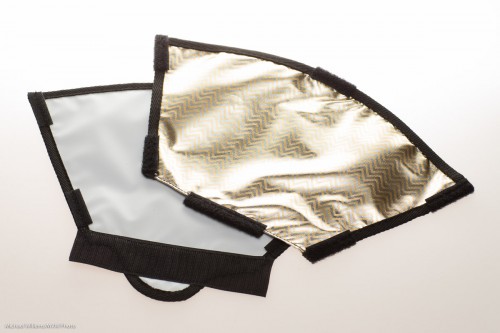
When you take it out of the package, the light paddle is a flat modifier, and in fact the package says “store flat when not in use”:
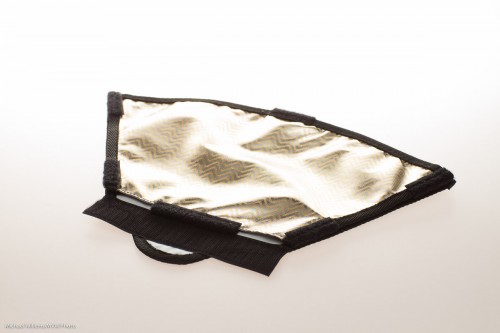
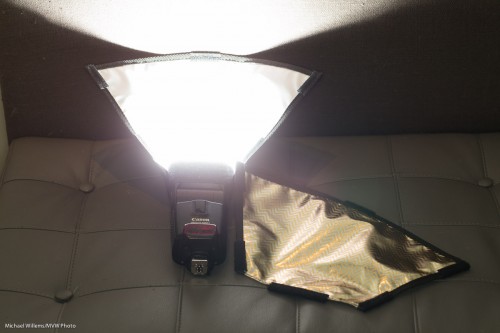
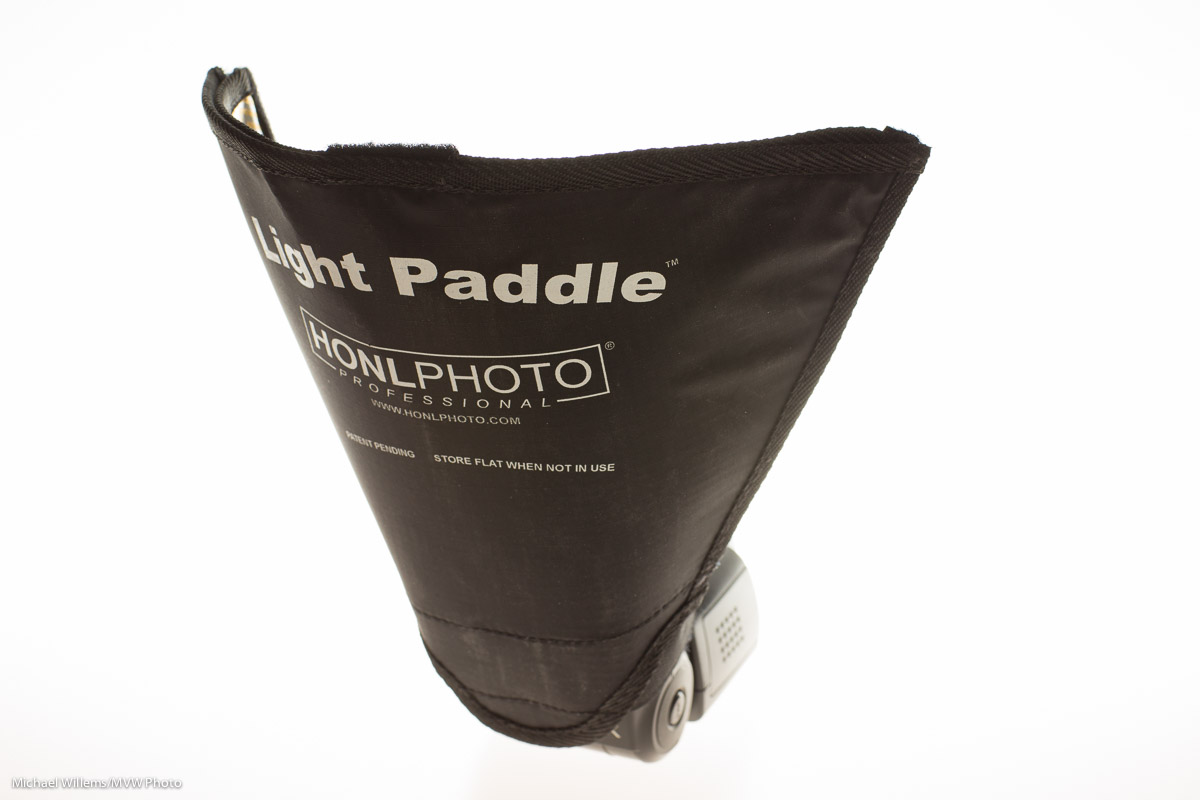
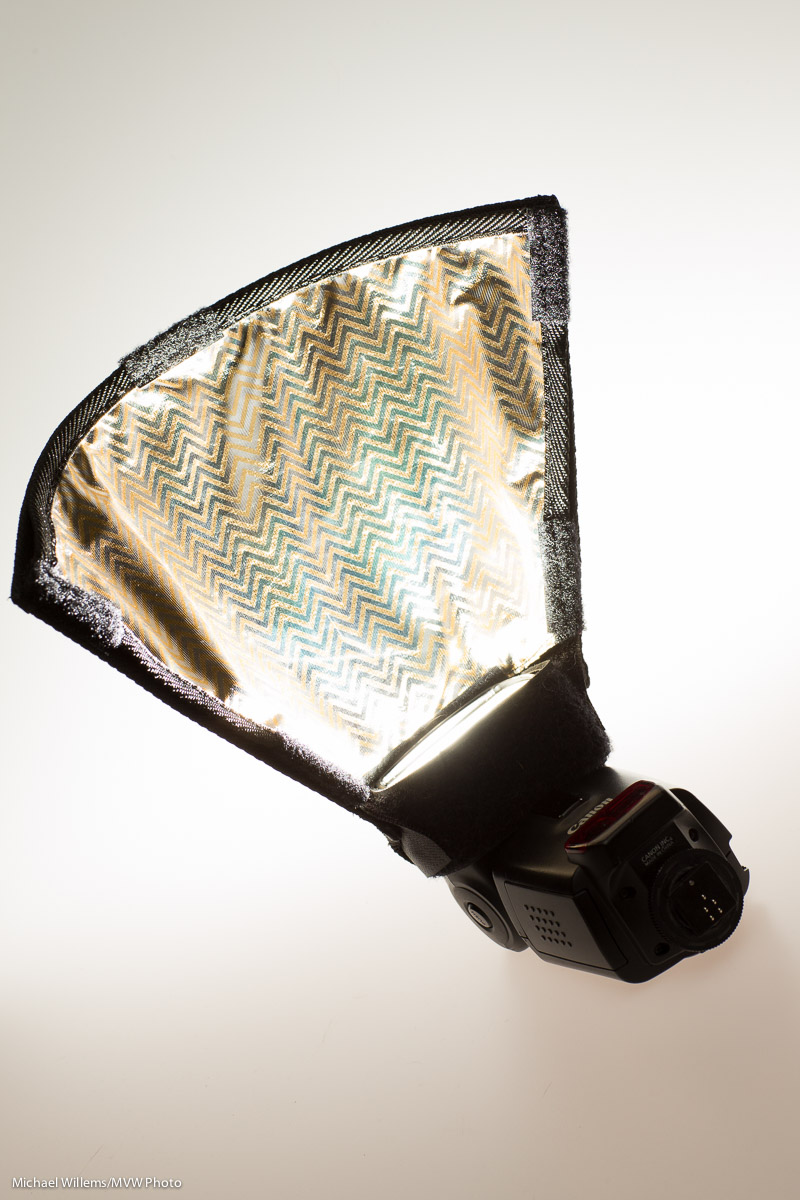
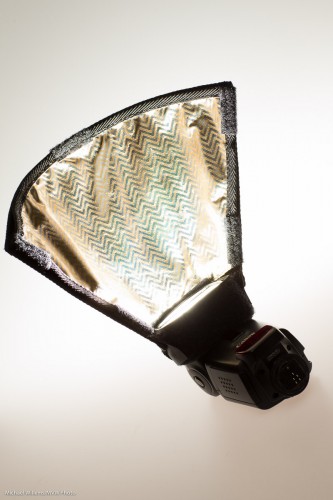
But attach its Velcro to a speedlight’s Speedstrap, and it becomes a convenient paddle that grabs the light, and nothing more or less, from the f;lash and bounces it forward.:
The Light Paddle is like the reflector, but having used both, I find that the Light Paddle has some big advantages over that and other modifiers.

  • It takes the right shape immediately. No guessing, adjusting, re-adjusting: it is the perfect shape each time.
  • It reflects the optimum amount of light from the flash, i.e. it catches the light, no more and no less, so it takes that worry off my hands.
  • It is sturdy: unlike a “free form” reflector, it holds its shape. I only used this sample for a few days but it looks and feels just as sturdy as the other Honl Photo flash accessories. And as said, light, sturdy and small, when combined with affordable, is a great combination for flash aficionados like me.
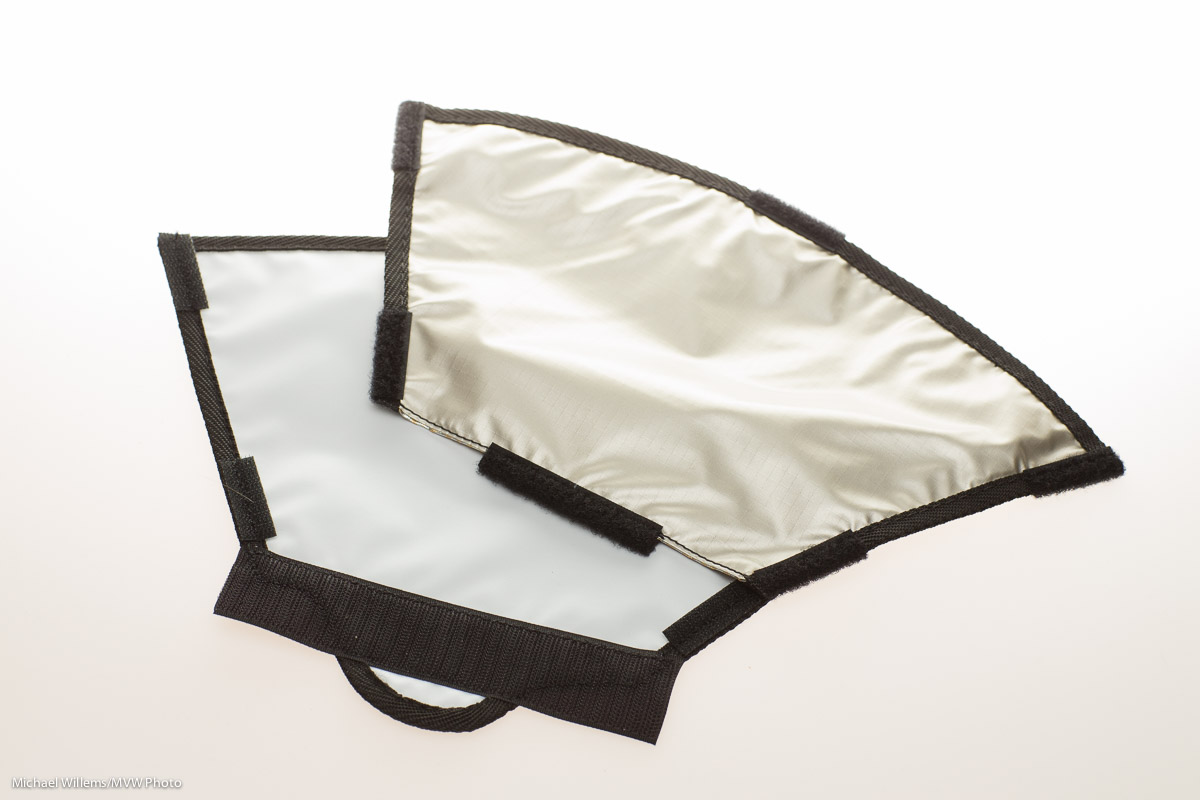
  • It has not one, but three bounce surfaces. As you see in the image below: peel off the reflective surface. which is initially CTO (Colour Temperature Orange, i.e. tungsten/warmer light), and you get white; reverse it and you get a lighter slightly warm orange.

Here’s what it looks like with its three bounce surfaces:
I found the Light Paddle to be directional where you would want it to be.
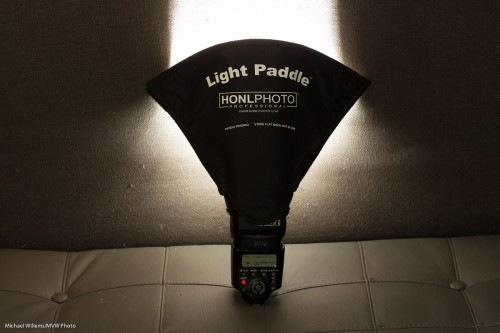
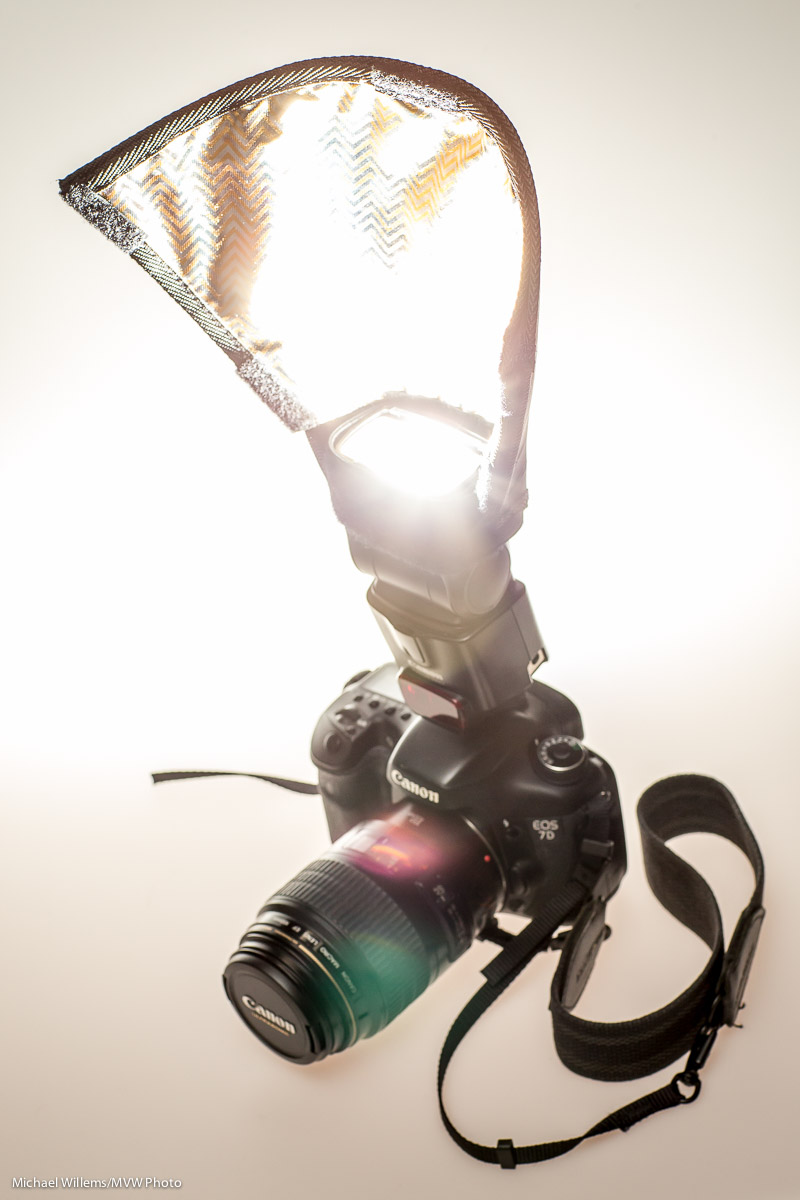
You can use the Light Paddle on an on-camera flash or on an off–camera flash. In either case, I found that it provided a surprising amount of directional control and consistency. Here it is again, and as you see it reflects the flash fully, and makes its surface much larger and higher:
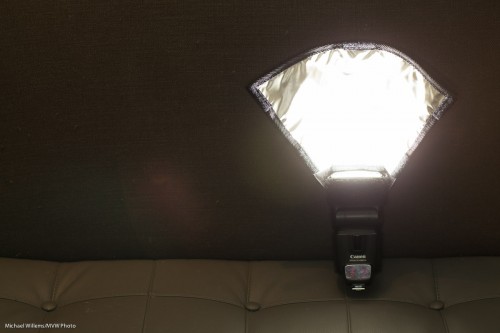
The Light Paddle in Practice

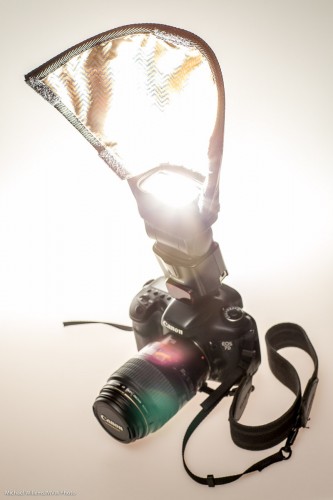
Let’s look at the Light Paddle in practice. Here is a usual operating mode:
First, straight flash, in a situation where there’s no bouncing (and thank you, kind July Intern Daniel H., for your volunteering):

Now in the same no-bounce situation, the Light Paddle:

But it is outside that this really shines. Another before and after:
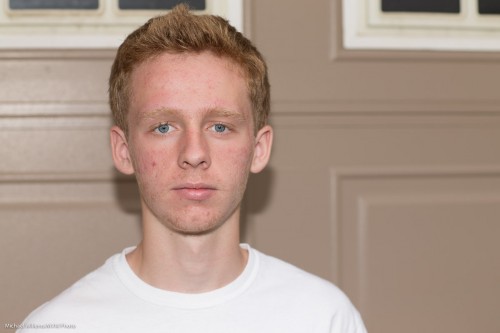
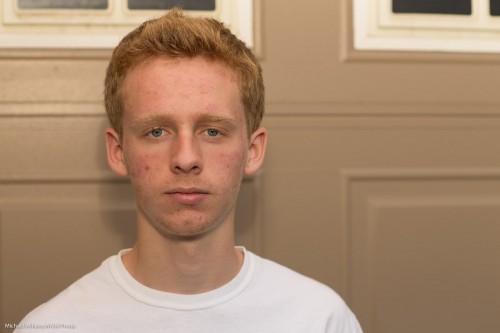
Another outdoors example, once more with the CTO (warming) side reflector: again, straight flash, then flash with Light Paddle. The difference is very clear.
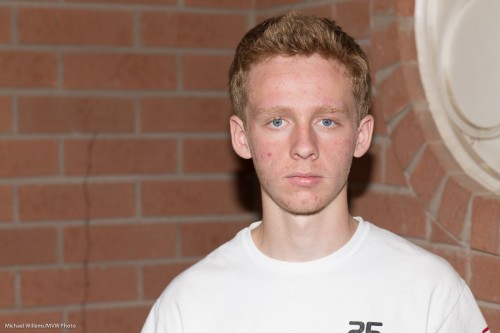
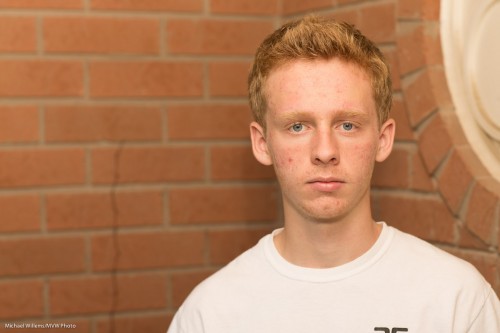
Based on all this,. the Light Paddle is certainly going to be a staple part of my flash bag for events and creative use. It is not the only flash accessory, but it fills in the gap between bounce card, reflector, and softbox ever so nicely. Thanks, Dave.

If you want one, go  to Honl Photo for orders as soon as it will be available—I am sure that will be soon, both there and at your favourite local retailer.