Miscellany Musings

Learning opportunity: Tomorrow AM and Friday PM, you can see me talk at the Coast To Coast arts convention at Toronto airport. Come learn about camera basics (tomorrow) or Landscapes (Friday).

Cat Opportunity: always be ready to shoot your cats with a wide open lens in available light. And I never waste an opportunity to post a cat picture:

Theft opportunity: that is what you are giving thieves by leaving gear in your car. A good friend last night had her multiple cameras, multiple expensive lenses, and laptop stolen from her parked car. So sad, a terrible loss. The lesson can benefit us all: DO not leave cameras in cars. Even if you do not have a license plate like mine (NB: link is not suitable for work!).

But there may be light at the end of the tunnel: your home insurance, and if you do not have this your car insurance, may well cover part or all of this loss. Immediately make a police report, and then immediately contact your insurance company. Meanwhile collect serial numbers. in the EXIF data of each photo, things like camera serial number and often lens serial number are present. You can use a free utility called EXIFTOOL (Google it) to see the full EXIF data, if need be.


The colour of the day.

Why do we use colour?

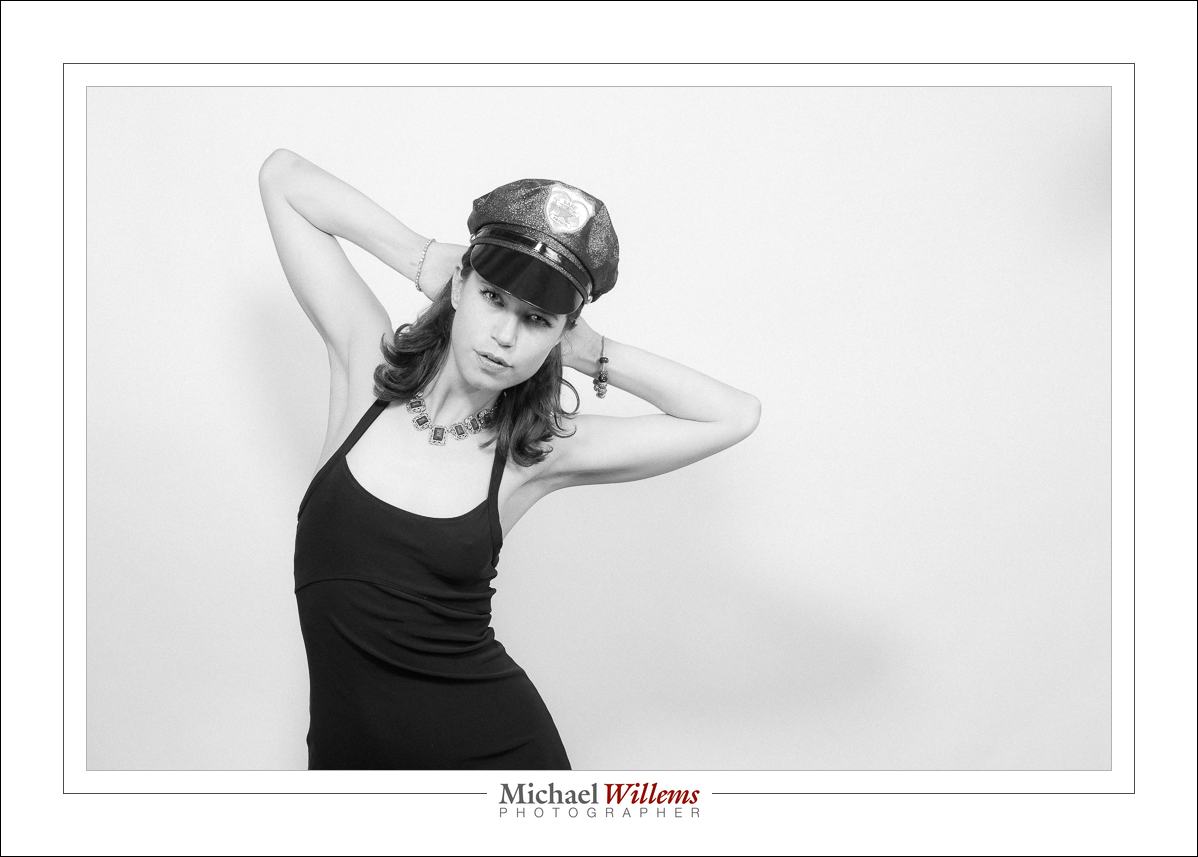
Sometimes I like simplicity, like here:

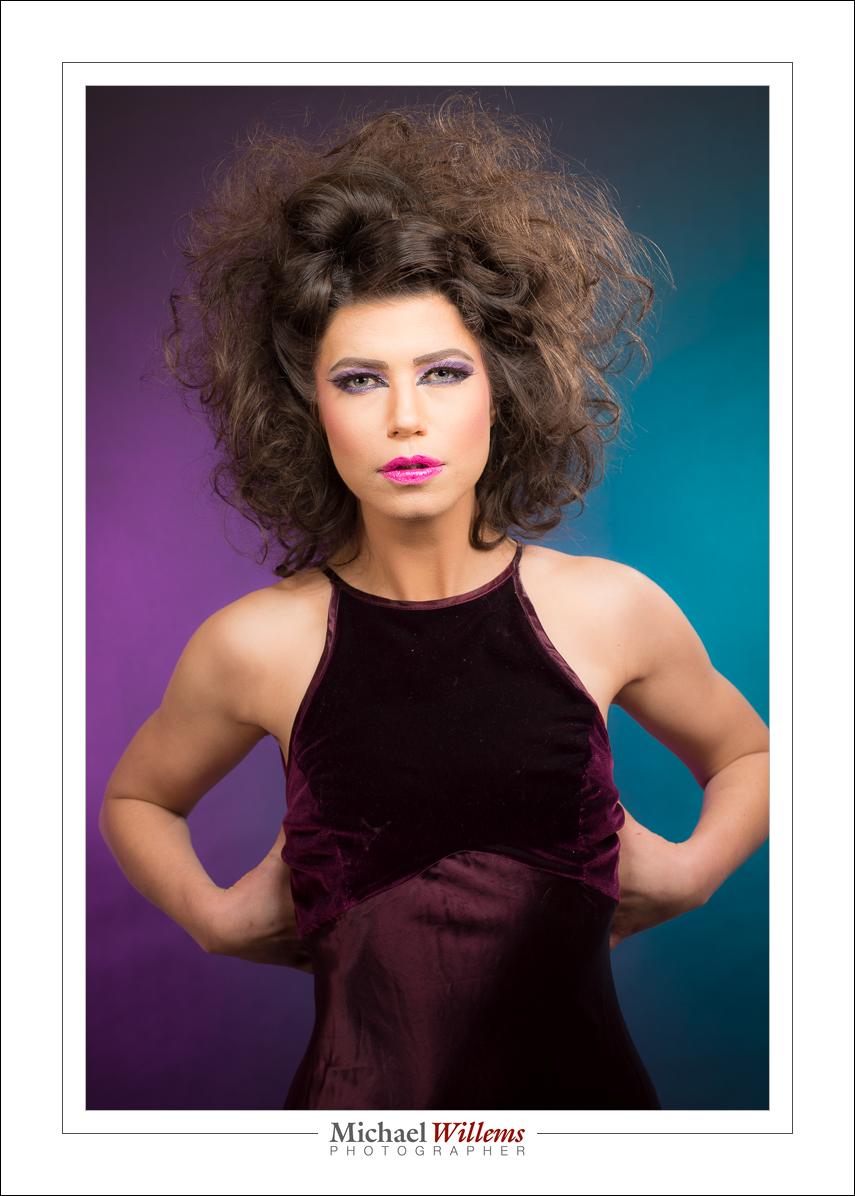
Sometimes, on the other hand, especially when I print images, I like to fill the frame with colour. Like here, from last night:

(Make-up by Glam IX Studio; model Kim Gorenko.)

The colours match the dress and the eyes. Two speedlights aimed at the background.

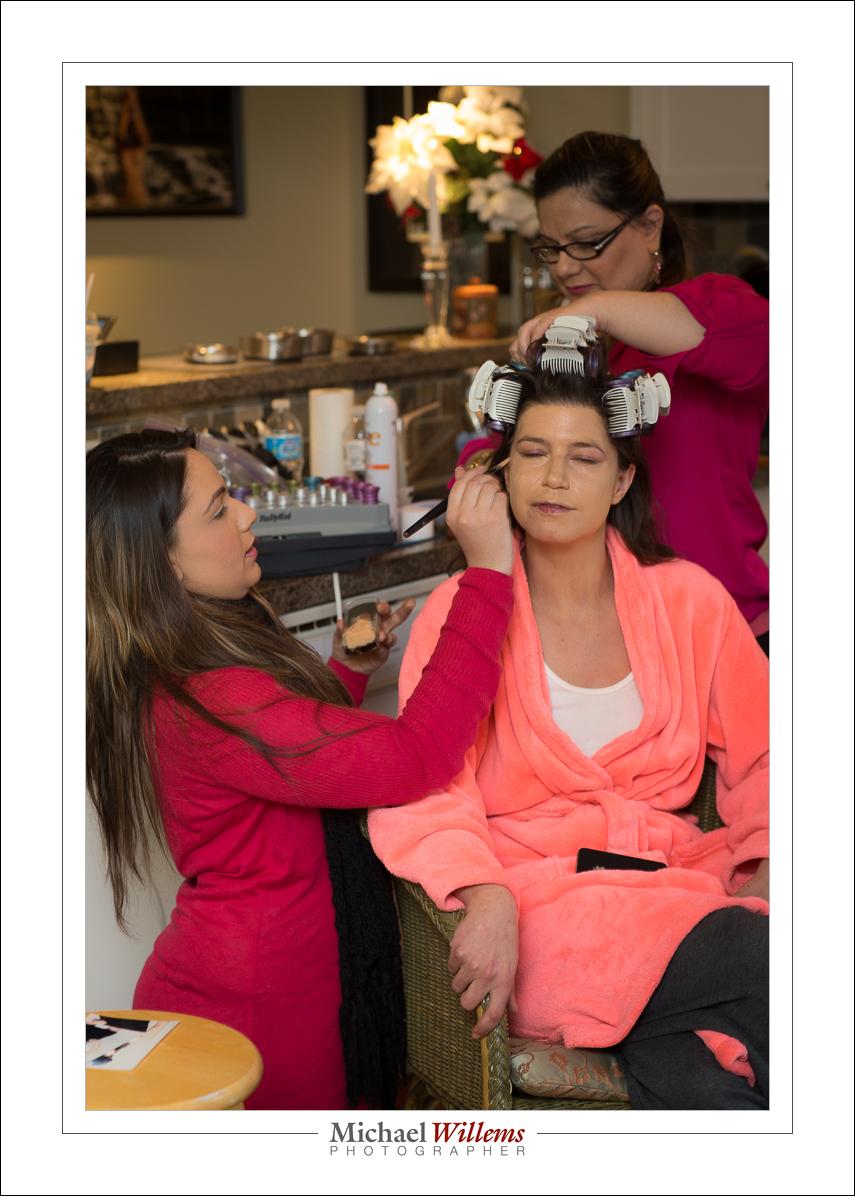
That last shot also emphasizes again the importance of getting a glamour-type shot like this right in terms of pose, light, and make-up.  Look at the before/after. Nothing was done here, only make-up. Straight out of camera:

The make-up and hair took about three hours to do: these are serious skills.

For a successful shoot, it all has to come together!

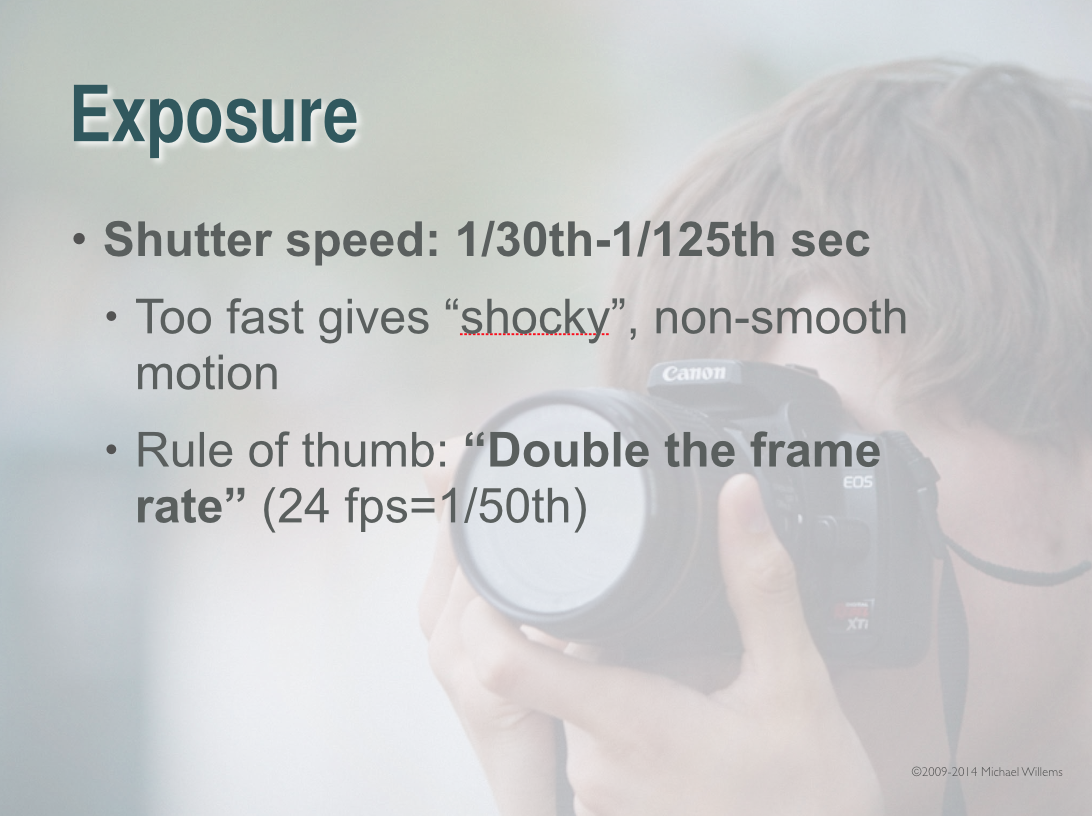
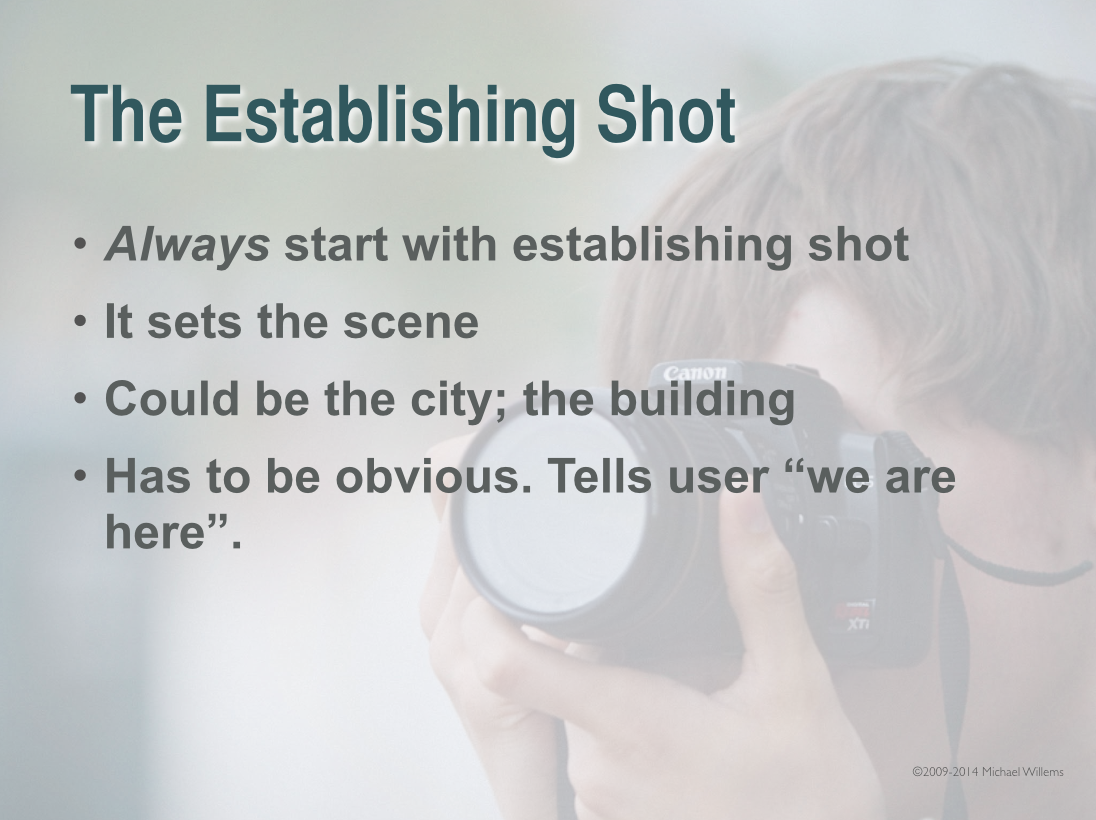
Now on to my Video with DSLR course, which is about to start.  Check www.cameratraining.ca for details on upcoming courses.


The secret of darkness

The shot I showed you the other day had a darkish background.

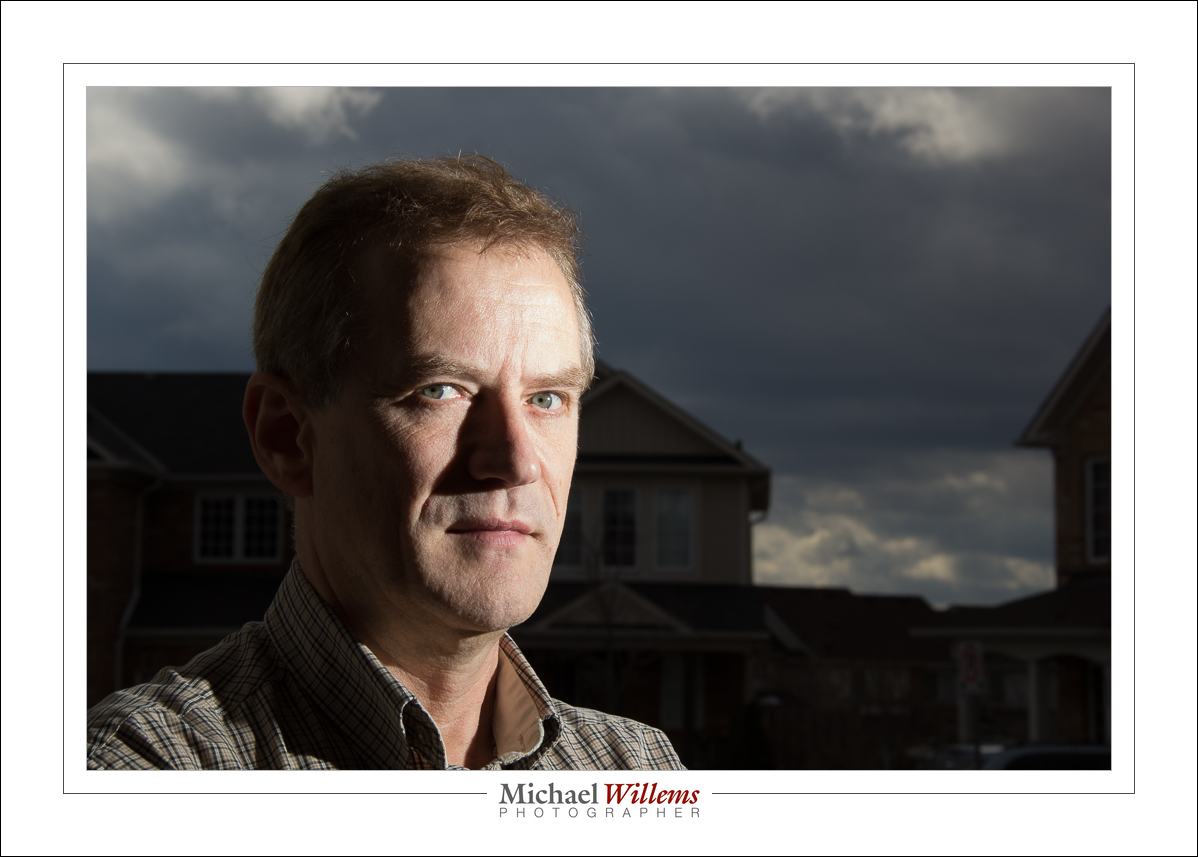
How dark? It was my usual “two stops below normal”. I.e. when I look at the scene, my light meter indicates not “0”, but “–2”.

Today: what happens when you make the background even darker. Like, four stops below normal. I.e. I use an aperture even smaller (I still of course use 100 ISO and 1/250th second).

Now we get a very dramatic portrait:

Which one is right? That is an impossible question to answer. It depends on what you want. On your style. On the picture and its purpose. There is no one “correct” photo. What you need to learn is the techniques to do all this. Then you can make up your mind for each photo you make.

One thing to keep in mind: the lower picture used such a small aperture that the flash had to be sued without a modifier: else it would not have had enough power. If you take my Flash course I will teach you a trick you can use to always know when you have enough power–or not.

___


Travel!

It’s Springtime. We Travel. We Come Back With Photos.

But are they Any Good? Relax. In a three hour lesson this Sunday, I teach you how to ensure that they will be good:

  • Camera settings for each situation;
  • What to bring;
  • Travel safety for you and your equipment;
  • What lenses to consider;
  • Composition basics;
  • Common mistakes-and solutions.
  • Practical composition tips;
  • Storytelling, and Using an B-Roll;
  • Post-production tips;

This seminar will allow you to do pro travel photography quickly. You will be amazed at how much better your shots are upon your return!

What you need: Basic camera knowledge, a camera, preferably but not necessarily with DSLR capabilities.

BOOK NOW: LIMITED SPACE. Go to  http://cameratraining.ca/Booking.html and select your travel course. This is a small seminar, max 6 students.

I See

“I see” in Latin is “Video”. A mode more and more DSLR cameras have. Can your camera do video?

If so, it behooves you to learn how to do it! It’s great quality, movie-type quality in fact, but the camera is not just point-and-shoot (point-and-tape?). Instead, there are things you need to learn. Things about the camera setup. Things about the extra equipment you need. Things about storytelling and about filming techniques. Things about post-production. Simple things, but without them you will never produce a good video. With them, however, it’s easy!

Well… It just so happens that I have recently written an all-new video/DSLR course. It will answer questions like:

  • The one accessory you must have
  • The shot types you need to know
  • How to storyboard
  • Camera settings; what are the secret “gotchas”?
  • How to shoot with what you have’
  • How to use audio
  • Composition tips
  • Common mistakes—and how to avoid them
  • Why you need an iPhone, too!

…and much more.

I will be teaching it on 30 March, but it is available as of now as private or custom small training, 24/7.

So if you have ever thought “maybe I should learn this video thing; after all, my camera can do it”, then now is your time.

Contact me to book, and to hear more: I am here for you.

Michael


Metering 101

Light meter at “zero” means a good picture. Right?

Wrong.

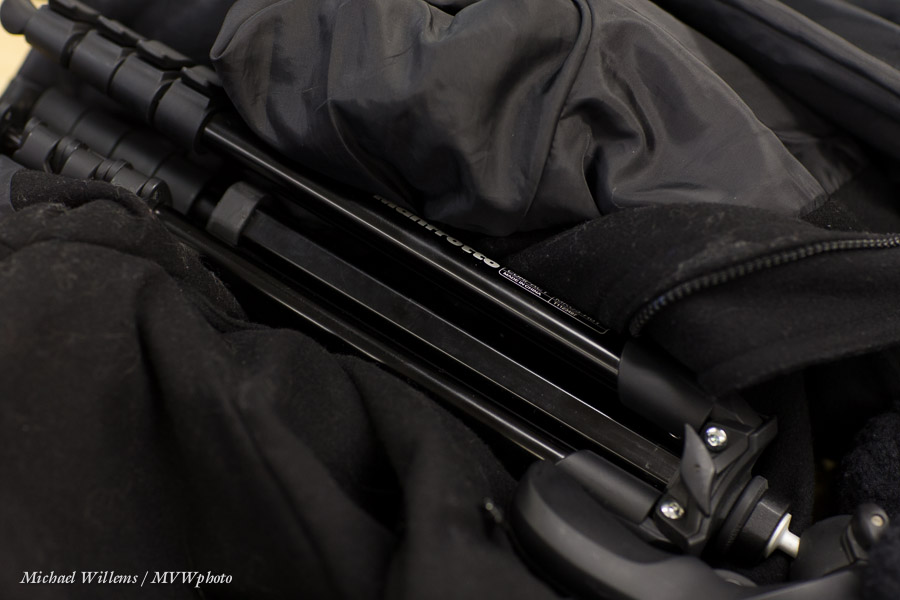
Shoot something black, filling the entire viewfinder with that object, and make sure the light meter points at “zero” as you are pointing at the subject (use the viewfinder!). Take the picture.

You get this:

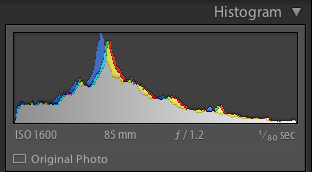
The histogram shows why this is bad:

A histogram of a black object should peak on the left (the dark side).

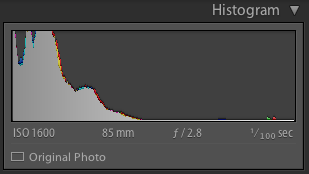
Now do it again, with the light meter pointing at –2 (minus 2):

Perfect. Look, the histogram is right for this type of scene:

The moral of this post:

  • “The meter displays zero” does not equal “this will be a good picture”. It merely means “this will be a mid-grey picture, neither dark nor light”.
  • “The meter points to minus” does not equal “this will be a bad picture”. It merely means “this will be a dark picture”.
  • “The meter points to minus” does not equal “this will be a bad picture”. It merely means “this will be a dark picture”.

And there you have it. Now you understand the camera’s built-in light meter.


Minor Math Monday

Those pesky “f-numbers”…  my new f/1.2 lens prompts me to write about them.

As you know, f-numbers determine the depth of field (download the sample chapter of my DSLR book here, if you need a refresher). But what does the number mean? A little math for you today.

What is the f-number? The f-number is actually an “f divided by” number. An expression where “f” is the focal length of the lens (say, 50mm for a 50mm lens, or 70mm for a 24-70 lens that is zoomed in) that has as its result the diameter of the opening. Or in formula form:

d = f/n

..where d = diameter, f = effective focal length, and n = “the f-number”. So a 100mm lens set to f/4, for instance, would have an opening with a diameter of 100/4 = 25mm.

Why use this measure? Why not just say the diameter? Because the f-number describes the light-gathering ability of a lens. A 10mm f/2 lens and a 100mm f/2 lens can gather the same amount of light. How so? Surely the opening of the 100mm lens is much larger? Ah yes, but it is also much farther away! The amount of light is the same.

Why the funny numbers? Why f/1, f/1.4, f/2, f/2.8, f/4, f/5.6, f/8, f/11, f/16, f/22 and so on? That’s because:

  • Each number was chosen to be a stop apart. A stop just means a doubling or halving of the light; i.e. each subsequent number lets in half the light of the previous number.
  • And the light that enters the camera is proportional with the area of the diaphragm circle.
  • Hence, to go to the next main f-number, we want half the area.
  • Which means reducing the diameter not by 2 (that would give 1/4 the light gathering ability, since the area = pi x r squared). Instead. we need to divide the diameter by the square root of two (√2) to get half the light gathering ability.

So the series is: 20x0.5, 21×0.5, 22×0.5, 23×0.5, 24×0.5, 25×0.5

For half stops, the series is: 20x0.5, 20.5×0.5, 21×0.5, 21.5×0.5, 22×0.5, 22.5×0.5

For third stops, 20x0.5, 21/3×0.5, 22/3×0.5, 23/3×0.5, 24/3, 25/3×0.5

So now you know a little of the math behind aperture numbers. And here’s what they do, again,.. here’s f/1.2:

Talking of f/1.2: I am selling my pristine, boxed Canon 50mm f/1.2L lens (I have the 85 and the 50, and one is enough). Interested? To my readers here I am extending a $125 discount. It is listed for $1,500 on Kijiji (slightly cheaper than what this lens has been selling for on eBay) , but it is $1,375 for you. If interested, let me know quickly!


More Courses

You want to learn professional photography skills? Good!

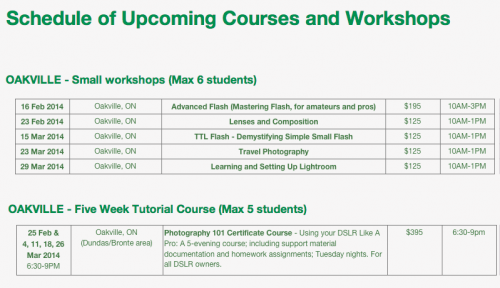
And there are more opportunities than ever.  Apart from learning from me at Vistek Toronto and Sheridan College Oakville, and reading my four e-books, I now have more courses planned in Oakville:

Click to see the schedule, and to sign up. There’s half-day specialized courses, and there’s a five-week course. I hope to see yo on them: this is the time to learn the pro skills that will make you love your images.


It Doesn’t Work!

Let me share a some camera malfunctions that I see again and again. Some of the most common ones are also very easy to fix, fortunately.

The flash does not work properly:

  • It is set to MANUAL, not TTL
  • It is set to COMMANDER/MASTER mode.
  • Your Flash Exposure Compensation is set to a value other than zero.
  • The hot shoe/flash contacts are not totally clean. This happens rather often. Always clean them – use just a drop of water and a cloth, or whatever else you can use, and clean thoroughly.

Autofocus is not working, or it is, kinda, but there is no beep:

  • Your lens switch is set to “M” (manual only).
  • Your camera switch is set to “M” (manual only).
  • Your menu is set to “M” (manual only).
  • You are set to AF-C/AI Servo instead of AF-S/One Shot.
  • You are not aiming the active focus point(s) at a subject with lines.
  • It is too dark.
  • You are too close.
  • You have disabled the beep in the camera’s menu.
  • Your lens is not fully engaged; it did not fully CLICK when you put it on the camera.

That last one happens all the time, and it is very dangerous–because of the lens is not attached, it can fall off.

The moral of this story: When your camera doesn’t behave as planned, do not panic: it’s usually something very simple.

___

Note: the “Buy Three, Get The Fourth Free” special price for my e-books is still on: I want you all to get trained up with your new cameras before you travel anywhere. Check it out on www.michaelwillems.ca/e-Books.html. If you previously bought one or more books, contact me for your price.