Four more days

Saturday I’ll be here:

Mono, country home with flash

Mono, country home (with flash)

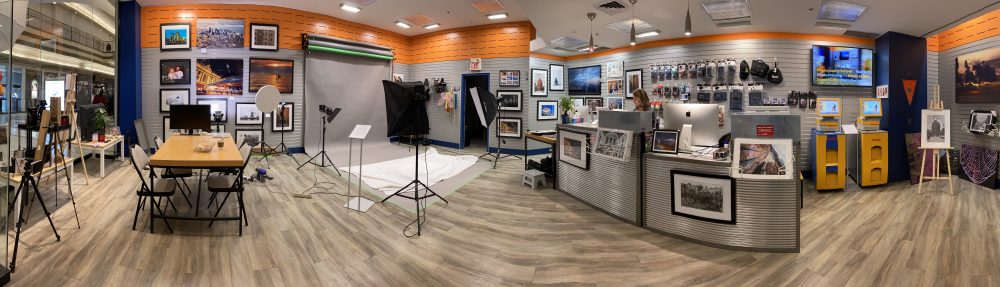
But it will be rearranged and full of lights. This is my Mono, Ont. Country home, where Joseph Marranca and I are holding our all-day Advanced Flash workshop.

That snap was taken with the little Panasonic GF1, with its built in little flash raised to very successfully fill in the shadows.

WordPress gone mad?

My blog’s “theme” appears to have spontaneously changed to “Coraline”. Without me doing anything! I wondered what had happened.

And when I go to WordPress.com support, I get:

Support Temporarily Closed

Support is temporarily closed at the moment. We will reopen very soon.

Even worse:

Support is currently closed as staff meet offsite brainstorming ways to make things better. We will be dropping into the forums regularly during the hiatus, and we’ll formally reopen on August 16th.

And then I find out that “Cutline”, my theme, has been “phased out” and replaced by Coraline.

No questions, no notice: just make my theme ugly. Thanks. Time to start thinking about moving my blog. This is a mission-critical endeavour for me, and this kind of nonsense, no support and changes without asking or even telling, is not good enough.

If your blog is important, best stay clear of WordPress.com, is my advice.

Know any good WordPress hosting providers, anyone? Providers who can move my blog and all its contents from WordPress?

What camera should I buy?

Today, a part answer to the question I get often: “what camera should I buy”.

I understand this question very well. There are many options. Which one is for me? How, as a beginner or intermediate user, do I even begin to choose?

Panasonic GF1, photo Michael Willems

Panasonic GF1, photo Michael Willems

A reader asked me the following (summarised):

“My goal is to replace the Lumix I own – my first digital camera all the way back from 2005.  It takes INCREDIBLE outdoor photos and people always think I have a really fancy DSLR.  But it was around $350 back then.  I’ve noticed that indoor photos are much worse, though slightly better than the point and shoots my friends own (or perhaps I am a better photog?).

The camera has been through a lot of trips and is carried daily. I would like to replace it with another similar camera – one that is easily portable and is not expensive because I don’t want to be afraid to toss it in my purse or the car.  I know, I should probably do DSLR, but really, I am not aspiring to be professional.  I just want crisp, lovely photos.

My goal is to spend around $300, knowing it will be replaced in a few years by something a bit better.  I also need the ability to have better photos in low light situations and to shoot quickly.

I’ve researched this a lot of crutchfied.com, where I plan to purchase, but I haven’t asked a For Real Photographer.  Your website seems so approachable, so I thought I would ask and you could direct me to your personal recommendations or another site that you trust.”

That is a great question. And while perhaps I cannot come up with the exact camera, I think I can do better: I can give you insight into what is important, so you can make your own well-informed choice.

Do you need a new camera?

First, do you need to replace your camera at all? Pictures are about the photographer, not about the camera. “Your camera takes great pictures” actually means “You take great pictures”. And note that since a few years ago, megapixels no longer matter: I would say “6 or more is enough, 8 or more is plenty”.

But in this case I would say yes – you probably do need a new camera – because your camera is five years old (so unlike all modern cameras, it may not have a sensor with quite enough megapixels) and in particular because you mention the two things which are indeed huge issues, and where even small  cameras have indeed gotten better: low-light ability and shutter release delay (where you press the button and nothing happens for a second). These are the big drawbacks of point-and-shoots but are getting better.

So let’s look at a few of the pointers to help you decide.

DSLR or point-and-shoot?

Indeed, as you quite rightly surmise, a DSLR is the way to go to get full creative control, instant shutter release, and very low noise and hence, great low-light abilities. The pros use DSLRs for a reason.

But a DSLR is definitely not just for pros. An entry-level DSLR does not have to cost much. Plus, with a small amount of training, like a couple of the great Henrys School of Imaging courses, you can operate it like a pro.

Digital SLR camera, by Michael Willems

Digital SLR camera

Why is an SLR better? The main reasons, in a nutshell, are:

  • Larger sensor, meaning much lower noise (less grainy images, especially indoors and in low light).
  • Larger lens, meaning better quality.
  • Much better selective depth-of-field (blurry backgrounds when you want them).
  • Interchangeable lenses (and with that, wider lenses possible).
  • No shutter delay.

Look at that list: there are no free lunches: this is where SLRs are better. This is why the pros have them. “But I want all those advantages in a small point-and-shoot!” will not fly, unfortunately.

That said, there are also of course some valid reasons for a smaller camera, and you seem to have these needs. “Budget” and “Size and Portability”, in particular.  Even some pros – like me – use a point-and-shoot sometimes (usually a Canon G11/G10/G9 or a “Micro Four Thirds” camera like the one at the top).

So, if you cannot consider a small DSLR, like a Canon Digital Rebel XS, then perhaps a smaller, point-and-shoot type camera. On to the next question.

What type of smaller camera?

There are several types:

  1. Small point-and-shoot with very few controls.
  2. Small point-and-shoot with additional “manual” controls.
  3. “Prosumer” cameras, almost as large as an SLR but with a fixed lens
  4. “Semi-pro” point and shoots, like the Canon G11 and like the large-sensor “micro four thirds” cameras including the Panasonic GF-1 and the Olympus PEN.

For you, with your stated needs, I would avoid 1: too limited. I would also avoid 3: too large, while still fitted with a tiny sensor. Might as well get an SLR. And while I love them, in your case I would avoid 4 only because of budget – these cost $500-1,000.

So that leaves category 2: small cameras with enough controls to be creative when you like.

To be creative, you need to be able to select Aperture Mode (A/Av) and shutter speed priority mode (S/Tv) when you want them. This usually means a dial at the top. In this category, look for prices between $200 and $400, roughly.

What to look for?

So in your category, here are some of the most important things to look for.

  • Size and feel. Buy a camera whose handling you like!
  • Interface. Do you like the menus and controls, or do you find them horribly confusing?
  • How convenient are the physical controls? “The more buttons the better”, since this alleviates the need to go into menus for every adjustment you want to make. But some controls on small cameras are easily pushed or rotated when you do not intend to.
  • How wide will it zoom? The ability to take wide-angle pictures is often underestimated: a good photographer will tend to use wide angles more often than telephoto settings.
  • How noisy (grainy) are the pictures in low light (i.e. at high ISO)? The larger the sensor, the better, and the fewer pixels, the better (that is why Canon very sensibly went down in megapixels from the G10 to the G11).
  • What shutter delay? After you focus, when you press the shutter, how long does it take the camera to click? If this takes an appreciable time, buy a different camera.
  • Does it have a viewfinder? I personally like cameras to have one, but that said, I bought a point-and-shoot without one.

Notice that I am not talking about “how many megapixels does it have?” and “how many times zoom does it have?”. While every aspect of a camera is important, a lot of this is marketing.

So what are the options?

So if you are indeed in need of a small, portable camera, not an SLR; and your budget is as stated, then there are many cameras to choose from. Too many for me to mention here.

I personally like the small Canon cameras and the small Panasonic Lumix cameras. The Panasonic LX3 comes to mind, as does the Canon G11, but these are more “category 4” cameras and both cost more than you want to spend.

Other options include the Panasonic DMC-ZS7 and DMC-Z3S, the Canon SD-4000, SX-210 and SD-3500, and closer to your price range, the Lumix DMC-ZR3 and ZS5.

But that is a partial list. To get closer to your choice, taking into account the fact you need to like the camera’s feel as well, I would do the following:

  • Go to Henry’s (if you are in Ontario) and ask there, keeping the above requirements in mind. Disclaimer: I teach photography at the Henry’s School of Imaging – but I am not employed by them and can be entirely independent. The reason I like them is that all store staff really know photography. Their customer service is also very good.
  • Research your options on dpreview.com – the gold standard of technical reviews. If you are lucky enough for your camera of choice to have been reviewed there, you will get all the pros and cons in a well-though out review.

So I would go to my nearest Henrys (or similar specialized photo retailer, if you are not in Canada) store to see – keep the requirements in mind.

Where to buy?

While you can buy anywhere, I would still be biased toward buying locally: warranties are not valid if you buy abroad; that plus the service and the free consulting you get in a specialized store is often easily worth the premium.

So I would say go hold the camera and play with it, ask about low noise at higher ISO, and check the shutter delay. That is the best way.

Above all: have fun and keep shooting!
Night Sky

A black sky may look black to us.

But to the camera, it is not that way:

Night Sky, by Michael Willems

Night Sky, by Michael Willems

At least if you set up the camera correctly.

My recipe was:

  • Canon 1Ds Mark III on a tripod
  • Using the Canon 35mm f/1.4 L prime lens
  • Focus: Manual, set to infinity
  • Exposure: Manual, f/1.4, 30 seconds
  • 200 ISO

Note the following:

  • Lightroom will automatically remove “stuck pixels”
  • The sky starts off lighter, and goes darker, so adjustments may be necessary.
  • Focus needs to be accurate: do it before it gets dark.
  • A city in the distance will light up the sky greatly.

Try it. And above all, have fun.

Unstick yourself!

A recent meeting with a very talented young photographer, Peter McKinnon, prompts me to write about lens choices for a moment.

Peter, who is a student of mine in the Advanced Flash lighting workshops, showed me a wedding album and other wedding shots he recently did. He showed me a wedding he shot on his own,  entirely with a 24mm prime lens, and much of it at f/1.4. Never took that lens off. No long shots. No zooming. Just Peter and his wide angle lens. Fantastic work.

The 1D Mark IV makes a lens look 30% longer, so that’s 24 x 1.3 = 31mm. Roughly equivalent, then, to me using my 35mm f/1.4 lens on the full-frame 1Ds Mark III body.

Mmm. That would be liberating: one lens, a wide one, for an entire shoot. And I have mentioned before, for events this is my favourite lens.

Selective focus:

Cat, by Michael Willems (35mm, f/1.4)

Cat, by Michael Willems (35mm, f/1.4)

Low light ability:

Club, by Michael Willems (35mm, f/1.4)

Club, by Michael Willems (35mm, f/1.4)

And both, available light and selective focus:

Couple, by Michael Willems (35mm, f/1.4)

Couple, by Michael Willems (35mm, f/1.4)

So I checked. The last wedding I shot, I used my 35mm lens for fully 30% of the shots! I too love the shallow depth of field:

Bride and Groom, by Michael Willems

Bride and Groom, by Michael Willems

And I like the ability to get it in and to not have to worry about how to zoom.

Groom getting ready, by Michael Willems

Groom getting ready, by Michael Willems

So here is my suggestion: that you too spend an entire day shooting with one wide angle lens. This will free your mind from deciding on lens, zoom, and so on, and open your eyes to the photos in front of you. And that is what photography is about: photos, not cameras or lenses.

And you know what: I’ll do the same, on my next event shoot.

Blurring backgrounds

A quick tip, today, for new or inexperienced photographers. But one that some experienced photographers forget sometimes, too.

In a good photo, you draw attention to your subject. You can do that by framing, by using converging lines, by making the subject large, by surrounding it by negative space… or by blurring the background.

If like me you like blurry backgrounds, how do you achieve them? Using a camera with the largest possible sensor size, use any of these methods:

  1. Use aperture mode (A/Av) and select a large aperture (i.e. a small F-number, like 2.8). This is why lenses with those low F-numbers are so good, and so desirable, and worth paying for.
  2. Use a longer lens (zoom in).
  3. Get closer.

Or do several of these at a time, like in this snap I took during a tweet-up the other day:

iPad in hand, by Michael Willems

iPad in hand, by Michael Willems

The blurry background shows just enough to make the viewer work, to understand what is happening; but it also accentuates the iPad very nicely.

I used the Panasonic GF1 with its 20mm f/1.7 prime lens set to f/1.7 (yes, a very low F-number).

Strobella

OK, so I also tried the “Strobella”, from http://www.strobella.com/:

The strap goes over your flash, so you shoot with it as a “shoot through”, between your flash and your subject.

This device is similar to a softbox, except it is going to throw light behind you too, so it will be good in a room with reflective white ceiling and walls. Or outdoors, where you have to shoot quickly and using direct light.

Results I got were similar to using other diffusers, but in the situations above, better than many. Here’s without, and then with, Strobella.

First without:

No strobella

No strobella

Nasty shadows and harsh look. Now we put the Strobella on:

With Strobella

With Strobella

As you can see, the shadows are much less harsh.

So when you are shooting something that you know will be bad (close up subjects where your flash is the predominant or only light), this works. It’ll save me regularly.

Drawbacks, other than the fact that you perhaps look a bit silly? It cuts one to two stops of light. Is it fairly cheaply made. It is small (the larger the light source, the softer the light).

Michael’s Quick Judgment: No panacea, and it will not last forever; but for the few Euros it costs, it’s not a bad thing to have one in your bag.

Studio tips

Two studio/product lighting tips for you, prompted by me shooting a few product shots just now for upcoming reviews. Shots like this:

Panasonic GF1, photo Michael Willems

Panasonic GF1, photo Michael Willems

That was taken here:

Product Photo

Product Photo Setup

Which, when seen from behind, looks like this:

Product Setup

Product Setup, with background flash

So what are the tips?

First, avoid stray light, especially on your background. Saturation means “how little white light is mixed in”. A saturated colour has no white mixed in. An unsaturated colour has much white mixed in.

So use a grey backdrop if you can, or just use distance and directional light. Of course since I am using an umbrella and a softbox, much light will stray. So I keep the background far away (you all remember the inverse square law).

So, not this:

Product, too much background light

Product, too much background light

But more like this.

Product, less background light

Product, less background light

Then set your camera to what you like (f/9 and 1/125th for me), and get the background right.

First take a picture with no flash, to ensure that is black; then shoot while activating the background light only. Now get the flash power right: too little and you get a dark background; too much and it turns white. For me, I found this about right:

Product, only background light

Product, only background light

Then you get the rest right, i.e. set the right power for your main lights, and finally, shoot the shot.

Second tip: always use a brush or compressed air to clean your product. Otherwise, hours of photoshopping will result.

KISS: Simple, again

Today, another shot in the “Keeping it simple” series.

Relatively simple, anyway:

Evanna Mills, photo Michael Willems

Model Evanna Mills, photo Michael Willems

For this photo, taken during our last Creative Lighting workshop, I could have used large strobes with softboxes and portable lead-acid batteries. Instead, I used two simple speedlites.

  • The main light: a Canon 580EX II flash fitted with a Honl Traveller 8 Softbox. Inside that softbox, a half CTO gel.
  • The hair light: a Canon 430EX flash with a Honl Photo 1/4″ grid.
  • Both flashes on cheap, simple stands.
  • Camera on manual/ 1/160th second, f/9, and set to “Flash” white balance.

This is simple and can be reproduced easily and consistently.

I used Pocketwizards and manual settings to fire the lights, because that way I was able to use any flash (even a very cheap one!) and to hand the Pocketwizard to each student in turn to shoot the shot and get consistent results immediately, but I could equally well have used TTL.

The next Creative Lighting workshop in Mono is August 14.

40.

When you turn forty, you need glasses. This is the way it is for many of us. Yes, I know my youthful good looks belie it, but I am in fact… oh, who am I kidding? Yeah, I am well past 40.

So I need glasses to see my camera. But to see anything a couple of feet away or beyond, my eyes are great. So all day I put my glasses on, take them off… put them on, take them off… ad infinitum. My head has indentations where they live half the time.

There is now a solution. Hoodman, they of the excellent Hood Loupe you cannot live without (and I mean that!), now have these:

Hoodman Photoframes glasses, photo Michael Willems

Hoodman Photoframes glasses, photo Michael Willems

So, photographers’ glasses, made with titanium, one size fits all. They are flexible at the back, so really will fit all. And they come in a sturdy case. To make them work, you have your optician put your own lenses in (a simple job: I had it done at Great Glasses here in Oakville).

Why?

Here’s why!

Hoodman Photoframes glasses, photo Michael Willems

Hoodman Photoframes glasses, photo Michael Willems

A-ha! That handy little tab allows you to lift the glasses, one eye at a time. That way you can:

  1. Look through the camera with one eye, and keep looking at distant objects with the other
  2. Lift the lens to take a photo, instead of “remove the glasses to take a photo”.

The first point does not work for me, since I am left-eyed. (Yes, we are left- or right-eyed, did you know that? Handsome, intelligent people are left-eyed.. oh who am I kidding!). But the second point works just great. Now when I do a shoot I flip my left eye’s lens up, look through the viewfinder, and shoot. And flip down when I am done. Or to review, use my right eye, so no moving-of-glasses is necessary.

So, one more indispensable tool from Hoodman.

Michael’s Quick Judgment: excellent tool for use during shoots, and you will see me with these!