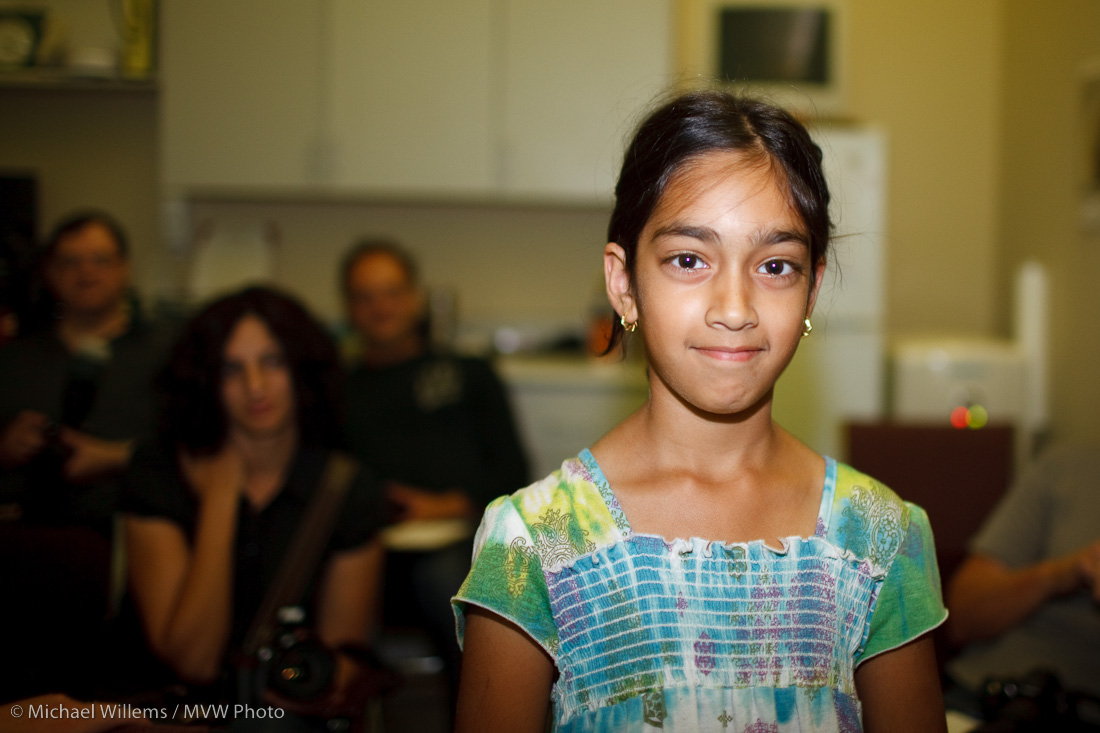
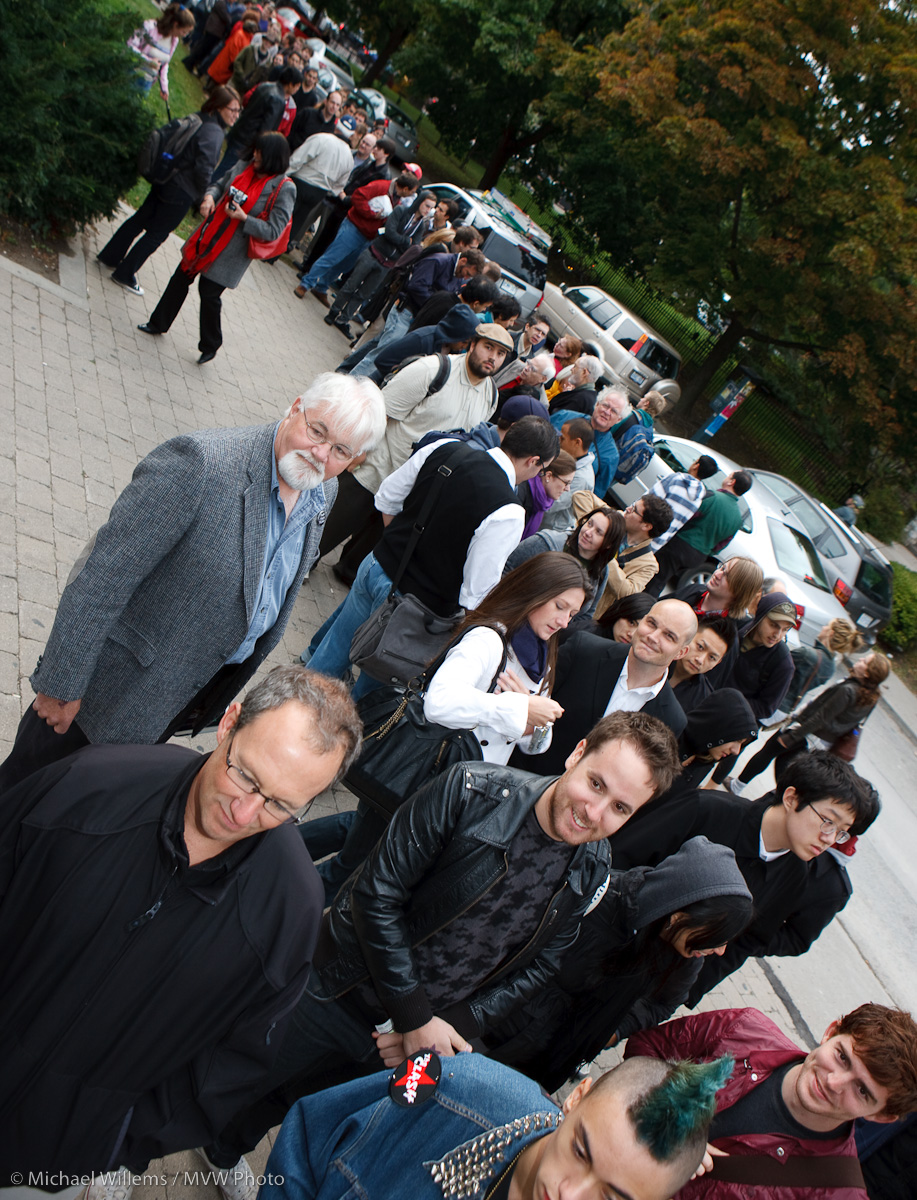
3200 ISO JPG

People talk about the 7D’s noise, I hear. Well, I saw that too – my first impression was, it seems noisy in Lightroom. On the other hand:

  • That is without a proper Lightroom import filter.
  • The 7D has auto-ISO and my 1Dx bodies do not, so of course I am shooting at higher ISOs than I am used to.

And look how a 3200 ISO JPG looks:

IMG_0838

Real size sample:

IMG_0838-2

Well, real sized when you click on it.

Noisy? I think that is great. Remember, this is full sized detail; shot at 3200 ISO, and taken from a JPG! A few years ago, 800 ISO would have been unacceptably noisy.

My new Canon 7D

…just locked up. Out of nowhere. I was not even doing anything.  Even turning it off did not do anything – I had to remove the battery.

I’m not concluding anything from this, but have to wonder: if this that famous Canon QC again? I shall await the software update…. months from now, presumably.

7D – post two

Okay… so I own a brick, until Adobe or Canon start waking up and fixing the fact that Lightroom, my core tool, cannot yet properly read 7D images. They come up noisy and with awful colour, using a “beta” camera profile and no way to select another. Adobe say they “hope” to get a fix for this into the next update (when? They say they are a long way off). See here.

MVWS9808

Also, I just figured out that movies are ignored by Lightroom. Fair enough but since I use Lightroom to copy stuff off my memory card, which is then ejected and formatted (by me), that ignoring is not clever better would be to copy them for me to some location.

Now I lost the family videos I made yesterday. That is regrettable. Now I need to, from now on, load CF cards into two different apps. Not very desirable – Lightroom lives by the fact it’s the one tool I use for my entire practice, and it is failing here on two counts.

7D

I went down to my local Henry’s store in Oakville yesterday (OK, I was teaching there) and bought a new Canon 7D.

This adds to my 1D MkIII and 1Ds Mk III. While it is not full frame, it does have an all-new focus system and it can drive speedlites from its pop-up flash. And it does high-def 29.97/25/24fps video. Reasons enough to add one!

It is now sitting next to me in Waterloo, Ontario with a 35mm f/1.4L lens on it – that makes it a fifty,of course, since 35 x 1.6 = 50, and you know how I feel about the “nifty fifty” (search for it on this blog if you don’t yet).

So far the 7D is looking good: I shall do a full review in the next few weeks.

Do I need a fast lens?

When students ask me “should I really buy a fast lens?” (For beginners, that’s a lens with a low “F-number”, like f/2.8), my answer is “it depends.”

What are you shooting? Landscapes (no need for a fast lens, since you will shoot at f/16 or above) or nightclubs (which need a fast lens for low-light abilities), portraits (which need a fast lens for blurry backgrounds) or sports (which need a fast lens for fast exposures)?

And if you like blurry backgrounds, does it make sense to get a pro lens like an f/2.8, or is my kit f/5.6 lens enough? That’s an easy one to answer. It depends. On whether you like this, taken yesterday during a course at f/5.6:

5p6

..or whether you prefer the same shot at f/2.8:

2p8

You decide. View them full size to really see the difference.

Know that every stop faster (from 5.6 to 4, or from 4 to 2.8) doubles the lens price. But if you like the blur (“Bokeh”) in the bottom shot, there’s no substitute for fast.

And I did not say expensive – at least not necessarily so: while some lenses like my f/1.4 35mm cost $2,000, an excellent 50mm fixed (“prime”) f/1.8 lens (a “nifty fifty”, which on a crop camera is  great portrait lens) can be had for as little as $150 or less.

So yes, low f-numbers make a difference and that’s why photographers are willing to pay lots of money for them. But don’t worry: good lenses keep their value.

Indoor Flash

Here’s a few demo shots from a kind volunteer (a student’s daughter) at a recent camera course I taught. This bit was about “flash”.

First, pop up the flash and use “P” or “Auto” mode and you get the picture that makes people hate flash:

MVWS0106

Then enable “Slow flash” or “Night portrait mode” and you get a better picture.. yeah, it’s better. But not all that much:

MVWS0105

Then put your big flash on top of the camera (e.g. an SB-900 or 580EX II, or their slightly smaller equivalents SB-600 or 430EX II). And aim that flash behind you.

Yeah. Behind. So it bounces off ceilings and walls behind you.

Much better. Much. See:

MVWS0107

And then if you want extra “character” and “depth”, bounce off a side wall, if you can find one.

Now you get three-dimensionality, depth, character as well:

MVWS0108

I mean – how cool is that? And all this was done in “P” mode, with no special stuff, with no settings on the camera, no required knowledge of aperture, no complicated techniques.

Flash is wonderful once you learn how to play with it. And it is easier than ever.

Dawkins

I photographed Richard Dawkins tonight. In the sold-out Bader theatre in Toronto, where he introduced his new book to an enthusiastic crowd:

MVWS9239

Usually, theatre lighting is quite simple – if you get to sit in the right place. Since my son Daniel and I sat in the very front row, today was no exception. The background is dark but the subject is lit brightly:

MVWS9318

I did not need more than 400 ISO, which gave me 1/100 sec at f/2.8. In manual exposure mode, of course.

“No flash“, the slightly inept people from the publishing house (who did not believe I had talked to their colleague on the phone earlier – Simon and Schuster Canada, you lost out on some free shots!), said time and time again. (The Dawkins web people aren’t very responsive either: four attempts to contact them. to multiple email addresses, offering free coverage – and zero responses: instead, I helped their own shooter, who was an ’emerging pro’ and asked for some advice).

No problem!

The only problem was focus. My 50mm f/1.4 lens front focused on the 1Ds MkIII by at least 6 inches, which is disastrous. I had to adjust it to a setting of “+17” (out of a possible 20!) in the ten or so minutes before prof Dawkins arrived. The 35mm f/1.4 and 24-70mm lens would not properly focus at all in this light (they were consistently way off), so while I switched many times, I kept coming back to the 50mm lens with +17 adjustment.

One day Canon will make a camera that focuses well. Perhaps. I am not holding my breath.

MVWS9307

Anyway, I got some nice shots. Photojournalism is never easy, but sitting about 10 ft away from Richard Dawkins makes up for a lot.

MVWS9299

(A few more shots here)

Not Neye-kon.

The following press release tells me several things:

September 9, 2009

Nikon Corporation (Michio Kariya, President) is pleased to announce that as of August 2009 total production of NIKKOR lenses, interchangeable lenses for Nikon SLR cameras, reached fifty million. Total production of NIKKOR lenses reached forty-five million in August 2008 with production of an additional five million over the past year.

Nikon (then Nippon Kogaku K.K.) released its first NIKKOR lens for Nikon SLR cameras, the NIKKOR-S Auto 5cm f/2, in 1959 along with its first SLR camera, the Nikon F. In the fifty years since then, NIKKOR lenses have been extremely well received by a great number of photo enthusiasts and professional photographers.

The current lineup of more than sixty NIKKOR lenses for Nikon SLR cameras offers a wide variety of lenses, including fisheye lenses, super wide-angle to super telephoto lenses and micro lenses.

The NIKKOR brand

As the brand name for Nikon lenses, NIKKOR has become synonymous with high-performance, high-quality SLR lenses. The NIKKOR name comes from adding “R”—a common practice in the naming of photographic lenses at that time—to “Nikko”, the Romanized abbreviation for Nippon Kogaku K.K. In 1933, the large-format lens for aerial photography was released with the name Aero-Nikkor, making last year the 75th anniversary of the NIKKOR brand.

First, a trivial one. Americans (and Canadians, who seem to follow Americans all too often) say “Neye-kon”. Elsewhere we say “Nikkon”, i.e. with the “i” pronounced as in “women”. And since the derivation is from Nippon (Japan), I can now finally see that that latter pronounciation is correct. (If you do not know Nippon, it is the official name for Japan, as my father learned during WW2 when he and his family were a guest of the emperor). So anyway: Nikon as in “Nikkon”, “i” as in women”.

Second, a more important one, 5 million lenses since Nikon was born in the same year I was born in, and 10% of them made in the last year. A recession year, to wit. That is huge, and shows how amazingly popular photography is becoming with digital technology.

Good times ahead for the makers, and good times for all the people who will have more pictures of their families than I have of mine. Take pictures while you can. Or one day it’ll be too late and you will wonder “why do I have so few pictures of my kids growing up, or of my parents or friends”.
Charge!!

Nope.. not the command of the Light Brigade commander to his men.

Well, that too. But in my case, advice.

Unlike the old “memory effect” NiCad or NiMH batteries, modern Lithium Ion (LiIon) batteries like to be charged every day. Like your car battery. They do not suffer from being topped up all day every day – rather the reverse. They like it.

Charger

And your modern camera battery is the same. Which is great news. It means you never have to leave home without a fresh, 100% full battery.

So here is my advice: charge your battery daily. Yes, every day. Every time i get home, my battery gets a topup. That is good for LiIon batteries, and no they do not suffer as a result. The charger will stop when they’re done. And doing this daily is good for LiIonbatteries.

Sometimes, technology gets better. Actually, often it does. It is rare that it gets worse. Concorde is one of the very rare examples of the opposite.

Nikon users: do you have this lens?

Hey, Nikon users with a non full-frame camera. Have you bought the new Nikon DX 35mm lens yet? If not, you may want to run, not walk, to your nearest Henry’s store to buy one.

Gizmodo discusses the new lens here and I could not agree more. This lens will give you the equivalent of a 50mm lens, which is a must have “standard”, as I discussed in an earlier post (“Nifty fifty“). Affordably.

Canon users, you can buy an expensive 35mm lens like my 35mm f/1.4 “L”, but that’s not affordable. Nikon has an edge here. A 50mm equivalent lens is a must-have for everyone, and this 35mm lens for crop cameras provides just that. Low weight, small size, low light ability and great ability to blur the backgrounds: you’ll never look back.