Elements of a picture

This, another photo from last Saturday’s Mono workshop, prompts me to write today’s post:
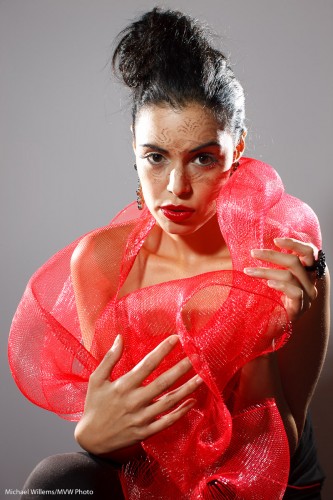
Tara Elizabeth

Tara Elizabeth in Mono, 20 November 2010

It prompts me to talk about how to make a photo like this. You see, a photo is not just one thing. It is a culmination of things all coming together.

First you need a subject. Yes, the subject is important. When all else is equal, your subject makes the image. After all, it is an image of something. Photographers are often enough all technique, to the extent that they forget about the subject. In this image, model Tara is looking great; her clothing is avant garde, her make-up, by Make-Up Artist Tea, is superb. Tara’s expression is just right.

Composition is also important, even in a simple portrait. Uncle Fred puts the subject (Tara’s eyes) in the middle. I use the rule of thirds; off-centre composition. Balance the image.

Next, you need technique and technology. I used a Canon 1Ds with a 50mm prime f/1.2 lens set to f/8 at 100 ISO and 1/125th second – pretty standard “studio” settings.  Pocket wizards were used to fire the flashes. A digital Rebel with a 50mm f/1.8 would have done the same here.

That brings me to the next factor: you need light. We used three speedlights. Two on the sides, with grids: edge lighting is always good. And one behind us, on our left, the fil-from-the-front light, down two stops, and fitted with a Honl Traveller 8 softbox. See that wonderful round catch light in her eyes? (yes, that is important.) The edge light also separates Tara’s arm, on our right, from the background.

Finally you need to simplify. A good photo is a simple photo. We used a simple white wall. I zoomed in enough to have nothing else in the picture. I used no background light or gels. Sometimes simple is better.

And there you have it, a photo worth using!

I encourage you to do the same kind of analysis on your own images. Always good to see what you are doing – it may remind you to think carefully about the image. And that will make it better. Promise.
High-key black and white

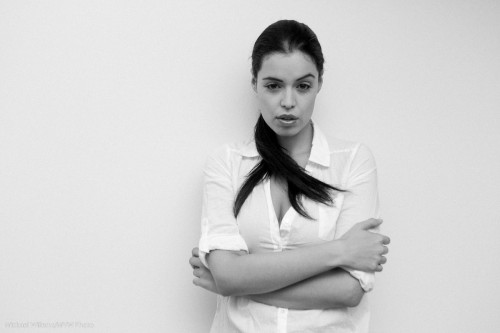
One of my favourite photo styles is this: high-key black and white, against a simple white background. This reduces the clutter to a minimum and starkly emphasizes the subject. Like in this image from the 20 November Mono, Ontario all-day workshop:

Tara, by Michael Willems

What I would say if I were to discuss this:

  • The image screams out “black and white”.
  • Clothes (white)  and wall (white) both disappear. I like the emphasis this gives the subject and the pose.
  • I like the 1970s feeling. I added a little grain to this image in Lightroom to emphasize that.
  • Slight, very slight, soft beautiful shadows are important.
  • Light is simple: one flash bounced behind me.
  • Of course you use exposure compensation and the histogram to check your exposure. But you knew that. Hit the right side (just).

Try a portrait like this! All you need is a white wall, a camera, an on-camera flash, and a model in white.

Softly softly.

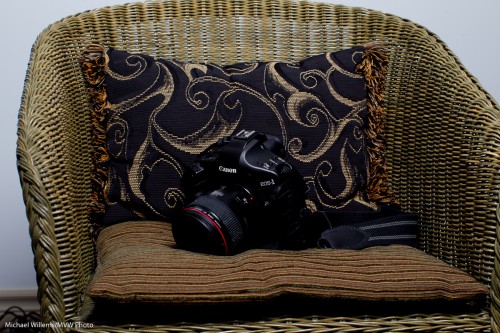
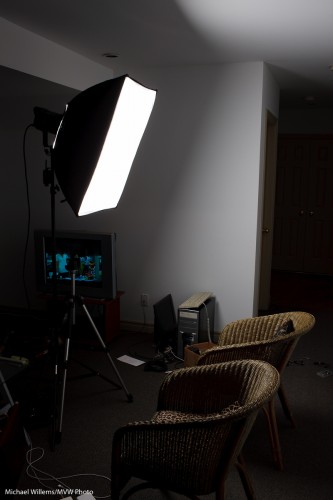
For last night’s picture, what did I use?

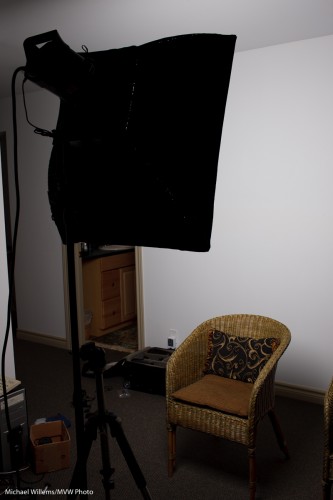
Here’s the answer. It was a simple softbox. This one:

Bowens Softbox

That gives a beautiful and soft-yet-directional light – which is why softboxes are the gold standard for portraits.

Bowens Softbox

Can you see in the shot above how the light drops off beautifully and softly?

Camera lit with softbox

In a small room, the softbox alone is enough. For a beauty portrait, of course, I might add any of the following:

  • A reflector, underneath the model’s chin, to bounce light back.
  • A hair light (using a snoot).
  • A a background light, perhaps with a gel to change the wall’s colour.

But those are optional: quite often a standard beauty light softbox is all you need. So there you go.

A softbox is better than an umbrella because

  1. It is much more controllable.
  2. It does not throw (spill) light all over the room where you do not necessarily want it.
  3. Being double diffused, a softbox produces a softer light than an umbrella.
  4. It produces a more even light, and avoids hotspots more.

True: it is less convenient because it is bigger and heavier, does not fold into a tiny area, takes longer to set up, and costs more. But considering the advantages above, a softbox may still be the way to go.

Try using a single light with a softbox, and see how you get on!

Club Hassles!

My esteemed son asks:

So tomorrow I need to shoot pictures in a club. I’m assuming my 17 – 85 f/4 – 5.6 IS won’t be much use? And I should just stick to the 50 f/1.8? There are no ceilings less than at least 10 meters, so nothing to bounce flash off of, but occasionally there may be a wall behind me.

Any other advice?

The life of a student is tough. No seriously – it is. I remember.

So OK, to the shoot. I often have to shoot clubs at crazy settings like 1600 ISO, f/1.4, 1/15th of a second. Clubs are dark!

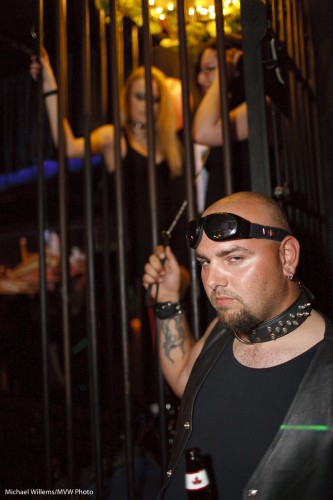
The following example was shot at 1600 ISO, 1/30th second, f/1.6:

Club scene, well lit

Club scene, well lit

There are two things you need to do:

  1. Light the background
  2. Light the subject

Number 1 you do by using:

  • a high enough ISO (do not be afraid to shoot at 800 or 1600 ISO),
  • large aperture (the larger the better…), and
  • slow shutter (1/15th with a wide lens, 1/30th with a somewhat wide lens, maybe 1/60th with a longer lens).

Important technique to find the right settings for the background: You aim to see the background -2 stops from normal (i.e. you are on MANUAL, of course, and you adjust until the meter points to -2 when pointed at an average part of the room).

Number 2 you do by:

  • Bouncing your flash off the ceiling (at 1600 ISO this is easily doable), or
  • Using a Fong Lightsphere; or
  • Using a Honl bounce card (or even the two together, bounce card behind a light sphere: I’ve done it!)
  • Using an improvised paper bounce card

..or even by using straight on flash, but use flash compensation, say to -2 stops.

Now for you. Of course you need a wider lens (for club shots, 24mm on your camera, ie 35mm real, is ideal). But you also need a fast lens.

  • So I would first try your standard lens at 800 or 1600 ISO – wide open, i.e. at f/3,5 – and with IS you can use 1/15th second. See what that does. Where does the meter point? Anywhere near -2?
  • If that does not do the job then yes, go prime and since your prime is long, step back farther-  that will be the challenge. 50 will give you a head shots but in clubs you want to see, the, um, area below the head too. And two or three people in a shot, not just one. So find an area where you can step back.

Is that any help? Not just for my son but for all of you who have to shoot in dark clubs and so on?

Upcoming workshop

There will be many lighting tips during the next Advanced Flash workshop in Mono (just north of Toronto) on 20 November.

Joseph Marranca and I will take students through a thorough overview, and then detail, of all types of flash (this is the same workshop I taught recently in Las Vegas and Phoenix); then practice, and then the best part: with a professional model, we create and make portfolio shots together, using all the techniques we have learned.

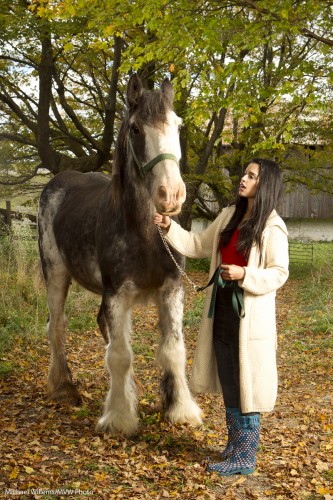
Shots like this:

Cherry and Tara Elizabeth

Cherry and Tara Elizabeth

Cherry, the horse, was old, and he recently passed away: this was the last photo taken of him.

It was lit by a battery-operated studio flash with a softbox on our right, and one bare flash (a speedlight) on our left (slightly behind the horse). Can you see how this adds some rim light to his face and legs, and hence gives them shape and offsets them from what is behind? This can be very important for well-lit portraits.

If you are interested in learning more, sign up: there are still a few places left. But hurry: we limit attendance to a maximum of ten students, which with two instructors is a great ratio.

And those of you who cannot come: sign up for a starter course at Henry’s (ask me when I am teaching what!), and of course this blog will contain daily tips, many of which I take from my workshop practice. Photography is one great adventure, and one I hope you will pursue to make ever more beautiful images.

The Royal

The last few days, and the next eight days, I am taking portraits at the Royal Agricultural Winter Fair in Toronto. Family portraits.

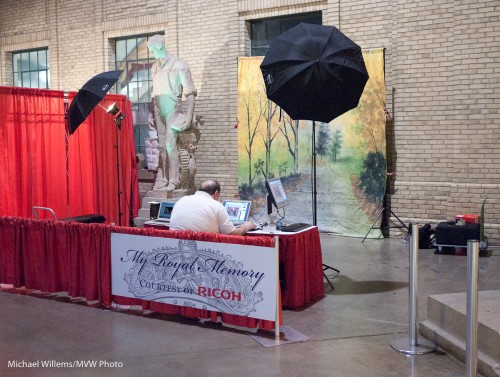
To do this, my colleague Paolo and I use this simple setup:

Setup at The Royal

Setup at The Royal

Two strobes in umbrellas, and a backdrop. That is it!

So you need a camera plus:

  • Two monolights, 45 degrees off to the side, high
  • Two stands and two umbrellas
  • A light meter
  • A backdrop
  • A way to connect the camera to the lights: perhaps pocketwizards, but a cable will do.

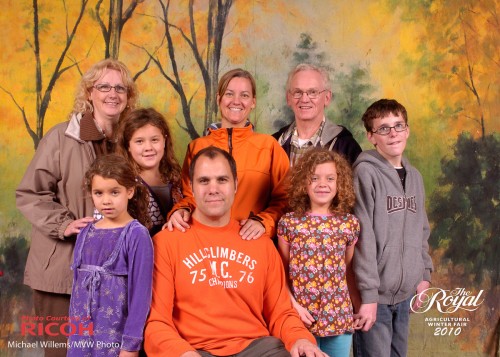
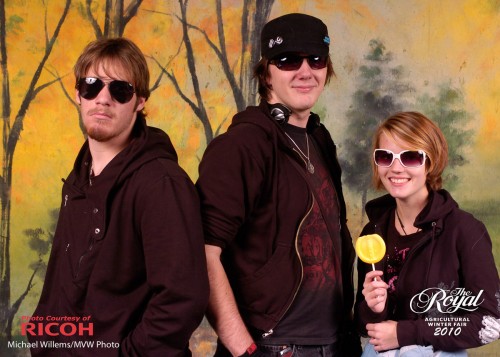
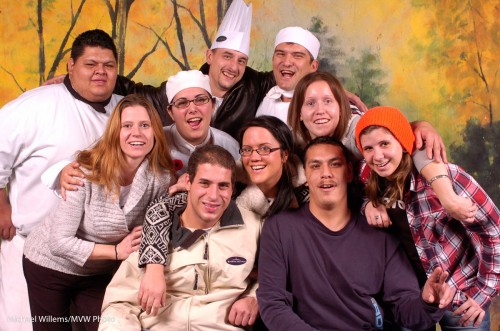
That is all. And every picture is reliable. Like this:

Family Portrait

Family Portrait

Friends

Friends

Friends

Friends

More tips:

  • People skills and compositional insight both help greatly.
  • Positioning (not “posing”) is the most important thing.
  • “Straight on” poses are not normally pleasing.
  • Telling people to “Smile!” is not a guarantee for nice photos

The moral of this post: simple light, two umbrellas, can do very well in giving you reliable images.

Outside flash

As a result of yesterday’s shoot, reader Franklin asked:

Michael, I often use my flash for outdoor portraits.  Since I don’t have anywhere to bounce the flash, I often point it straight at my subject.  In many cases, I end up having to deal with the oily, overexposed skin highlights mentioned in your previous post.  Any tips you could offer to create soft, natural looking skin tone would be greatly appreciated.

Great question. Yes, outdoors flash can be challenging, so here are my tips.

  • First, outdoors you can sometimes bounce. A wall, for instance, can provide a wonderful soft ounce area. If possible, try that first. (A Gary Fong Lightsphere may make this easier if there are some small things that light could bounce off. Like people, trees, a car, a fridge, you name it. The Fong Lightsphere throws light everywhere so it sometimes works.)
  • Second: next, try to soften the light. I often use a Honl Photo Traveller 8 softbox for this. Sometimes a Honl bounce card.
  • Third: the direction of the light is important. One reason outdoor flash can look unnatural is that the flash is shooting from where the camera is. If you can take it off the camera, using an off-camera flash cord like the ones of Flashzebra.com, you will get much more natural light. Shoot with the light coming from above (even a foot), and at an angle.
  • Fourth: I often add some colour, like a quarter CTO or half CTO filter, to warm up the flash. This removes much of the objective (see yesterday’s picture).
  • Finally: it is allowed, even a good thing, to shoot with direct flash outside. And Photoshop or Lightroom can help remove the nasty skin highlights. Sometimes this is just the price you pay!

I hope that helps!

Oh daddy…

…I know I shouldn’t have  crashed your plane!

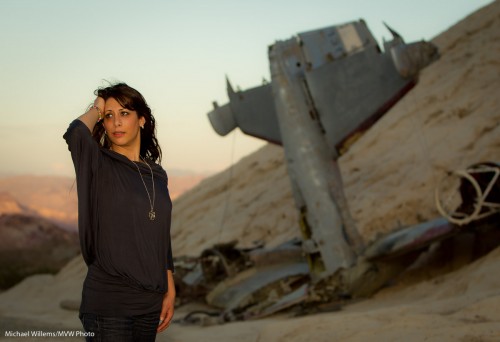
Yasmin Tajik in Nelson, NV

Yasmin Tajik in Nelson, NV

This photo, which I took in Nelson, Nevada of friend and photographer Yasmin Tajik, shows how useful a flash can be when fitted with gels.

I took the picture with a Canon 1D MkIV fitted with a 70-200 2.8 lens and a 580EX II flash. The camera was set to Aperture mode (Av), at f/4 and 100 ISO, which gave 1/320th second when I used -2/3 stop of exposure compensation.

The light was a setting sun.

But the setting sun was not lighting up Yasmin at all. So I used the flash.

But to keep the “golden hour” light quality, I fitted the flash with a Honl Photo Speed Strap and a  1/2 CTO Honl Photo gel.  That made Yasmin look like she was in the setting sun. When in fact she was not.

Reader post

Joel, a reader who came on a recent Creative Urban Photography walk with me, says the following – and I thought it worth it posting this today, to emphasise what I have said before:

Just circling back after the Urban Photography walk in Oakville that I did with you and the group on Oct. 23rd.
Despite the rain, it was a nice blend of technique and discussion.  I putzed around after we wrapped up down by the waterfront.

I had been on the fence about purchasing a flash after the Henrys show, but spending an afternoon with the Speedlighter had me sold.   Your quick demo about flash compensation and CTO was enough to push me over the edge.

[…for Canon users: Joel then points out there are cheap deals on for the 430EX: price match the Adens Camera offer at $274.99. I believe Henry’s also has a great offer on this flash…MW]

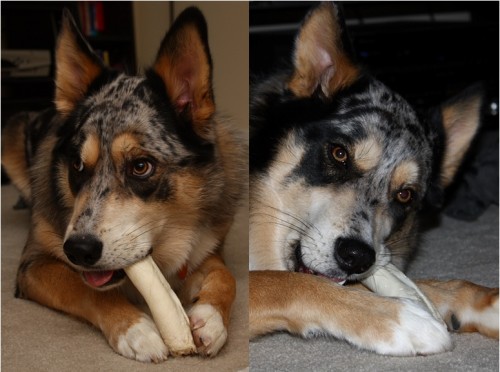
Not that you need any proof yourself, but I took a quick comparison shot (attached) to bring back to the camera guys here at work.  Images are unedited (but very compressed).  Left side is bounced behind me with the 430, right side is standard pop up flash.  Both shot at ISO 100 in my poorly lit living room at night.  Very happy with it and excited to learn more.  Keep posting on your speedlighter site – lots of good advice…

Thanks, Joel. Here’s your two shots:

Bounced vs Straight

Bounced vs Straight

(Click to see them larger).

As you can see,

  • The bounced shot is much warmer (note, if due to wall colour it is too warm, this is easily adjusted with one little tweak in Lightroom).
  • Its shadows are softer. Look at the dog on the right and at the annoying shadow on our right.
  • Its background is not inky black, unlike the direct image’s background.
  • The catch lights are more natural (the straight image has an unnatural looking tiny catch light right in the centre of the pupil; the bounced image has a much more natural looking and much more naturally positioned catch light).
  • The dog looks more natural in the left image. On people, this would be even more dramatic: the right image would have oily, overexposed skin highlights. The dog’s hair helps shield us from this.

Images like this are taken as follows:

  1. Attach the flash to the camera.
  2. Turn it on, and ensuring it is set to TTL mode (its default).
  3. Use program mode on the camera; or manual (preferred for more advanced users) or even “night portrait” mode.
  4. Turn the head so it points 45 degrees upward behind you.
  5. Shoot!

Joel adds, in a follow-up email:

Camera is Canon XSi.  Standard Kit Lens 18-55 EF-S. I’ve never seen this level of detail out of my equipment before.  It was so sharp that when zoomed in, you can see my kitchen in his eye.  Like you said – ‘A bright pixel is a sharp pixel’  J

Exactly. That is Willems’s Dictum: “Bright Pixels are sharp pixels”. Noise, grain, cockroaches and bedbugs all hide in the dark areas.

All this is subject of my next November 20 all-day course (see www.cameratraining.ca) – you will learn these techniques and many more, and go home with some great portfolio shots using a professional model.

Colour

Sunday, I spent the afternoon walking through Oakville with ten students for a Creative Urban Photography walk.

A few pictures here. I thought I would concentrate on colour. And even on a very cold fall afternoon, there is colour.

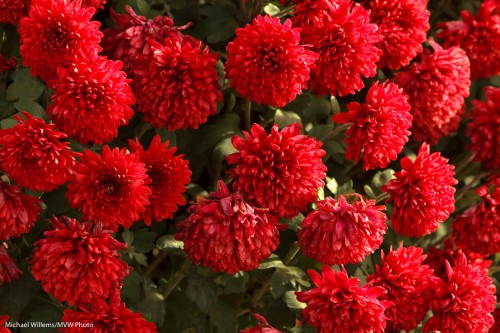
Like contrasting colour, in this case red and green:

Red-Green

Or harmonious pastel colour:

Colours

Colours

Or subtle single colour:

Coffee Beans

Coffee Beans

Or simple single colours:

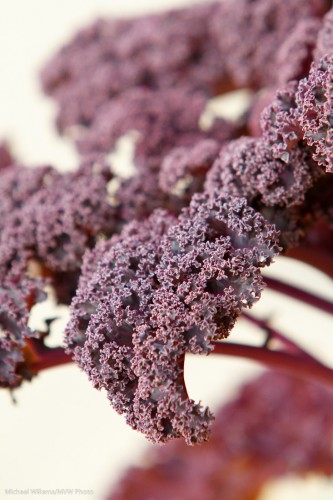
Plant

Plant

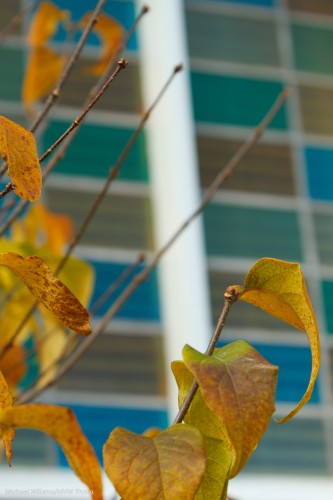
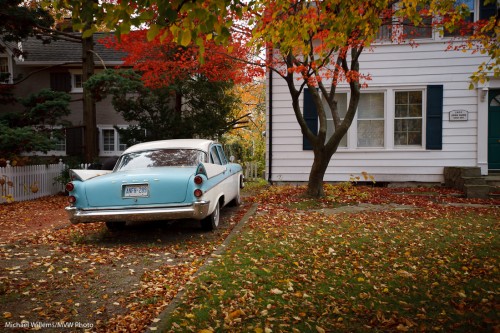
Or beautiful fall colours:

Fall colours

Fall colours

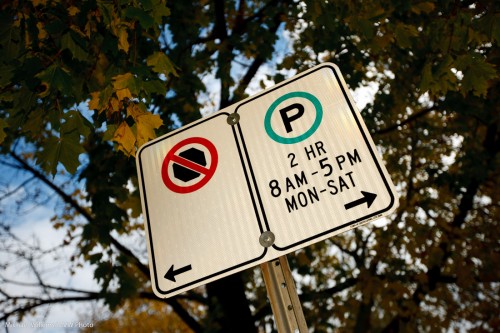
Or colour warmed up by a gel on the flash:

Sign

Sign

So if a cold afternoon can show colours like this, so can anything else. As long as you spot the colours.

Your assignment, therefore, if you wish: Spend an afternoon shooting in the environment of your choice, looking only for colours.

And remember to:

  1. Set the correct white balance
  2. Expose well (do not overexpose; use your histogram or a Hoodman Hood Loupe)

Enjoy your outing!