Flashes: to clone, or not to clone?

I received the following question via email:

I have been following your posts since the Spring Camera show in Toronto. I have loved all of your tips and comments.

I would like to know your opinion on a 3rd party flash or your general opinion on 3rd party flashes. I am thinking of getting the Opteka EF-600 DG Super EO-TTL II for just over $100 the reviews are good and the promotional information says it works with other canon flashes if I wish to get brand name in the future and use this one as a slave. This will be my first flash for a Canon Rebel XT. I was also thinking of getting Opteka FL-50AF E-TTL II but with it only being able to tilt I do not think it will suit my needs as I learn to do more with flash.

I would like to know if it is better to save the money and go for the cheaper version or bite the bullet and go for the canon brand.

Oh yeah, I like this question. It is the kind of question we all struggle with.

I agree you need a flash that swivels and turns. A 430EX, 580EX, or a clone of either of those, in other words.

I have worked a little with some of the clone flashes, though not that very one, and here is my take on this:

Pros:

  • Much cheaper. Much!

Cons:

  • Not guaranteed to be as compatible in every situation (complex TTL).
  • Quality control and warranties may or may not be as good, so there is some uncertainty.
  • The interface is sometimes simpler (which is not always a bad thing!)
  • Not all features may be supported (eg high-speed flash, auto flash head zoom: I have seen some clones that did not support these).
  • If you have a problem, Canon will not help, and nor in all likelihood will the maker of the third-party flash.

Bear in mind that of you use flashes in manual mode (which often enough you will, once you master flash), then it makes no difference what flash you have, since you will not use TTL at all in that situation.

Knowing all this, I would say: (drum roll):

  • Make sure you have one flash that is made by Canon. If flash is important to you, that should be your first flash; if not, and you are experimenting, then it can be your second or third flash, whenever you get around to this.
  • Other flashes, try the clones.
  • Particularly if you shoot manual flash, and have many flashes, equip yourself with clones.

So in your case: “it depends”. If you want to be sure, get the 430EX. If you want to play, then by all means start with a clone and once you are happy, add a canon and make the clone your second flash.

Do make sure the offer is genuine, and do try the flash in the store to make sure you are happy. Take a few test shots. Opteka and Nissin (and various such OEM labels)  are “off brands”; Metz is a good brand. Off brands do not have to be bad, but they are not necessarily good either.
Gearing up.

A story has it that someone once asked Pablo Picasso to do a drawing. Five minutes later, after he was done, he asked for $5,000. “Why, you only took five minutes”, said the customer. “No – I took my entire life”, said the artist.

I know how he felt. I am getting ready for tomorrow’s all-day workshop in Mono, an hour north of Toronto.

Like the last ones, it will be a lot of fun, as students learn and practice with light, modifiers, camera techniques, modern hardware, and more.

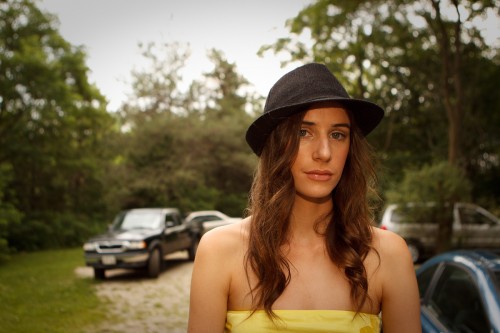
Evanna Mills; photo Michael Willems

Evanna Mills; photo Michael Willems

But I realise it is taking me all day to prepare: packing up the entire studio, getting the presentation materials and hardware ready; deciding on the shots, doing the logistics.

But that is the half of it. The best part of teaching is that if you do it well, you bring a lifetime of experience to the table. That’s what makes it satisfying. And that’s what the secret is, more than the day itself.

Back to packing lights, backdrops, softboxes, pocketwizards, cameras, and more.

Speed

When we say “pick the right moment” we often mean “freeze that moment in time”. Like the ball floating just above the ground here:

Picking the right moment, photo Michael Willems

Picking the right moment

To capture something like that,

  • Go so shutter speed priority (S/Tv) on the dial on the top
  • Select a shutter speed of, say, 1/500th second. faster is the object moves more quickly of course.

Try it today: go freeze a few moments!

Outdoor portrait tip

A quick tip for new photographers and a reminder for more experienced ones:

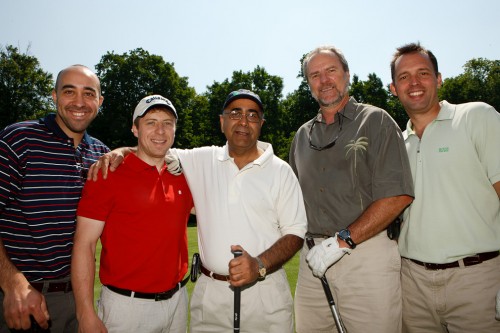
When shooting a portrait outdoors, have the sun behind the subject – but light that subject with a flash.

Government Services Minister Harinder S. Takhar and friends, photo Michael Willems

Government Services Minister Harinder S. Takhar

The sun behind them, because sunlight is harsh, and otherwise they would squint. The flash, to stop them from being silhouettes.

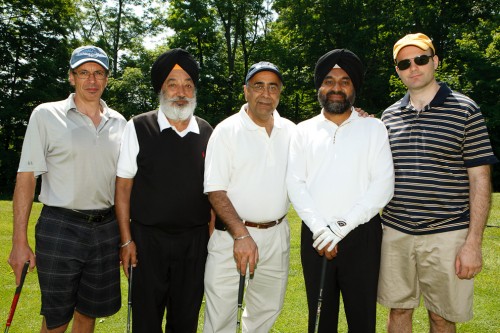
Another example:

Government Services Minister Harinder S. Takhar and friends, photo Michael Willems

Government Services Minister Harinder S. Takhar and friends

Creative light

There is just one more spot open for the all-day Creative Flash course in Mono, Ontario, an hour north of Toronto, Saturday.

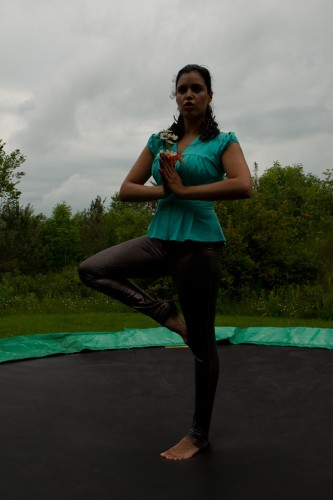
Using a professional model and pro lighting equipment on Canon, Nikon and other camera brands, Joseph Marranca and I will teach our students to take shots not like this:

Tara Elizabeth

Tara Elizabeth

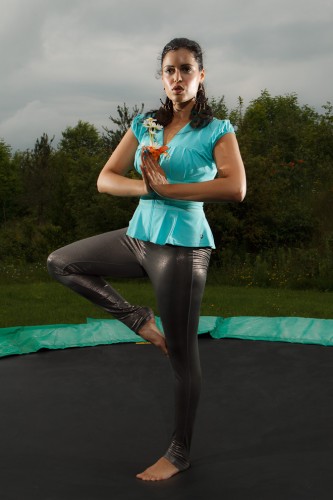
But instead like this:

Tara Elizabeth

Tara Elizabeth

You see how important light is? That’s what these workshops are about, to make users comfortable with the technical and creative aspects of light,

And they are about going home with portfolio shots.

And about having fun with cameras, all day!

Too much contrast!

A student wrote to ask me the following:

Sometimes it is impossible to avoid part of your picture getting over-exposed without your main subject becoming very dark. I didn’t have great improvement with a smaller aperture. What do I have to do in this case?

Good question. A sensor is more like slide film than like negatives: the dynamic range is limited. Meaning you can only show so much difference between lightest and darkest parts of your image.

So when I point at a person in front of a window, they are a silhouette. The aperture makes no difference in this case: not by itself, anyway. But if I increase the exposure (by using  my spot meter, manual mode, or exposure compensation) then they can be correctly exposed, but now the sky behind them is all blown out. Uh oh!

So what can I do?

As usual, there is no single answer. I can (and often do!) the following:

  • Move myself. If I shoot from the other side, no problem.
  • Move my subject or move my light (unless it is the sun!)
  • Use a reflector. That is why photographers always carry reflectors.
  • Use my flash! This is why on a sunny day we carry our flash. Sun is very contrasty light. With a flash, we minimize the differences.

An example of flash outside:

Daniel at the Alamo, photo Michael Willems

Daniel at the Alamo

Without the flash, Daniel would have been too dark (look under his chin), or else the Alamo would have been way too bright.

There is one other way that sometimes works.

I can shoot RAW and hope there is enough dynamic range to contain detail in the sky; and then adjust afterward, using HDR – High Dynamic Range.

I can do this either in Lightroom, by using “filll light”, “recovery” and other exposure adjustments, or by using specialized HDR software like Photomatix.

Photomatix HDR example from one RAW, by Michael Willems

Photomatix HDR example from one RAW

The original image (which I took Monday in Toronto’s Distillery District) had a very bright, blown out sky, and the foreground was too dark.

But because I shot RAW, I was lucky and there was enough detail “hidden” in the file, and I was able to bring it out.

This works as follows:

  1. Shoot a RAW image, expose “in between”.
  2. Copy it so that you have five identical images.
  3. Make one image two stops darker; make one one stop darker; keep one at the shot setting; make one one stop brighter; and make one two stops brighter. If you shot “in between”, each image should have detail on part of the image.
  4. Now run Photomatix software (I used a demo version here, see the watermark).

This is no panacea, and HDR (High Dynamic Range) can look gimmicky and unnatural, but when this works, it can help save you from these high contrast situations.

Normally, for HDR you take multiple exposures, of course. But there is so much “extra” information in a RAW file thatyou can get away with this technique quite often.

Welcome to speedlighter

Speedlighter.ca: the new home of Michael’s blog.

Why now? Because WordPress changed themes, dropped layouts, and showed themselves to be untrustworthy. But also because now I can do more: in particular I can now add a wide range of “plugins” on this blog.

Why “speedlighter”? As you know, a small flash is called a speedlight. Because they are fast to use. And I specialize in speedlighting: I teach lighting seminars all over. I teach pros as well as beginners how to use flash technically and creatively. I will help you know the exact differences between Nikon’s CLS/iTTL and Canon’s e-TTL. I love small modifiers like the Honl Photo gels, grids, softbox, reflectors etc.

Michael Willems. Lighting: three small speedlites

Photography is about composition/subject, moment and light. While I talk about all three, I particularly like to help people understand light, and how small flashes can help produce professional photography quickly and easily, without lots of heavy equipment.


Matt

Matt of WordPress dot com explained, I now see, why he inconvenienced me and thousands of other bloggers: see http://ma.tt/2010/07/syn-thesis-1/#comment-481953

Quote: “regardless we’ve always had attribution on it. We’re replacing it anyway, don’t want any of his junk touching our sites.”

So he killed my blog layout and widgets to satisfy his own  need to have a great designer’s “junk” not on his site? What an inconsiderate person. All the prejudices I ever had against spoilt Californian kids are bubbling up. Except Matt tells me he is not even Californian!

Postscript: so OK, I got a bit angry. Can you see why, though?

Afternoon = Gel

Another flash tip for you today.

Later afternoon pictures. You can make them look better by adding your own “golden hour” glow. Like this:

Patio at dusk, photo by Michael Willems

Patio at dusk, photo by Michael Willems

To take a picture like this, you might do the following:

  • Use an on-camera flash while there is still light;
  • First set your camera’s exposure (ISO, aperture, shutter) to get a nice background sky. Ignore the foreground for now.
  • Then position yourself such that there is no close subject (remember the inverse square law).
  • Use a half CTO gel on the flash (I used a Honl Photo half CTO gel on the speedstrap on my 580EX);
  • White balance to “Flash”.
  • Take a test shot. If the flash is too bright or too dark, use Flash compensation (+ or 1) to adjust. If the background is not right, adjust ISO, shutter or aperture.
  • A wide angle lens makes it easier.

And Bob’s your uncle: nice colours.